Visiting AhobilamFor accomodations, Please contact the Guest House via Phone listed here.
Details
Perumal (Lord):Ahobila Nrisimha - Sitting posture in Chakrasana facing East (Main temple)Thayar (Consort):Lakhmi, SenjulakshmiOther shrines:Jwala Nrisimha, Malola Nrisimha, Kroda Nrisimha, Karanja Nrisimha, Bhargava Nrisimha, Yaogananda Nrisimha, Kshatravata Nrisimha, Pavana NrisimhaPushkarani:Pavanasini, Bhargava, Indra, Nrisimha,Gaja TheerthamsVimanam:Guhai (Cave)Pratyaksham:Prahalada, Adivan Satakopan
Ahobilam is located in Karnool district of Andhra Pradesh in the hills of the eastern ghats, about 400 KM northwest of Chennai.
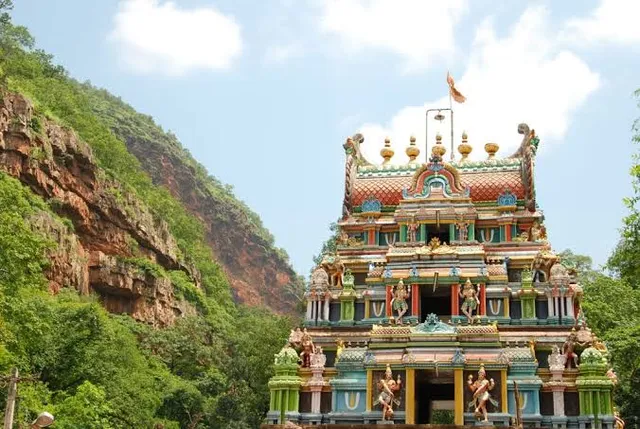
The temple consists of nine shrines to Lord Nrisimha located around a 5 KM circle. In addition to the nine shrines, there is a temple for Prahaladavarada Varadhan in the foothills of the mountain. Due to security reasons and the difficulty in performing daily worship, many of the utsava vigrahas of the nine shrines are kept in this temple.
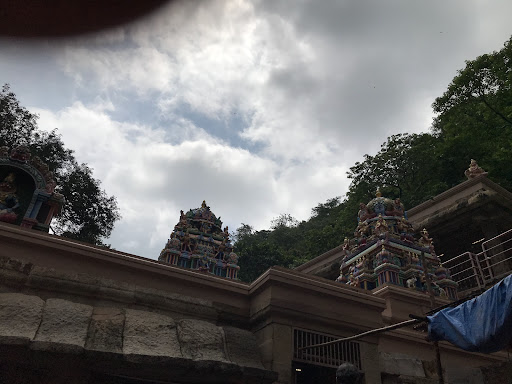
Lower Ahobilam Temple
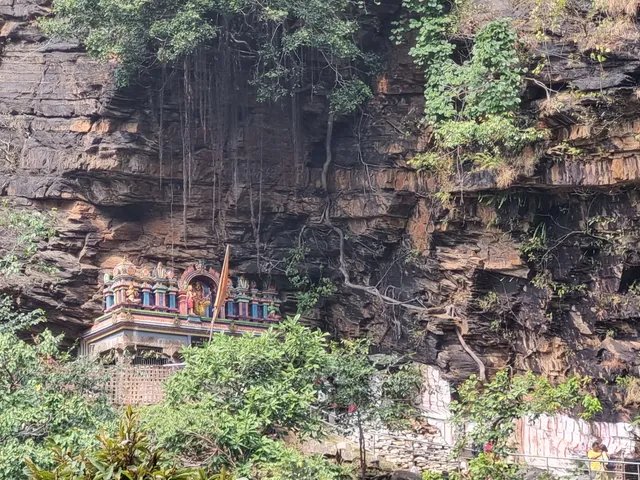
Garuda wished for a vision of Lord Nrisimha in the form of the Avathara. To fulfill his wish, the Lord settled in the hills around Ahobilam in the midst of dense forests in nine different forms. For this reason this hill came to be known as Garudadri, Garudachalam, and Garudasailam.
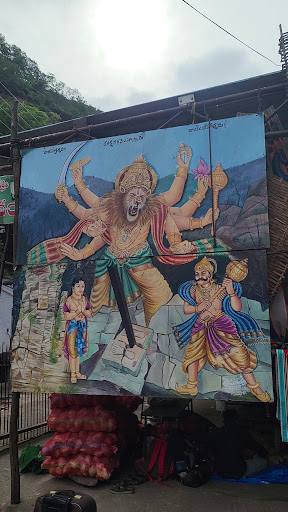
Ahobilam is the place where the Lord killed Hiranyakasipu and saved Prahalada. Mahalakshmi took avathar as Senjulakshmi among the Senju, tribal hunters of the hills, and married the Lord.
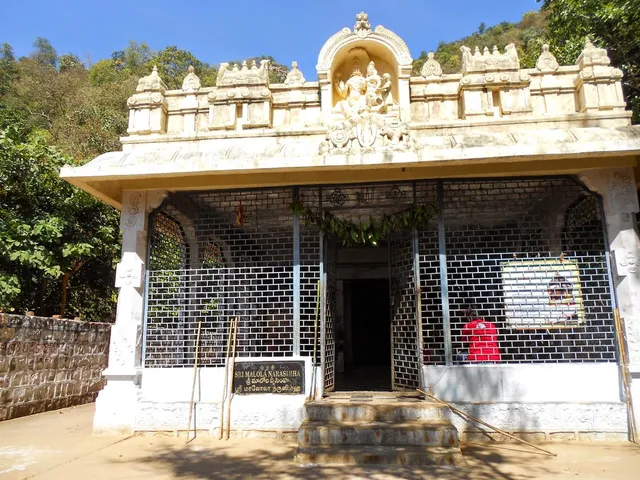
Sri Ahobila Muth, one of the most important Sri Vaishnava religious institutions in India, was established by Sri Athivan Satakopan at the instructions of Lord Lakshmi Nrisimha of Ahobilam. In fact, the utsava moorthy of the Malola Nrisimha temple, one of the nine shrines of Ahobilam, is the presiding deity of Sri Ahobila Mutham. Sri Malolan accompanies Srimad Azhagiya Singar, the spiritual and titular head of Sri Ahobila Mutham, on his travels.
Thirumangai Azhvaar has sung ten verses about this temple in Periya Thirumozhi.
Sthala Puranam
The Himalayas rise high to the Everest in the north while the far south of India shows the deep sea - rather communion of the three oceans. The western region and the eastern region of the Peninsular India, on the other hand, while tapering towards Kanyakumari, exhibit a wide range of mountains known as Western Ghats present wholesome sceneries and adventurous travel both by rail and road, the Eastern Ghats display not only picturesque view but demonstrate divinity as well. The Eastern Ghats are likened to the great serpent Adhisesha basking in the sun with its head (or hood) at Thirumala, its middle at Ahobilam and its tail- end portion at Srisailam - all the three with famous temples on them.
The subject we have before us is Ahobilam. Of course, Thirupathi and Srisailam are also frequented pilgrimage centres. Ahobilam because of this special issue. Not only Mahabharatha; but also ancient puranas like Koorma Purana, Padma Purana and Vishnu Purana mention about Ahobilam and its presiding deity Narasimha. In fact, Brahmanda Purana says that this place was once the palace of Hiranyakasipu who was slain by Sriman Narayana manifesting as Narasimha from a pillar there for the sake of his staunch devotee Prahlada. Vagaries of time brought about the destruction of the then existing structures yielding place to nature's creation of the mountain range that preserved the site of incarnation as "Svayam Vyakta Kshetram" of Lord Narasimha.
According to Stala Purana, there are two popular legends for the derivation of the word 'Ahobilam'. It is stated that the Devas (Gods), while witnessing the terrific aspect (Ugra Kala), the lord took on in order to tear to pieces Hiranyakasipu sung in His praise as 'Ahobala' (Lo: the strength). Hence this place has come to be known as Ahobilam. In support of this, there is a prapatthi sloka about-Ahobilam that reads:-
"Aho Veeryam Aho Souryarn Aho Bahuparakramah Naarasimham Param Daivam Ahobilam Aho Balam.
The other version is that because of the great cave, the Ahobila, where Garuda...
Read moreDivyadesam Yeguva Sri Ahobila Narasimha Swamy Temple is located in Ahobilam, Andhra Pradesh at a distance of 140 Kms from Kurnool and 340 Kms from Hyderabad Airport.
As per Brahmanda Purana, Ahobilam is the Avatara Sthala of Lord Narasimha, and it is a Kruthayuga Kshetra. It is one of the 108 Sri Vaishnava Divya Desams. Sri Thirumangai Alwar, , composed ten Pasurams on Ahobilam. This Kshetram also witnessed the invasions, and every time it hard to tried get back its past glory.
The Ahobilam Kaifiyat mentions that one Nandana Chakravarthi in the lineage of Parikshit and Janamejaya was the king in whose reign worship of Ahobila Narasimha Swamy was being performed regularly. Such worship is mentioned during the time of Chalukya Kings Jagadeka Malla,Bhuvaneka Malla, and Tribhuvana Malla Rajas. An inscription of Chalukya Kirthivarman II, found at Peddapeta, a hamlet of Yadiki, refers to the name of a person as Vobula. The word Voubula is a colloquial form of Ahobila which shows the extent of influence of Ahobilam in the region.
While the First Peethadhipathi of Sri Ahobila Matha was alive, Prataparudra of of the Kakatiyas, during a campaign, camped in Rudravaram near Ahobilam and melted gold to make an image of Lord Siva, for his daily worship. The melted gold, however, kept on turning into an image of Narasimha Swamy. Pratapa Rudra then worshipped the Swarna Moorthy (Gold Idol) of Lakshmi Narasimha and gave it to the first Peethadhipathi, Sri Adivan Satagopa Yatheendra Mahadesikan.
Nine temples are dedicated to ‘Lord Narasimha’ (one of the ten incarnations of ‘Lord Vishnu’) and also situated at Ahobilam in the Allagadda municipality of Karnool district in Andhra Pradesh.These group of temples are named as ‘Nava Narasimha Kshetram Temples’ and also counted among the ‘108 Divya Desam Temples’ dedicated to Lord Vishnu. All these Nava Narasimha Kshetram Temples are in the deep forest and divided by two fields as ‘Upper Ahobilam’ and ‘Lower Ahobilam’. Each region contains four temples and the other one is on the way to ‘Upper Ahobilam’ from ‘Lower Ahobilam’.
Nava Narasimha Kshetram Temples located at Upper Ahobilam are: A) Ahobilam Narasimha Temple b) Varaha Narasimha Temple c) Jwala Narasimha Temple d) Malola Narasimha Temple. Nava Narasimha Kshetram Temples located at Lower Ahobilam are: a) Yoganandha Narasimha Temple b) Chatravata Narasimha Temple c) Paavana Narasimha Temple d) Bhargava Narasimha Temple. And in-between the Upper Ahobilam and Lower Ahobilam, found the Karanja Narasimha Temple. In terms of sculpture and architecture all these nine temples stands to be an ultimate testament for the ancient sthapathis in planning and sculpting these temples. A few temples can be reached through trekking. Some temples are inside the cave. Some temples are very difficult to trek to. The nine planets that define the human fates are believed to have worshipped these nine Lord Narasimhas to get relief from Rakshashas (demons) and curses of sages for their actions.
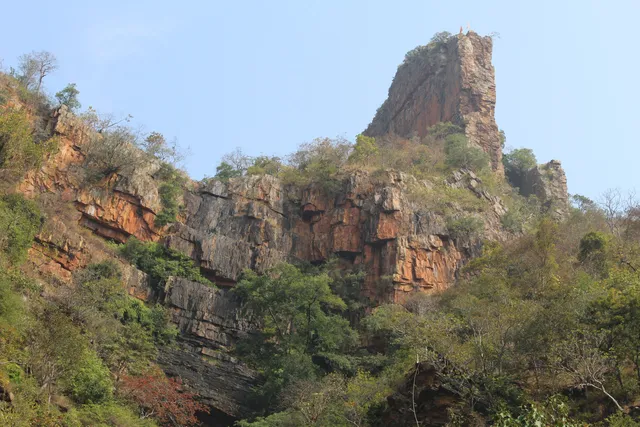
According to legends it is believed that when the Devas saw the manifestation of Lord Vishnu as half-lion, half-man, they shouted “Ahobala” (great strength) as well as “Ahobila” (great cave in which the current sanctum is). Hence, this place could be called either “Ahobalam” or “Ahobilam”. The mention of this place is present in Brahmanda Purana. The place where Lord Narayana appeared from the stone pillar to kill Hiranyakashipa can be seen in this place. The name of this pillar is Ugra Sthambha, which is now referred as “Ukku Sthambha” in Telugu, which translates to iron pillar.
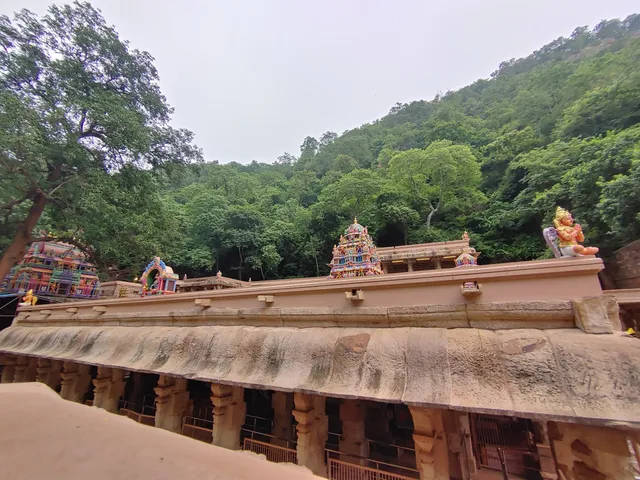
Sri Ahobila Narasimha Swamy is the main deity of Ahobila Kshetram. Sannidhi Bhagavan is seated in the cave on a raised platform, with Bhaktha Prahlada in front. Bhagavan Shiva worshipped Ahobila Narasimha Swamy with "Mantra Raja Pada Stotram", Bhagavan Rama with Panchamrutha Stotram. Baghavan Srinivasa offered the food prepared at the time of his marriage to Sri Ahobila Narasimha Swamy. Here, Goddess Mahalakshmi is worshipped as...
Read moreDivine and Adventurous Trip to Ahobilam
A two-day trip is ideal if traveling with family.
How to Reach?
From anywhere, first, reach Allagadda. From there, you can find several RTC buses and taxis available to reach Ahobilam.
Where to Stay?
In Diguva Ahobilam, there are more accommodation options compared to Yeguva Ahobilam. I stayed at Arya Vysya Satram, where they charge ₹1000 per day for a non-AC room and ₹1500 per day for an AC room. Another good option is the AP Tourism Haritha Hotel, which is also nearby.
⸻
Day 1 Plan
Temples to Visit: Pavana Narasimha, Bhargava Narasimha, Chatravata Narasimha, and Yogananda Narasimha
After freshening up, first, visit Pavana Narasimha and Bhargava Narasimha temples. These can only be reached by local jeeps, which charge ₹3500 for six members, with an additional ₹500 per extra member. The journey through the dense forest is extremely rough, making it difficult for elderly individuals or those with body pain. • Pavana Narasimha Temple: The jeep ride takes approximately 1 hour and 15 minutes. After darshan, return to Bhargava Narasimha Temple. • Bhargava Narasimha Temple: The route is slightly better than that of Pavana Narasimha, but you will need to climb around 150-200 steps to reach the temple. Don’t forget to wash your face and eyes in Akshaya Kundam.
After darshan, return to your room, have lunch, and take some rest.
In the evening, visit Chatravata Narasimha and Yogananda Narasimha temples, which are easily accessible by local auto. The round trip costs ₹300. After darshan, return to your room.
⸻
Day 2 Plan
Temples to Visit: Jwala Narasimha, Varaha (Kroda) Narasimha, Malola Narasimha, Lakshmi Narasimha, and Karanja Narasimha
Start early in the morning and take an auto to Yeguva Ahobilam. The shared auto fare is ₹30 per person (they wait until there are 10 passengers). If you prefer a direct ride, you can pay ₹300 for a private auto to reach the main Ahobila Narasimha Temple. If you choose a bus, you will need to walk nearly 1 km since buses do not go near the temple.
After reaching Yeguva Ahobilam, begin trekking to Jwala Narasimha Temple, where Lord Narasimha killed Hiranyakashipu. The trek is challenging for elderly people, but many elderly devotees manage it while chanting “Govinda Namam.” Your devotion will give you strength! • For those who cannot trek: A doli (palanquin) service is available for ₹4000. • After 30 minutes of trekking, the steps begin—approximately 900 steps need to be climbed to reach the temple.
After darshan, begin your return journey. Midway, you will find a bridge leading to Malola Narasimha Swami Temple, but this route is extremely difficult—do not take it.
Once you descend, visit Varaha (Kroda) Narasimha Temple, where Lord Varaha saved Mother Earth. Have darshan, and nearby, you will find steps leading to Malola Narasimha Temple—visit and have darshan there.
Finally, visit Ahobila Lakshmi Narasimha Swami Temple and return to the auto stand, where you can find food in satrams.
After lunch, walk 1 km to the bus stand, where you will see Karanja Narasimha Temple, where Lord Narasimha gave darshan to Hanuman.
With this, your Ahobilam 9-temple pilgrimage will be complete.
⸻
Tips for the Trip: Near Jwala Narasimha Temple, there is a very difficult path leading to Ugra Sthambham, where Lord Narasimha appeared. There is a rope for support, but the climb is extremely challenging. Attempt it only if you have enough energy. Do not carry any luggage except a water bottle while trekking to Jwala Narasimha Temple. Monkeys may snatch food items if exposed, but they are not aggressive and will not harm you. Do not miss drinking Panakam (jaggery water) at Jwala Narasimha Temple. Drink water from Rakta Kundam, near Jwala Narasimha Temple, where Lord Narasimha washed his hands after slaying Hiranyakashipu. If you have enough energy after visiting Malola Narasimha Temple, you can visit Prahlada Badi, where Prahlada studied. However, the route is dangerous and...
Read more