HTML SitemapExplore
logo
Find Things to DoFind The Best Restaurants

Sri Kurmanatha swamy Temple — Attraction in Andhra Pradesh

Name
Sri Kurmanatha swamy Temple
Description
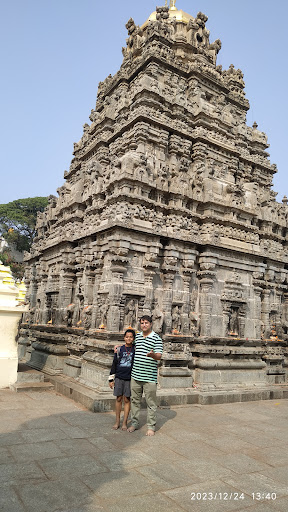
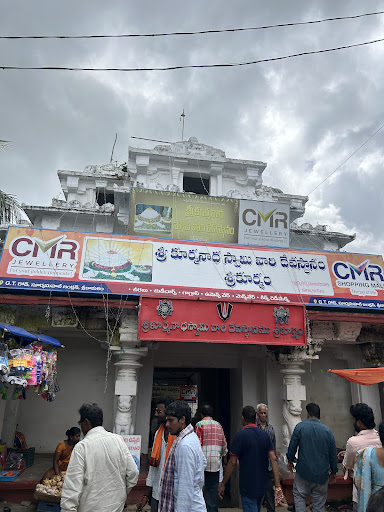
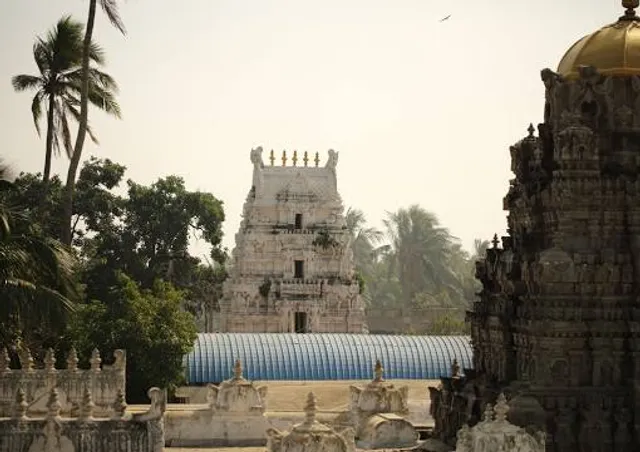
The Kurmanathaswamy temple, also known as the Kurmanatha temple, Srikurma or Srikurmam temple, is a Hindu temple dedicated to Kurma – the second avatar of Vishnu. It is located in Srikurmam village, Srikakulam district in Andhra Pradesh, India.
Nearby attractions
Nearby restaurants
SRK HOTEL SREEKURMAM
72C3+HX9, Srikurmam, Andhra Pradesh 532404, India
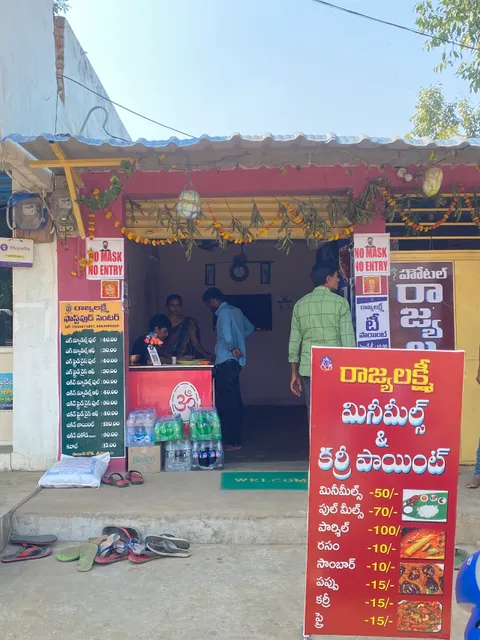
RAJYALAXMI - HOTEL (VEG & NON VEG)
SRIKURMAM OPP - Z.P.H.S (GIRLS) HIGH SCHOOL, beside GOVT HOSPITAL, & B.K.S COLLEGE, Srikurmam, Andhra Pradesh 532404, India
Paradise restaurant
72C4+WW4, Srikurmam, Andhra Pradesh 532404, India
Nearby hotels
Related posts
Keywords
Sri Kurmanatha swamy Temple tourism.Sri Kurmanatha swamy Temple hotels.Sri Kurmanatha swamy Temple bed and breakfast. flights to Sri Kurmanatha swamy Temple.Sri Kurmanatha swamy Temple attractions.Sri Kurmanatha swamy Temple restaurants.Sri Kurmanatha swamy Temple travel.Sri Kurmanatha swamy Temple travel guide.Sri Kurmanatha swamy Temple travel blog.Sri Kurmanatha swamy Temple pictures.Sri Kurmanatha swamy Temple photos.Sri Kurmanatha swamy Temple travel tips.Sri Kurmanatha swamy Temple maps.Sri Kurmanatha swamy Temple things to do.
Sri Kurmanatha swamy Temple things to do, attractions, restaurants, events info and trip planning
Sri Kurmanatha swamy Temple
IndiaAndhra PradeshSri Kurmanatha swamy Temple

Basic Info

Sri Kurmanatha swamy Temple

5-167, Srikurmam Rd, Srikurmam, Andhra Pradesh 532404, India
4.6(3.4K)
Open 24 hours
Save
spot

Ratings & Description

Info

The Kurmanathaswamy temple, also known as the Kurmanatha temple, Srikurma or Srikurmam temple, is a Hindu temple dedicated to Kurma – the second avatar of Vishnu. It is located in Srikurmam village, Srikakulam district in Andhra Pradesh, India.

Cultural
Family friendly
attractions: , restaurants: SRK HOTEL SREEKURMAM, RAJYALAXMI - HOTEL (VEG & NON VEG), Paradise restaurant
logoLearn more insights from Wanderboat AI.
Phone
+91 83415 15917

Plan your stay

hotel
Pet-friendly Hotels in Andhra Pradesh
Find a cozy hotel nearby and make it a full experience.
hotel
Affordable Hotels in Andhra Pradesh
Find a cozy hotel nearby and make it a full experience.
hotel
The Coolest Hotels You Haven't Heard Of (Yet)
Find a cozy hotel nearby and make it a full experience.
hotel
Trending Stays Worth the Hype in Andhra Pradesh
Find a cozy hotel nearby and make it a full experience.

Reviews

Nearby restaurants of Sri Kurmanatha swamy Temple

SRK HOTEL SREEKURMAM

RAJYALAXMI - HOTEL (VEG & NON VEG)

Paradise restaurant

SRK HOTEL SREEKURMAM

SRK HOTEL SREEKURMAM

3.8

(112)

Click for details
RAJYALAXMI - HOTEL (VEG & NON VEG)

RAJYALAXMI - HOTEL (VEG & NON VEG)

4.6

(12)

Click for details
Paradise restaurant

Paradise restaurant

4.0

(2)

Click for details
Get the Appoverlay
Get the AppOne tap to find yournext favorite spots!
Wanderboat LogoWanderboat

Your everyday Al companion for getaway ideas

CompanyAbout Us
InformationAI Trip PlannerSitemap
SocialXInstagramTiktokLinkedin
LegalTerms of ServicePrivacy Policy

Get the app

© 2025 Wanderboat. All rights reserved.
logo

Reviews of Sri Kurmanatha swamy Temple

4.6
(3,406)
avatar
4.0
2y

Sri Kurmanatha Swamy Temple is a Hindu temple dedicated to Lord Vishnu in the form of Kurma, the tortoise avatar. It is located in the small village of Srikurmam in Srikakulam district of Andhra Pradesh, India. The temple is one of the most important Vaishnava temples in Andhra Pradesh and is also one of the 108 Divya Desams, the holy shrines of Vishnu as per Vaishnava tradition.

History

The temple is believed to have been built by the Eastern Ganga dynasty in the 11th century. The temple was later renovated by the Vijayanagara Empire in the 15th century. The temple has been a major pilgrimage center for centuries and has attracted devotees from all over India.

Architecture

The temple is built in the Dravidian style of architecture. The temple has a three-tiered gopuram, or gateway tower, at the entrance. The main sanctum of the temple houses the idol of Sri Kurmanatha Swamy. The idol is made of black granite and is about 10 feet tall. The idol is seen in a seated posture with four hands. The upper two hands hold the conch and the discus, while the lower two hands are placed on the knees.

Other Deities

The temple also houses the idols of other deities, including Lakshmi, Saraswati, Hanuman, and Garuda. The temple also has a shrine dedicated to the nine planets, or Navagrahas.

Festivals

The temple celebrates a number of festivals throughout the year. Some of the most important festivals celebrated at the temple include:

Vaikunta Ekadasi: This festival is celebrated in the month of Dhanurmasam (December-January). On this day, the doors of the sanctum sanctorum are opened for only a few hours, and devotees are allowed to have a glimpse of the idol of Sri Kurmanatha Swamy. Kurma Jayanti: This festival is celebrated on the day of the birth of Sri Kurmanatha Swamy. It is celebrated on the full moon day in the month of Vaisakha (April-May). Brahmotsavam: This festival is celebrated for 10 days in the month of Chaitra (March-April). It is the most important festival celebrated at the temple.

How to Reach

Sri Kurmanatha Swamy Temple is located about 100 kilometers from Visakhapatnam. The nearest airport is Visakhapatnam Airport, which is about 120 kilometers from the temple. The nearest railway station is Srikakulam Road Railway Station, which is about 10 kilometers from the temple.

Accommodation

There are a number of hotels and lodges available in Srikurmam village. There are also a number of government-run guesthouses available near the temple.

Tips for Visitors

The temple is open from 6:00 AM to 12:00 PM and from 4:00 PM to 8:00 PM. Visitors are required to dress modestly while visiting the temple. Photography is not allowed inside the sanctum sanctorum. There are a number of shops selling prasad and other items outside the temple. There are also a number of restaurants and eateries available...

   Read more
avatar
5.0
1y

The Kurmanathaswamy Temple, also known as the Kurmanatha Temple or Srikurma Temple, is dedicated to Kurma, the second avatar of Lord Vishnu. Situated in Srikurmam village, Srikakulam district, Andhra Pradesh, India, this temple has a rich history. It was originally a Shiva temple but was converted into a Vaishnava temple in 1035 CE by King Anantavarman Chodaganga Deva of the Eastern Ganga Dynasty. The architecture combines Kalinga and Dravidian styles. Notably, it's the only pre-14th-century temple dedicated to Kurma. The temple houses various deities and is a center of both Shaivite and Vaishnavite worship.

During the reign of King Swetha Chakravarthi, the region was known as Swetha Giri. When the king approached his wife, Vishnu Priya, during her Ekadasi fast, she refused, and Vishnu intervened, creating a stream to separate them. As the flood carried away the king, Vishnu Priya followed to the hilly terrains. Sage Narada initiated the Kurma Narayana mantra, and the king prayed to Vishnu using it. Vishnu appeared as Kurma (tortoise) and, with his Sudarshana Chakra, formed a lake called Swetha Pushkarani. The king bathed in it and regained health, leading to the deity of Kurmanatha. Later, a tribal king constructed a tank around the lake and began worshipping the deity regularly. Legends also mention visits by sage Durvasa, Rama's sons Lava and Kusha, and Balarama, who cursed that Vishnu would only be worshipped as Kurma Narayana in Srikurmam.

The tranquil surroundings of the temple, adorned with a pristine koneru (temple tank), provide an oasis of peace and serenity. The temple's meticulous maintenance and cleanliness make it a delightful place to connect with one's spiritual side. Don't forget to capture the mesmerizing moments with your camera.

Getting to Sri Kurmanatha Swamy Temple from Vizag is convenient, whether you opt for a scenic train journey or a road trip. The temple's strategic location ensures easy accessibility by both rail and road.

The temple operates with the following timings: Morning: 6:00 AM to 1:00 PM Evening: 3:00 PM to 7:00 PM

Exploring the temple's vicinity unveils a world of family-friendly attractions. The lush greenery, serene lakes, and historical sites in the area offer opportunities for an enriching family outing. The temple's proximity to places like Visakhapatnam, Srikakulam, and Vizianagaram allows you to explore a myriad of cultural and natural wonders.

The temple is closely associated with other revered shrines, such as the Arasavilli Sri Suryanarayana Swamy Temple and the Mukhalingam Temple. Each temple has its unique significance, and their connections to Sri Kurmanatha Swamy Temple enhance the spiritual journey.

In conclusion, Sri Kurmanatha Swamy Temple is a tapestry of history, spirituality,...

   Read more
avatar
5.0
1y

Moolavar : Sri Kurmanatha Swamy Thayar : Sri Lakshmi as Kurmanayaki Some of the salient features of this temple are… HISTORY AND INSCRIPTIONS The original temple built by whom is not known and the present structure is about 700 years. Initially this temple dedicated to Shiva and referred to as Kurmeswara Temple, Ramanuja is said to have converted into a Vaishnavite temple in 1035 CE. But as per the records, in 1103 CE Anantavarman Chodaganga Deva (1077-1150 CE) of Eastern Ganga Dynasty of Odisha converted this temple to a Vaishnava kshetra from a Siva temple. Later the temples perambulatory were constructed along with Kurmanayaki’s sannidhi. King Anangabhima Deva III, (who completed Puri temple) constructed the Prakara mandapa around the main temple, and 108 ekasila (single-stone) pillars. Further renovations are done by Gajapati kings According to an inscription at Sri-Kurmam, Rajaraja of the Eastern Chalukya family was a minister of Narasimha I. According to another inscription at the same place, a person named Sahasa-malla made a grant at this temple during the reign of Narasimha I in 1251 CE. According to the Bhubaneśvar inscription, now in the Royal Asiatic Society, Narasimha's brother-in-law, the Haihaya Prince Paramardin, fell fighting the battles of the King. Paramardin had married Chandrika, a daughter of Anangabhima II. This Chandrikā built a temple of Vishņu at Bhubaneśvar in the Saka year 1200-1278 CE, during the reign of her brother's grandson, Narasimha II. A work on Alankara called Ekāvali was composed in the reign of Narasimha-I by a person named Vidyādhara in which Narasimha is called "The master of the kingdom. The Display of the Proofs of Invasion. During 11th to 17th Century, many Moghul Emperors from Iran, Iraq, Turkey, Delhi, Aurangabad, etc., invaded this world, famous temple. The locals, sacrificing their lives, tried to protect the temple by applying limestone mixture on the entire temple, complex, and camouflaged as a hill rock. Though these layers were peeled off subsequently, the traces of the same can be seen even today on these walls. The Indian postal department issued a stamp featuring the temple on 11 April 2013. Gajapathi Rajus of Vizianagaram are the trustees of the temple, the descendants of Gajapati Kings, who renovated the temple. The temple is being maintained and administered by the Hindu Religious and Endowment Board of the Government of...

   Read more
Page 1 of 7
Previous
Next

Posts

HARI SHANKARHARI SHANKAR
Sri Kurmanatha Swamy Temple is a Hindu temple dedicated to Lord Vishnu in the form of Kurma, the tortoise avatar. It is located in the small village of Srikurmam in Srikakulam district of Andhra Pradesh, India. The temple is one of the most important Vaishnava temples in Andhra Pradesh and is also one of the 108 Divya Desams, the holy shrines of Vishnu as per Vaishnava tradition. **History** The temple is believed to have been built by the Eastern Ganga dynasty in the 11th century. The temple was later renovated by the Vijayanagara Empire in the 15th century. The temple has been a major pilgrimage center for centuries and has attracted devotees from all over India. **Architecture** The temple is built in the Dravidian style of architecture. The temple has a three-tiered gopuram, or gateway tower, at the entrance. The main sanctum of the temple houses the idol of Sri Kurmanatha Swamy. The idol is made of black granite and is about 10 feet tall. The idol is seen in a seated posture with four hands. The upper two hands hold the conch and the discus, while the lower two hands are placed on the knees. **Other Deities** The temple also houses the idols of other deities, including Lakshmi, Saraswati, Hanuman, and Garuda. The temple also has a shrine dedicated to the nine planets, or Navagrahas. **Festivals** The temple celebrates a number of festivals throughout the year. Some of the most important festivals celebrated at the temple include: * **Vaikunta Ekadasi:** This festival is celebrated in the month of Dhanurmasam (December-January). On this day, the doors of the sanctum sanctorum are opened for only a few hours, and devotees are allowed to have a glimpse of the idol of Sri Kurmanatha Swamy. * **Kurma Jayanti:** This festival is celebrated on the day of the birth of Sri Kurmanatha Swamy. It is celebrated on the full moon day in the month of Vaisakha (April-May). * **Brahmotsavam:** This festival is celebrated for 10 days in the month of Chaitra (March-April). It is the most important festival celebrated at the temple. **How to Reach** Sri Kurmanatha Swamy Temple is located about 100 kilometers from Visakhapatnam. The nearest airport is Visakhapatnam Airport, which is about 120 kilometers from the temple. The nearest railway station is Srikakulam Road Railway Station, which is about 10 kilometers from the temple. **Accommodation** There are a number of hotels and lodges available in Srikurmam village. There are also a number of government-run guesthouses available near the temple. **Tips for Visitors** * The temple is open from 6:00 AM to 12:00 PM and from 4:00 PM to 8:00 PM. * Visitors are required to dress modestly while visiting the temple. * Photography is not allowed inside the sanctum sanctorum. * There are a number of shops selling prasad and other items outside the temple. * There are also a number of restaurants and eateries available near the temple.
Kiran RapakaKiran Rapaka
The Kurmanathaswamy Temple, also known as the Kurmanatha Temple or Srikurma Temple, is dedicated to Kurma, the second avatar of Lord Vishnu. Situated in Srikurmam village, Srikakulam district, Andhra Pradesh, India, this temple has a rich history. It was originally a Shiva temple but was converted into a Vaishnava temple in 1035 CE by King Anantavarman Chodaganga Deva of the Eastern Ganga Dynasty. The architecture combines Kalinga and Dravidian styles. Notably, it's the only pre-14th-century temple dedicated to Kurma. The temple houses various deities and is a center of both Shaivite and Vaishnavite worship. During the reign of King Swetha Chakravarthi, the region was known as Swetha Giri. When the king approached his wife, Vishnu Priya, during her Ekadasi fast, she refused, and Vishnu intervened, creating a stream to separate them. As the flood carried away the king, Vishnu Priya followed to the hilly terrains. Sage Narada initiated the Kurma Narayana mantra, and the king prayed to Vishnu using it. Vishnu appeared as Kurma (tortoise) and, with his Sudarshana Chakra, formed a lake called Swetha Pushkarani. The king bathed in it and regained health, leading to the deity of Kurmanatha. Later, a tribal king constructed a tank around the lake and began worshipping the deity regularly. Legends also mention visits by sage Durvasa, Rama's sons Lava and Kusha, and Balarama, who cursed that Vishnu would only be worshipped as Kurma Narayana in Srikurmam. The tranquil surroundings of the temple, adorned with a pristine koneru (temple tank), provide an oasis of peace and serenity. The temple's meticulous maintenance and cleanliness make it a delightful place to connect with one's spiritual side. Don't forget to capture the mesmerizing moments with your camera. Getting to Sri Kurmanatha Swamy Temple from Vizag is convenient, whether you opt for a scenic train journey or a road trip. The temple's strategic location ensures easy accessibility by both rail and road. The temple operates with the following timings: Morning: 6:00 AM to 1:00 PM Evening: 3:00 PM to 7:00 PM Exploring the temple's vicinity unveils a world of family-friendly attractions. The lush greenery, serene lakes, and historical sites in the area offer opportunities for an enriching family outing. The temple's proximity to places like Visakhapatnam, Srikakulam, and Vizianagaram allows you to explore a myriad of cultural and natural wonders. The temple is closely associated with other revered shrines, such as the Arasavilli Sri Suryanarayana Swamy Temple and the Mukhalingam Temple. Each temple has its unique significance, and their connections to Sri Kurmanatha Swamy Temple enhance the spiritual journey. In conclusion, Sri Kurmanatha Swamy Temple is a tapestry of history, spirituality, and culture.
VeludharanVeludharan
Moolavar : Sri Kurmanatha Swamy Thayar : Sri Lakshmi as Kurmanayaki Some of the salient features of this temple are… HISTORY AND INSCRIPTIONS The original temple built by whom is not known and the present structure is about 700 years. Initially this temple dedicated to Shiva and referred to as Kurmeswara Temple, Ramanuja is said to have converted into a Vaishnavite temple in 1035 CE. But as per the records, in 1103 CE Anantavarman Chodaganga Deva (1077-1150 CE) of Eastern Ganga Dynasty of Odisha converted this temple to a Vaishnava kshetra from a Siva temple. Later the temples perambulatory were constructed along with Kurmanayaki’s sannidhi. King Anangabhima Deva III, (who completed Puri temple) constructed the Prakara mandapa around the main temple, and 108 ekasila (single-stone) pillars. Further renovations are done by Gajapati kings According to an inscription at Sri-Kurmam, Rajaraja of the Eastern Chalukya family was a minister of Narasimha I. According to another inscription at the same place, a person named Sahasa-malla made a grant at this temple during the reign of Narasimha I in 1251 CE. According to the Bhubaneśvar inscription, now in the Royal Asiatic Society, Narasimha's brother-in-law, the Haihaya Prince Paramardin, fell fighting the battles of the King. Paramardin had married Chandrika, a daughter of Anangabhima II. This Chandrikā built a temple of Vishņu at Bhubaneśvar in the Saka year 1200-1278 CE, during the reign of her brother's grandson, Narasimha II. A work on Alankara called Ekāvali was composed in the reign of Narasimha-I by a person named Vidyādhara in which Narasimha is called "The master of the kingdom. The Display of the Proofs of Invasion. During 11th to 17th Century, many Moghul Emperors from Iran, Iraq, Turkey, Delhi, Aurangabad, etc., invaded this world, famous temple. The locals, sacrificing their lives, tried to protect the temple by applying limestone mixture on the entire temple, complex, and camouflaged as a hill rock. Though these layers were peeled off subsequently, the traces of the same can be seen even today on these walls. The Indian postal department issued a stamp featuring the temple on 11 April 2013. Gajapathi Rajus of Vizianagaram are the trustees of the temple, the descendants of Gajapati Kings, who renovated the temple. The temple is being maintained and administered by the Hindu Religious and Endowment Board of the Government of Andhra Pradesh.
See more posts
See more posts
hotel
Find your stay

Pet-friendly Hotels in Andhra Pradesh

Find a cozy hotel nearby and make it a full experience.

Sri Kurmanatha Swamy Temple is a Hindu temple dedicated to Lord Vishnu in the form of Kurma, the tortoise avatar. It is located in the small village of Srikurmam in Srikakulam district of Andhra Pradesh, India. The temple is one of the most important Vaishnava temples in Andhra Pradesh and is also one of the 108 Divya Desams, the holy shrines of Vishnu as per Vaishnava tradition. **History** The temple is believed to have been built by the Eastern Ganga dynasty in the 11th century. The temple was later renovated by the Vijayanagara Empire in the 15th century. The temple has been a major pilgrimage center for centuries and has attracted devotees from all over India. **Architecture** The temple is built in the Dravidian style of architecture. The temple has a three-tiered gopuram, or gateway tower, at the entrance. The main sanctum of the temple houses the idol of Sri Kurmanatha Swamy. The idol is made of black granite and is about 10 feet tall. The idol is seen in a seated posture with four hands. The upper two hands hold the conch and the discus, while the lower two hands are placed on the knees. **Other Deities** The temple also houses the idols of other deities, including Lakshmi, Saraswati, Hanuman, and Garuda. The temple also has a shrine dedicated to the nine planets, or Navagrahas. **Festivals** The temple celebrates a number of festivals throughout the year. Some of the most important festivals celebrated at the temple include: * **Vaikunta Ekadasi:** This festival is celebrated in the month of Dhanurmasam (December-January). On this day, the doors of the sanctum sanctorum are opened for only a few hours, and devotees are allowed to have a glimpse of the idol of Sri Kurmanatha Swamy. * **Kurma Jayanti:** This festival is celebrated on the day of the birth of Sri Kurmanatha Swamy. It is celebrated on the full moon day in the month of Vaisakha (April-May). * **Brahmotsavam:** This festival is celebrated for 10 days in the month of Chaitra (March-April). It is the most important festival celebrated at the temple. **How to Reach** Sri Kurmanatha Swamy Temple is located about 100 kilometers from Visakhapatnam. The nearest airport is Visakhapatnam Airport, which is about 120 kilometers from the temple. The nearest railway station is Srikakulam Road Railway Station, which is about 10 kilometers from the temple. **Accommodation** There are a number of hotels and lodges available in Srikurmam village. There are also a number of government-run guesthouses available near the temple. **Tips for Visitors** * The temple is open from 6:00 AM to 12:00 PM and from 4:00 PM to 8:00 PM. * Visitors are required to dress modestly while visiting the temple. * Photography is not allowed inside the sanctum sanctorum. * There are a number of shops selling prasad and other items outside the temple. * There are also a number of restaurants and eateries available near the temple.
HARI SHANKAR

HARI SHANKAR

hotel
Find your stay

Affordable Hotels in Andhra Pradesh

Find a cozy hotel nearby and make it a full experience.

Get the Appoverlay
Get the AppOne tap to find yournext favorite spots!
The Kurmanathaswamy Temple, also known as the Kurmanatha Temple or Srikurma Temple, is dedicated to Kurma, the second avatar of Lord Vishnu. Situated in Srikurmam village, Srikakulam district, Andhra Pradesh, India, this temple has a rich history. It was originally a Shiva temple but was converted into a Vaishnava temple in 1035 CE by King Anantavarman Chodaganga Deva of the Eastern Ganga Dynasty. The architecture combines Kalinga and Dravidian styles. Notably, it's the only pre-14th-century temple dedicated to Kurma. The temple houses various deities and is a center of both Shaivite and Vaishnavite worship. During the reign of King Swetha Chakravarthi, the region was known as Swetha Giri. When the king approached his wife, Vishnu Priya, during her Ekadasi fast, she refused, and Vishnu intervened, creating a stream to separate them. As the flood carried away the king, Vishnu Priya followed to the hilly terrains. Sage Narada initiated the Kurma Narayana mantra, and the king prayed to Vishnu using it. Vishnu appeared as Kurma (tortoise) and, with his Sudarshana Chakra, formed a lake called Swetha Pushkarani. The king bathed in it and regained health, leading to the deity of Kurmanatha. Later, a tribal king constructed a tank around the lake and began worshipping the deity regularly. Legends also mention visits by sage Durvasa, Rama's sons Lava and Kusha, and Balarama, who cursed that Vishnu would only be worshipped as Kurma Narayana in Srikurmam. The tranquil surroundings of the temple, adorned with a pristine koneru (temple tank), provide an oasis of peace and serenity. The temple's meticulous maintenance and cleanliness make it a delightful place to connect with one's spiritual side. Don't forget to capture the mesmerizing moments with your camera. Getting to Sri Kurmanatha Swamy Temple from Vizag is convenient, whether you opt for a scenic train journey or a road trip. The temple's strategic location ensures easy accessibility by both rail and road. The temple operates with the following timings: Morning: 6:00 AM to 1:00 PM Evening: 3:00 PM to 7:00 PM Exploring the temple's vicinity unveils a world of family-friendly attractions. The lush greenery, serene lakes, and historical sites in the area offer opportunities for an enriching family outing. The temple's proximity to places like Visakhapatnam, Srikakulam, and Vizianagaram allows you to explore a myriad of cultural and natural wonders. The temple is closely associated with other revered shrines, such as the Arasavilli Sri Suryanarayana Swamy Temple and the Mukhalingam Temple. Each temple has its unique significance, and their connections to Sri Kurmanatha Swamy Temple enhance the spiritual journey. In conclusion, Sri Kurmanatha Swamy Temple is a tapestry of history, spirituality, and culture.
Kiran Rapaka

Kiran Rapaka

hotel
Find your stay

The Coolest Hotels You Haven't Heard Of (Yet)

Find a cozy hotel nearby and make it a full experience.

hotel
Find your stay

Trending Stays Worth the Hype in Andhra Pradesh

Find a cozy hotel nearby and make it a full experience.

Moolavar : Sri Kurmanatha Swamy Thayar : Sri Lakshmi as Kurmanayaki Some of the salient features of this temple are… HISTORY AND INSCRIPTIONS The original temple built by whom is not known and the present structure is about 700 years. Initially this temple dedicated to Shiva and referred to as Kurmeswara Temple, Ramanuja is said to have converted into a Vaishnavite temple in 1035 CE. But as per the records, in 1103 CE Anantavarman Chodaganga Deva (1077-1150 CE) of Eastern Ganga Dynasty of Odisha converted this temple to a Vaishnava kshetra from a Siva temple. Later the temples perambulatory were constructed along with Kurmanayaki’s sannidhi. King Anangabhima Deva III, (who completed Puri temple) constructed the Prakara mandapa around the main temple, and 108 ekasila (single-stone) pillars. Further renovations are done by Gajapati kings According to an inscription at Sri-Kurmam, Rajaraja of the Eastern Chalukya family was a minister of Narasimha I. According to another inscription at the same place, a person named Sahasa-malla made a grant at this temple during the reign of Narasimha I in 1251 CE. According to the Bhubaneśvar inscription, now in the Royal Asiatic Society, Narasimha's brother-in-law, the Haihaya Prince Paramardin, fell fighting the battles of the King. Paramardin had married Chandrika, a daughter of Anangabhima II. This Chandrikā built a temple of Vishņu at Bhubaneśvar in the Saka year 1200-1278 CE, during the reign of her brother's grandson, Narasimha II. A work on Alankara called Ekāvali was composed in the reign of Narasimha-I by a person named Vidyādhara in which Narasimha is called "The master of the kingdom. The Display of the Proofs of Invasion. During 11th to 17th Century, many Moghul Emperors from Iran, Iraq, Turkey, Delhi, Aurangabad, etc., invaded this world, famous temple. The locals, sacrificing their lives, tried to protect the temple by applying limestone mixture on the entire temple, complex, and camouflaged as a hill rock. Though these layers were peeled off subsequently, the traces of the same can be seen even today on these walls. The Indian postal department issued a stamp featuring the temple on 11 April 2013. Gajapathi Rajus of Vizianagaram are the trustees of the temple, the descendants of Gajapati Kings, who renovated the temple. The temple is being maintained and administered by the Hindu Religious and Endowment Board of the Government of Andhra Pradesh.
Veludharan

Veludharan

See more posts
See more posts