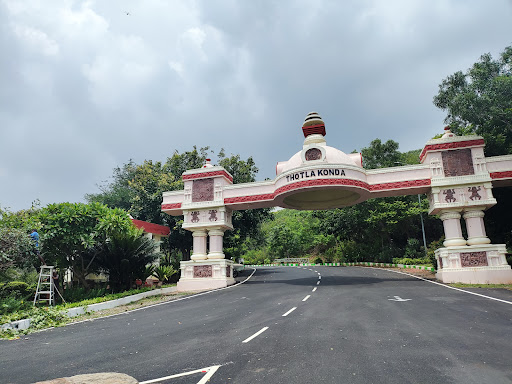
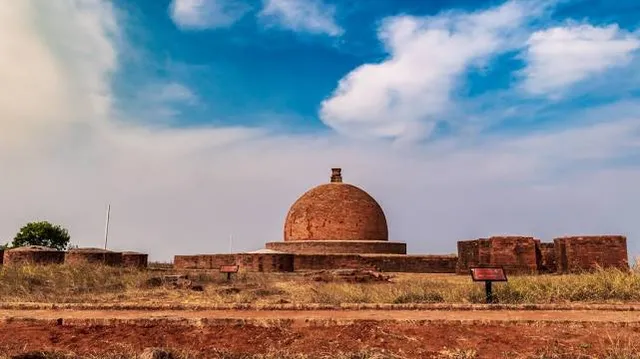
Thotlakonda Buddhist Complex is situated on a hill near Bheemunipatnam about 15 kilometres (9.3 mi) from Visakhapatnam in Andhra Pradesh, India. The hill is about 128 metres (420 ft) above sea level and overlooks the sea. The Telugu name Toṭlakoṇḍa derived from the presence of a number of rock-cut cisterns hewn into the bedrock of the hillock. In 2019, the stupa was partially damaged due to monsoons, but it was restored by 2021 at the cost of Rs 42 lakh.
Thotlakonda was well within the influence of ancient Kalinga, which was an important source of dissemination of Buddhism to Sri Lanka and various parts of Southeast Asia.[2] Also, it is one of the Ports of entry for all the Visitors coming from high Seas to visit all Buddhist prominent places located closely around 83.3 degrees Meridian East. It provides an insight into the process of transoceanic diffusion of Indic culture, especially Buddhism.
A hill on the sea coast with salubrious climate was an ideal attraction for the Buddhist monks to build a monastery complex here.[3] The placid sea sheltered by the deeply in curved coastline here, provided a safe haven for anchoring ships. People coming from far away places to India are well guided by the longitude 83.3 degrees Meridian East. Thotlakonda, Sarnath, Kushinagar and Lumbini happens to lie almost on the same Longitude. People coming to India by sea looked for the shortest route to travel. Many stopped at Thotlakonda, a transit point where they anchored their ships, rested on the hill for a while, and then continued along the 83.3° East meridian to visit important Buddhist sites.
Thotlakonda came to light during an aerial survey by the Indian Navy for setting up a naval base. After its discovery, major excavations have been conducted by the Andhra Pradesh State Archaeology Department from 1988 to 1993.[4] The excavations established the existence of a Hinayana Buddhist complex which flourished 2000 years ago. To the south of the complex there is a tank which served as a water source to the inhabitants of the monastery.
The excavations reveal Satavahana dynasty lead and Roman silver coins indicating foreign trade; terracotta tiles, stucco decorative pieces, sculptured panels, miniature stupa models in stone, and Buddha footprints were also found. The excavations also yielded twelve inscriptions in the Dhamna script. From polygraphic studies, it appears that the hill might have been known as Senagiri; Sena in Pali means "elder, superior".
Thotlakonda's peak activity was between the 2nd century BCE and the 2nd century CE owing to brisk Roman trade and religious missions sent abroad.[5] Thotlakonda came into existence along with nearby sites in Visakhapatnam like Bavikonda and Pavurallakonda. The lofty stupas shining during the day, with their light lime plaster and with rows of wick lamps during nights, might have served as guiding landmarks of nautical commuters. There appears to have been no royal patronage for this monastery. However traders and local believers seem to have supported the complex. In its heyday, Thotlakonda might have accommodated more than 100 bhikkhus.
The complex had arrangements for storing food, clothing, medicines and served as a religious cum academic centre. Nikaya Buddhism appears to have been practiced here, including the worship of Gautama Buddha through symbols such as padukas and other material remains rather than using human representation.
Thotlakonda had declined by the end of the...
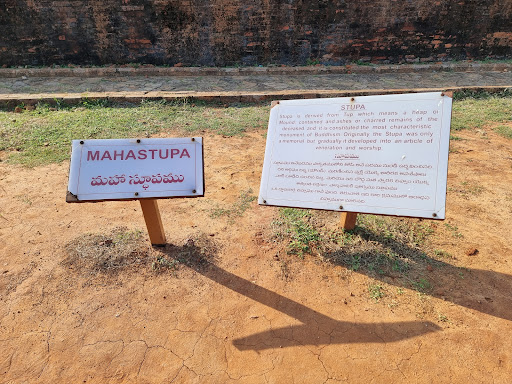
Read moreTHE CITY OF VISAKHAPATNAM IN Andhra Pradesh is mostly known for its many beaches and maritime history, but it is also home to several Buddhist archaeological sites, including the ancient hilltop monastic complexes of Bavikonda and Thotlakonda. Discovered by the Indian Navy during its aerial survey of the area, the ruins of Thotlakonda were excavated by the state department of archaeology from 1988 to 1993. Among the artifacts found during the excavations were a hoard of ancient coins, mainly consisting of Satavahana lead and Roman silver, indicating that the site flourished from foreign trade between the 2nd century B.C. and the 3rd century A.D. hotlakonda THE CITY OF VISAKHAPATNAM IN Andhra Pradesh is mostly known for its many beaches and maritime history, but it is also home to several Buddhist archaeological sites, including the ancient hilltop monastic complexes of Bavikonda and Thotlakonda. Discovered by the Indian Navy during its aerial survey of the area, the ruins of Thotlakonda were excavated by the state department of archaeology from 1988 to 1993. Among the artifacts found during the excavations were a hoard of ancient coins, mainly consisting of Satavahana lead and Roman silver, indicating that the site flourished from foreign trade between the 2nd century B.C. and the 3rd century A.D. Archaeological evidence suggests that the monastery was supported by local Buddhists and traders rather than a local ruler, and that it was an important cultural and academic center, with many monks coming over from China and other regions to learn and meditate. The archaeological complex is composed of stupas, chaitya grihas, and viharas, as well as remnants of a kitchen, a dining hall, and rock-hewn cisterns which gave the site its name (Thotlakonda roughly means “hill of troughs” in Telugu.) The stupa, also known here as the Mahastupa or “great stupa,” is especially notable and often representative of the complex itself. It was partially destroyed during the monsoon season in 2019, but it was restored to its former glory at the cost of Rs 42 lakhs (approx. $31,000 USD) in 2021. Currently, the Indian government is planning to submit the Buddhist complexes of Visakhapatnam to UNESCO for consideration for World Heritage status. If approved, the archaeological sites should receive the preservation and recognition that...
Read moreThotlakonda Buddhist Monastery is a serene and historically significant site located near Visakhapatnam. Visiting this place is a journey back in time, offering a glimpse into the rich Buddhist heritage that flourished here centuries ago.
The site is perched on a hilltop. The peaceful ambiance, combined with the gentle sea breeze, makes it an ideal spot for meditation and introspection. The surroundings are well-maintained, clean, and inviting, adding to the overall experience.
The archaeological remains at Thotlakonda, including the stupas, chaityas, viharas, and cisterns, provide a fascinating insight into the lives of Buddhist monks who once inhabited the site. Informative plaques and signboards are placed around the area, explaining the historical and cultural significance of the structures. While the ruins may not be grand in scale, their simplicity and spiritual essence are captivating.
The site is also an excellent destination for history enthusiasts and photography lovers. The blend of ancient ruins with breathtaking natural beauty offers a unique perspective that is both educational and visually appealing.
Getting to Thotlakonda is relatively easy, and there is ample parking available. However, carrying water and snacks is advisable as facilities are limited. The best time to visit is during the early morning or late afternoon to enjoy the views and avoid the midday heat.
Overall, Thotlakonda Buddhist Monastery is a must-visit for anyone exploring Visakhapatnam. It is a place where history, spirituality, and natural beauty come together to create a tranquil and enriching experience. Whether you're a history buff or just someone looking for a peaceful escape, Thotlakonda will...
Read more