HTML SitemapExplore
logo
Find Things to DoFind The Best Restaurants

Barpeta Satra Kirtanghar — Attraction in Assam

Name
Barpeta Satra Kirtanghar
Description
Nearby attractions
Nearby restaurants
Nearby hotels
Related posts
Keywords
Barpeta Satra Kirtanghar tourism.Barpeta Satra Kirtanghar hotels.Barpeta Satra Kirtanghar bed and breakfast. flights to Barpeta Satra Kirtanghar.Barpeta Satra Kirtanghar attractions.Barpeta Satra Kirtanghar restaurants.Barpeta Satra Kirtanghar travel.Barpeta Satra Kirtanghar travel guide.Barpeta Satra Kirtanghar travel blog.Barpeta Satra Kirtanghar pictures.Barpeta Satra Kirtanghar photos.Barpeta Satra Kirtanghar travel tips.Barpeta Satra Kirtanghar maps.Barpeta Satra Kirtanghar things to do.
Barpeta Satra Kirtanghar things to do, attractions, restaurants, events info and trip planning
Barpeta Satra Kirtanghar
IndiaAssamBarpeta Satra Kirtanghar

Basic Info

Barpeta Satra Kirtanghar

Ward no. 3, Thakur Bazar, Assam 781301, India
4.7(854)
Open 24 hours
Save
spot

Ratings & Description

Info

Cultural
Family friendly
Accessibility
attractions: , restaurants:
logoLearn more insights from Wanderboat AI.
Website
barpetasatra.org

Plan your stay

hotel
Pet-friendly Hotels in Assam
Find a cozy hotel nearby and make it a full experience.
hotel
Affordable Hotels in Assam
Find a cozy hotel nearby and make it a full experience.
hotel
The Coolest Hotels You Haven't Heard Of (Yet)
Find a cozy hotel nearby and make it a full experience.
hotel
Trending Stays Worth the Hype in Assam
Find a cozy hotel nearby and make it a full experience.

Reviews

Get the Appoverlay
Get the AppOne tap to find yournext favorite spots!
Wanderboat LogoWanderboat

Your everyday Al companion for getaway ideas

CompanyAbout Us
InformationAI Trip PlannerSitemap
SocialXInstagramTiktokLinkedin
LegalTerms of ServicePrivacy Policy

Get the app

© 2025 Wanderboat. All rights reserved.
logo

Reviews of Barpeta Satra Kirtanghar

4.7
(854)
avatar
4.0
3y

Satra Premises: Satra premises start with three Batchara (Entry Gate of Areas), whereas Main complex is surrounded by Wall, they are (i) Nahati Batchara (westside entry) (ii) Uttar Hati Batchara (North Entry) and (iii) Dakshinhati Batchara (Entry from South), there is no entry from East side because a canal (Hari Jaan) flows along the east side.

Entry Gate: As like Batchara, there are three entry gate to enter main complex, i.e. Uttar Dwaar (north gate), Dakshin Dwaar (south gate) and Dalan (on west side). Dalan is considered the main entry.

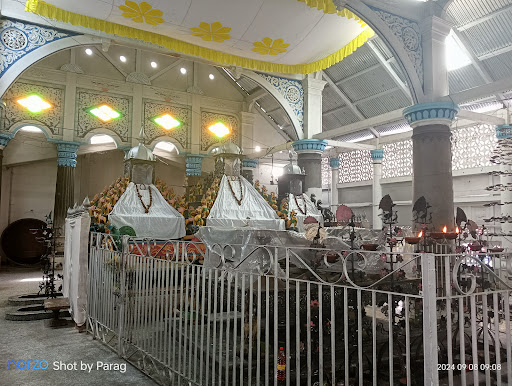
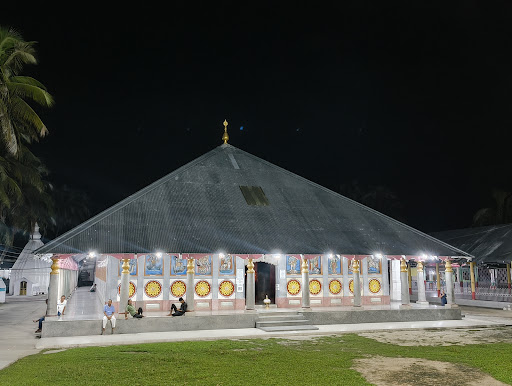
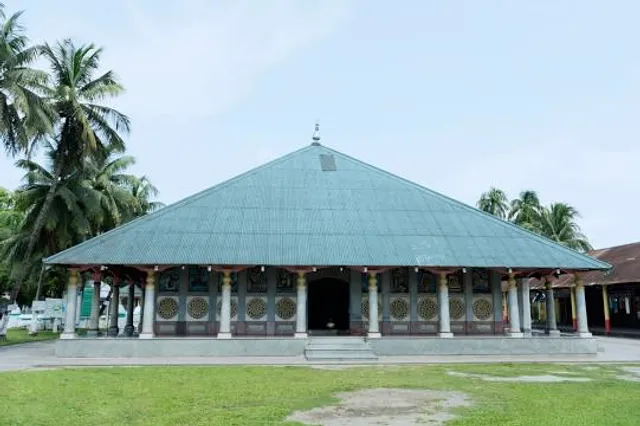
Kirtan Ghar (main prayer hall): Kirtan ghar is situated in the almost center of the Sarta complex. Main entrance in the west, Bhaj ghar is in east. Near to main west gate, there are two wooden pillar (traditionally known as Tulashi Kuta) making the support to main building. There are Guru Ashans, which are followed by two big Ghacha (stand) are kept Akhay Banti (lamp). There are two Chairs behind the Guru Ashana (east corner) namely for Burha Satriya and Deka Satria, where they do their day-to-day activities. There are three Guru Ashans in the Kirtan Ghar, it is believed that these Guru Ashan are associated with the name of Sri Sankar Dev, Madhab Dev and Padma Ata. According to the general faith these three Guru Ashan are dedicated towards lord Krishna in a composite form. There are seven Bar Sarais (great sarais) are kept in a line before the Guru Ashan. One Chaki/Pradip are lightening in front of each Bar Sarai. There is no statue of any God or Goddess inside the Kirtan ghar.

Bhaj Ghar: This is known as Monikut, valuable ornaments of gold and silver are kept in this area. Some representative statues are also kept here. The Bhaj Ghar is established in the east side of Kirtan Gharn in the north-south position. The architectural style of the Bhaj Ghar is unique.

Pat Chang: The pat chang also carries a special architectural style. The pat chang is a made of wood and tin. It is constructed parallel to the Bhaj Ghar. The floor of the pat chang is 5 feet (1.5 m) above from the ground. Some special meetings are held here. Basically religious and administrative issues of satra are discussed here. It is honoured as pure as the pat chang of king Kongsha.

Khatkhati Ghat: There is a canal running to the east side of Satra complex. The bank of the canal which touches the Satra complex in the east is known as Khatkhati (the canal later on block two sides and converted to pool and named as Madhab Sarover, but it now again run as a canal). Shree Madhab Deva, the great disciple of Srimanta Sankar Deva used to bath along with other bhakats in this canal. All the steps (khatkhati) were constructed with stone. There are statues of child Krishna was constructed in between the water of the jaan (canal).

Math: The math available in the Barpeta Satra is similar with the architectural style of Ahom king. Some precious Sankar–Madhab memorabilia are kept in the math i.e. a piece of stone (used by Sankar and Madhab to wash their feet ), the script of Sankar Dev's Dasham and Madhab Dev's Namghosha, Bhakti Ratnavali and two "Negeri" currency, which was given to Madhura Das by Madhab Dev as remuneration.

Sri Ram Ata’s Bhiti: The house (Bhiti) of Sri Ram Ata was established opposite to the house of Madhab Dev’s house. Now a day one well is constructed here, the water of this well is assumed as pure and water from this well is used in all the works of the Satra.

Burha Ata’s Bhiti: In the north-east position of the Satra there is a small but beautiful house constructed on the place where the 1st Satria of Barpeta Satra Mathura das Burha Ata lived.

Bhagawat Graiha: It is an open (without wall) L-shaped house, it is used as a prayer house, every day at the morning and evening time people come to listen the Bhagawat. In the time of Doul or holi the...

   Read more

avatar
4.0
2y

Barpeta Satra Barpeta Dating back to 500 years old, Barpeta Satra is an important place of worship in Assam. It was established by a saint named Madhabdev in the year 1583 AD and was earlier known as Barpetathan. Saint Madhabdev stayed there for 8 long years but left this place in order to learn from Sri Srimanta Sankaradeva, and gave the responsibility of the satra to one of his disciples named Sri Mathura Das Burha Ata.

Satra premises begin with 3 Batchara (entry gates), the main complex is protected by walls namely, Nahati Batchara (westside entry), Uttar Hati Batchara (North Entry) and Dakshinhati Batchara (Entry from South). On the eastern side of the satra, a canal (Hari Jaan) is flowing. People are not allowed to travel on any vehicle beyond these Batchara. The rules are mentioned on signboards in Assamese and Hindi. It was originally built as a kutcha house but later concreted in the year 1870 and is spread over a huge area with decorative wall paintings.

POPULAR THINGS TO DO & SEE AROUND Exploring the entire premise is an interest thing to do and this can take 2-3 hours of your time. The kirtan ghar here is a great example of excellent craftsmanship.

Baghbar Hill is another place that you can visit. It is located 20 kms from Barpeta. The most important place that you can visit from Barpeta is the Manas National Park which is a reserve forest offering scenic landscape. It is home to many animals including tiger, elephant, leopard, and golden langur.

GETTING THERE You can reach the Barpeta satra by auto rickshaws or taxis, however you can only reach till the gate and from there no...

   Read more
avatar
5.0
1y

Barpeta Satra Naamghar, often simply referred to as Barpeta Satra, is one of Assam's most significant cultural and spiritual centers, located in Barpeta district. Founded by the prominent Vaishnavite saint and reformer Madhavdeva in the late 16th century, it plays a crucial role in preserving and promoting the teachings of the neo-Vaishnavism movement initiated by Srimanta Sankardeva, Madhavdeva's mentor.

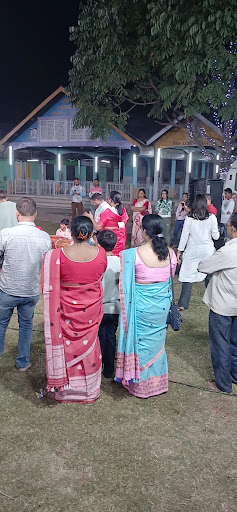
The Naamghar, or prayer hall, is the heart of the Satra, where daily prayers (naam) and cultural events take place. Barpeta Satra has a unique architectural style, with a blend of traditional Assamese elements and simple yet serene interiors, which reflect the spiritual purity emphasized by Sankardeva’s teachings. One of its key features is the large courtyard where community gatherings and performances of Bhaona (a form of religious theater) are held, representing tales from the epics and Puranas.

Historically, Barpeta Satra has been more than just a place of worship; it has also served as a cultural school, teaching ancient Assamese arts like Sattriya dance, classical music, and traditional crafts. The Satra is led by a Sattradhikar, or head priest, who oversees spiritual, social, and educational activities. The legacy of the Satra and its importance in Assamese society remain strong today, drawing visitors who come for its cultural and spiritual richness, as well as its role as a symbol of Assamese identity...

   Read more
Page 1 of 7
Previous
Next

Posts

Paragjyoti DasParagjyoti Das
Barpeta Satra Naamghar, often simply referred to as Barpeta Satra, is one of Assam's most significant cultural and spiritual centers, located in Barpeta district. Founded by the prominent Vaishnavite saint and reformer Madhavdeva in the late 16th century, it plays a crucial role in preserving and promoting the teachings of the neo-Vaishnavism movement initiated by Srimanta Sankardeva, Madhavdeva's mentor. The Naamghar, or prayer hall, is the heart of the Satra, where daily prayers (naam) and cultural events take place. Barpeta Satra has a unique architectural style, with a blend of traditional Assamese elements and simple yet serene interiors, which reflect the spiritual purity emphasized by Sankardeva’s teachings. One of its key features is the large courtyard where community gatherings and performances of Bhaona (a form of religious theater) are held, representing tales from the epics and Puranas. Historically, Barpeta Satra has been more than just a place of worship; it has also served as a cultural school, teaching ancient Assamese arts like Sattriya dance, classical music, and traditional crafts. The Satra is led by a Sattradhikar, or head priest, who oversees spiritual, social, and educational activities. The legacy of the Satra and its importance in Assamese society remain strong today, drawing visitors who come for its cultural and spiritual richness, as well as its role as a symbol of Assamese identity and heritage.
AloeAloe
Barpeta Satra is one of the most renowned places of the Ekasarana dharma. Established in the 16th century by Mahapurush Madhavdev (Important disciple of Mahapurush Srimanta Sankardev). Originally called Barpeta Than, the Satra became an important spiritual and cultural center under Madhavdev’s leadership. After Madhabdev, it was further developed and institutionalized by his disciple Bhattadeva, who is also credited with introducing prose writing in Assamese literature. An important source of Assamese culture, art, literature, music and Songs, the local democratic administration system (Satra Xangraha) and traditional Namghar architecture are notable features. Today, the Barpeta Satra remains a vibrant center for religious worship, cultural preservation, and spiritual education. Doul festival during Holi is one of the largest festivities held. It is preferable to wear traditional dress, only then men are allowed inside the main temple house, women are not allowed inside the main temple building.
SAMIRAN DUTTA 【 s music axom 】SAMIRAN DUTTA 【 s music axom 】
Historically, Barpeta Satra has been more than just a place of worship; it has also served as a cultural school, teaching ancient Assamese arts like Sattriya dance, classical music, and traditional crafts. The Satra is led by a Sattradhikar, or head priest, who oversees spiritual, social, and educational activities. The legacy of the Satra and its importance in Assamese society remain strong today, drawing visitors who come for its cultural and spiritual richness, as well as its role as a symbol of Assamese identity and heritage. Great Place to Visit. Wear their Traditional Dress to get entry Permission to their main Temple. Barpeta Satra Naamghar, often simply referred to as Barpeta Satra, is one of Assam's most significant cultural and spiritual centers, located in Barpeta district
See more posts
See more posts
hotel
Find your stay

Pet-friendly Hotels in Assam

Find a cozy hotel nearby and make it a full experience.

Barpeta Satra Naamghar, often simply referred to as Barpeta Satra, is one of Assam's most significant cultural and spiritual centers, located in Barpeta district. Founded by the prominent Vaishnavite saint and reformer Madhavdeva in the late 16th century, it plays a crucial role in preserving and promoting the teachings of the neo-Vaishnavism movement initiated by Srimanta Sankardeva, Madhavdeva's mentor. The Naamghar, or prayer hall, is the heart of the Satra, where daily prayers (naam) and cultural events take place. Barpeta Satra has a unique architectural style, with a blend of traditional Assamese elements and simple yet serene interiors, which reflect the spiritual purity emphasized by Sankardeva’s teachings. One of its key features is the large courtyard where community gatherings and performances of Bhaona (a form of religious theater) are held, representing tales from the epics and Puranas. Historically, Barpeta Satra has been more than just a place of worship; it has also served as a cultural school, teaching ancient Assamese arts like Sattriya dance, classical music, and traditional crafts. The Satra is led by a Sattradhikar, or head priest, who oversees spiritual, social, and educational activities. The legacy of the Satra and its importance in Assamese society remain strong today, drawing visitors who come for its cultural and spiritual richness, as well as its role as a symbol of Assamese identity and heritage.
Paragjyoti Das

Paragjyoti Das

hotel
Find your stay

Affordable Hotels in Assam

Find a cozy hotel nearby and make it a full experience.

Get the Appoverlay
Get the AppOne tap to find yournext favorite spots!
Barpeta Satra is one of the most renowned places of the Ekasarana dharma. Established in the 16th century by Mahapurush Madhavdev (Important disciple of Mahapurush Srimanta Sankardev). Originally called Barpeta Than, the Satra became an important spiritual and cultural center under Madhavdev’s leadership. After Madhabdev, it was further developed and institutionalized by his disciple Bhattadeva, who is also credited with introducing prose writing in Assamese literature. An important source of Assamese culture, art, literature, music and Songs, the local democratic administration system (Satra Xangraha) and traditional Namghar architecture are notable features. Today, the Barpeta Satra remains a vibrant center for religious worship, cultural preservation, and spiritual education. Doul festival during Holi is one of the largest festivities held. It is preferable to wear traditional dress, only then men are allowed inside the main temple house, women are not allowed inside the main temple building.
Aloe

Aloe

hotel
Find your stay

The Coolest Hotels You Haven't Heard Of (Yet)

Find a cozy hotel nearby and make it a full experience.

hotel
Find your stay

Trending Stays Worth the Hype in Assam

Find a cozy hotel nearby and make it a full experience.

Historically, Barpeta Satra has been more than just a place of worship; it has also served as a cultural school, teaching ancient Assamese arts like Sattriya dance, classical music, and traditional crafts. The Satra is led by a Sattradhikar, or head priest, who oversees spiritual, social, and educational activities. The legacy of the Satra and its importance in Assamese society remain strong today, drawing visitors who come for its cultural and spiritual richness, as well as its role as a symbol of Assamese identity and heritage. Great Place to Visit. Wear their Traditional Dress to get entry Permission to their main Temple. Barpeta Satra Naamghar, often simply referred to as Barpeta Satra, is one of Assam's most significant cultural and spiritual centers, located in Barpeta district
SAMIRAN DUTTA 【 s music axom 】

SAMIRAN DUTTA 【 s music axom 】

See more posts
See more posts