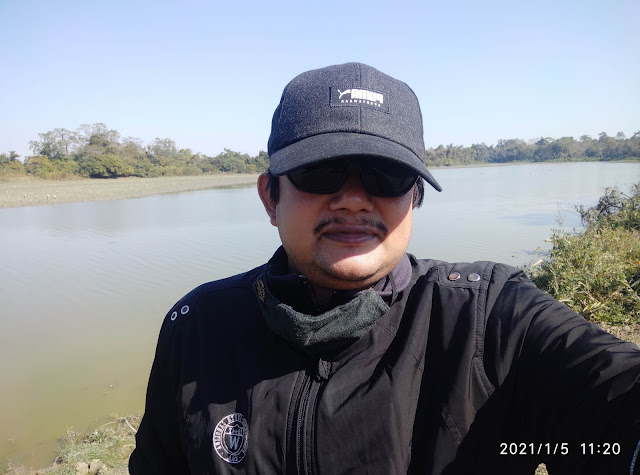
Nice place need more cleanness and gardening near the road sides , should add some parking area for vehicles , traffic should maintain properly , tourists attraction should be added all around , local people should be polite and helpful to tourists, all around restaurants food quality should make good enough as per the rate,, Kaziranga National Park, a world heritage site was declared by UNESCO in the year 1985 for its unique natural environment, is one of the oldest National parks in India, is located within Bokakhat subdivision of Golaghat district and Kaliabor subdivision of Nagaon district of Assam. Kaziranga National Park is famous for the largest habitat of Great One-horned rhinoceros (rhinoceros unicornis) in the world. It is also declared as Tiger Reserve on 2006. Kaziranga also having a large no of other mammals like - elephants, bears, panther, deer, etc and birds and reptiles.
Kaziranga National Park is surrounded over an area of approximately 378 sq km with an elevation ranges from 40m to 80m, boundaries by two rivers - the north and east boundaries formed by the River Brahmaputra, and the Mora Diphlu River to the South. Some other water bodies also available within the Kaziranga National Park including Diphlu and Mora Dhansiri rivers.
Flora
Four major forests are available in the Kaziranga National Park - muddy flooded grasslands, savanna woodlands, tropical wet evergreen forests, and tropical semi-evergreen forests. But the major part of this vegetation is tall grasses on the swamps. Sugarcanes, rattan canes, reed, spear grass and elephant grass are common vegetation on the grasslands. Some kumbhi, Indian gooseberry, the cotton tree, and elephant apple are also available along with grasses on the grasslands. Pithraj tree (Aphanamixis polystachya),Talauma hodgsonii, elephant apple or chulta/chalta (Dillenia indica), Garcinia tinctoria, figs tree( Ficus rumphii), Cinnamomum bejolghota, and species of Syzygium are common trees on the evergreen forests, mainly shown in the Kanchanjhuri, Panbari, and Tamulipathar blocks of the Kaziranga National Parks. Other hand, silk plants/silk trees or sirises(Albizia procera), Jayanti(Duabanga grandiflora), Lagerstroemia speciosa, Crateva unilocularis, gum karaya (Sterculia urens), Grewia serrulata, Red Kamala or Kumkum tree(Mallotus philippensis), Spinous Kino Tree (Bridelia retusa), Aphania rubra, bandicoot berry (Leea indica), and Leea umbraculifera are common trees on the Tropical semi-evergreen forests area of this park, mostly cover the region of Baguri, Bimali, and Haldibari.
Fauna
Kaziranga National Park is famous for the unique Indian One-horned rhinoceros. Almost two-third One-horned rhinoceros of the world are habitat in the park, as on March, 2015 Kaziranga National Parks having 2401 population of single-horned rhinoceros where 1651 adults, 294 sub-adults, 251 juveniles and 205 infants. Kaziranga is also the most dense tiger habitat (118 as per last census, one tiger per 3.2 sq km) among all tigers reserved areas in the world. Kaziranga is also the largest habitat of wild Asiatic water buffalo (1,666, about 57% of the world population) and eastern swamp deer (468) in the world. Another 31 species of mammals are also habitat in this park - jungle cat, fishing cat, leopard cat, hog deer(9,000) rare hispid hare, Indian gray mongoose, small Indian mongooses, large Indian civet, small Indian civets, Bengal fox, golden jackal, sloth bear,Chinese pangolin, Indian pangolins, hog badger, Chinese ferret badgers, and particoloured flying squirrel including nine types of primate - Assamese macaque, capped, golden langur, ape and hoolock gibbon and Ganges dolphin as aquatic mammal.
To protect avifaunal species, Kaziranga National Park is declared as an Important Bird Area by Birdlife International. It is the home of deferent verities of Indian and migrant birds, water birds, predators, scavengers, and game birds, among them the lesser white-fronted goose, fudge duck, Baer's pochard and lesser adjutant stork, greater adjutant stork,...
Read moreThis is where elephant safari is organised in Kaziranga. We reached there at 630 in the morning, there were about 70/80 people. One guy was calling out names of people for checking the official receipt of the Forest Office with his handmade list. Our names would not come and it was already very cloudy and about to rain. We got anxious, but finally he (affectionately called 'Bablu-da' by everybody present there including our driver) called our names and handed us yet another small piece of paper and kind os pushed us towards one side. Eventually we were let into the jungle area after being frisked by Forest Guards who took out all the plastic water bottles, food items etc (sadly, tourists are known to disregard basic rules of the area, so the strict checking). We went up the stairs of a square shaped elevated platform where one side is the approach to the platform while rest 3 are open to allow tourists to sit on the back of the elephant. Our journey began. The mahout (Akram Ali) was 53 year old while the elephant (a female, mother of 2) was 43 year old. They have been together for last 40 years. We saw the amazing power and extent of partnership between the two, though all instructions were silent. The mahout sits on elephant's shoulder and uses both his naked feet to press below the huge flapping ears of the giant elephant. While taking us thru a narrow passage full of trees the elephant plucked flowers and presented us. It was such a pleasant surprise. We saw few rhinos, wild boars and many deer. Next morning when we were going to Bomdila from Kaziranga, we spotted a wild elephant and a Bison. Kaziranga encompasses hundreds of acres but one can see only a small part as allowed by forest department. Its full of marshy lands, thick vegetation or elephant grass or even flat meadows at some patches. We were also told that during rainy season (May, June onward), the jungle gets flooded by the mighty Brahmaputra flowing adjacent to the reserve forest and that all the wild animals come near the main highway sharing space with human beings. There are fixed charges for elephant safari and jeep safari. All hotels and tour operators can get it for you if you dont want to wake up early and buy the tickets standing in a queue. We went there in Nov which is not the best time. The guide told us that in Feb-March all the elephant grasses (easily 12 feet tall and very thick) are burnt down manually in a controlled manner to avoid wild fire and thats when the wild animals do not get any forest cover to hide. This ensures...
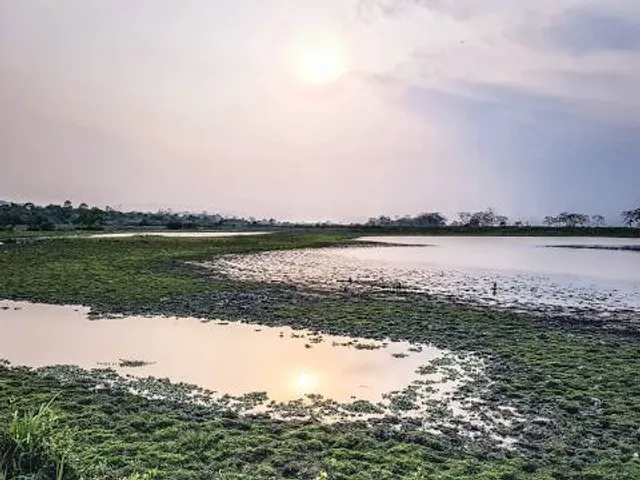
Read moreA decent place for wildlife lovers however it is overhyped.
First of all the entry ticket at the forest office is a chaos... with so many tourist visiting every year not sure why the system is still not in place.. we reached at 7:45 in the morning for the entry ticket at the forest office with the jeep safari driver and it took 50 minutes to get the ticket. There was no line people from everywhere were on the counter for it.
After that we went inside the central range ( earlier I have visited the western range and was told that central is better) .. the ride was for about 30 km which took approximately 2 hrs. We saw rhino, elephant, buffaloes, deers at a distance. But not as per my expectations.
The jeep driver was friendly and the security personnel were also nice.
But as such the safari is not that exciting... Some may have different view however many visitors had the same to say.
Plastics, packaged foods etc are not permitted inside the range so better don't take. There is a table where the security will keep if they find plastics things and you can take back after the ride.
Note: carry sunglasses, masks as it is super dusty.. except if it rains. Also carry water bottles.
My say: one time visit.. the other issue related to it is the hotels nearby who would cheat with your money. You may book hotels online but when you reach they will demand more and no receipt. They simply don't care.. either pay more that the online booking price or leave.. this is a sad attitude some hotels have
I also came across a group who told that they booked a trip through a tour&travel agent which included a 4star hotel ( they paid ₹4580) but when they reached Kaziranga they were made to stay in a lodge and not as per the tour package.
Please be careful in this regard... All may not be the same but please be very cautious while booking online ... Go for reputed hotels and agents not to...
Read more