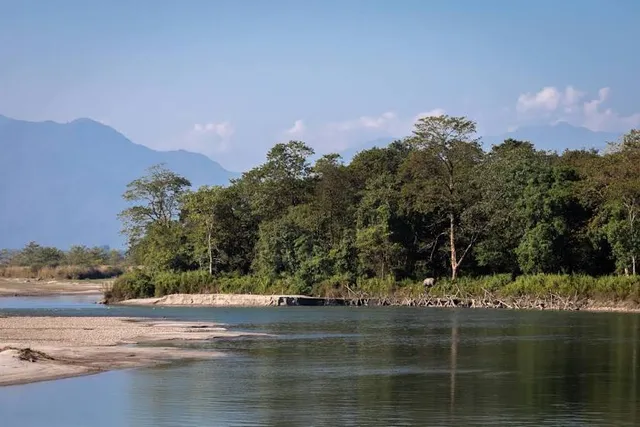
Manas National Park is a UNESCO World Heritage Site and a wildlife sanctuary located in the northeastern state of Assam, India. Here are key points about Manas National Park:
Location: Manas National Park is situated in the Himalayan foothills in the western part of Assam, bordering Bhutan. It spans across the districts of Baksa, Chirang, and Udalguri.
UNESCO World Heritage Site: Manas National Park was designated as a UNESCO World Heritage Site in 1985 in recognition of its outstanding biodiversity and unique natural features.
Biodiversity: The park is known for its rich biodiversity, encompassing diverse flora and fauna. It serves as a critical conservation area for several endangered species.
River Manas: The park is named after the Manas River, which flows through its core area. The river is a tributary of the Brahmaputra.
Wildlife: Manas is home to a variety of wildlife, including the Bengal tiger, Indian elephant, Indian rhinoceros, wild buffalo, clouded leopard, and a wide range of deer and primate species.
Birdlife: The park is a birdwatcher's paradise, with over 450 species of birds recorded. It is recognized as an Important Bird Area (IBA).
Landscape: The landscape of Manas National Park includes grasslands, forests, and wetlands. The park is part of the Eastern Himalayas biodiversity hotspot.
Conservation Status: While the park has faced conservation challenges, including poaching and habitat loss, ongoing efforts are being made to protect and preserve its unique ecosystem.
Manas Wildlife Sanctuary: Manas was declared a wildlife sanctuary in 1928 and later elevated to the status of a national park. It was also listed as a Biosphere Reserve in 1973.
Manas Tiger Reserve: Manas is a designated tiger reserve, contributing to the conservation of Bengal tigers and their habitats.
Best Time to Visit: The best time to visit Manas National Park is during the dry season, from November to April. The park remains closed during the monsoon season.
Eco-tourism: The park offers eco-tourism activities, including Jeep safaris, elephant safaris, and river cruises, providing visitors with opportunities to experience its natural beauty and wildlife.
Conservation Initiatives: Conservation initiatives in Manas focus on habitat restoration, anti-poaching measures, and community engagement to ensure the long-term sustainability of the park.
Visiting Manas National Park offers a unique opportunity to explore the wilderness of the Eastern Himalayas, witness diverse wildlife, and contribute to...
Read moreManas National Park, nestled in the foothills of the Himalayas in Assam, India, is a treasure trove of biodiversity and a UNESCO World Heritage Site. It's not just a park; it's a vital ecosystem, a Project Tiger reserve, an elephant reserve, and a biosphere reserve, all rolled into one. Manas offers a rich and immersive wildlife experience, showcasing the incredible diversity of flora and fauna found in this region. The park's landscape is a mosaic of [describe the landscape - e.g., grasslands, swamps, and riverine forests]. This diverse habitat supports a remarkable array of wildlife, including [mention some of the key species - e.g., Indian rhinoceros, tiger, elephant, golden langur, hispid hare, pygmy hog, Assam roofed turtle, and numerous bird species]. Manas is particularly significant for its population of endangered species, some of which are found nowhere else in the world. Exploring Manas typically involves jeep safaris, which provide the primary means of wildlife viewing. [Describe the safari experience - e.g., How long are the safaris? How close do you get to the animals? Are the guides knowledgeable and informative?]. The thrill of encountering a tiger, a rhino, or a herd of elephants in their natural habitat is an unforgettable experience. Beyond the safaris, Manas offers other ways to connect with nature. [Mention any specific features or activities - e.g., watchtowers for panoramic views, river cruises on the Manas River, nature trails for walking, visits to nearby villages to experience local culture]. [Mention any research or conservation efforts being conducted in the park]. [Mention some practical considerations for visitors - e.g., best time to visit (typically during the dry season from November to April), what to bring (comfortable clothing, binoculars, camera), accommodation options near the park, permit requirements and booking procedures for safaris]. [Mention any ethical guidelines for wildlife viewing - e.g., maintaining a safe distance, minimizing noise, respecting the animals' natural behavior]. Manas National Park is more than just a place to see wildlife; it's a place to connect with nature on a deeper level. It's a place to appreciate the incredible biodiversity of the region and to understand the importance of conservation efforts. It's a must-visit for wildlife enthusiasts, nature lovers, and anyone who wants to experience the magic of the...
Read moreManas National Park is one of India’s most stunning and biodiverse wildlife reserves — a UNESCO World Heritage Site located in Assam, near the foothills of the Himalayas along the Bhutan border.
Here’s a complete overview 👇
🐅 Manas National Park — Overview
Location: Baksa, Chirang, and Udalguri districts, Assam, India
Area: ~950 sq. km
Established: 1990 (as a National Park; it was a wildlife sanctuary since 1928)
UNESCO World Heritage Site: Designated in 1985
Part of: Project Tiger Reserve, Elephant Reserve, and Biosphere Reserve
🌿 Major Attractions
Wildlife:
Tigers (it’s a Project Tiger Reserve)
Asian Elephants
Indian Rhinoceros
Wild Buffalo, Gaur, Leopards, Deer, Hoolock Gibbon
Over 450 species of birds, including the Great Hornbill and Bengal Florican (an endangered bird found only in Manas and Kaziranga).
Landscape: Lush grasslands, tropical forests, and clear rivers (like the Manas River) flowing from the Himalayas make the park extremely scenic.
Adventure Activities:
Jeep safaris and elephant safaris
River rafting on the Manas River
Nature walks and bird watching
📍 How to Reach
Nearest Town: Barpeta Road (about 22 km away)
Nearest Airport: Guwahati Airport (~176 km, 4–5 hrs drive)
Nearest Railway Station: Barpeta Road Railway Station (~22 km)
Entry Gates: Main gate at Bansbari Range (most popular entry point)
🏞️ Best Time to Visit
November to April – Ideal for safaris and pleasant weather.
Closed: Park remains closed during monsoon (May to September) due to heavy rain and flooding.
🕰️ Safari Details
Morning Safari: 6:00 AM – 10:00 AM
Afternoon Safari: 2:00 PM – 5:00 PM
Modes: Jeep or Elephant Safari (booked through forest offices or resorts)
🏡 Accommodation
Inside/near park:
Manas Jungle Camp
Florican Cottages
Bansbari Lodge
Smaller eco-camps run by local communities
⚡ Interesting Facts
Manas shares its ecosystem with Royal Manas National Park in Bhutan, forming a large transboundary conservation area.
It’s home to several rare and endangered species, like the Pygmy Hog and Golden Langur, found only in this...
Read more