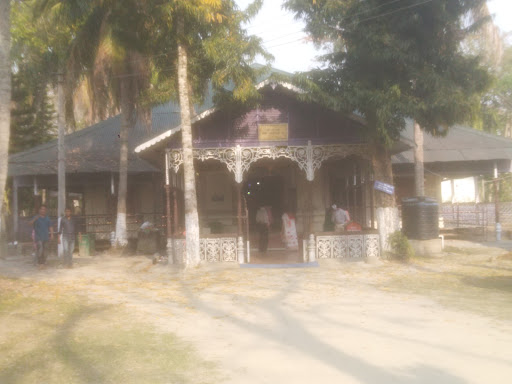
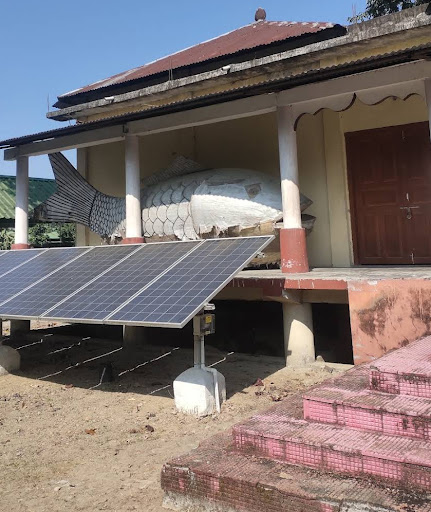
Auniati Satra, located in Majuli, Assam, is a significant cultural and spiritual institution that holds great importance in the region. It is one of the largest and most renowned Satras (monastic institutions) on the island of Majuli, which is considered to be the cultural capital of Assam.
The Auniati Satra is deeply rooted in the Vaishnavite tradition, following the teachings of Srimanta Sankardeva, the 15th-century saint and social reformer from Assam. The Satra is known for preserving and promoting various art forms, literature, music, dance, and religious philosophies associated with the Vaishnavite religion.
As you enter the premises of Auniati Satra, you are greeted with a tranquil atmosphere and a sense of spirituality. The architecture of the Satra reflects its rich heritage, with intricately carved wooden structures and traditional Assamese motifs adorning the buildings.
Inside the Satra, you will find the prayer hall or Namghar, where daily prayers and religious ceremonies take place. The Namghar is a serene space where devotees come together to seek solace and connect with their faith. The Satra also houses ancient manuscripts, religious artifacts, and valuable cultural relics.
The Auniati Satra is renowned for its dance and music traditions. The Satra has its own dance and music troupes that showcase the vibrant and captivating Bhaona performances, which are traditional religious plays that depict episodes from Hindu mythology. These performances are a blend of music, dance, acting, and storytelling, offering a unique and immersive cultural experience.
The Satra also plays a significant role in the preservation of local arts and crafts. Many artisans and craftsmen associated with the Satra create exquisite handcrafted items, including masks, pottery, textiles, and traditional Assamese jewelry. These handicrafts can be purchased as souvenirs, providing visitors with a tangible connection to the cultural heritage of Majuli.
The friendly and welcoming nature of the Satra's residents adds to the overall experience. Visitors can engage in conversations with the monks and learn about the Satra's history, traditions, and the principles of the Vaishnavite philosophy.
Overall, Auniati Satra is a treasure trove of culture, spirituality, and artistic expressions. It offers a unique opportunity to learn about the rich heritage of Assam and provides a peaceful and immersive experience for individuals seeking spiritual solace or cultural exploration. A visit to Auniati Satra is a journey into the heart and soul of Assam's vibrant...
Read moreOne of the best Satra of Majuli 😍!! We visited in March . You have to wear proper traditional wear in order to go inside of the Satra . You can seat and listen to the naam that happens there and also can roam around and feel the spiritual connection. The place is very neat and clean . You can watch my video on YouTube : KP travel tales Will definitely visit again
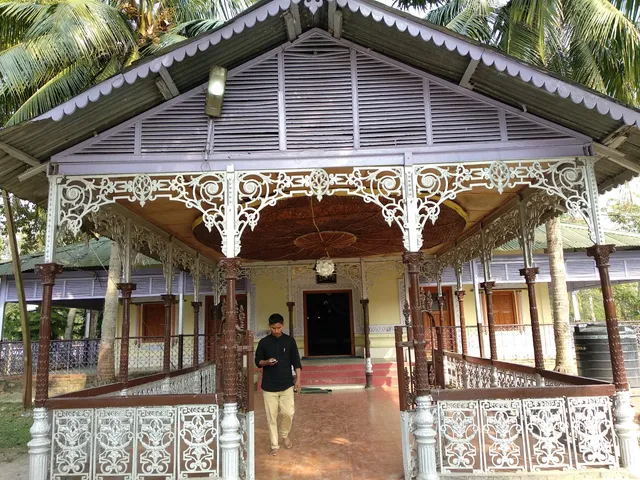
Very beautiful place of worship. A beautiful sattra with many deities in a row. There is a museum which we did not visit. We have to remove our shoes and walk a lot on sharp gravel to reach the temple which is a little difficult but if you have thick socks on its not a problem.
The Auniati Satra is a famous Vaishnavite monastery located on Majuli, the largest river island in the world, situated in the Brahmaputra River, Assam, India. It's known for its cultural significance, with activities like music, dance, and traditional crafts being practiced and taught there.
After the death of Sankardev, Madhavdev incorporated narrations of his life in prayer services, a practice that was followed by his apostles, and in due course of time a large body of biographical literature arose.[10] These are generally classed in two groups: early (those by Daityari Thakur, Bhusan Dwija, Ramananda Dwija and Vaikuntha Dwija) and late (Guruvarnana by Aniruddha Das, the more than one anonymous Katha-guru-carits, Bardowa-carit, Sankardev caritra from Barpeta, the Saru-svarga-khanda and Bar-svarga-khanda by Sarvabhauma).[11] The authorship of the biography credited to Ramcaran Thakur, Daityari Thakur's father, is doubted and it is generally dated to the 17th-century and classed with the late biographies.[12]
In general, all biographies consider Sankardev as an incarnation of Vishnu, including that by Daityari Thakur, the earliest. The late biographies differ from the early group on the count that they ascribe supernatural feats to Sankardev, and describe miraculous events; and there is a tendency to read some events of the Bhagavata into his life.[13] The biographies are full of contradictions; even though the earlier ones are considered more accurate, not all they claim are true—Daityari Thakur's biography, the earliest one, claims Sankardev met with Chaitanya, which is now not accepted...
Read moreThis wooden pillar holds historical significance of Auniati Satra. During the rule of Ahom King Chandrakanta Singha, the tenth Satradhikar, Sri Sri Kusharam Dev of Auniati Satra encountered financial challenges that hindered the construction of the Satra. Subsequently, the Satradhikar and his devotees procured a substantial wooden pillar from the mighty Brahmaputra which was then brought to the Satra and installed as the principal pillar, (Laikhuta) in the Namghar."
#AwesomeAssam #Assam #AuniatiSatra #Majuli #WelcometoAssam #TravelAssam #AssamTourism #ExploreAssam Auniati Satra in North Guwahati is a branch of the main Auniati Satra in Majuli which is one of the most prominent Satras ( Monasteries of the Neo-Vaishnavite tradition established by 15th Century saint and social reformer Srimanta Shankardev). It represents the heritage of the Auniati Satra, Majuli.
For More information about destinations, experiences and bookings etc. log on to...
Read more