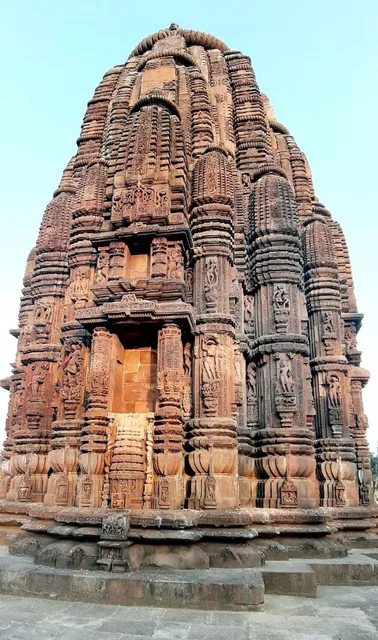
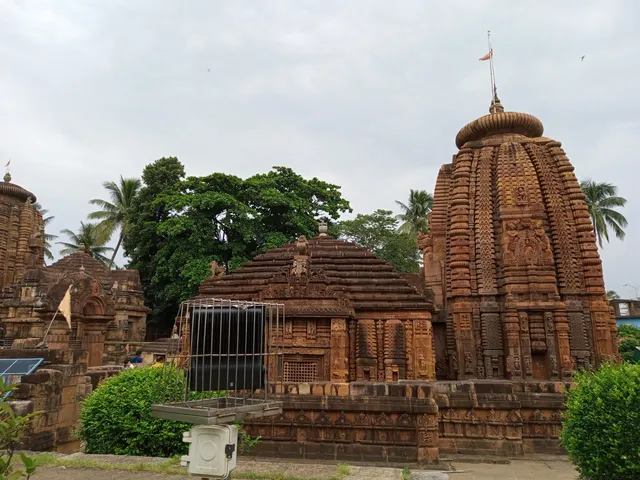
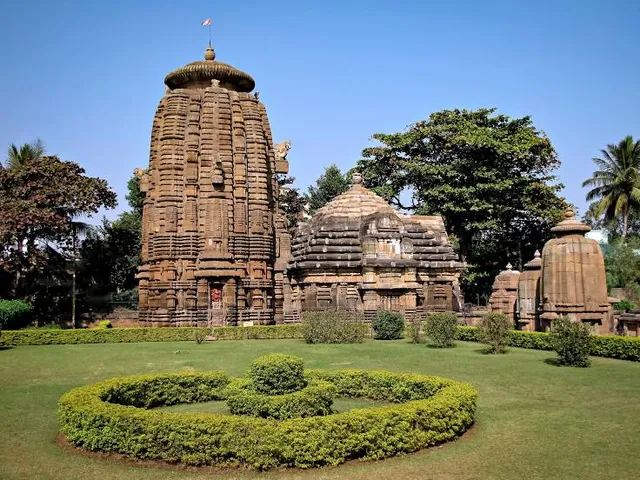
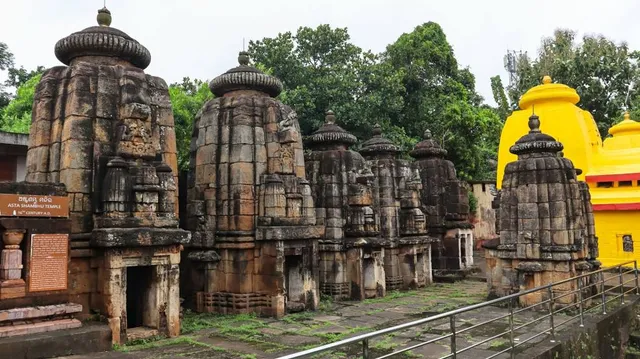
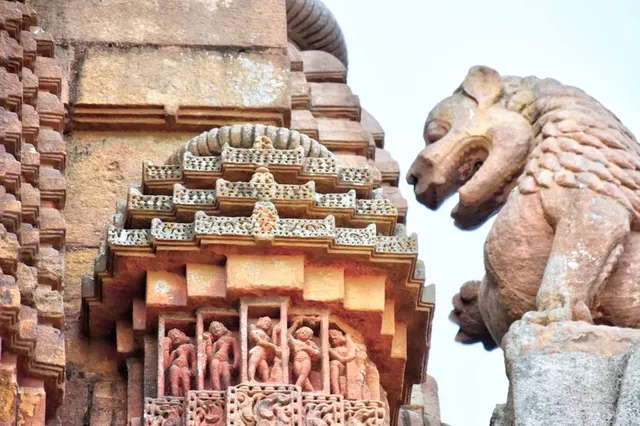
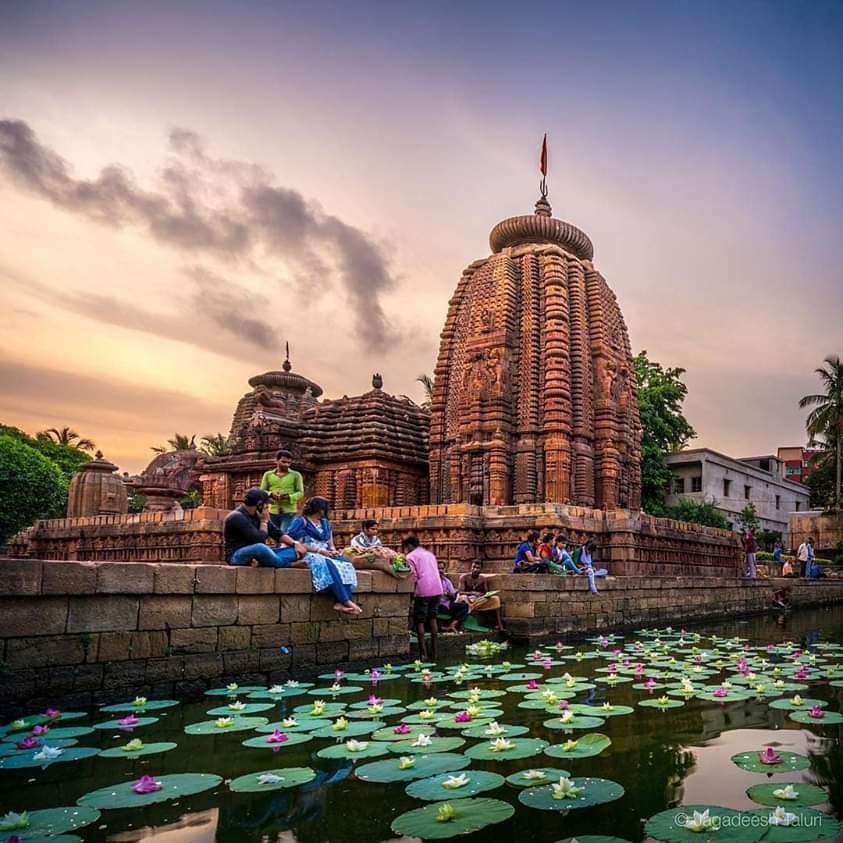
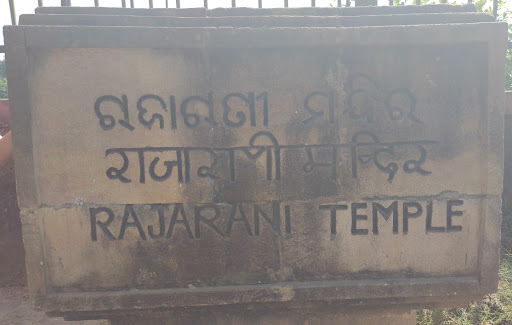
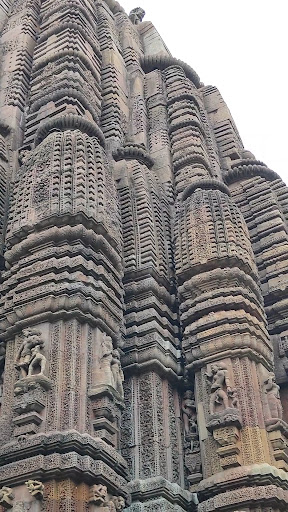
The Rajarani temple, Bhubaneswar (Lat.200 15’ N Long. 850 50’ E) in the district of Khurda is located towards north-east of Lingaraj temple is one of the most beautiful temples representing a unique experiment in the field of architecture in Orissa. The temple, in all probability, referred to in the traditional sanskrit texts as Indresvara Siva temple is remarkable for its sculptural excellence, profusion of ornaments, exuberant architectural features and multiple scroll work. At present, the sanctum is devoid of any deity. The present name Rajarani has been derived from a very fine grained yellowish sand stone called Rajarania in common parlance with which the entire edifice has been built. Mellowed by time, the glaring amber of the stone complements its architectural splendor. The temple has panchanga bada or five divisions’ viz., pabhaga, talajangha, bandhana, uparajangha and baranda. The lowermost division is called pabhaga having five decorative mouldings namely, khura, kumbha, patta, kani and basanta. The superstructure (gandi) of the temple is distinguished by number of miniature turrets (angasikharas). The composite form of the temple with clustering of such miniature turrets, multiple recesses and angles make the edifice circular in appearance. Above the superstructure is crowned with a fluted disc shaped architectural members called amalaka. A vase (kalasa) surmounts the amalaka as the crowning finial. In a pleasing contrast to the ornate decoration of the sanctum, the tiered (pidha) jagamohana is severely plain, though intended to decorate it originally but possibly left incomplete. The plan of jagamohana is square in contradistinction to its rectangular counterparts of earlier temples. Like sanctum, its interior is also devoid of any workmanship. Extensive conservation appears to have been carried out on jagamohana in the later period before taking over by Archaeological Survey of India. The monument is noted for its exuberant sculptural wealth of which the naga-nagi sthambha, saiva dwarapalas on the entrance door jambs, sculpture of Lakulisa on the lintel of entrance above which is the architrave of Navagrahas are worth mentioning. The presence of Lakulisa, saiva dwarapalas tend to prove its saivite affiliation. The best preserved and the most outstanding sculptural wealth of the temple are the standing astadikpalas on the central façade of kanika appearing on the jangha portion of the bada clad in diaphanous drapery, they stand on lotus with their mounts below. Among the dikpalas, the intact Varuna is remarkable for its body ornamentation, coiffure and facial expression. Scenes of marriage of Siva, Nataraja, Parvati are some of the important cult images of the temple. The celebrity of the Rajarani temple is also a large extent due to the tall slender sophisticated nayikas gracing the walls of the sanctum particularly on the anurahapagas of the lower jangha carved in bold relief, depicted in various roles and moods in amorous dalliance with actions such as turning her head from an emaciated ascetic, fondling her child, holding a branch of tree, attending to her toilet, looking into mirror, taking off her anklet, caressing her pet bird and playing instrument, etc. These nayikas are vivacious and lively with their fascinating facial expressions and elastic movements. The erotic (mithuna) figures carved in high relief on the projecting pagas of the uparajangha are quite notable. Besides, the other most popular decorative motifs are carved out in the shape of vyala, jagrata and gajakranta. Further, the most dominant scroll motifs are the foliages, creepers and vines (vanalata) and each contains lush foliage independent of any stalk or vine.On the basis of sculptural art architectural style this temple is assignable to circa mid...
Read moreAbout Rajarani Temple
The Rajarani Temple, Bhubaneswar (Lat.200 15’ N Long. 850 50’ E) in the district of Khurda is located towards north-east of Lingaraj Temple is one of the most beautiful temples representing a unique experiment in the field of architecture in Orissa. The temple, in all probability, referred to in the traditional Sanskrit texts as Indresvara Siva Temple is remarkable for its sculptural excellence, the profusion of ornaments, exuberant architectural features and multiple scroll works. At present, the sanctum is devoid of any deity. At present, the sanctum is devoid of any deity. The present name Rajarani has been derived from a very fine grained yellowish sandstone called Rajarania in common parlance with which the entire edifice has been built. Mellowed by time, the glaring amber of the stone complements its architectural splendor.
Facing east, this temple consists of a sanctum with a height of 17.9m and a porch (jagamohana) raised above a platform of three mouldings. There is a pancharatha in plan with a curvilinear superstructure (Rekha sikhara), reminiscent of the Kandariya Mahadeva Temple of Khajuraho. Temple exhibits yet another phase in the evolution of Orissan temple architecture.
The temple has panchanga bada or five divisions’ viz., pabhaga, talajangha, bandhana, uparajangha and baranda. The lowermost division is called pabhaga having five decorative mouldings namely, khura, kumbha, patta, kani and basanta. The superstructure (gandi) of the temple is distinguished by a number of miniature turrets (angasikharas). The composite form of the temple with clustering of such miniature turrets, multiple recesses and angles make the edifice circular in appearance. Above the superstructure is crowned with a fluted disc-shaped architectural member called amalaka. A vase (kalasa) surmounts the amalaka as the crowning finial.
In a pleasing contrast to the ornate decorations of the sanctum, the tiered (pidha) jagamohana is severely plain, though intended to be decorated, it was possibly left incomplete. The plan of jagamohana is square in contradistinction to its rectangular counterparts of earlier temples. Like sanctum, its interior is also devoid of any workmanship. Extensive conservation appears to have been carried out on jagamohana in the later period before taking over by Archaeological Survey of India.
The monument is noted for its exuberant sculptural wealth of which the naga-nagi sthambha, saiva dwarapalas on the entrance door jambs, the sculpture of Lakulisa on the lintel of entrance above which is the architrave of Navagrahas are worth mentioning. The presence of Lakulisa, saiva dwarapalas tend to prove its Saivite affiliation.
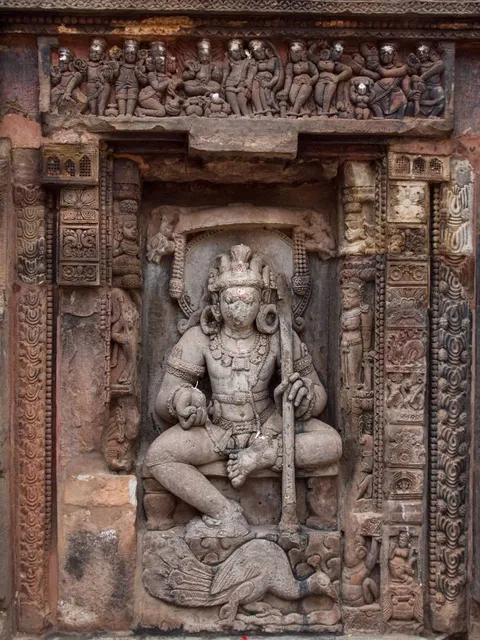
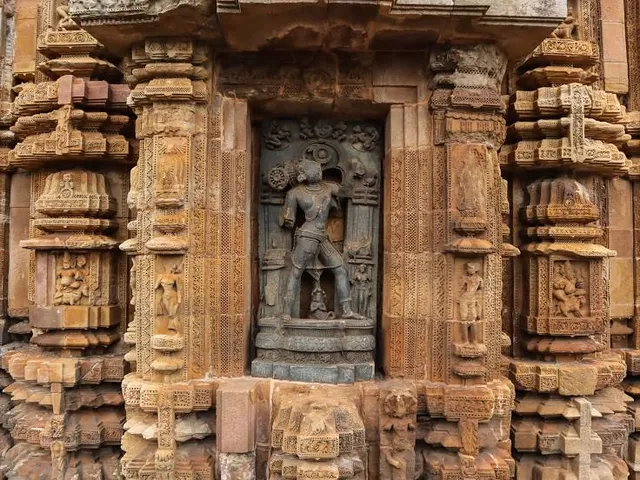
The best preserved and the most outstanding sculptural wealth of the temple are the standing astadikpalas on the central façade of Kanika appearing on the jangha portion of the bada clad in diaphanous drapery; they stand on a lotus with their mounts below. Among the dikpalas, the intact Varuna is remarkable for its body ornamentation, coiffure and facial expression. Scenes of marriage of Siva, Nataraja, Parvati are some of the important cult images of the temple. .
The attraction of the Rajarani Temple can also be attributed to the tall, slender, sophisticated nayikas gracing the walls of the sanctum particularly on the anurahapagas of the lower jangha carved in bold relief, depicting various roles and moods in amorous dalliance. Actions such as turning her head from an emaciated ascetic, fondling her child, holding a branch of a tree, attending to her toilet, looking into the mirror, taking off her anklet, caressing her pet bird and playing an instrument, etc. These nayikas are vivacious and lively with their fascinating facial expressions and elastic...
Read moreI recently visited the Rajarani Temple, located on Tankapani Road in the heart of Bhubaneswar, and the experience left me truly moved and spiritually uplifted. Nestled near the BOI ATM in the serene Kedar Gouri Vihar area, this ancient temple is not just a historical monument but a divine place filled with peace, beauty, and powerful bhakti vibes.
Architecture and Ambiance: The first thing that strikes you as you enter the temple premises is the stunning architecture. Built in the 11th century, the temple is made of reddish and yellowish sandstone, often called "Rajarani" stone — hence the name. The intricate carvings on the walls, representing gods, goddesses, celestial nymphs, and floral patterns, are truly mesmerizing. It's a beautiful example of Kalinga architecture, and even if you’re not a history buff, the sheer craftsmanship will leave you in awe.
The temple complex is very well-maintained, with manicured lawns, clean pathways, and a peaceful environment all around. The lush greenery adds to the serenity of the place. There are benches where you can sit and soak in the spiritual energy or simply admire the temple’s beauty in silence.
Spiritual Vibe and Peacefulness: Though Rajarani Temple is not an active place of worship (there’s no idol inside), the spiritual and bhakti vibes here are undeniable. As I walked around the temple, I could feel a deep sense of calm and connection with the divine. The silence, broken only by birdsong or the soft murmur of visitors, creates the perfect space for reflection, prayer, or meditation.
There’s something about this place that heals the mind and soul. Even a short visit can uplift your mood and help you feel more grounded. It’s ideal for those seeking spiritual peace without the noise and crowd often found at more commercial religious sites.
Cleanliness and Management: The temple is managed by the Archaeological Survey of India, and I was very impressed by the cleanliness and preservation efforts. Entry is ticketed but very affordable, and the staff is polite and helpful. There are proper signboards in Odia, Hindi, and English, making it easy for tourists to understand the historical significance.
Photography and Visitor Experience: Photography is allowed, and I highly recommend bringing your camera or smartphone. The early morning or evening light makes the stone glow beautifully, and the temple provides a perfect backdrop for both spiritual and architectural photos.
Nearby Attractions: Located close to other important spiritual sites like Mukteswar Temple, Lingaraj Temple, and Kedar Gouri Temple, Rajarani Temple is a must-visit if you're on a temple trail in Bhubaneswar. The entire area is filled with divine energy.
Final Thoughts: Rajarani Temple is not just a historical monument — it’s a place where you feel a divine presence, inner peace, and deep bhakti. Whether you're a devotee, tourist, student, or just someone looking for a quiet place to reconnect with yourself, this temple offers a beautiful experience. Highly...
Read more