HTML SitemapExplore
logo
Find Things to DoFind The Best Restaurants

Ambika Bhawani Temple Aami — Attraction in Bihar

Name
Ambika Bhawani Temple Aami
Description
Nearby attractions
Nearby restaurants
Nearby hotels
Related posts
Keywords
Ambika Bhawani Temple Aami tourism.Ambika Bhawani Temple Aami hotels.Ambika Bhawani Temple Aami bed and breakfast. flights to Ambika Bhawani Temple Aami.Ambika Bhawani Temple Aami attractions.Ambika Bhawani Temple Aami restaurants.Ambika Bhawani Temple Aami travel.Ambika Bhawani Temple Aami travel guide.Ambika Bhawani Temple Aami travel blog.Ambika Bhawani Temple Aami pictures.Ambika Bhawani Temple Aami photos.Ambika Bhawani Temple Aami travel tips.Ambika Bhawani Temple Aami maps.Ambika Bhawani Temple Aami things to do.
Ambika Bhawani Temple Aami things to do, attractions, restaurants, events info and trip planning
Ambika Bhawani Temple Aami
IndiaBiharAmbika Bhawani Temple Aami

Basic Info

Ambika Bhawani Temple Aami

Ami, Dighwara, Bodha Chhapra, Bihar 841207, India
4.6(1.3K)
Closed
Save
spot

Ratings & Description

Info

Cultural
Accessibility
attractions: , restaurants:
logoLearn more insights from Wanderboat AI.
Phone
+91 70333 94406
Open hoursSee all hours
Fri4:30 AM - 9 PMClosed

Plan your stay

hotel
Pet-friendly Hotels in Bihar
Find a cozy hotel nearby and make it a full experience.
hotel
Affordable Hotels in Bihar
Find a cozy hotel nearby and make it a full experience.
hotel
The Coolest Hotels You Haven't Heard Of (Yet)
Find a cozy hotel nearby and make it a full experience.
hotel
Trending Stays Worth the Hype in Bihar
Find a cozy hotel nearby and make it a full experience.

Reviews

Get the Appoverlay
Get the AppOne tap to find yournext favorite spots!
Wanderboat LogoWanderboat

Your everyday Al companion for getaway ideas

CompanyAbout Us
InformationAI Trip PlannerSitemap
SocialXInstagramTiktokLinkedin
LegalTerms of ServicePrivacy Policy

Get the app

© 2025 Wanderboat. All rights reserved.
logo

Posts

VIKASH SINGHVIKASH SINGH
The temple is in the structure of a fort that is surrounded from all sides, on the bank of the River Ganga. It lies in the flood-prone district of Saran and it is very near the Ganges. The Ganga takes a curb at this point going to South. The image of the Ganga at this point is Lingvat. Even during a flood, the Ganga never touches the fort. The entire structure of Temple is on debris. During 1973 the then Director of the Department of Archaeology of the Government of Bihar Sri Prakash Chandra excavated and found a wall made of bricks used during the Pal dynasty. In the worship of Sakti an equidistant triangle has the same importance as Saligram for Lord Vishnu and Shiv Ling for Lord Shiva. The centre of the triangle is called Prambika Or Ambika. Surprisingly the distance of the three Siv Temples (Baidyanath, Vishwanath and Pashupati Nath) are equal and if you draw an imaginary line connecting the three Shiva Temple it will an equidistant triangle with Ambika Asthan Ami in the centre. This shows the importance of Ambika Asthan Ami. This place is also said to be the same place where King Surath & Samadhi Vaishya, performed AGYA for three years and got the desire fulfilled with the grace of Divine mother. It is also said that the place Digwara was originally called Drigdwara. This was the main gate of the palace of Daksh Prajapati where he organised Yagya. The palace was destroyed by Maa Sati. There are many other places claiming the same importance but in view of the fact that the incidence of Sati Sacrifice took place in Adi Satyug and has been repeated in every Satyug such claim and counterclaim can not be denied. There is a belief associated with the temple is that [2] one who worships over here, his/her wishes get fulfilled by the Goddess. Hence in Dussehra, worshippers from different places gather here to obtain the divine blessing.
Sandhya_ PathakSandhya_ Pathak
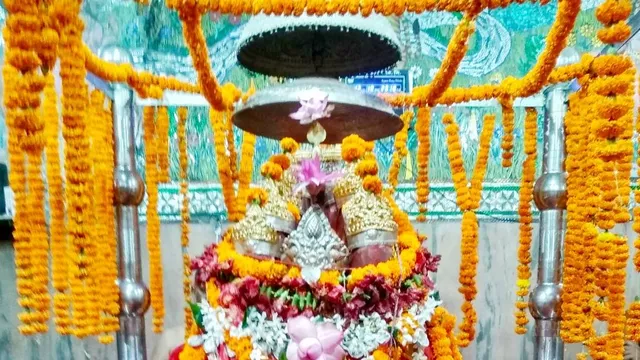
Aami temple, also known as Maa Ambika Sthan is a temple, where the presiding deity is Maa Ambika Bhawani, also known as Parvati, Gauri, Durga, is a Hindu Goddess. She is the mild aspect of Mahadevi, who in Hindu mythology known as the great Goddess. The deity is considered to be the whole personification of Adi Parashakti, with all other deities being her manifestations or incarnations. This holy place is situated in Bihar’s Chapra District in the city Aami village. The name of the town is originated from the temple. In the Ami village, there is an ancient place of worship, which is called ‘Amba Asthan’. Close to the shrine there is a garden along with a deep & wide well that remains filled with water throughout the year. The well never dries up according to people. The worshippers from far flung areas pay a visit to the Yagna Kunda over this place. The devotees come here to pay their reverence to Goddess in Navaratra of April & October. Water offered by numeral devotees in the Kunda gets disappeared. There is a belief associated with the temple is that one who worships over here, his/her wishes get fulfilled by the Goddess. Hence in Dussehra, worshippers from different places gather here to obtain the divine blessing. There is also a small town around 3 km from Ambika Asthan, ‘Dighwara’. Previously it was supposed to be known as ‘Dirgh-dwara’, the main gate, which was the chief gate of King Daksh’s yagna area
Anil KumarAnil Kumar
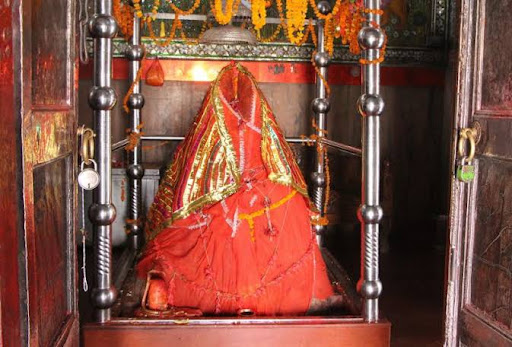
More development work need to be done in and around the temple. Aami Mandir is a famous Hindu temple of Maa Durga; located at Ami, Dighwara, Bihar. Maa Durga is worshipped here as Maa Ambika Bhawani. So this temple is also known as Maa Ambika Sthan. At Ambika Sthan Temple, the idol of the Devi is created with the soil known as “Pinda”. Daily the Devi is worshipped by Vedic mantras and holy chants along with several rituals of snana, bhoga distribution and regular aarti offerings. Pilgrims primarily visit this site during Navratri, the Ami Mandir’s main festival, in addition to Dusserra, Shiv-Parvathi Vivah, and Shiv Ratri. Aside from the regular puja, devotees participate in Jagaran or Jagratha, a bhajan tradition of worshipping Mata Bhawani. Here the idol is in the shape of a vulva with nine pinds. Millions of people visit this temple every year to celebrate all of the festivals that are held here. Some major festivals held here are Durga Puja. (Winter) – Devotees celebrate Navaratri at this temple in the month of Ashwin (Sep-Oct). Navaratri. (Summer) – They celebrate other Navaratri in the fortnight of the Chaitra (March-April). Every nine days they worship Navadurga (nine Durgas). Diwali – Diwali is one of the most admired and auspicious festivals in the town. MahaShivratri – Mahashivratri, “The Great Night of Shiva” is the most significant event in India’s Hindu calendar.
See more posts
See more posts
hotel
Find your stay

Pet-friendly Hotels in Bihar

Find a cozy hotel nearby and make it a full experience.

The temple is in the structure of a fort that is surrounded from all sides, on the bank of the River Ganga. It lies in the flood-prone district of Saran and it is very near the Ganges. The Ganga takes a curb at this point going to South. The image of the Ganga at this point is Lingvat. Even during a flood, the Ganga never touches the fort. The entire structure of Temple is on debris. During 1973 the then Director of the Department of Archaeology of the Government of Bihar Sri Prakash Chandra excavated and found a wall made of bricks used during the Pal dynasty. In the worship of Sakti an equidistant triangle has the same importance as Saligram for Lord Vishnu and Shiv Ling for Lord Shiva. The centre of the triangle is called Prambika Or Ambika. Surprisingly the distance of the three Siv Temples (Baidyanath, Vishwanath and Pashupati Nath) are equal and if you draw an imaginary line connecting the three Shiva Temple it will an equidistant triangle with Ambika Asthan Ami in the centre. This shows the importance of Ambika Asthan Ami. This place is also said to be the same place where King Surath & Samadhi Vaishya, performed AGYA for three years and got the desire fulfilled with the grace of Divine mother. It is also said that the place Digwara was originally called Drigdwara. This was the main gate of the palace of Daksh Prajapati where he organised Yagya. The palace was destroyed by Maa Sati. There are many other places claiming the same importance but in view of the fact that the incidence of Sati Sacrifice took place in Adi Satyug and has been repeated in every Satyug such claim and counterclaim can not be denied. There is a belief associated with the temple is that [2] one who worships over here, his/her wishes get fulfilled by the Goddess. Hence in Dussehra, worshippers from different places gather here to obtain the divine blessing.
VIKASH SINGH

VIKASH SINGH

hotel
Find your stay

Affordable Hotels in Bihar

Find a cozy hotel nearby and make it a full experience.

Get the Appoverlay
Get the AppOne tap to find yournext favorite spots!
Aami temple, also known as Maa Ambika Sthan is a temple, where the presiding deity is Maa Ambika Bhawani, also known as Parvati, Gauri, Durga, is a Hindu Goddess. She is the mild aspect of Mahadevi, who in Hindu mythology known as the great Goddess. The deity is considered to be the whole personification of Adi Parashakti, with all other deities being her manifestations or incarnations. This holy place is situated in Bihar’s Chapra District in the city Aami village. The name of the town is originated from the temple. In the Ami village, there is an ancient place of worship, which is called ‘Amba Asthan’. Close to the shrine there is a garden along with a deep & wide well that remains filled with water throughout the year. The well never dries up according to people. The worshippers from far flung areas pay a visit to the Yagna Kunda over this place. The devotees come here to pay their reverence to Goddess in Navaratra of April & October. Water offered by numeral devotees in the Kunda gets disappeared. There is a belief associated with the temple is that one who worships over here, his/her wishes get fulfilled by the Goddess. Hence in Dussehra, worshippers from different places gather here to obtain the divine blessing. There is also a small town around 3 km from Ambika Asthan, ‘Dighwara’. Previously it was supposed to be known as ‘Dirgh-dwara’, the main gate, which was the chief gate of King Daksh’s yagna area
Sandhya_ Pathak

Sandhya_ Pathak

hotel
Find your stay

The Coolest Hotels You Haven't Heard Of (Yet)

Find a cozy hotel nearby and make it a full experience.

hotel
Find your stay

Trending Stays Worth the Hype in Bihar

Find a cozy hotel nearby and make it a full experience.

More development work need to be done in and around the temple. Aami Mandir is a famous Hindu temple of Maa Durga; located at Ami, Dighwara, Bihar. Maa Durga is worshipped here as Maa Ambika Bhawani. So this temple is also known as Maa Ambika Sthan. At Ambika Sthan Temple, the idol of the Devi is created with the soil known as “Pinda”. Daily the Devi is worshipped by Vedic mantras and holy chants along with several rituals of snana, bhoga distribution and regular aarti offerings. Pilgrims primarily visit this site during Navratri, the Ami Mandir’s main festival, in addition to Dusserra, Shiv-Parvathi Vivah, and Shiv Ratri. Aside from the regular puja, devotees participate in Jagaran or Jagratha, a bhajan tradition of worshipping Mata Bhawani. Here the idol is in the shape of a vulva with nine pinds. Millions of people visit this temple every year to celebrate all of the festivals that are held here. Some major festivals held here are Durga Puja. (Winter) – Devotees celebrate Navaratri at this temple in the month of Ashwin (Sep-Oct). Navaratri. (Summer) – They celebrate other Navaratri in the fortnight of the Chaitra (March-April). Every nine days they worship Navadurga (nine Durgas). Diwali – Diwali is one of the most admired and auspicious festivals in the town. MahaShivratri – Mahashivratri, “The Great Night of Shiva” is the most significant event in India’s Hindu calendar.
Anil Kumar

Anil Kumar

See more posts
See more posts

Reviews of Ambika Bhawani Temple Aami

4.6
(1,333)
avatar
5.0
5y

Chhapra (also written Chapra) is a city and headquarters of the Saran district in the Indian state of Bihar. It is situated near the junction of the Ghaghara River and the Ganges River. Chhapra grew in importance as a river-based market in the 18th century when the Dutch, French, Portuguese, and English established saltpeter refineries in the area. It was recognized as a municipality in 1864. The city has major rail and road connections with the rest of India and a distance of few minutes from Uttar Pradesh by Train. There is a well known shakti peeth temple in Chhapra named Ambika Bhavani.

A quaint town, studded with ancient structures and monuments, Chapra is embedded in history and heritage. Embellished in the colorful Bhojpuri culture, the city captivates you with its fervor for traditions. Despite the passage of time, it has managed to stay true to its age-old cultural heritage. A city of historical importance, Chapra has shone through different eras of India’s glorious past. It is believed to have been a part of the ancient kingdom of Kosala. Archeological remains suggest its affinity to the Maurya Empire under Emperor Asoka. It was believed to be an important market town during the Mughal reign in the 18th century. Today, Chapra lures travelers as a major cultural and heritage hub of Bihar.

Discovering Chapra

Boasting of a rich cultural and historical heritage, Chapra has much to offer tourists. History and archeology enthusiasts will find much to delight them here. Visit Chirand near the banks of River Ghaghra to get a glimpse of the city’s pre-historic remains. Ancient artifacts related to the city dating back to more than 4,000 years can be found here. The Ashoka Pillar is another site of historical as well as religious significance near the city. It is believed that Lord Buddha visited the place before attaining Nirvana.

Chapra is also known for its venerable religious legacy. The Amba Asthan in Aami is an important place of worship dedicated to the Hindu Mother Goddess. The Grahdevi Temple in Marhaura is a popular shrine of Goddess Durga and attracts devotees from across the country. Visit the Gautam Asthan, which devotees believe is linked with the epic of Ramayana.

A great time to visit Chapra is during the numerous festive occasions such as Karthik Purnima and Shivratri fair at Silhauri, as the city is abuzz with cultural activity during these times.

Getting Around

Local transport in the city consists of bus services operated by the government as well as private owners. You can choose from the different types of buses like local bus, deluxe and semi-deluxe. Mini-buses, though new, are also commonly used for traveling in Chapra. Cycle-rickshaws and auto-rickshaws are common ways of traveling within the city. Private vehicles can be booked through car rentals for traveling in and around Chapra.

Beware!

Ladies be alert when in public spaces, as the safety of women is a major concern in Chapra.

Beware of your belongings in crowded areas, as thefts have been reported.

How to Reach Chapra

On a daily basis there are approximately 38 flights that operate at Lok Nayak Jayaprakash Airport.IndiGo and Air India are the most popular airline brands that fly frequently to this airport.

Besides flying you can also reach Chapra through train.Chhapra, Chhapra Kacheriare some of the most popular train stations in Chapra.On an average about 100+ trains pass through Chapra on a daily basis.Hajipur to Chapra, Sonepur to Chapra, Muzaffarpur to Chapraare some of the most popular routes to Chapra with 165, 148, 138 trains weekly respectively.

By road Chapra is surrounded by Arrah, Dinapur Nizamat, Khagaul which are 15.6 km, 18.72 km, 21.18 km away respectively. These places are ideal spots for people to plan their short...

   Read more

avatar
5.0
6y

Aami Mandir, considered as a Shakti Peetha, is a Hindu temple of the Goddess Sati, Story:- According to legends, King Manan Singh was the king of Hathua. He considered himself to be the greatest devotee of Durga. Because of pride, they did not consider anyone to be a devotee of mother. In this state, there was a famine in the state and people started craving for food. Thaavu was a true devotee of the devout goddess mother in Thawe. According to the legend, Rahasu used to eat grass in the day with the grace of the mother and she used to get food from the night, due to which the people there started receiving food, but the king did not believe.

The king asked Rahu to call the mother a croaking and call the mother. Rahushu often prayed to the king that if the mother comes here then the state will be ruined, but the king does not believe. On the prayer of Rahushu, all the buildings of the king who reached here, along with mother Kolkata, Patna and Ami, fell and the king died.

Where the mother visited, there is a grand temple and there is a temple of Rahasu Bhagat at a distance. It is believed that those who come to see the mother also visit the temple of Rahasu Bhagat, otherwise their worship is considered incomplete. There is still the ruins of Manan Singh's buildings near this temple.

Fort Temple

The temple is in the structure of a fort that is surrounded from all sides, on the bank of the River Ganga. It lies in the flood-prone district of Saran and it is very near the Ganges. The Ganga takes a curb at this point going to South. The image of the Ganga at this point is Lingvat. Even during a flood, the Ganga never touches the fort. The entire structure of Temple is on debris. During 1973 the then Director of the Department of Archaeology of the Government of Bihar Sri Prakash Chandra excavated and found a wall made of bricks used during the Pala Dynasty.

In the worship of Sakti an equidistant triangle has the same importance as Saligram for Lord Vishnu and Shiva Ling for Lord Shiva. The centre of the triangle is called Prambika Or Ambika. Surprisingly the distance of the three Shiv Temples (Baidyanath, Vishwanath and Pashupatinath) are equal and if you draw an imaginary line connecting the three Shiva Temple it will an equidistant triangle with Ambika Asthan Ami in the centre. This shows the importance of Ambika Asthan Ami.

This place is also said to be the same place where King Surath & Samadhi Vaishya, performed AGYA for three years and got the desire fulfilled with the grace of Divine mother.

It is also said that the place Digwara was originally called Drigdwara. This was the main gate of the palace of Daksh Prajapati where he organised Yagna. The palace was destroyed by Maa Sati.

There are many other places claiming the same importance but in view of the fact that the incidence of Sati Sacrifice took place in Adi Satya Yuga (beginning of 1st age) and has been repeated in every Satya Yuga such claim and counterclaim can not be denied.

There is a belief associated with the temple is that [2] one who worships over here, his/her wishes get fulfilled by the Goddess. Hence in Dusshera, worshippers from different places gather here to obtain the...

   Read more
avatar
5.0
7y

The temple is in the structure of a fort that is surrounded from all sides, on the bank of the River Ganga. It lies in the flood-prone district of Saran and it is very near the Ganges. The Ganga takes a curb at this point going to South. The image of the Ganga at this point is Lingvat. Even during a flood, the Ganga never touches the fort. The entire structure of Temple is on debris. During 1973 the then Director of the Department of Archaeology of the Government of Bihar Sri Prakash Chandra excavated and found a wall made of bricks used during the Pal dynasty.

In the worship of Sakti an equidistant triangle has the same importance as Saligram for Lord Vishnu and Shiv Ling for Lord Shiva. The centre of the triangle is called Prambika Or Ambika. Surprisingly the distance of the three Siv Temples (Baidyanath, Vishwanath and Pashupati Nath) are equal and if you draw an imaginary line connecting the three Shiva Temple it will an equidistant triangle with Ambika Asthan Ami in the centre. This shows the importance of Ambika Asthan Ami.

This place is also said to be the same place where King Surath & Samadhi Vaishya, performed AGYA for three years and got the desire fulfilled with the grace of Divine mother.

It is also said that the place Digwara was originally called Drigdwara. This was the main gate of the palace of Daksh Prajapati where he organised Yagya. The palace was destroyed by Maa Sati.

There are many other places claiming the same importance but in view of the fact that the incidence of Sati Sacrifice took place in Adi Satyug and has been repeated in every Satyug such claim and counterclaim can not be denied.

There is a belief associated with the temple is that [2] one who worships over here, his/her wishes get fulfilled by the Goddess. Hence in Dussehra, worshippers from different places gather here to obtain the...

   Read more
Page 1 of 7
Previous
Next