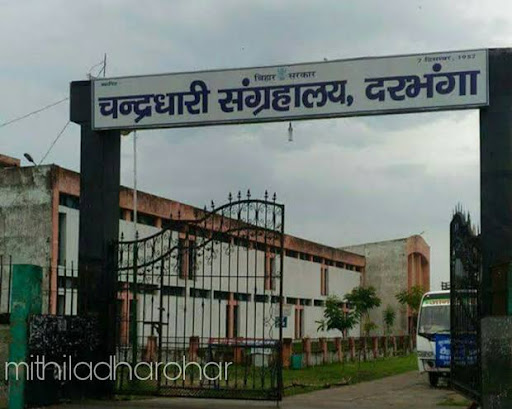
Chandradhari Museum which was established by the state government in 1957, It is situated at Darbhanga in Bihar, Originally situated on the eastern bank of Mansarowar Lake, The museum was shifted to the present double-storied building in 1974. The Museum with the help of the private collection of Chandradhari Singh, a zamindar of Madhubani Chandrandar Museum was established on 7 December 1957. Earlier it was named Mithila Museum. It was later named after Babu Chandraheri Singh, landlord of Ranti Dodhi of the main donor Madhubani district. It has been constructed from artifacts and heritage received from them. Chandradhari Museum Archaeological and artistic works are displayed in 11 galleries halls here. each exhibiting artifacts of different category. Among the exhibit include attractive artifacts made of glass, rare and splendid artistic works of weavers and rare miniature painting of different styles. Most noteworthy among the paintings is the painting of Krishna Leela with gopies, based on Geet-govinda of Jaidev. Painting describing the great epic Ramayana has been arranged in this hall. The museum has a fabulous collection of statues made of Brass in Indian, Nepalese and Tibetan style. Statues of Goddess Durga, Surya and Lord Shiva are quite attractive. Statues related to Buddhism are also on display. The natural history section showcases costly gems and stones. The museum also has library facilities.There are art objects made of glass, fabric, metal and other materials depicting epic stories, gems, battle guns and other interesting subjects. Chandradhari lived in the nearby town of Madhubani and his family had donated his collections for this museum
The museum is open from 10 to 4 o'clock for the general audience. At the moment, there is no fee. Many celebrities of the country have arrived in the museum. Maharaja Kameshwar Singh of Darbhanga has observed his heritage. Former Prime Minister Lal Bahadur Shastri, Indira Gandhi , former President Dr. Zakir Hussain, Loknayak Jayaprakash Narayan and his wife Pratishthi, former Chief Minister Dr. Srikrishna Co, Karpuri Thakur , former Governor Dr. AR Kidwai, Dr. LP Shahi, Jagannath Kaushal , Nitish kumar spent around two hours going through the 5,000 exhibits.etc. Chandradhari Museum, Darbhanga
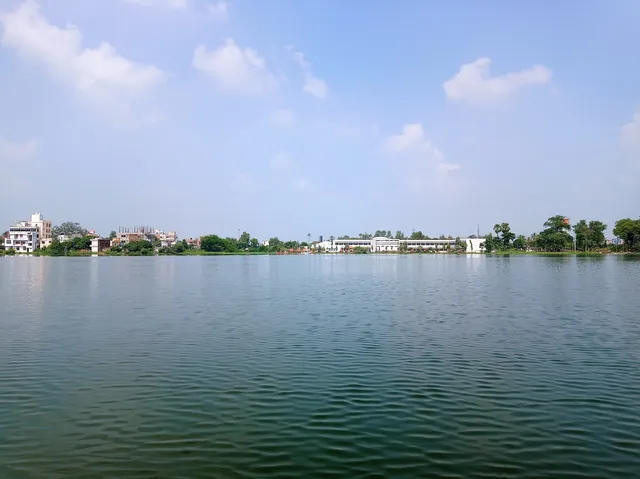
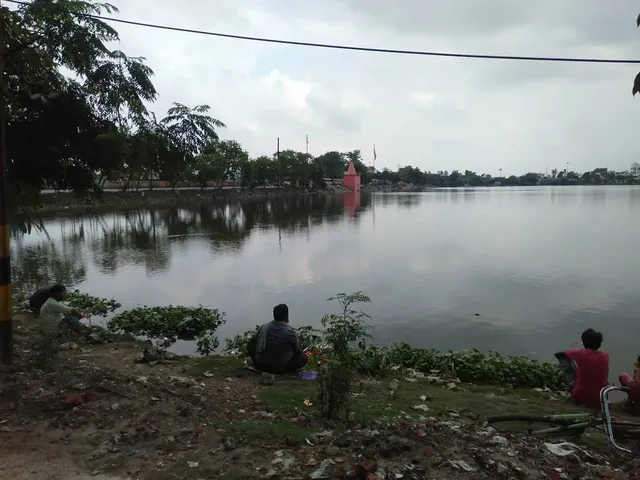
This museum was established on 7 December 1957 on the north bank of Mansarowar Lake. Late Chandradhari Singh of Ranti Dyordhi (Madhubani) donated all the artifact and other rare objects. It was shifted in double story building in 1974. There is no entry fee for visiting the Museum. It remains open for public on everyday except Monday. On the basis of arrangement and materials of the Museum it can be devided into eleven type of Halls.
Aims of the Museum
To collect, to preserve and to display the artifacts of historical, archaeological and cultural importance of the region in the public interest as well as to educate the students through the exhibited materials.
Galleries
On the basis of arrangement and materials of the Museum, it is divided into eleven gallery. Short description of same very important gallery are below:-
Glass Gallery In this gallery beautiful objects of Baljium cutting glass are displayed.
Textile Gallery Traditional dress of Mithila as well as dress of Royal family have been shown in this Gallery.
Miniature Painting Gallery
In this gallery rare miniature paintings of different styple and school are displayed. Among these the paintings of Krishna leela with Gopies, based on Geet Govind of Jaidev are peerless. Besides this the miniature paintings of Mughal Kings and their queens in Mughal style are also of much importance.
Modern Paintings
Water colour paintings of modern style based on Ramayan and Mahabharta theme such as "Raja Janak Darbar" and "Mahabharta War" can be seen here.
Stone Sculpture Gallery
Sculptures in black Basalt stone of Hindu and Buddha religion have been shown in this gallery. Most of the sculpture belongs to the 8th & 9th century A.D.
Wood Gallery
Various types of wood objects having floweral design and inlay work...
Read moreVery nice museum, must visit
Darbhanga is one of the most important northern districts of Bihar , situated in the heart of Mithilanchal, with its fertile alluvial plains of north India, its name derives from the main city, it is said, was founded by Darbhangi Khan. It is also said that Darbhanga means DWAR BANGA "The Gate way of Bengal."
According to its legendary origin, it is believed that here lived in exile the Pandavas , had great kings, as Janak, Sita's father, a scholar and philosopher.
Darbhanga, with its 2279 km2 in area, consists of four natural areas: the eastern part, sandy and marshy, with blocks and sediment carried by the river Kosi, the most fertile area, south of the Gandak river, the natural area between Burhi Gandak rivers and Baghmati , higher ground but also watery and Sadar area, crossed by numerous streams.
In fact there are no forests and hills, is completely flat with a gentle slope from north to south. Its climate is dry and healthy, the warmest month is May, and June is the wettest.
The fertile land of Darbhanga is almost fully grown; we will find palms, mango and tamarind trees near the cities. Wild animal life is extinct in the eighteenth century; however, there are many fish and birds.
Darbhanga is a cultural destination ideal for enthusiasts of the great mass fairs and festivals of India. The most important parties are Kartik Purnima Mela, Dussehra Mela, Diwali Mela Mela and Janmastami, and at the same time is an important space for popular art.
The popular art of Darbhanga is characterized by line drawings are filled with bright contrasting colors. During the ceremonies the walls and balconies are painted and decorated especially with various techniques, such as "sujunis" which consists in covering the walls with fabrics and tapestries, and Mithila paintings are made, typical of religious and mythological events, on paper or material, from the primary colors.
Visitors interested to know that here in northern Bihar grows an herb called sikka tall; with gold end in reality it is the only place in India where it is found. The skilled hands of artisans using ancient techniques coils and used for sewing, stained with dyes, with a needle called Takua. Another characteristic of the region's craft is the art of wood inlay, using different materials like metal and ivory, and wood grain and dye different effects varied and beautiful.
Darbhangā is a municipal corporation and the capital city of old Darbhanga Raj and present headquarters of Darbhanga district and Darbhanga Division in the state of Bihar, India.It is 2nd big medical and educational hub of Bihar. Darbhanga has been developing rapidly. It is one of the most important district & city of North Bihar situated in the very heart of Mithilanchal.[1] Darbhanga is also the headquarter of Darbhanga division. According to the latest 2011 census, the total population of the district is 3,921,971, of which about 91.30% live in rural areas. There are 511,125 people in scheduled castes, while there are only 841 people in scheduled tribes; together, they account for 15.53% of the total population. The total male population is 2,053,043, with the female population being 1,868,928. The population density is as high as 1,721 per km2 and the sex ratio is 910.[2] 290,889 families were below the poverty line, with 1,745,334 people (66.28% of the population).
Darbhanga town attained the status of a city in 1961. Darbhanga is the seat of the Maharaja of Darbhanga. Laheriasarai that is the seat of district and divisional administration is a part of the Darbhanga town. The Raj area is a well developed and beautifully laid-out complex of palaces, temples, offices, parks, gardens and ponds. There are a number of palaces built by the successive Maharajas, important among them being Nargauna Palace, Anandbagh Bhawan and Bela Palace. A number of buildings are in the use of Sanskrit University and L.N.Mithila University. The old Raj Library has been taken over by the Mithila University. The Maharajas of Darbhanga have traditionally been very...
Read moreChandradhari Museum, Darbhanga – A Hidden Treasure of Art & History
Located near the Darbhanga Railway Station, Chandradhari Museum is a must-visit for history buffs, art lovers, and anyone curious about Mithila’s rich cultural heritage. Housed in a beautiful heritage building, this museum showcases an impressive collection of artifacts, sculptures, and paintings.
Highlights: ✅ Rich Collection – The museum displays ancient sculptures, medieval weapons, exquisite terracotta works, traditional Mithila paintings (Madhubani art), and rare coins. ✅ Historical Significance – Many artifacts date back to the Pala, Maurya, and Gupta periods, offering a glimpse into Bihar’s glorious past. ✅ Well-Preserved – The exhibits are neatly arranged, with informative descriptions (though some labels could be more detailed). ✅ Peaceful Atmosphere – Unlike crowded tourist spots, the museum is quiet and perfect for a leisurely visit.
Areas for Improvement: ⚠️ Maintenance Needed – Some sections could use better lighting and restoration work. ⚠️ No Photography Allowed – A bit disappointing for those who want to capture the beautiful artifacts.
Final Verdict: Chandradhari Museum is a hidden gem in Darbhanga, offering a fascinating journey through history and art. If you love culture and heritage, this place is worth a visit!
Best for: History enthusiasts, art lovers, students, and families. Ideal Duration: 1-2 hours Entry Fee: None
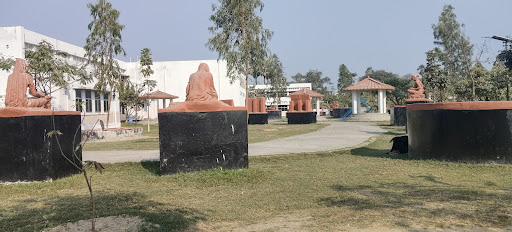
Will I visit again? Yes, especially if they add more interactive displays! 🏛️🎨 Otherwise its peaceful garden is most favorable site for those want feel relaxed for sometimes 😍
Pro Tip: Combine your visit with nearby attractions like Shyama mai Temple, Kankali Temple or Darbhanga fort for a full heritage...
Read more