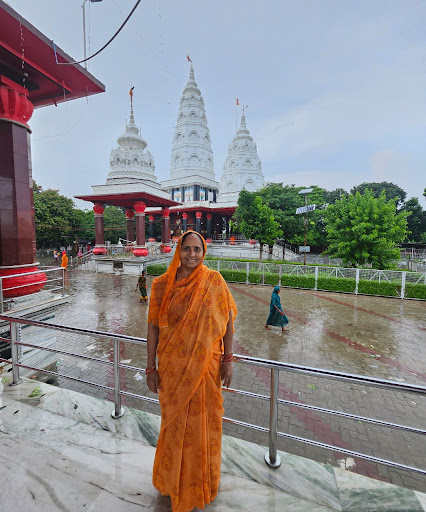
This temple, dedicated primarily to Lord Shiva, encapsulates a blend of spiritual significance and cultural heritage, making it a noteworthy destination for devotees and tourists. The following sections delve into its history, architecture, visitor experiences, and additional features, providing a comprehensive overview
[Historical Context and Significance]
The temple's roots extend deep into history, with evidence suggesting it has been a center of worship since the 8th century. Historical records indicate that Narayan Pal, the 6th emperor of the Pala Empire, initiated regular worship of the Shivlingam during this period. By the 12th century, King Indradyumna is said to have constructed a temple at this site, though it was later demolished, leaving no visible remains above ground for many years. The modern chapter of Ashokdham Temple began on 7 April 1977, when a boy named Ashok, while playing the traditional game Gilli-danda, discovered a giant Shivlingam beneath the ground. This serendipitous rediscovery led to the temple's revival, culminating in its restructuring and inauguration on 11 February 1993 by the Shankaracharya of Jagannathpuri. This narrative not only highlights the temple's historical continuity but also adds a layer of folklore that enhances its spiritual allure. The temple's long-standing association with Lord Shiva, coupled with its connection to significant historical figures, positions it as a vital site for understanding the religious and cultural evolution of the region. It is believed to have been a contested space historically, with mentions of conflicts between Shaiva and Vaishnav followers, as noted in some visitor accounts, where the Shivlingam's establishment above a lotus symbol is interpreted as a victory of Shaiva traditions. Architectural and Spiritual Layout Ashokdham Temple is not a singular structure but a complex that includes the central Indradamneshwar Mahadev Mandir, dedicated to Lord Shiva, surrounded by additional temples for Goddess Parvati, Nandi (the mount of Shiva), and Goddess Durga. This layout reflects a holistic worship environment, catering to devotees of various deities within the Hindu pantheon. The Shivlingam itself is described as massive, contributing to the temple's spiritual ambiance and drawing pilgrims seeking divine connection. The architecture, while recently reconstructed, incorporates elements that resonate with traditional Indian temple design, creating a serene and sacred atmosphere. Visitors often remark on the temple's ability to evoke a sense of peace, with the central shrine's grandeur and the surrounding deities enhancing the...
Read moreIndradamneshwar Mahadev (Ashok Dham) Temple in Lakhisarai, Bihar — its history, significance, structure, things to know and how to plan a visit.
🛕 Overview & Location
Ashok Dham, also known as Indradamneshwar Mahadev Mandir, is a major Shiva temple complex located in Balgudar village, Lakhisarai district, Bihar.
The temple is built around a central shrine dedicated to Lord Shiva, surrounded by temples for Goddess Parvati, Nandi (Shiva’s bull), and Goddess Durga.
📜 History & Legend
The site has ancient roots: it’s believed worship of the Shivling began under Narayan Pal of the Pala Empire in the 8th century.
In the 12th century, King Indradyumna constructed a temple here. Over time, it fell into ruin.
A remarkable rediscovery: on 7 April 1977, a boy named Ashok (and his friend Gajanand) playing Gilli-danda happened to find a giant Shivling buried underground. This led to restoration efforts.
Restoration was inaugurated by the Shankaracharya of Jagannath Puri on 11 February 1993, and major construction of the current complex began on 15 November 2002 under the Shri Indradamneshwar Mahadev Trust.
🎊 Festivals, Devotees & Activity
Maha Shivaratri and the month of Sawan see large influxes of pilgrims. On Sawan’s first and final Mondays, the numbers can swell dramatically.
In a recent instance, over 80,000 devotees gathered for Jalabhishek (offering water) to the Shivling in Ashok Dham on a Sawan Monday.
🕌 Architecture & Structure
The complex has four main temples:
Indradamneshwar Mahadev Mandir – the main shrine to Shiva
Parvati temple
Nandi...
Read moreGreat Experience:
I recently went to Ashok Dham to worship Lord Mahadev. I remember when I was a child, walking the approximate 8 to 9 kilometres from home to get here. The Temple is now properly connected to the road and has all the facilities pilgrims need to come here to worship Lord Shiva. Being in the temple always makes me feel blessed. I suggest that everyone who worships Lord Shiva go to the temple. After worshipping Lord Shiva with a lot of positive energy, one can experience the deepest peace.
About Temple Management committee:
I saw that a charge was being collected at the temple's entrance for any ceremonies one might want to carry out on the grounds of the temple. I also paid the requisite amount, but there are no plans from Mandir Committee in place to use the money I paid. I'm not sure what happens to these funds after they are collected. More care needs to be taken to ensure that the campus is clean so that visitors don't feel frustrated. Additionally, people should exercise caution around any priests who seek to solicit additional money despite the fact that an entrance charge has already been paid.
Shops in the vicinity of Temple;
The restaurants and shops nearby the temple are not very good. Local foods are either not advised or should be consumed with extreme caution. The prices they give are exaggerated, thus one should pay closer attention while purchasing any...
Read more