ABOUT DARBAR Mundeshwari Bhawani temple situated on an isolated hill of Kaimur range with its unique historical, archaeological, religious and cultural features has become one of the focal points of state tourism these days. The tourism department has announced to celebrate Mundeshwari Mahotsava on April 7 and 8 of each year to mark the importance of the ancient shrine.
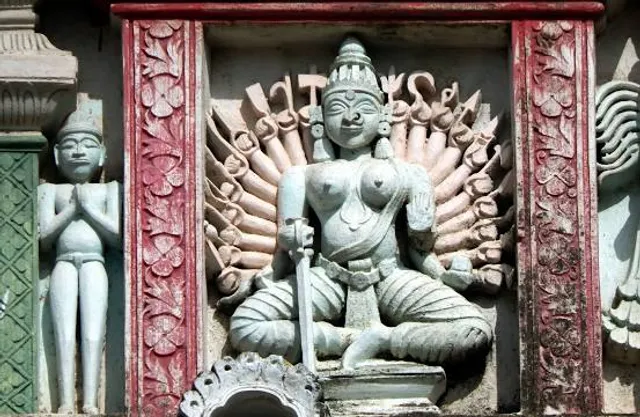
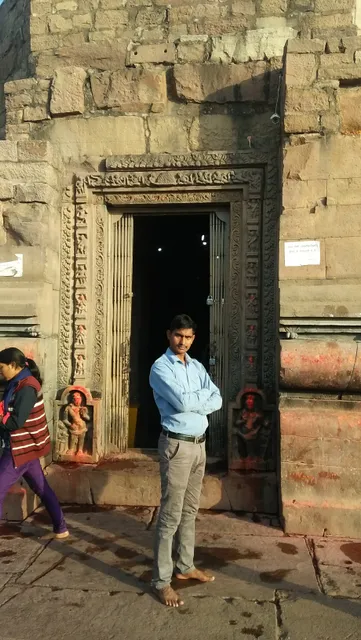
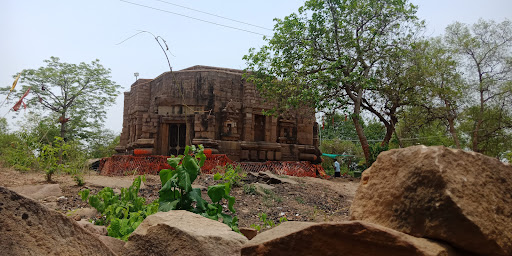
UNIQUE ARCHITECTURE Located atop Pawanra (original Prawara) hill on the height of 182.8 meters at a distance of 12km from Kaimur district headquarters Bhabua, the temple with earliest specimen of nagara style of temple architecture has been declared the oldest Hindu temple of the country by the scholars in a national seminar organized by Bihar State Religious Trust Board at Patna in the year 2008. The sculptures decorative figures, carvings and fragment scattered around hillock are classic example of Gupta style and indicate that the place was once a cultural centre of great importance and magnitude. The temple is unique with its octagonal plan, bold masonry and beautiful carvings. There is some fine latticed stone work on the northern window and the temple door facing the porch, is a fine specimen of architecture with various figures of dancers and musicians. The chaitya windows, kirtimukhas and lotus medallions etc show the clear influence nagara style. The full size idol of goddess Mundeshwari, installed in the eastern sub chamber of the temple, has a great impact on devotees. A number of statues and rock carved figures on the eastern slope of the hill, reveal that the place was once the site of a cluster of temples and educational institutions and Mundeshwari Bhawani temple was the main shrine.
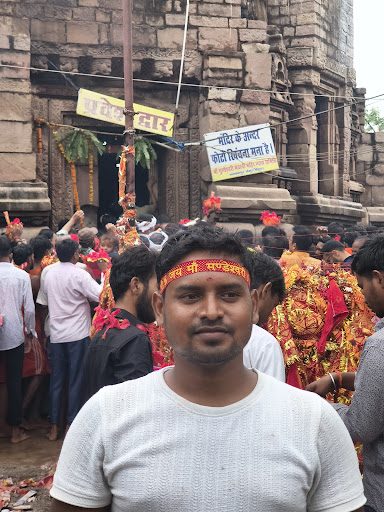
MANAGEMENT The temple attracts some 12 to 14 lakh devotees and tourists every year. But a sea of people from India and abroad is seen here in two navaratras, shravana and in magh yajna. Earlie, its affairs had been managed by the Mundeshwari Paryatan Evam Sanskritik Vikas Parishad headed by the district magistrate. But presently it has been taken over by the BSRTB and a trust committee chaired by the DM is managing the events and started a master plan for developing the place. The temple is an archaeological survey of India (ASI) protected monument since long but the ASI has not taken sufficient steps for its preservation and renovation. The BSRTB had sent a plan to ASI for renovation of the temple in original shape. The Board was ready to bear its entire cost but the proposal is still pending with the ASI. There is no place in the state amidst such beautiful flora and fauna.
HOW TO GET THERE...
BY AIR Lal Bahadur Shastri International Airport, Varanasi Is The Nearest Airport, Located At A Distance Of 102 Km From The Temple.Carriers Including Air India, Jet Airways etc And International Carriers Like Air India.
BY BUS It Can Be Reached By Road Via Patna, Gaya, Or Varanasi.It Is 22 Km By Road South Of The City Of Mohania, In Kaimur District At The Intersection Of State Highway 14 And National Highway 2.
BY RAIL One Can Also Reach Maa Mundeshwari Temple From Train. Nearest Railway Station Is Mohania ,It's Also Known By Bhabhua Road Junction From Where The Temple Is...
Read moreMaa Mundeshwari Temple reviews highlight it as an ancient and significant pilgrimage site, celebrated for its unique architecture, historical importance, and spiritual atmosphere. Visitors praise the temple, located on Kaimur hills in Bihar, for being one of the world's oldest functional temples, housing ancient deities like Devi Mundeshwari and a four-faced Shiva linga. While praised for its divine grace, history, and serene setting, some visitors note potential improvements needed in accessibility, infrastructure, and campus maintenance due to its hilly, remote location. Highlights and Positive Reviews: Oldest Functional Temple: Many visitors and sources consider it the oldest continuously functional Hindu temple in the world, with worship performed without interruption for over 2000 years. Architectural Significance: The octagonal-shaped stone structure is a rare and significant example of the Nagara style of temple architecture in Bihar, drawing appreciation from religious and history enthusiasts alike. Spiritual Atmosphere: Reviewers often describe the temple as a peaceful and serene place for spiritual introspection, offering a unique connection between the ancient and the present. Ancient Deities: The presence of ancient idols of Devi Mundeshwari and a four-faced (Panchmukhi) Shiva linga is a key attraction, drawing pilgrims to witness divine grace. Unique Rituals: The temple is noted for its peculiar tradition of a "bloodless" or ritualistic goat sacrifice, a compelling ceremony for many. Natural Beauty: Situated atop the Kaimur hills, the temple offers beautiful panoramic views of the surrounding landscape, enhancing the visitor experience. Areas for Improvement Noted by Visitors: Accessibility: While the temple offers wheelchair access, some visitors have faced challenges reaching it due to traffic congestion on the narrow, winding roads leading up the hill. Infrastructure & Maintenance: Limited infrastructure and maintenance within the temple campus have been mentioned, suggesting room for improvement to enhance the visitor experience. Location: The remote, hilly location, while offering serene views, can present accessibility challenges, particularly for those without private transport. Who Should Visit? Devotees: The temple is a must-visit for those seeking spiritual solace and to witness ancient religious practices. History and Art Lovers: The unique architecture and historical significance make it a compelling destination for those interested in ancient Indian art and history. Culture Enthusiasts: It offers an immersive experience into the rich culture and traditions of Bihar. Tips for Visiting: Best Time: The winter months (October to December) are considered the best season for visiting. Dress Code: Adhere to the temple's dress code, which requires modest attire such as sarees or salwar-kameez for women and traditional wear for men. Accessibility: Be prepared for a slightly challenging journey due to its location on the hills, and consider visiting during off-peak times to...
Read more🕉️ Highlights & History
Age & Antiquity
ASI and the Bihar State Religious Trust Board date the temple to 108 CE, claiming it to be the oldest functional Hindu temple .
However, architectural studies date its existing structure to 6th–7th century CE, with later additions possibly from the 16–17th century .
Deities & Structure
The shrine is octagonal (ashtākona) with four doorways—an unusual design in Nagara-style temples .
Central is the Chaturmukh Shiva-linga, and along one wall in a niche is Devi Mundeshwari (Durga in Varahi form) .
Miraculous Phenomena
The shiv-linga appears to change color up to three times a day, a natural wonder that draws both local and international devotees .
Its bloodless goat sacrifice is famously unique: goats brought after vows remain motionless until rice and turmeric (ākṣata) are sprinkled, then they recover and are released .
📌 Location & Travel
Altitude: ~608 ft above sea level on Pavara Hill
Nearby Access:
~10 km from Bhabhua town, 22–25 km from Mohania/Bhabua Road railway station
60 km from Varanasi airport, 100 km from Varanasi by road
🎉 Festivals & Visiting Info
Major celebrations during Ramnavami, Shivratri, and Navaratri, with vibrant melas and special floral decorations—including imported flowers during Navaratri .
Timings: Generally open sunrise to sunset; stays open all night on special occasions like Ashtami during Navaratri .
🔍 Archaeological & Cultural Significance
Recognized and protected as an ASI monument since 1915 .
Inscriptions date back as early as 389 CE, with some linked to the post–Gupta period (~570–590 CE) .
Unearthed artifacts include sculptures now housed in Patna and Kolkata museums .
It is a rare example of a shrine where Shiva and Shakti (Durga/Varahi) are worshipped simultaneously, reflecting tantric traditions in eastern India .
🚶 Visiting Tips
Start early to climb the hill—about 20 minutes via stairway.
Expect security checks and CCTV in peak times (e.g., Navaratri) .
Don’t miss: the panchamukha linga, Devi Mundeshwari idol, and animal-friendly ritual.
Combine your trip with other Kaimur hill attractions or the scenic Son...
Read more