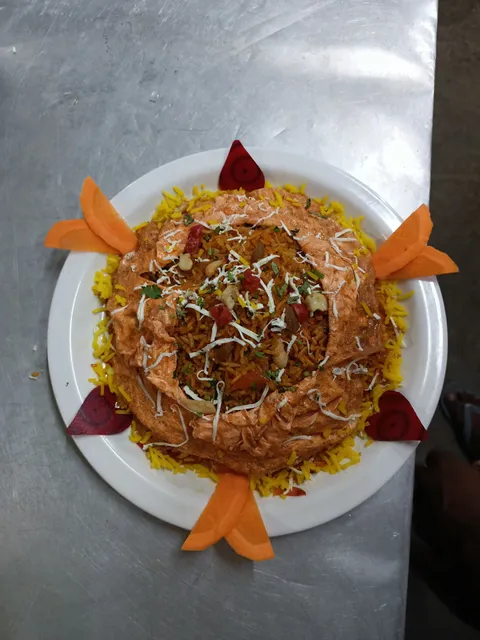
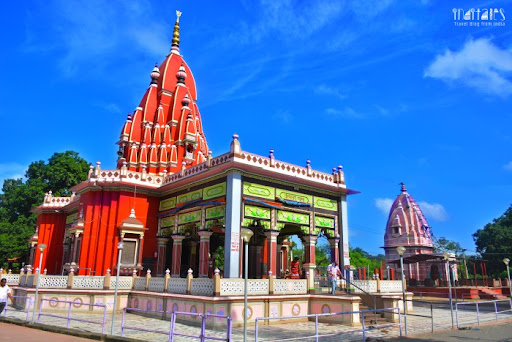
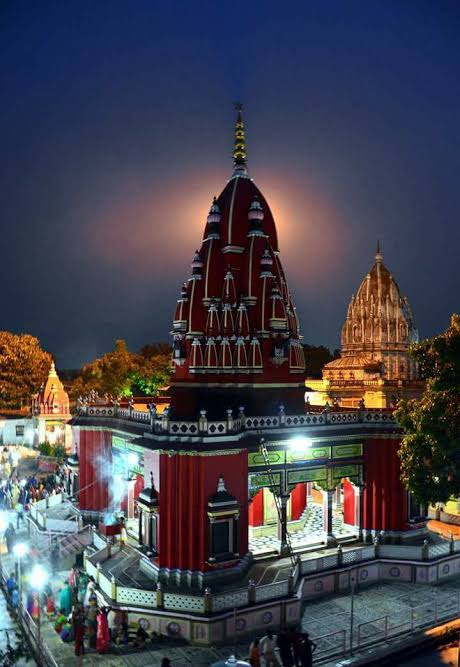
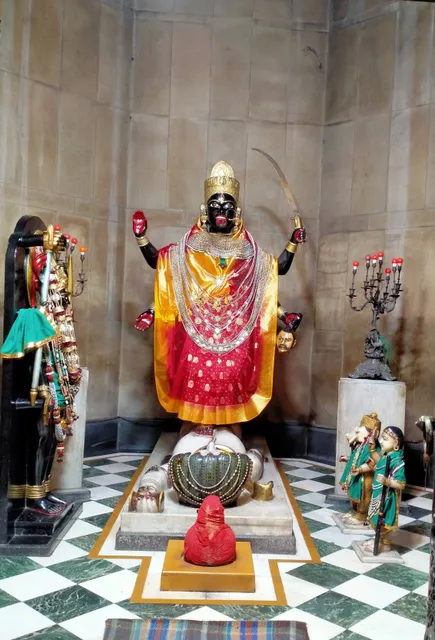
Awide expanse with multiple temple structures greets you as the Ma Shyama temple in the Madheshwar campus at Darbhanga comes into view. The heavy rains have ensured the greenery is lush and the pathway rainwashed. An eerie feeling descends as it comes to light that this temple is indeed unique as it has been constructed on the chita (cremation spot) of the King of Darbhanga, Rameshwar Singh. In fact the whole temple campus is the cremation ground of the royal family with several other temples too alongwith the main Ma Shyama temple. This red coloured beautiful structure was built by Kameshwar Singh, son of Rameshwar Singh in 1933 AD. Situated near the campus of Lalit Narayana Mithila University, the sanctum of the main temple has an idol of Goddess Ma Shyama, or Ma Kali, a form of Shakti. This black colour idol placed just above the chita of Rameshwar Singh, shows the Goddess standing atop the lying idol of Lord Shiva. Here Lord Shiva is in the form of Sadashiva, lying under her feet calmly. This form of Ma Shyama has kept nag as the sacred thread, janeu on her body. There is a logic behind the placement of idols. The sanctum has two idols of Lord Shiva, one in the lying calm (saumya) form of Sadashiva under the feet of Ma Shyama and another in the standing (raudra) form of Mahakal to the right of Ma Shyama. Kartik and Ganesha are placed just in front of the raudra form to soothe his anger. The sanctum also has God Shaligram (a form of Lord Vishnu) and is worshipped every morning. The imposing Ma Shyama’s black idol is about ten feet high. Dressed in a bright green silk sari, a red and gold drape over the shoulders, she looks resplendent with a gold mukut or crown placed firmly on her head. Hibiscus flowers, the traditional offering to Ma Kali lie strewn around, while the aroma of dhoop and agarbatti drifts through the air. Women in white sari with red border complete the picture as they can be seen busying themselves with temple work. As the arti begins to the sound of conch shells, two men stand ringing a huge bell to the east of the main temple. Made of ashtadhatu, this bell was gifted by the King of Nepal and is made to ring only at the time of arti twice everyday. The verandah of the temple in front of the sanctum has a special meaning. Called Jagmohana which represents the universe, the ceiling of this structurecarries different signs and forms used in tantra sadhana. These signs are believed to collectively create positive energy and after passing through this the devotee is said to become free of materialistic desires. The idol of Ma Shyama was installed by priest Sitaram Jha Vyas, who was assigned this task as he had participated in rituals with the King of Darbhanga and specialised in tantra sadhana. Apart from the main temple, there are other temples of different Goddesses in the premises, like that of Ma Annapurna in the north direction built on the cremation point (chita) of the elder Queen of the King of Darbhanga. The statue here is of white marble, while the other temple in the south-east direction of the main temple is called Tara temple. It is built on the cremation point of King Lakshmeshwar Singh. The temple premises also has a pond to the south, that is said to be made up of the water of seven rivers. On the occasion of Navratra, bali to Ma Shyama is offered from the house of the King of Darbhanga. Apart from this, a special prasada Shyama Bhoga is...
Read moreShyama Mandir, located in Darbhanga, Bihar, is not just a place of worship but a significant cultural landmark that attracts devotees from across Bihar, Nepal, and even other countries. The temple is renowned for its architectural beauty, which is both intricate and awe-inspiring. The design and craftsmanship of the temple are truly commendable, reflecting the rich heritage and artistic traditions of the region.
The history of Shyama Mandir is both unique and fascinating. The temple is dedicated to Goddess Kali and is built on the funeral pyre of Maharaja Rameshwar Singh of the Darbhanga royal family, making it an unusual and deeply symbolic site. Maharaja Rameshwar Singh, known for his spiritual devotion, was one of the devout kings of the Darbhanga Raj. The temple, often referred to as Shyama Mai's Temple, was named Rameshwari Shyama Mai in honor of the Maharaja. It was established in 1933 by Maharaja Kameshwar Singh, the son of Maharaja Rameshwar Singh.
Within the temple's sanctum sanctorum, a large idol of Goddess Kali is enshrined. To the right of the goddess is the statue of Mahakal, and to the left are the idols of Ganapati and Batuk Bhairav. The goddess’s garland is unique, featuring skulls that correspond to the letters of the Hindi alphabet, symbolizing the creation of the universe according to devotees. The temple’s aarti holds special significance, and many devotees wait for hours to participate in it. During the Navratri festival, the number of visitors increases dramatically, and the temple grounds come alive with a vibrant fair.
What makes Shyama Mandir even more remarkable is that it is located in a cremation ground, yet it defies the usual Hindu custom of avoiding such places for a year after marriage. Newlyweds not only visit the temple for blessings but also have their marriages solemnized here. The temple blends both Vedic and Tantric rituals in the worship of Goddess Kali.
According to tradition, the goddess worshipped here is believed to be a form of Goddess Sita. This belief is rooted in a legend narrated by Laldas, who served Maharaja Rameshwar Singh and documented the story in "Rameshwar Charit Mithila Ramayana," which draws from the Valmiki Ramayana. The legend tells of a battle in which Lord Rama was struck by an arrow from Sahastranand. Enraged, Goddess Sita defeated Sahastranand, turning dark in her fury. Her anger remained unabated until Lord Shiva intervened, and when her foot touched his chest, she was overcome with shame, her tongue protruding in humility. This form of the goddess is worshipped at Shyama Mandir, where she is known as Shyama, not Kali.
The temple is especially famous for the grand fair held in November, lasting 15 days. During this period, the temple becomes a hub of spiritual activity, with lakhs of devotees flocking to offer their prayers and partake in the festivities. The atmosphere is vibrant and filled with devotion, making it a unique experience for those who visit during this time.
In conclusion, Shyama Mandir is a must-visit for anyone interested in experiencing the spiritual and cultural richness of Darbhanga. The temple's stunning architecture, profound history, and the devotion it inspires are truly remarkable. However, visitors should be prepared for large crowds, particularly during the November fair, when the temple draws devotees...
Read moreShree Shyam Mai Mandir Darbhanga: A Journey Into Divine Beauty and Serenity
As I embarked on a spiritual journey to the sacred Shree Shyam Mai Mandir in Darbhanga, Bihar, I felt a profound sense of tranquility and devotion. From the moment I stepped into the temple premises, I was captivated by the exquisite architecture, intricate carvings, and the palpable aura of spirituality.
Architecture and Design: The temple's design is a reflection of traditional Indian architecture, showcasing intricate carvings, magnificent pillars, and elaborate domes. The main entrance is adorned with a stunning archway, adorned with intricate floral and geometric patterns. As I entered the temple, I was awestruck by the sheer beauty and attention to detail that had gone into every aspect of its design.
Interior Beauty: Upon entering the sanctum sanctorum, I was greeted by the divine presence of Maa Shyam Mai, the presiding deity of the temple. The idol, crafted from pristine white marble, is a sight to behold. The delicate features and serene expression of the deity exuded an aura of peace and tranquility.
Devotional Atmosphere: As I stood before the idol, my heart filled with devotion and gratitude. The atmosphere inside the temple was charged with positive energy, and I could feel the presence of countless devotees who had come to seek blessings and offer their prayers. The melodious chanting of mantras and the gentle sound of bells added to the spiritual ambiance, creating an environment conducive to meditation and contemplation.
Legends and History: The history of Shree Shyam Mai Mandir is steeped in legends and folklore. It is believed that the idol of Maa Shyam Mai was discovered by a local farmer while he was tilling his field. Upon touching the idol, he was blessed with miraculous healing from a chronic illness. This event led to the construction of the temple, which has since become a renowned pilgrimage site attracting devotees from far and wide.
Annual Festivals: Throughout the year, the temple hosts several religious festivals and events. The most prominent of these is the annual Durga Puja, which attracts thousands of devotees. During this time, the temple is decorated with colorful lights and adorned with flowers, creating a vibrant and joyous atmosphere.
Local Significance: Beyond its religious importance, Shree Shyam Mai Mandir also holds a special place in the hearts of Darbhanga residents. It is considered a symbol of unity and harmony, bringing people from all walks of life together in prayer and spiritual devotion. The temple has become an integral part of the cultural heritage of the city and a source of pride for the local community.
Overall Experience: My visit to Shree Shyam Mai Mandir Darbhanga was an enlightening and uplifting experience. The temple's stunning architecture, divine atmosphere, and rich history left a lasting impression on my mind and soul. It is a place where devotees can seek solace, offer their prayers, and connect with the divine. The temple has become a haven of peace and tranquility, offering a retreat from the hustle and bustle of everyday life. I highly recommend a visit to this sacred site for anyone seeking a spiritual awakening or a deeper connection with...
Read more