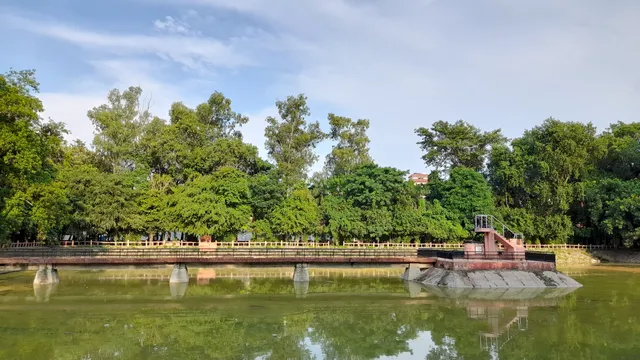
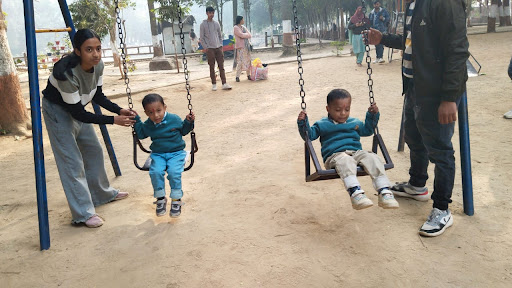
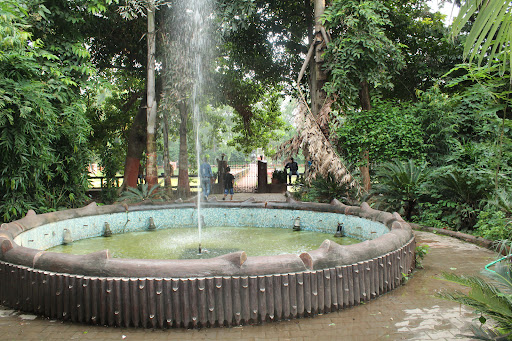
A Breath of Fresh Air and History at Veer Kunwar Singh Park, Arrah! Veer Kunwar Singh Park in Arrah is more than just a green space; it's a place where history and tranquility beautifully converge. During my recent visit, I was truly impressed by the well-maintained grounds and the palpable sense of respect for the great freedom fighter it's named after. The park offers a welcome escape from the hustle and bustle of the city. The lush greenery is a treat for the eyes, providing a serene environment for a leisurely stroll or a quiet moment of reflection. The well-laid pathways make it easy to navigate the park and enjoy the various features it has to offer. What struck me most was the evident care and attention given to the park's upkeep. The lawns were neatly manicured, the flowerbeds were vibrant with color, and the overall cleanliness was commendable. It's clear that the authorities take pride in maintaining this important landmark. The statue of Veer Kunwar Singh stands tall and proud, serving as a powerful reminder of his bravery and contribution to India's struggle for independence. It's a fitting tribute and a point of interest for visitors of all ages, especially for those interested in learning more about local history. Beyond its historical significance, the park also serves as a valuable community space. I saw families enjoying picnics, children playing freely, and individuals taking their evening walks. It's a place where people can connect with nature and with each other. The presence of benches and shaded areas makes it comfortable for visitors to relax and soak in the peaceful atmosphere. While I visited during the daytime, I can imagine the park offering a different kind of charm in the evenings, perhaps with pleasant lighting and a cooler breeze. Overall, Veer Kunwar Singh Park is a gem in Arrah. It's a well-maintained, historically significant, and community-friendly space that offers a refreshing break from the urban environment. Whether you're a local resident or a visitor, I highly recommend spending some time in this beautiful park to appreciate its history and its calming ambiance. It's a testament to the legacy of a great hero and a wonderful place to connect with nature...
Read moreKunwar Singh (1777 – 26 April 1858) was a notable leader during the Indian Rebellion of 1857. He belonged to a royal Ujjainiya(Panwar) Rajput house of Jagdispur, currently a part of Bhojpur district, Bihar, India. At the age of 80, he led a select band of armed soldiers against the troops under the command of the British East India Company. He was the chief organiser of the fight against the British in Bihar. He is popularly known as Veer Kunwar Singh. Kunwar Singh was born in November 1777 to Maharaja Shahabzada Singh and Maharani Panchratan Devi, in Jagdispur of the Shahabad (now Bhojpur) District, in the state of Bihar. He belonged to the Ujjainiya Rajput clan which is a branch of the Parmars. He married the daughter of Raja Fateh Naraiyan Singh (a Mewari Sisodiya Rajput), a wealthy zamindarof Gaya district, Bihar, and a descendant of Maharana Pratap of Mewar To honour his memory and his contribution to India’s freedom movement, the Republic of India issued a commemorative stamp on 23 April 1966. Named after him, Government of Bihar established Veer Kunwar Singh University, Arrah in 1992.
A play by Jagdish Chandra Mathur titled Vijay Ki Vela (Moment of Victory) is based on the later part of Kunwar Singh's life. He is also mentioned in the poem "Jhansi Ki Rani" by Subhadra...
Read moreThis park name on freedom fighter veer kunwar Singh assumed command of the soldiers who had revolted at Danapur on 25 July. Two days later he occupied Arrah, the district headquarters. Major vincent Eyres relieved the town on 3 August, defeated Singh's force and destroyed Jagdishpur. During the rebellion, his army had to cross the ganges river. Douglas' army began to shoot at their boat. One of the bullets shattered Singh's left wrist. Singh felt that his hand had become useless and that there was the additional risk of infection due to the bullet-shot. He drew his sword and cut off his left hand near the elbow and offered it to the Ganges. Singh left his ancestral village and reached Lucknow in December 1857 where he met with other rebel leaders. In March 1858 he occupied Azamgarh and managed to repel the initial British attempts to take the area. However, he had to leave the place soon. Pursued by Brigadier Douglas, he retreated towards his home...
Read more