Buddhajñānapāda, followed by Dīpaṁkarabhadra and Jayabhadra.[11] The first two were active during Dharmapāla's reign, the third in the early to mid portion of the 9th century. Jayabhadra, a monk from Sri Lanka, was the first prominent commentator on the Cakrasamvara tantra.[11] Śrīdhara was the next preceptor, followed by Bhavabhaṭṭa.[12] The latter, also a prominent commentator on Cakrasamvara, may have been the mahāsiddha Bhadrapāda.[13] He in turn was succeeded by three more prominent Cakrasamvara commentators, Bhavyakīrti, Durjayachandra, and Tathāgatarakṣita.[13] Durjayachandra collaborated with the renowned Tibetan translator Rinchen Zangpo and his commentary became particularly important for the Sakya school, and Tathāgatarakṣita collaborated with Rin-chen grags.[13]
In chronological order:
Buddhajñānapāda
Dīpaṁkarabhadra
Jayabhadra
Śrīdhara
Bhavabhaṭṭa
Bhavyakīrti
Līlavājra
Durjaychandra
Samayavajra
Tathāgatarakṣita
Bodhibhadra
Kamalarakṣita
LibraryEdit
The vast majority of the manuscripts contained within Vikramashila’s library have been lost following multiple historical upheavals including the Muslim raids of East India led by Bakhtiyar Khalji. Many of manuscripts fell prey to natural decay as the climate of the Indo-Gangetic plains is not favourable to the preservation of palm-leaf manuscripts. However, some of the manuscripts of Vikramashila’s library, have been discovered in Nepal and Tibet as many of the Buddhist monks fled to these regions following the collapse of the monastery. So far, five manuscripts have been identified that contain references to Vikramashila. One of these manuscripts is currently held at the British Library references the ‘Glorious Great Monastery of the King Vikramaśīla’ (śrīmadvikramaśīladevamahāvihāra) as the place of production and contains the text of the Aṣṭasāhasrikā Prajñāpāramitā.[14]
Layout and...
Read moreVikramshila University, an ancient center of learning in Bihar, India, was one of the most prominent institutions of higher education during the Pala Dynasty (8th-12th century CE). Established by King Dharmapala, it was renowned for its focus on Buddhist studies, particularly Vajrayana Buddhism, alongside other disciplines like philosophy, grammar, and logic.
The university was structured around a monastery and served as a hub for scholars, monks, and students from across Asia, fostering intellectual exchanges and cultural integration. Its library, Ratnodadhi (Ocean of Jewels), was legendary for its extensive collection of manuscripts. The university maintained a rigorous academic environment, with an emphasis on debate and discussion as tools for intellectual growth.
Despite its illustrious history, Vikramshila suffered a tragic downfall during the 12th century due to invasions by Bakhtiyar Khilji, which led to the destruction of the university and the dispersal of its scholars.
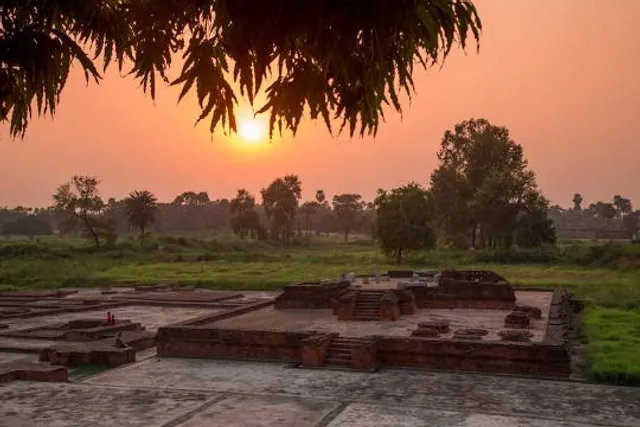
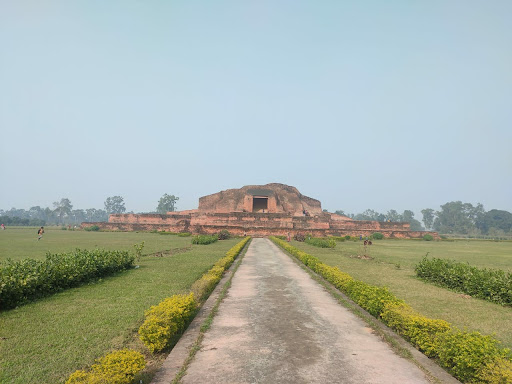
Modern archaeological efforts have unearthed remnants of Vikramshila, showcasing its architectural brilliance, including stupas, monasteries, and frescoes that reflect the era's artistic and academic achievements. These discoveries serve as a testament to the institution’s legacy and its role in shaping India's intellectual and cultural heritage.
Today, Vikramshila stands as a symbol of India’s rich educational past and a reminder of the need to preserve such historical treasures. Its ruins inspire pride in the subcontinent's ancient scholarly traditions while highlighting the transient nature of...
Read moreVikramashila was established by the Pala emperor Dharmapala (783 to 820 AD) in response to a supposed decline in the quality of scholarship at Nalanda. Atiśa, the renowned pandita and philosopher, is listed as a notable abbot. It was destroyed by the forces of Muhammad bin Bakhtiyar Khalji around 1193. A number of monasteries grew up during the Pāla period in ancient Bengal and Magadha. According to Tibetan sources, five great Mahaviharas stood out: Vikramashila, the premier university of the era; Nalanda, past its prime but still illustrious, Somapura, Odantapura, and Jagaddala. The five monasteries formed a network; "all of them were under state supervision" and there existed "a system of co-ordination among them. It seems from the evidence that the different seats of Buddhist learning that functioned in eastern India under the Pāla were regarded together as forming a network, an interlinked group of institutions," and it was common for great scholars to move easily from position to position among them.
Vikramashila was founded by Pāla king Dharmapala in the late 8th or early 9th century. It prospered for about four centuries before it was destroyed by Bakhtiyar Khilji along with the other major centres of Buddhism in India...
Read more