The Jama Masjid of Burhanpur is the only mosque in India with bilingual inscriptions – in Sanskrit and Arabic!
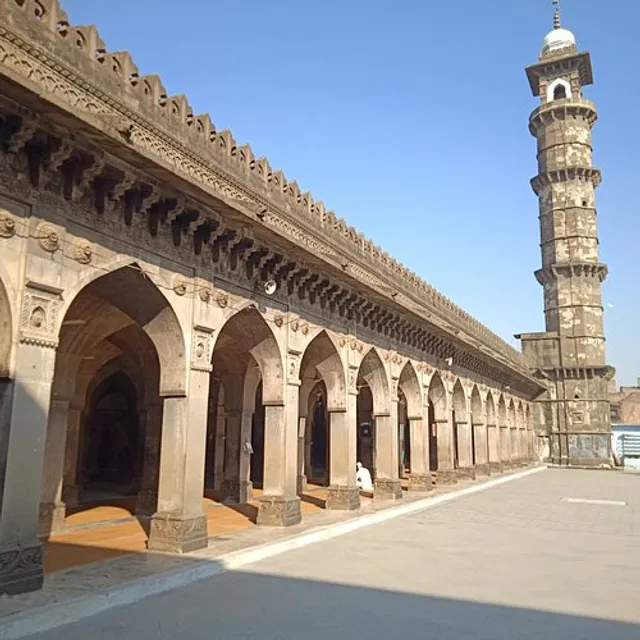
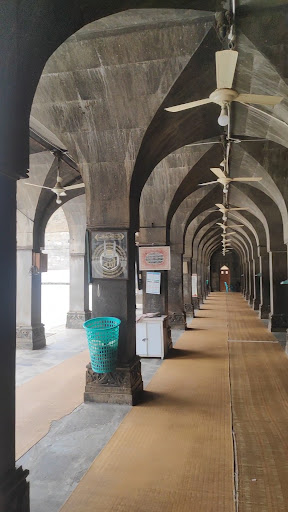
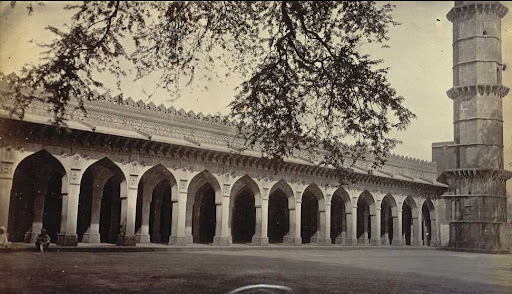
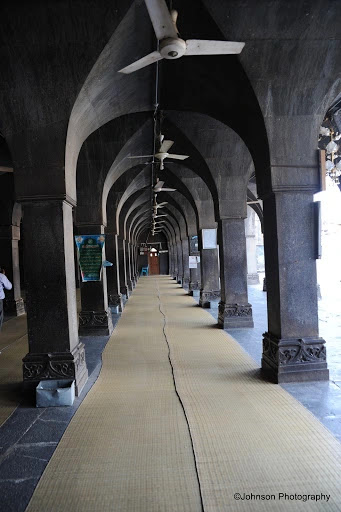
The roofless mosque, was built in 1589 by the Faruqi ruler, Raja Ali Khan (also called Adil Shah). You’ll notice that the mosque has no roof – but the intersecting symmetrical arches create the ceiling. The facade has 15 arches and is flanked by two minarets that are 36m in height and quite plain in terms of design. It is said that the ‘black stone’ for the mosque was sourced from Mandu. The mosque has 17 mihrab niches. Mihrabs mark the prayer direction on the Mecca-facing (qibla) wall in a mosque. In one of these, along with verses from the Quran (highlighting the merits of constructing a mosque) an Arabic inscription reveals the patron of the mosque and the year it’s construction commenced, i.e. 1588/9. The inscription states that the construction was completed in one year. The calligrapher Mustafa finds a mention in the end as well. But it is at the south end of the prayer hall that we see a bilingual inscription – almost a testimony to India’s secular fabric. There’s also a little note by Akbar in Persian somewhere in the mosque.
Burhanpur – a small city about 200kms from Indore in Madhya Pradesh lies on the bank of the River Tapti. This historically significant city hardly ever finds itself on a travel bucket list. But centuries ago, it served as a secondary capital to the Mughals, and was initially the preferred location for the Taj Mahal! The city itself is said to be founded by the Sultanate of the Khandesh in 1399 [Nasir Khan of the Faruqi dynasty] and was named after the Sufi saint ‘Burhan-ud-din’. It linked several important trade routes during the medieval times. Burhanpur fell under Mughal rule somewhere around the year 1600 (when Akbar conquered it) and remained integral to the Mughal ambitions in the Deccan region (till the death of Aurangzeb). The disintegration of the Mughal rule made way for the Peshwas, Marathas and finally...
Read moreBurhanpur was ruled by several dynasties,[11] and consequently has many visitor attractions of historical interest. It has three rivers, the Tapti, the Utavali and the Mohna, with several natural sights for visitors to Burhanpur. This small town has four small ghats. Being the home of a very diverse population, Burhanpur has a notable Gurudwara,[citation needed] Masjid,[12] Church, a world-famous Dargah[13]
Asirgarh Fort – The fort built by Asa Ahir of the Ahir dynasty is notable for its historical architecture. This fort during its prime time was difficult to win because of being built at a great height, with strong outer walls which are still standing intact. It is situated on Burhanpur-Khandwa Highway, 20 kilometres (12 mi) from Burhanpur.
Shahi Qila – A rare fort with a complete garden on its terrace. It was built in the Farooqi Dynasty and ruled by Shahjahan for a long period of time. His beloved wife Mumtaz died here and it is believed that the Taj Mahal was decided to be made in Burhanpur before the plan was cancelled due to lack of white marble here at the time, though Mumtaz was buried here for six months after her death until Taj Mahal construction was completed.
Jama Masjid – The Jama Masjid is a historic monument as well as a place of worship. It is centrally located in Gandhi Chowk. The construction of Jama Masjid started in Farooqi rule. The construction of the monument took very long and continued even after Farooqi leader Adil Shah's demise. Then Emperor Akbar supervised and completed the work of the Masjid. There are two large minarets, three round cupolas and extensive artwork on its symmetric pillars which are well conserved.[12]
Dargah-e-Hakimi – The tomb complex 'Dargah-e-Hakimi' includes mosques, gardens, and accommodation facilities for visitors. Here the holy Dawoodi Bohra saint, Sayyedi Abdul Qadir Hakimuddin is buried, with his monument visited by pilgrims from...
Read moreMashaallah beautiful Historical Mosques इसका निर्माण फारुकी वंश के मुबारक शाह के बेटे आदिल शाह चतुर्थ ने करवाया था। मस्जिद का निर्माण बुरहानपुर की शाही सामूहिक मस्जिद के रूप में किया गया था। शहर के केंद्र में। मस्जिद का निर्माण वर्ष १५८८ में शुरू हुआ था। जामा मस्जिद का निर्माण फारूकी शासन में शुरू हुआ और फारूकी नेता आदिल शाह के निधन के बाद भी बहुत लंबे समय तक चला। इसके बाद, बादशाह अकबर ने मस्जिद के काम की देखरेख की और उसे पूरा किया। मस्जिद के अग्रभाग में दो मीनारों द्वारा अलग किए गए 15 मेहराब हैं। इसे बनाने में मांडू से एक्सपोर्ट किए गए काले पत्थरों का इस्तेमाल किया गया है। फिर भी जो सबका ध्यान आकर्षित करता है वह है प्रार्थना कक्ष का दक्षिणी छोर, जहां संस्कृत शिलालेख हैं जो हिंदू संवत कैलेंडर के अनुसार खगोलीय स्थिति, तिथि और वर्ष का उल्लेख करते हैं। मक्का की दिशा की ओर मुख वाली इस मस्जिद में...
Read more