HTML SitemapExplore
logo
Find Things to DoFind The Best Restaurants

Shiva Mandir Deobaloda — Attraction in Chhattisgarh

Name
Shiva Mandir Deobaloda
Description
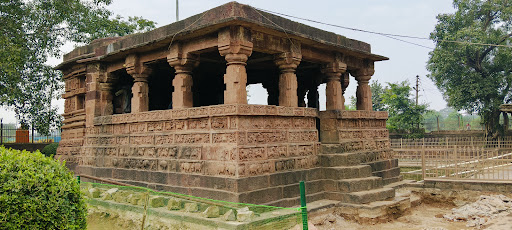
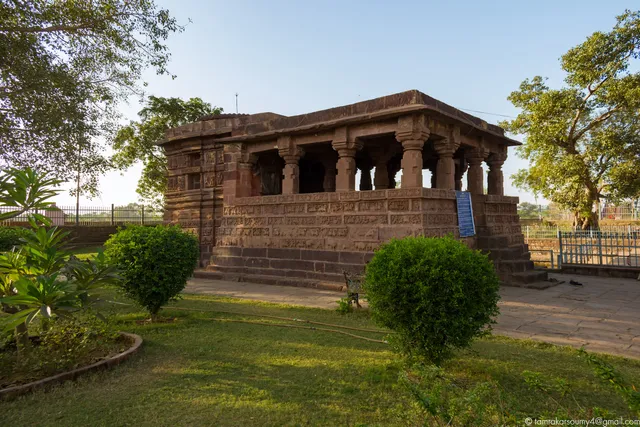
The Mahadev Temple in Deobaloda is dedicated to Lord Shiva in the Indian state of Chhattisgarh. This temple belongs to the Kalchuri Period. The temple is a protected monument under the Archaeological Survey of India.
Nearby attractions
Nearby restaurants
Nearby hotels
Related posts
Keywords
Shiva Mandir Deobaloda tourism.Shiva Mandir Deobaloda hotels.Shiva Mandir Deobaloda bed and breakfast. flights to Shiva Mandir Deobaloda.Shiva Mandir Deobaloda attractions.Shiva Mandir Deobaloda restaurants.Shiva Mandir Deobaloda travel.Shiva Mandir Deobaloda travel guide.Shiva Mandir Deobaloda travel blog.Shiva Mandir Deobaloda pictures.Shiva Mandir Deobaloda photos.Shiva Mandir Deobaloda travel tips.Shiva Mandir Deobaloda maps.Shiva Mandir Deobaloda things to do.
Shiva Mandir Deobaloda things to do, attractions, restaurants, events info and trip planning
Shiva Mandir Deobaloda
IndiaChhattisgarhShiva Mandir Deobaloda

Basic Info

Shiva Mandir Deobaloda

Bhilai Marshalling Yard, Durg, Bhilai, Chhattisgarh 490025, India
4.6(481)
Closed
Save
spot

Ratings & Description

Info

The Mahadev Temple in Deobaloda is dedicated to Lord Shiva in the Indian state of Chhattisgarh. This temple belongs to the Kalchuri Period. The temple is a protected monument under the Archaeological Survey of India.

Cultural
Scenic
Family friendly
Accessibility
attractions: , restaurants:
logoLearn more insights from Wanderboat AI.
Open hoursSee all hours
Fri6 AM - 6 PMClosed

Plan your stay

hotel
Pet-friendly Hotels in Chhattisgarh
Find a cozy hotel nearby and make it a full experience.
hotel
Affordable Hotels in Chhattisgarh
Find a cozy hotel nearby and make it a full experience.
hotel
The Coolest Hotels You Haven't Heard Of (Yet)
Find a cozy hotel nearby and make it a full experience.
hotel
Trending Stays Worth the Hype in Chhattisgarh
Find a cozy hotel nearby and make it a full experience.

Reviews

Get the Appoverlay
Get the AppOne tap to find yournext favorite spots!
Wanderboat LogoWanderboat

Your everyday Al companion for getaway ideas

CompanyAbout Us
InformationAI Trip PlannerSitemap
SocialXInstagramTiktokLinkedin
LegalTerms of ServicePrivacy Policy

Get the app

© 2025 Wanderboat. All rights reserved.
logo

Posts

SaptarshiSaptarshi
# Ancient Shiva Temple # 14th Century or before # Garbha Griha is throbbing with Spiritual Energy, Shiva is the main deity in Lingam form, behind Shakti Devi is there, # The energy and the stone deities suggest it is consecrated in the Tantrika method (Tantra Yoga), once again, the deities are really powerfully consecrated, they are throbbing their divine energy and transmitting anyone one who approaches with Devotion in heart. # It is currently maintained by ASI, thanks to Archeological Survey of India (Bharat) for maintaining the place, however time has come that the Hindu Community forms a group of Devotees who will maintain the temple, its rituals, and its offerings. # It seems there is no regular Pooja or Aarati or Abhishekam is offered to the deity, the Devotees offer in their own way. This is once again not a positive thing, we must take care of our own Deities, Temples, Our own ancestry and heritage. Building such temples, energy places, consecration of such magnitude is not an easy task at all # Parking space available # Surrounding areas are not very affluent, if this temple is revived properly then the place will see much more economic activities. # The temple and the sphere seems like telling many ancient stories # One can offer flowers, incense, dhoopam, Vilva leaf, water, deepam to the Linga, the Linga is Hexagonal in shape I would urge more people to visit this temple, be in the sphere for 30-60 min. Meditate and experience the energy of the Space.
RAMESH PALLANKIRAMESH PALLANKI
Nestled in Deobaloda, near Bhilai–Charoda, the 13th-century Shiva temple—affectionately known as the “6-Maashi” or six-month temple—stands as a silent testament to Kalchuri-era craftsmanship. Built of red sandstone in the Nagara style, this east-facing temple comprises a garbhagriha (sanctum) and a pillared navaranga mandapa; notably, its shikhara (spire) remains unfinished—adding to its enigmatic charm . As you approach, a Nandi sits vigilantly outside the entrance, while the pillars and walls are intricately carved with figures of Bhairava, Vishnu, Shiva, Mahishasuramardini, dancers, musicians, Kirtimukha motifs, and depictions of divine panels—like Tripurantaka, Narasimha, Radha-Krishna, Ganesh, and scenes of hunting and bull-fighting . Inside, a 1.5-ft Shiva lingam resides in the lower sanctum, flanked by idols of Parvati, Ganesh, Hanuman, Jagannath, and guardian dwarpalas at the ornately carved entrance . Adding to the mystique is the temple’s kund (tank), believed to connect via a secret tunnel to Arang—accompanied by a local legend involving an engrossed sculptor whose dramatic story remains vivid in folklore . Protected by the Archaeological Survey of India, the temple comes alive during Mahashivratri, attracting devotees from nearby villages with rituals and a small fair—offering an immersive spiritual and cultural experience .
Akhilesh .V. BharosAkhilesh .V. Bharos
This east facing edifice built of sand stone is surviving with a garbhagriha and a pillared Navaranga mandapa. The sikhara is missing which was probably in Nagara style. The garbhagriha houses a Shiv linga and is approached through a highly ornate entrance guarded by Saiva dwarapalas accompanied by attendants. Ganesha is depicted on the lalatabimba. The mandapa pillars are adorned with images of Bhairava, Vishnu, Mahishasurmardini, Tripurantaka Shiv, Venu Gopala, musicians, dancers, keertimukha designs etc. The exterior of adhisthana portion of the temple bears decorative bands of Gaja, Asva and Nara. The Bhitti portion has two decorative segments, adorned with images of Tripuarantaka Shiv, Gajantakashiv, Narasimha, Nruvaraha, Parvati, Radha-Krishna, Ganesa, Mahishasurmardini, Laxmi,   Trivikrama,Venu Gopala, Kesi vadh etc. The temple constructed by the Kalachuris can be dated to 14th century AD. Source: cgculture. in
See more posts
See more posts
hotel
Find your stay

Pet-friendly Hotels in Chhattisgarh

Find a cozy hotel nearby and make it a full experience.

# Ancient Shiva Temple # 14th Century or before # Garbha Griha is throbbing with Spiritual Energy, Shiva is the main deity in Lingam form, behind Shakti Devi is there, # The energy and the stone deities suggest it is consecrated in the Tantrika method (Tantra Yoga), once again, the deities are really powerfully consecrated, they are throbbing their divine energy and transmitting anyone one who approaches with Devotion in heart. # It is currently maintained by ASI, thanks to Archeological Survey of India (Bharat) for maintaining the place, however time has come that the Hindu Community forms a group of Devotees who will maintain the temple, its rituals, and its offerings. # It seems there is no regular Pooja or Aarati or Abhishekam is offered to the deity, the Devotees offer in their own way. This is once again not a positive thing, we must take care of our own Deities, Temples, Our own ancestry and heritage. Building such temples, energy places, consecration of such magnitude is not an easy task at all # Parking space available # Surrounding areas are not very affluent, if this temple is revived properly then the place will see much more economic activities. # The temple and the sphere seems like telling many ancient stories # One can offer flowers, incense, dhoopam, Vilva leaf, water, deepam to the Linga, the Linga is Hexagonal in shape I would urge more people to visit this temple, be in the sphere for 30-60 min. Meditate and experience the energy of the Space.
Saptarshi

Saptarshi

hotel
Find your stay

Affordable Hotels in Chhattisgarh

Find a cozy hotel nearby and make it a full experience.

Get the Appoverlay
Get the AppOne tap to find yournext favorite spots!
Nestled in Deobaloda, near Bhilai–Charoda, the 13th-century Shiva temple—affectionately known as the “6-Maashi” or six-month temple—stands as a silent testament to Kalchuri-era craftsmanship. Built of red sandstone in the Nagara style, this east-facing temple comprises a garbhagriha (sanctum) and a pillared navaranga mandapa; notably, its shikhara (spire) remains unfinished—adding to its enigmatic charm . As you approach, a Nandi sits vigilantly outside the entrance, while the pillars and walls are intricately carved with figures of Bhairava, Vishnu, Shiva, Mahishasuramardini, dancers, musicians, Kirtimukha motifs, and depictions of divine panels—like Tripurantaka, Narasimha, Radha-Krishna, Ganesh, and scenes of hunting and bull-fighting . Inside, a 1.5-ft Shiva lingam resides in the lower sanctum, flanked by idols of Parvati, Ganesh, Hanuman, Jagannath, and guardian dwarpalas at the ornately carved entrance . Adding to the mystique is the temple’s kund (tank), believed to connect via a secret tunnel to Arang—accompanied by a local legend involving an engrossed sculptor whose dramatic story remains vivid in folklore . Protected by the Archaeological Survey of India, the temple comes alive during Mahashivratri, attracting devotees from nearby villages with rituals and a small fair—offering an immersive spiritual and cultural experience .
RAMESH PALLANKI

RAMESH PALLANKI

hotel
Find your stay

The Coolest Hotels You Haven't Heard Of (Yet)

Find a cozy hotel nearby and make it a full experience.

hotel
Find your stay

Trending Stays Worth the Hype in Chhattisgarh

Find a cozy hotel nearby and make it a full experience.

This east facing edifice built of sand stone is surviving with a garbhagriha and a pillared Navaranga mandapa. The sikhara is missing which was probably in Nagara style. The garbhagriha houses a Shiv linga and is approached through a highly ornate entrance guarded by Saiva dwarapalas accompanied by attendants. Ganesha is depicted on the lalatabimba. The mandapa pillars are adorned with images of Bhairava, Vishnu, Mahishasurmardini, Tripurantaka Shiv, Venu Gopala, musicians, dancers, keertimukha designs etc. The exterior of adhisthana portion of the temple bears decorative bands of Gaja, Asva and Nara. The Bhitti portion has two decorative segments, adorned with images of Tripuarantaka Shiv, Gajantakashiv, Narasimha, Nruvaraha, Parvati, Radha-Krishna, Ganesa, Mahishasurmardini, Laxmi,   Trivikrama,Venu Gopala, Kesi vadh etc. The temple constructed by the Kalachuris can be dated to 14th century AD. Source: cgculture. in
Akhilesh .V. Bharos

Akhilesh .V. Bharos

See more posts
See more posts

Reviews of Shiva Mandir Deobaloda

4.6
(481)
avatar
5.0
21w

Nestled in the serene town of Deobaloda in Chhattisgarh, the Shiva Mandir stands as a majestic embodiment of spiritual heritage and architectural brilliance. This ancient temple, dedicated to Lord Shiva, is not merely a place of worship—it is a living chronicle of India's enduring devotion, artistic legacy, and community spirit.

From the moment one steps into the temple premises, there is a palpable shift in atmosphere. The air feels heavier with reverence, and the surroundings echo with the quiet hum of faith. The temple’s stone structure, believed to date back to the Kalachuri period, is a marvel of intricate carvings and symmetrical design. Each sculpture etched into its walls tells a story—of gods and guardians, of celestial beings and mythic battles—woven seamlessly into the stone like verses of a sacred hymn.

What sets Shiva Mandir Deobaloda apart is not just its historical significance but its ability to remain relevant and revered across generations. The temple is a hub of spiritual activity, especially during festivals like Mahashivratri, when devotees from across the region gather in celebration. The rituals performed here are steeped in tradition, yet they carry a warmth and inclusivity that welcomes every seeker, regardless of background.

The sanctum sanctorum houses a beautifully adorned Shiva Lingam, radiating a quiet power that draws one into contemplation. The priests, deeply knowledgeable and respectful, guide visitors through the temple’s lore with humility and grace. Their presence reinforces the temple’s role not just as a religious site, but as a center of learning and cultural preservation.

Surrounding the temple is a landscape that complements its spiritual aura. The nearby pond, often dotted with lotus blooms, adds a tranquil charm to the setting. Local flora and the gentle rustle of leaves create a natural symphony that enhances the meditative experience. It’s not uncommon to see families sitting together under the shade of ancient trees, sharing stories and prasad, reinforcing the temple’s role as a communal anchor.

What truly elevates Shiva Mandir Deobaloda is its commitment to maintaining the sanctity and cleanliness of the premises. The temple management, along with local volunteers, ensures that the site remains pristine and welcoming. Their efforts reflect a deep respect for heritage and a forward-thinking approach to sustainable tourism.

In a time when rapid modernization often overshadows tradition, Shiva Mandir Deobaloda stands as a beacon of balance. It honors the past while embracing the present, offering a space where spirituality, history, and community converge. Visiting this temple is not just a religious act—it is a journey into the soul of India, where stone and spirit speak in unison.

Whether you are a devotee, a history enthusiast, or a curious traveler, Shiva Mandir Deobaloda promises an experience that is both grounding and uplifting. It is a place where silence speaks volumes, and every corner holds a whisper...

   Read more

avatar
5.0
1y

Ancient Shiva Temple 14th Century or before Garbha Griha is throbbing with Spiritual Energy, Shiva is the main deity in Lingam form, behind Shakti Devi is there, The energy and the stone deities suggest it is consecrated in the Tantrika method (Tantra Yoga), once again, the deities are really powerfully consecrated, they are throbbing their divine energy and transmitting anyone one who approaches with Devotion in heart. It is currently maintained by ASI, thanks to Archeological Survey of India (Bharat) for maintaining the place, however time has come that the Hindu Community forms a group of Devotees who will maintain the temple, its rituals, and its offerings. It seems there is no regular Pooja or Aarati or Abhishekam is offered to the deity, the Devotees offer in their own way. This is once again not a positive thing, we must take care of our own Deities, Temples, Our own ancestry and heritage. Building such temples, energy places, consecration of such magnitude is not an easy task at all

Parking space available

Surrounding areas are not very affluent, if this temple is revived properly then the place will see much more economic activities.

The temple and the sphere seems like telling many ancient stories

One can offer flowers, incense, dhoopam, Vilva leaf, water, deepam to the Linga, the Linga is Hexagonal in shape

I would urge more people to visit this temple, be in the sphere for 30-60 min. Meditate and experience the energy...

   Read more
avatar
5.0
4y

It is an ancient temple built by Kalchuris during the 13th century ADIt is said that this temple was built in just 6 months and that is why it is also called 6 Maashi (Maasi or Masi, in English - Months) templeThe temple is having a Kund and it is believed to be connected to another old town Arang of Chhattisgarh state through a tunnelThe temple is east facing, built of sand stone. It has a Garbhagriha and a pillared Navaranga Mandapa(hall). The shikhara which is supposed to have been built in Nagara stylesupposed to have been built in Nagara style is missing. The Garbhagriha houses a Shiva Linga of about 1.5 feet in height, which is approached through a highly ornate door entrance guarded by Shaiva Dwarpalas.Inside the garbhgriha one can find idols of Goddess Parvati, Ganesha and Hanuman among others. The mandapa pillars are adorned with images of Bhairava, Vishnu, Mahishasur mardini(a form of Devi Durga who killed the demon Mahishasura), shiva, musicians, dancers and Kirtimukha designs.The exterior of the temple near the entrance is adorned with decorated band of Gaja, Asva and Nara. The temple wall portion has two decorated segments adorned with images of Tripurantaka Siva, Gajantaka Siva, Narasimha, Radha Krishna, Ganesh, Varaha, Lakshmi along with other depictions of Gods and Goddesses. One can find pictorial representation of hunting, hunters and bull fighting on the...

   Read more
Page 1 of 7
Previous
Next