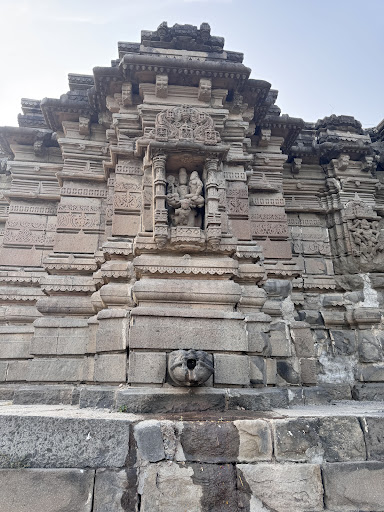
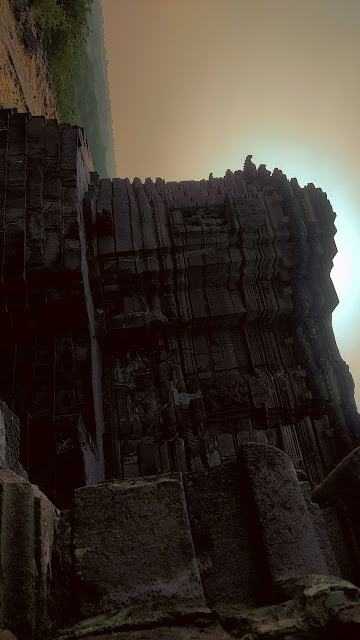
One of the most interesting and lesser-known rock temples of Maharashtra is the Anandeshwar Temple at Lasur village in Daryapur taluka in Amravati district. Built on the bank of the Purna river on raised ground, this temple built in black stone looks very much like a fort from a distance. Historical records state that this temple was built by Raja Ramachandra of the Yadavas of Devagiri somewhere in the 13th century but its purpose, construction and lack of availability of the black stone in the vicinity has raised many questions.
Though this temple is built in the typical Hemadpanthi style, the layout of the temple is very unusual. The temple in plan appears like a three-petal flower with a relatively small entrance on the fourth side. There are three sanctums and an open sabha mandap known as swarga mandap in the middle. This round structure is a visual delight with intricately carved pillars in the background while the infinite blue sky appears to be in the foreground! Another fascinating architectural detail is that rocks of different sizes appear to be joined or interlocked to hold the entire structure.
The Shiva Temple is seated in the main sanctum and supported by twelve pillars. There appears to be a common theme of yakshas in different forms seen in the roof detailing.
It is quite unlikely that you will see the array of floral, geometrical, mandalas and other myriad patterns in any other temple structure built in this time. This centuries-old temple has elaborately carved figures of sages, apsaras, scenes from the Puranas and gods and goddesses on the pillars and cornices.
Archaeological excavations around the temple have uncovered idols and stonework in the same black stone. There is some evidence that the carving on the stones was done with the help of elephants at the time of construction.
This temple makes for a compelling study for its concept, layout, structural detailing and unique designs and relief work drawing both devotees and students of history and architecture. This temple is now a protected monument of the Archaeological Survey of...
Read moreLasur, at Daryapur there is a beautiful temple of Yadav period which is about 800 years old. An excellent example of ancient architecture, this temple of Lord Shiva is situated on a high place near the village. Situated in a very quiet place and different from the usual temples, this temple is built in black stone. There is a big pipal tree in the courtyard of the temple and the rest of the area is open. The pavilion in the temple is round in shape and the pavilion is octagonal. The hallmark of the auditorium is that the circular area does not have a roof, but the sky can be seen from it. This experience is fascinating and keeps the viewer hooked for a long time. Each of the pillars is beautifully carved. On all three sides of the sabhamandap there is a space resembling a gabhara. The temple has a semi-circular (dome) instead of the traditional summit. The shadow that forms inside the center of the sunlight coming from the circular space in the center and the composition that emerges from it, attracts the photographer. Like other tourist destinations in Vidarbha, it has the potential to be a great tourist destination. Hygiene and architecture should also be maintained, there is a need for public awareness about this, in fact it is everyone's...
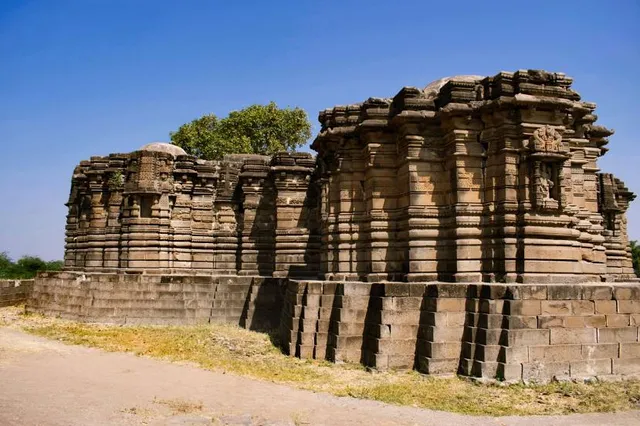
Read moreThe Anandeshwar Temple is a remarkable example of 13th-century Hemadpanthi architecture. Commissioned by Raja Ramachandra of the Yadavas of Devagiri, the temple is dedicated to Lord Shiva and is renowned for its unique design and intricate carvings.
the temple showcases the Hemadpanthi architectural style, characterized by the use of black stone and claimed a distinctive construction technique that involves interlocking stones without mortar. However some iron reinforced are now visible through cracks.
Temple is protected monument by the Archaeological Survey of India (ASI)
Its layout is particularly noteworthy, resembling a three-petaled flower with three sanctums and an open central hall known as the “swarga mandap.” This open-to-sky design allows natural light to illuminate the intricately carved pillars and ceilings, enhancing the temple’s aesthetic appeal.
Architectural Features:
The temple stands on twelve beautifully carved pillars and features elaborate sculptures both inside and outside. The pillars and cornices are adorned with depictions of sages, apsaras (celestial maidens), scenes from the Puranas, and various deities. The detailed carvings and the unique open-roof design exemplify the architectural ingenuity...
Read more