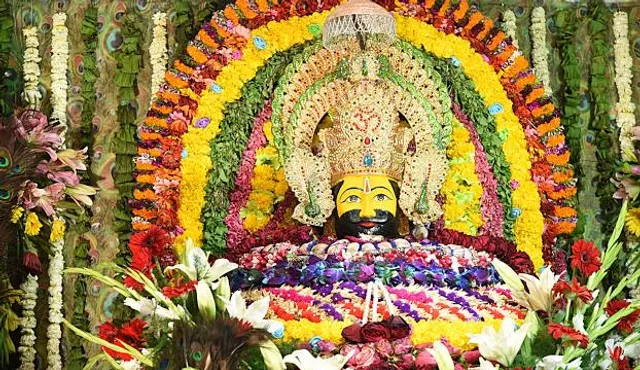
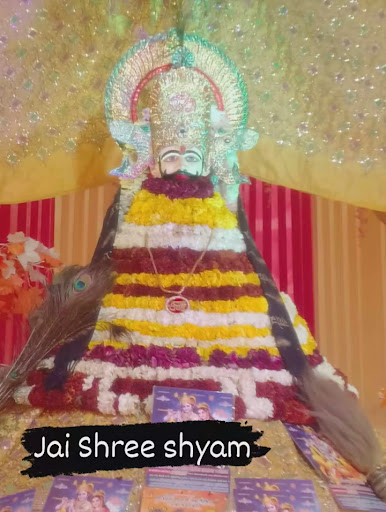
Khatu Shyam, also known as Shyam Baba or Barbarika, is a revered deity in Hinduism, particularly in the regions of Rajasthan and North India. He is considered an incarnation of Lord Krishna and is worshipped for his unwavering devotion, selflessness, and divine powers. The legend of Khatu Shyam is deeply rooted in the Mahabharata, where he is depicted as a symbol of sacrifice and loyalty.
According to the legend, Khatu Shyam was originally Barbarika, the son of Ghatotkacha and grandson of Bhima, one of the Pandava brothers. Born with immense power and blessed with three infallible arrows by Lord Shiva, Barbarika was a formidable warrior. Before the Kurukshetra war, he pledged to support the weaker side, intending to balance the scales of justice. However, Lord Krishna, aware of Barbarika's potential to alter the outcome of the war, tested his resolve by asking for his head as a donation. Without hesitation, Barbarika offered his head, demonstrating his unwavering commitment to dharma (righteousness). Pleased with his sacrifice, Krishna granted him a boon, allowing him to be worshipped as Khatu Shyam in the Kali Yuga.
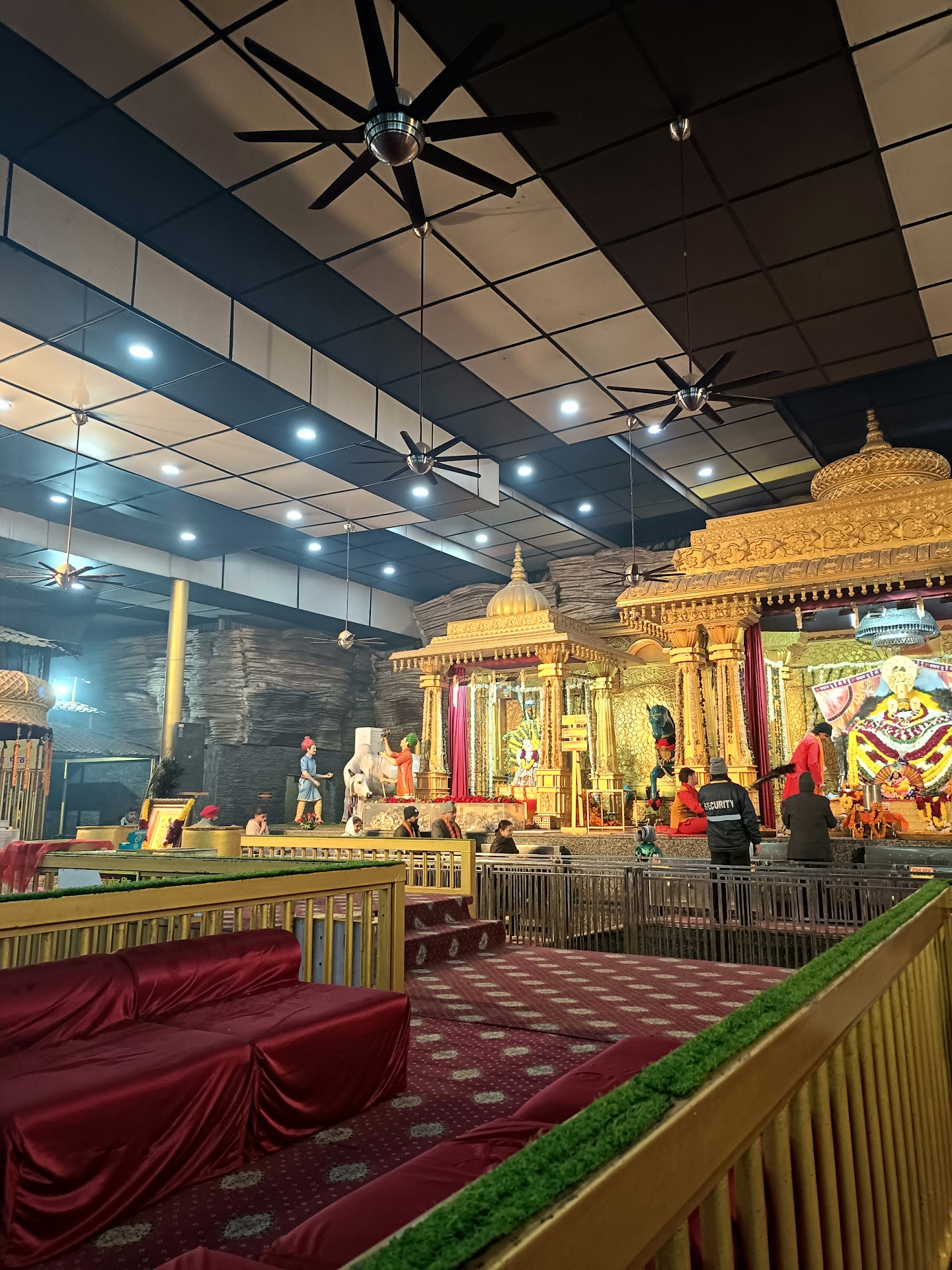
The temple of Khatu Shyam, located in the Sikar district of Rajasthan, is a major pilgrimage site. Thousands of devotees visit the temple every year, especially during the Phalgun Mela, a grand festival held in his honor. The deity is often depicted as a child with a blue complexion, holding a bow and arrow, symbolizing his warrior spirit and divine grace. Devotees believe that worshipping Khatu Shyam brings protection, prosperity, and fulfillment of desires. His blessings are sought for overcoming challenges, healing ailments, and achieving success in life.
The story of Khatu Shyam is not just a tale of sacrifice but also a lesson in humility and devotion. His willingness to give up everything for the greater good resonates with the core values of Hinduism, emphasizing selflessness and duty. Devotees often chant his name, "Shyam Baba," and sing bhajans (devotional songs) in his praise, seeking his divine intervention in their lives.
Khatu Shyam's popularity extends beyond Rajasthan, with temples dedicated to him in various parts of India and abroad. His teachings and legacy continue to inspire millions, reminding them of the power of faith and the importance of sacrificing personal desires for the welfare of others. In a world often driven by materialism, the story of Khatu Shyam serves as a beacon of hope, guiding people toward a path of righteousness and spiritual...
Read moreBarbarika was the grandson of Bhima, a prominent figure in the Mahabharata, and the son of Ghatotkacha. He was a formidable warrior known for his invincibility and was in possession of three powerful arrows that could guarantee victory in any battle. The three arrows had special powers: the first one would mark all the things Barbarika wanted to destroy, the second would mark all the things he wanted to save, and the third arrow would simply destroy the targets that had been marked.
When Barbarik learned that his grandfathers had marched into battle against the Kaurava princes, he left home to observe the conflict. He assured his mother that he would only intervene on behalf of the side that was losing. Meanwhile, Krishna, disguised, was surveying all the warriors to find out how long each thought they would need to end the war if it were up to them. Bhishma estimated 20 days, Karna 24 days, Dronacharya 25 days, and Arjuna believed he could win in 28 days.
When Krishna asked Barbarik the same question, Barbarik claimed he could conclude the war in just a minute. His reasoning was that his arrows could swiftly identify and strike down the targets, ensuring the safety of his allies and defeating his enemies quickly. Krishna inquired which side Barbarik intended to support. Barbarik recalled the promise to his mother, assuming he would join the Pandavas, who had a smaller army compared to the Kauravas.
However, Krishna explained the paradox: Barbarik's presence would automatically tilt the balance, making his chosen side the victors. This would contradict his promise, as he would continually have to switch sides to keep his vow, ultimately leaving him as the last man standing. Distressed by the realization of his promise's consequences, Barbarik was puzzled. Krishna then presented a solution. According to tradition, the bravest warrior's head had to sanctify the battlefield. To prevent total destruction, Barbarik sacrificed his head for the cause, and the war commenced with his...
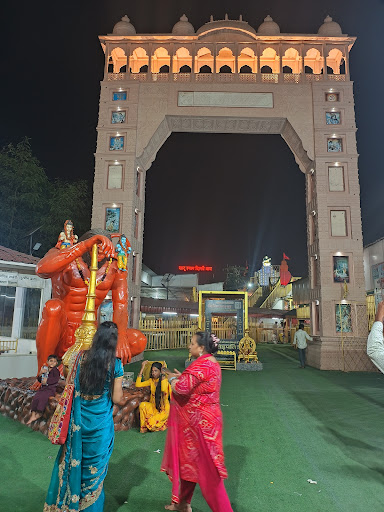
Read moreMy recent visit to the temple was quite disappointing, especially as I was accompanying my mother who uses a wheelchair.
Entry & Accessibility: Thankfully, wheelchair access was available through Gate No. 2. However, the designated car parking is quite far, requiring a wait for battery rickshaws. To avoid this, I parked near Gate No. 1, where some cars were already parked, though it's not an official parking area. This turned out to be a mistake.
Footwear & Entry: I left my footwear in the car and entered through Gate No. 1 — something I strongly advise against. There are no clear instructions or facilities for storing shoes at that gate.
Inside the Temple: The passage to the main sanctum is direct but poorly managed:
No crowd control or assistance available.
No drinking water facilities along the queue.
Emergency contact numbers are displayed but unreachable.
Vendors selling prasad line the passage, adding to the congestion.
Conclusion: The temple administration needs to significantly improve accessibility, crowd management, and basic facilities for a better visitor experience. Disclaimer:- Around the temple — whether near the parking area or by Gate No. 1 — you’ll likely encounter a few self-appointed “officials” proudly wearing temple ID cards. They usually roam in groups of two or more, perhaps for moral support. Don’t expect any actual assistance — their communication style leans more toward ego than empathy. Best advice? Smile, nod, and avoid engaging — unless you’re in the mood for a completely...
Read more