HTML SitemapExplore
logo
Find Things to DoFind The Best Restaurants

Yamuna Biodiversity Park — Attraction in Delhi

Name
Yamuna Biodiversity Park
Description
Yamuna biodiversity park, located on Yamuna river front is a 9770 hectares biodiversity area in Delhi, India. It is developed by Delhi Development Authority with the technical help of Centre for Environmental Management of Degraded Ecosystems, University of Delhi.
Nearby attractions
Nearby restaurants
Gautam Sweet Shop
Main Rd, Milan Vihar, Burari, New Delhi, Delhi, 110084, India
PARATHA KING
Shiv Mandir Marg, B-212, Gali No. 12, Wazirabad, Delhi, 110084, India
Krishna Sweets
25, Foota Rd, Hanuman Kunj, Sant Nagar, Burari, New Delhi, Delhi, 110084, India
LAJAWAB CHAAP POINT
P6JF+C85, Wazirabad, New Delhi, Delhi, 110084, India
MOMOS POINT
1, Gali No. 8, Wazirabad, Delhi, 110084, India
Delhi 6 Ka Zaika
N 109 Sangam Vihar Gali No 3/5, New Delhi, Delhi 110084, India
Nearby hotels
Hotel O Red Rose
Khasra no-7, gali no-6, Main Jagatpur Rd, Sangam Vihar, Delhi, 110084, India
OYO Vision Rooms Near Gtb Nagar Metro Station
293, Gali Number 3/3, Sangam Vihar, Wazirabad, Delhi, 110084, India
Related posts
Keywords
Yamuna Biodiversity Park tourism.Yamuna Biodiversity Park hotels.Yamuna Biodiversity Park bed and breakfast. flights to Yamuna Biodiversity Park.Yamuna Biodiversity Park attractions.Yamuna Biodiversity Park restaurants.Yamuna Biodiversity Park travel.Yamuna Biodiversity Park travel guide.Yamuna Biodiversity Park travel blog.Yamuna Biodiversity Park pictures.Yamuna Biodiversity Park photos.Yamuna Biodiversity Park travel tips.Yamuna Biodiversity Park maps.Yamuna Biodiversity Park things to do.
Yamuna Biodiversity Park things to do, attractions, restaurants, events info and trip planning
Yamuna Biodiversity Park
IndiaDelhiYamuna Biodiversity Park

Basic Info

Yamuna Biodiversity Park

Main Jagatpur Rd, Wazirabad, New Delhi, Delhi, 110084, India
4.1(4.8K)
Open 24 hours
Save
spot

Ratings & Description

Info

Yamuna biodiversity park, located on Yamuna river front is a 9770 hectares biodiversity area in Delhi, India. It is developed by Delhi Development Authority with the technical help of Centre for Environmental Management of Degraded Ecosystems, University of Delhi.

Outdoor
Adventure
Family friendly
attractions: , restaurants: Gautam Sweet Shop, PARATHA KING, Krishna Sweets, LAJAWAB CHAAP POINT, MOMOS POINT, Delhi 6 Ka Zaika
logoLearn more insights from Wanderboat AI.
Phone
+91 98990 55001
Website
delhibiodiversityparks.org

Plan your stay

hotel
Pet-friendly Hotels in Delhi
Find a cozy hotel nearby and make it a full experience.

hotel
Affordable Hotels in Delhi
Find a cozy hotel nearby and make it a full experience.

hotel
The Coolest Hotels You Haven't Heard Of (Yet)
Find a cozy hotel nearby and make it a full experience.

hotel
Trending Stays Worth the Hype in Delhi
Find a cozy hotel nearby and make it a full experience.

Reviews

Things to do nearby

Old Delhi Food-Temples-Spice Market & Rickshaw
Tue, Dec 9 • 1:00 PM
New Delhi, Delhi, 110006, India
View details
Same Day Taj Mahal Tour from Delhi by Car
Wed, Dec 10 • 2:30 AM
New Delhi, Delhi, 110001, India
View details
The Chef - Indian Cooking Class
Tue, Dec 9 • 11:30 AM
New Delhi, Delhi, 110063, India
View details

Nearby restaurants of Yamuna Biodiversity Park

Gautam Sweet Shop

PARATHA KING

Krishna Sweets

LAJAWAB CHAAP POINT

MOMOS POINT

Delhi 6 Ka Zaika
Gautam Sweet Shop

Gautam Sweet Shop

5.0

(1)

Click for details

PARATHA KING

PARATHA KING

3.8

(66)

Click for details
Krishna Sweets

Krishna Sweets

4.1

(11)

$$

Click for details
LAJAWAB CHAAP POINT

LAJAWAB CHAAP POINT

5.0

(3)

Click for details
Get the Appoverlay
Get the AppOne tap to find yournext favorite spots!
Wanderboat LogoWanderboat

Your everyday Al companion for getaway ideas

CompanyAbout Us
InformationAI Trip PlannerSitemap
SocialXInstagramTiktokLinkedin
LegalTerms of ServicePrivacy Policy

Get the app

© 2025 Wanderboat. All rights reserved.
logo

Posts

Mohit DockMohit Dock
Yamuna Biodiversity Park  Aerial View of YBP Emerging as the capital's most visited public place and prominent center for learning and understanding the environment, the Yamuna Biodiverstity Park has become a home for biologically rich wetlands, grassland communities, a wide variety of fruit yielding species and an abundance of medicinal herbs. The Park also comprises a native flora and fauna which used to exist a 100 years ago and then became extinct locally. It further, acts as a natural conservation site for specific group of endangered plants. The Yamuna Biodiversity Park is presently spread over an area of approximately 457 acres near Wazirabad village on the flat alluvial plains of the Yamuna and can be approached:  Entrance to YBP (i) from East Delhi through Bhajanpura, (ii) from South and Central Delhi through ISBT, and (iii) from North Delhi through Burari. The Biodiversity Park is 15 kms north-east of Connaught Place, and 4 kms north of ISBT.  The park features two major zones - the visitor zone and the nature reserve zone.  Domesticated Biodiversity Zone The front portion of the Yamuna Biodiversity Park, a 220m southward and 140m northward stretch from the main entry gate with 20-30m width is demarcated as Domesticated Biodiversity Zone. Enclosed by a hedge of poplar, it features plants like Ailanthus, Butea and Bauhinia that have a continuous seasonal interest due to their long flower production throughout the season. The outer iron fencing is embraced by multi-coloured climbers like Jasmine and Quisqualis with the same theme of continual luxury.  Resting Point Located at the main entrance, at the southward end, are three snack bars, a drinking water facilities and three resting places covered with the vines of Argyreia nervosa, Jasminum sambac and Petrogea volubilis. Just past the entry pocket and to the right is a “Welcome Rock facet” representing the origin of the Ganga and Yamuna and their convergence at Allahabad. A trail further leads to the Bambusetum, the Nature interpretation Centre, the Conservatory of fruit yielding species, the Migratory duck’s wetland and the Nature Reserve area.  A View of NIC Nature interpretation Centre is a beautiful classical building with elegant lighting, a red carpet floor, attractive interior designs, panels depicting various biodiversity levels, touch screens, and visual-aids that provide an insight into the basic concepts of biodiversity.
Rasik RajRasik Raj
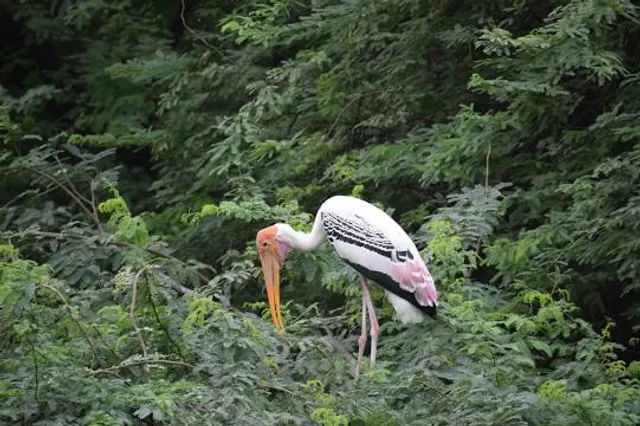
Yamuna biodiversity park, located on Yamuna river front is a 9770 hectares biodiversity area in Delhi, India. It is developed by Delhi Development Authority (DDA) with the technical help of Centre for Environmental Management of Degraded Ecosystems (CEMDE), University of Delhi. It serves as an ideal alternative habitat for migratory and resident bird species. It also is designed to conserve the wild genetic resources of agricultural crops and enhance groundwater recharge and augment freshwater availability. Delhi has 7554 hectares of fragmented forests which are deprived of wild animals due to unplanned urbanisation, and of the 400 wetlands, fewer than 3 or 4 were left. In 2015, Delhi already had Aravalli Biodiversity Park and Yamuna biodiversity park. Delhi Development Authority (DDA) engaged the scientist of Delhi University to develop four more biodiversity parks in Delhi, including the Northern ridge biodiversity park (Kamla Nehru Ridge), Tilpath Valley Biodiversity Park, Neela Hauz biodiversity park and phase-2 of the Yamuna Biodiversity Park. Phase-I of Yamuna biodiversity park focused on barren floodplains commenced in 2005 and phase-2 focused on the active floodplains commenced in 2015
Madhulika LiddleMadhulika Liddle
Phase 2 of the Yamuna Biodiversity Park, in Wazirabad, spreads over 457 acres. Of this, 197 acres are open to visitors. While no entry fee is charged, you are not allowed to go around on your own – you must be accompanied by a staff member of the park. We did not know about this, so arrived at the park at 11:30 and were informed of this, but after a phone call, a staff member came and took us around on a nature walk of 45 minutes. This land was reclaimed and then planted with vegetation, so it’s a mix of various fruit trees, grasslands, acacia, and so on. There are several greenhouses; a kitchen garden to demonstrate agriculture; a fruit plantation zone (the fruit is mainly to attract birds), and an acacia woodland, besides various herb beds and other interesting trees and plants. There are wetlands, which host various water birds as well as migratory birds during the winter. We were told that the park has several mammals too, including neelgai, deer, and wild boar, but all we saw was one mongoose! Overall, a satisfying if hurried exploration of nature. I would have liked it to be longer and more leisurely.
See more posts
See more posts
hotel
Find your stay

Pet-friendly Hotels in Delhi

Find a cozy hotel nearby and make it a full experience.

Yamuna Biodiversity Park  Aerial View of YBP Emerging as the capital's most visited public place and prominent center for learning and understanding the environment, the Yamuna Biodiverstity Park has become a home for biologically rich wetlands, grassland communities, a wide variety of fruit yielding species and an abundance of medicinal herbs. The Park also comprises a native flora and fauna which used to exist a 100 years ago and then became extinct locally. It further, acts as a natural conservation site for specific group of endangered plants. The Yamuna Biodiversity Park is presently spread over an area of approximately 457 acres near Wazirabad village on the flat alluvial plains of the Yamuna and can be approached:  Entrance to YBP (i) from East Delhi through Bhajanpura, (ii) from South and Central Delhi through ISBT, and (iii) from North Delhi through Burari. The Biodiversity Park is 15 kms north-east of Connaught Place, and 4 kms north of ISBT.  The park features two major zones - the visitor zone and the nature reserve zone.  Domesticated Biodiversity Zone The front portion of the Yamuna Biodiversity Park, a 220m southward and 140m northward stretch from the main entry gate with 20-30m width is demarcated as Domesticated Biodiversity Zone. Enclosed by a hedge of poplar, it features plants like Ailanthus, Butea and Bauhinia that have a continuous seasonal interest due to their long flower production throughout the season. The outer iron fencing is embraced by multi-coloured climbers like Jasmine and Quisqualis with the same theme of continual luxury.  Resting Point Located at the main entrance, at the southward end, are three snack bars, a drinking water facilities and three resting places covered with the vines of Argyreia nervosa, Jasminum sambac and Petrogea volubilis. Just past the entry pocket and to the right is a “Welcome Rock facet” representing the origin of the Ganga and Yamuna and their convergence at Allahabad. A trail further leads to the Bambusetum, the Nature interpretation Centre, the Conservatory of fruit yielding species, the Migratory duck’s wetland and the Nature Reserve area.  A View of NIC Nature interpretation Centre is a beautiful classical building with elegant lighting, a red carpet floor, attractive interior designs, panels depicting various biodiversity levels, touch screens, and visual-aids that provide an insight into the basic concepts of biodiversity.
Mohit Dock

Mohit Dock

hotel
Find your stay

Affordable Hotels in Delhi

Find a cozy hotel nearby and make it a full experience.

Get the Appoverlay
Get the AppOne tap to find yournext favorite spots!
Yamuna biodiversity park, located on Yamuna river front is a 9770 hectares biodiversity area in Delhi, India. It is developed by Delhi Development Authority (DDA) with the technical help of Centre for Environmental Management of Degraded Ecosystems (CEMDE), University of Delhi. It serves as an ideal alternative habitat for migratory and resident bird species. It also is designed to conserve the wild genetic resources of agricultural crops and enhance groundwater recharge and augment freshwater availability. Delhi has 7554 hectares of fragmented forests which are deprived of wild animals due to unplanned urbanisation, and of the 400 wetlands, fewer than 3 or 4 were left. In 2015, Delhi already had Aravalli Biodiversity Park and Yamuna biodiversity park. Delhi Development Authority (DDA) engaged the scientist of Delhi University to develop four more biodiversity parks in Delhi, including the Northern ridge biodiversity park (Kamla Nehru Ridge), Tilpath Valley Biodiversity Park, Neela Hauz biodiversity park and phase-2 of the Yamuna Biodiversity Park. Phase-I of Yamuna biodiversity park focused on barren floodplains commenced in 2005 and phase-2 focused on the active floodplains commenced in 2015
Rasik Raj

Rasik Raj

hotel
Find your stay

The Coolest Hotels You Haven't Heard Of (Yet)

Find a cozy hotel nearby and make it a full experience.

hotel
Find your stay

Trending Stays Worth the Hype in Delhi

Find a cozy hotel nearby and make it a full experience.

Phase 2 of the Yamuna Biodiversity Park, in Wazirabad, spreads over 457 acres. Of this, 197 acres are open to visitors. While no entry fee is charged, you are not allowed to go around on your own – you must be accompanied by a staff member of the park. We did not know about this, so arrived at the park at 11:30 and were informed of this, but after a phone call, a staff member came and took us around on a nature walk of 45 minutes. This land was reclaimed and then planted with vegetation, so it’s a mix of various fruit trees, grasslands, acacia, and so on. There are several greenhouses; a kitchen garden to demonstrate agriculture; a fruit plantation zone (the fruit is mainly to attract birds), and an acacia woodland, besides various herb beds and other interesting trees and plants. There are wetlands, which host various water birds as well as migratory birds during the winter. We were told that the park has several mammals too, including neelgai, deer, and wild boar, but all we saw was one mongoose! Overall, a satisfying if hurried exploration of nature. I would have liked it to be longer and more leisurely.
Madhulika Liddle

Madhulika Liddle

See more posts
See more posts

Reviews of Yamuna Biodiversity Park

4.1
(4,817)
avatar
5.0
3y

*NATURE WALK, BIRDING AND NATURE EDUCATION *

This is one of the best places to learn about wildlife, ecosystems and nature out of the books. You can see many species of wild plants and animals native to Delhi, here, (including barking deer, wild boar, porcupine, Indian hare, jungle cat, nilgai, civet - A leopard had visited the park in 2017 etc.).

*WHAT TO EXPECT *

You must place a call on their landline number to book a visit (free of cost) to get a quick and tight response. They have very well skilled Nature Education Officers and Scientists who are experts in Wildlife Biology, Ecology, Zoology, Botany and Nature Education and/or learning. They, depending on availability, will guide you through the park giving you interesting and precise information (that you'll hardly find in common books) about how a forest /ecosystem actually works and what is our role regarding ecosystems. You might get to see- a butterfly conservatory different kinds of wetland systems orchard and related birds migratory birds (depending on season) reptiles and mammals (if you're lucky) Nature interpretation Centre Grassland ecosystems forest ecosystems of different kinds -. Nursery

*NO ENTRY IN SLIPPERS OR SANDLES"

Shoes are must. This is a forest. Insects, snakes and Monitor lizards are present here. Although it's safe till you keep your distance, still wear shoes. Anyway you won't be allowed without shoes.

UNIQUE PARK

Plants, found in Delhi about 100-200 years ago on the banks of Yamuna river but now almost lost, from Delhi, can be seen here in their natural habitat forming a base for a natural forest. More than a park this place is a wildlife refuge where a lot of beautiful migratory and resident birds can be seen. Many species of reptiles and mammals are also present here.

*IMPORTANCE *

Yamuna Biodiversity Park in the true sense has become Delhi's lung in the past few years. It is a restored natural forest which offers many services to the city including fresh air, ground water recharge, flood control, soil restoration and protection, nature education and many more.

*WHAT IS THIS PARK? *

YBP is a scientifically restored flood plain ecosystem (forest), which has become functional after 2 decades of hard work by scientists from Delhi University and engineers of DDA. It has been put to development after careful scientific study of forests present on the banks of Yamuna. The goal of this project is to restore a fully functional ecosystem and landscape on a previously barren land and present it as an model of development, learning and conservation which could...

   Read more
avatar
3.0
6y

Yamuna biodiversity park, located on Yamuna river front is a 9770 hectares biodiversity area in Delhi, India.Arjuni/Mor Biodiversity Park It is developed by Delhi Development Authority (DDA) with the technical help of Centre for Environmental Management of Degraded Ecosystems (CEMDE), University of Delhi. It serves as an ideal alternative habitat for migratory and resident bird species. It also is designed to conserve the wild genetic resources of agricultural crops and enhance groundwater recharge and augment freshwater availability. Delhi has 7,884 hectares of fragmented forests which are deprived of wild animals due to the unplanned urbanisation and of the 400 wetlands fewer than 3 or 4 were left. In 2015, Delhi already had Aravalli Biodiversity Park and Yamuna biodiversity park. Delhi Development Authority (DDA) engaged the scientist of Delhi University to develop four more biodiversity parks in Delhi, including the Northern ridge biodiversity park (Kamla Nehru Ridge), Tilpath valley biodiversity park, Neelahauz biodiversity park and phase-2 of the Yamuna Biodiversity Park. Phase-I of Yamuna biodiversity park focused on barren floodplains commenced in 2005 and phase-2 focused on the active floodplains commenced in 2015.

In 2005 restoration of floodplains of Yamuna commenced, which had been lying barren due to sodic soil making it difficult for plants to grow. In Phase-I, 157 acres ecosystem was restored by developing two wetlands, a grassland and forest communities. Native plant species were reintroduced to reduce the salt content in the soil. The pH level (scale of acidity) of the soil was not neutral and detrimental to the success of the native Indian plants. Researchers form Delhi University had to plant one specific species of grass that brought the pH level from 10 to seven (neutral) level. According to prof. C R Babu of Delhi University, initially only mongooses, lizards and 31 species of birds were there in the park up until 2004. By 2014 the biodiversity park already had 900 species of native plants. The native species reintroduced included adina, sal, teak and hardwickia . As of 2019, it has about 1,500 species of plants and animals, and 200 species of birds.

By 2014, the wetlands was already attracting thousands of migratory birds from Siberia, Central Asia Asia and Europe. It had 200 species of birds, 75 species of butterflies, 10 species of snakes, and big mammals like porcupine, small Indian...

   Read more
avatar
4.0
7y

Yamuna Biodiversity Park

 Aerial View of YBP

Emerging as the capital's most visited public place and prominent center for learning and understanding the environment, the Yamuna Biodiverstity Park has become a home for biologically rich wetlands, grassland communities, a wide variety of fruit yielding species and an abundance of medicinal herbs. The Park also comprises a native flora and fauna which used to exist a 100 years ago and then became extinct locally. It further, acts as a natural conservation site for specific group of endangered plants. The Yamuna Biodiversity Park is presently spread over an area of approximately 457 acres near Wazirabad village on the flat alluvial plains of the Yamuna and can be approached:

 Entrance to YBP

(i) from East Delhi through Bhajanpura, (ii) from South and Central Delhi through ISBT, and (iii) from North Delhi through Burari. The Biodiversity Park is 15 kms north-east of Connaught Place, and 4 kms north of ISBT.

 The park features two major zones - the visitor zone and the nature reserve zone.

 Domesticated Biodiversity Zone

The front portion of the Yamuna Biodiversity Park, a 220m southward and 140m northward stretch from the main entry gate with 20-30m width is demarcated as Domesticated Biodiversity Zone. Enclosed by a hedge of poplar, it features plants like Ailanthus, Butea and Bauhinia that have a continuous seasonal interest due to their long flower production throughout the season. The outer iron fencing is embraced by multi-coloured climbers like Jasmine and Quisqualis with the same theme of continual luxury.

 Resting Point

Located at the main entrance, at the southward end, are three snack bars, a drinking water facilities and three resting places covered with the vines of Argyreia nervosa, Jasminum sambac and Petrogea volubilis. Just past the entry pocket and to the right is a “Welcome Rock facet” representing the origin of the Ganga and Yamuna and their convergence at Allahabad. A trail further leads to the Bambusetum, the Nature interpretation Centre, the Conservatory of fruit yielding species, the Migratory duck’s wetland and the Nature Reserve area.

 A View of NIC

Nature interpretation Centre is a beautiful classical building with elegant lighting, a red carpet floor, attractive interior designs, panels depicting various biodiversity levels, touch screens, and visual-aids that provide an insight into the basic concepts of...

   Read more
Page 1 of 7
Previous
Next