HTML SitemapExplore

Gosanimari Rajpat — Attraction in Dinhata - I

Name
Gosanimari Rajpat
Description
Rajpat or Kamtapur Fort is an archaeological site in present-day Gosanimari in the Dinhata I CD block in the Dinhata subdivision of the Cooch Behar district in West Bengal, India.
Nearby attractions
Nearby restaurants
Nearby hotels
Related posts
Keywords
Gosanimari Rajpat tourism.Gosanimari Rajpat hotels.Gosanimari Rajpat bed and breakfast. flights to Gosanimari Rajpat.Gosanimari Rajpat attractions.Gosanimari Rajpat restaurants.Gosanimari Rajpat travel.Gosanimari Rajpat travel guide.Gosanimari Rajpat travel blog.Gosanimari Rajpat pictures.Gosanimari Rajpat photos.Gosanimari Rajpat travel tips.Gosanimari Rajpat maps.Gosanimari Rajpat things to do.
Gosanimari Rajpat things to do, attractions, restaurants, events info and trip planning
Gosanimari Rajpat
IndiaWest BengalDinhata - IGosanimari Rajpat

Basic Info

Gosanimari Rajpat

5922+G38, Dist, Gosanimari, Kamtapur, West Bengal 736145, India
4.1(470)
Open 24 hours
Save
spot

Ratings & Description

Info

Rajpat or Kamtapur Fort is an archaeological site in present-day Gosanimari in the Dinhata I CD block in the Dinhata subdivision of the Cooch Behar district in West Bengal, India.

Cultural
Family friendly
attractions: , restaurants:
logoLearn more insights from Wanderboat AI.

Plan your stay

hotel
Pet-friendly Hotels in Dinhata - I
Find a cozy hotel nearby and make it a full experience.
hotel
Affordable Hotels in Dinhata - I
Find a cozy hotel nearby and make it a full experience.
hotel
The Coolest Hotels You Haven't Heard Of (Yet)
Find a cozy hotel nearby and make it a full experience.
hotel
Trending Stays Worth the Hype in Dinhata - I
Find a cozy hotel nearby and make it a full experience.

Reviews

Get the Appoverlay
Get the AppOne tap to find yournext favorite spots!
Wanderboat LogoWanderboat

Your everyday Al companion for getaway ideas

CompanyAbout Us
InformationAI Trip PlannerSitemap
SocialXInstagramTiktokLinkedin
LegalTerms of ServicePrivacy Policy

Get the app

© 2025 Wanderboat. All rights reserved.

Reviews of Gosanimari Rajpat

4.1
(470)
avatar
5.0
2y

The Khen dynasty replaced the weak rulers of the Kamata kingdom in the middle of the 15th century. There were only three Khen rulers. The last king, Nilambar expanded the kingdom to include the present Koch Bihar district of West Bengal, the undivided Kamrup and Darrang districts of Assam, northern Mymensingh, now in Bangladesh, and eastern parts of Dinajpur district. In 1498, its last capital at Gosanimari was attacked by the invading army of Alauddin Husain Shah

Rajpat is located at 26.1518°N 89.3502°E

The Kamtapur Fort was spread from the Dharla River in the east to Godaikhora in the west, and from Sitalabas in the north to Silduar-Soawariganj in the south. The palace was in the centre of the fort and is now referred to as Rajpat.[4]

Note: The map alongside presents some of the notable locations in the subdivisions. All places marked in the map are linked in the larger full screen map.

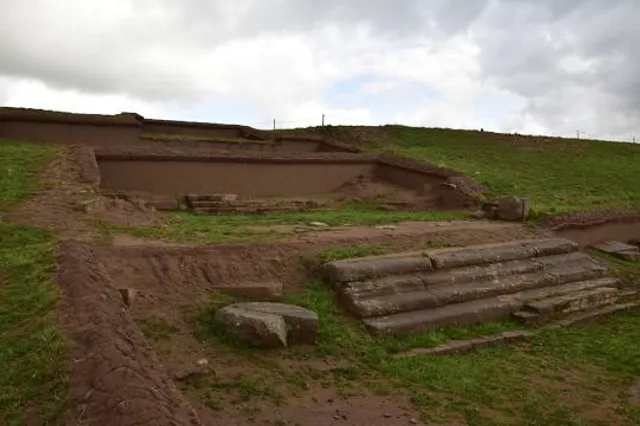
The fort was surrounded by a horse-shoe type high earthen wall running for around 22 kilometres (14 mi) and was open only on the side where the Dharla River was there. Now, it is mostly around 30 feet high and 35 feet wide. It was higher and wider in earlier days. The fort had seven entrance doors. There was a 250 feet wide float all around it. There was a system of providing regular water for it. Various people visiting the fort in the earlier days had seen many roads, temples, ponds and other utilities. In 1808, Dr. Buchanan Hamilton, visited the place and saw many broken structures. He also saw two brick-built walls inside the earthen enclosures. He left behind a detailed report. Now, all one can see is a large mound strewn with broken pieces of structures. Many statues or interesting items found in the fort have been kept aside for...

   Read more
avatar
5.0
7y

Gosanimari village at a distance of 35 kilometer to the south of Cooch Behar District, West Bengal State, marks the site of the ancient capital of ‘Kamtapur’ Kingdom

*Rajpat situated in  13kms. from Dinhata town. Goshanimari’s history is very important for medieval period in East and North-east India.

*Goshanimari (Kamtapur) is capital of the Kamtapur State in medieval period (1228AD to 1510AD). Kamtapur State established by Maharaja Sandha Roy the year of 1228AD.

*Maharaja Sandha Roy’s father was last king of Kamrup State, Maharaja Pithu Roy.

*Maharaja Sandha Roy change the name of Ancient Kamrup State, new name is ‘Kamtapur State” and change his capital, new capital is ‘Kamtapur’, present name is ‘Goshanimari’. “Kamta Originally denoted the western part of Brahamputra Vally to Koshi River and it was included within the Ancient Kingdom of Kamrupa”. Maharaja Nilambar Khen was defited by Hushen Saha. So, some year “Kamtapur State” was Afgan Colony the year of 1498/99AD to 1501AD.

*The last King of “Kamtapur State” wasMaharaja Durlovendra the year of 1510AD. After words the name of “Kamtapur State” is known as “Cooch-Behar State”.

*Kamteswari Temple” Situated at Goshanimari a distance of about 13km west of Dinhata Town the original temple is now destroyed. The present temple has been established by Maharaja Pran Narayan in 1665. Inside the temple the throne of Debi is situated. Beside the main temple 2 smaller temples also exist at the back-side of the temple courtyard. At the gate a ‘Tarakeswar Sivalinga’ exists. A large number of festivals are observed here of which the Batha Festival of Debi in the month of Magh is...

   Read more
avatar
5.0
3y

The eastern part of the district. In Tufanganj subdivision 6.97% of the population lives in the urban areas and 93.02% lives in the rural areas. In Dinhata subdivision 5.98% of the population lives in the urban areas and 94.02% lives in the urban areas.[1] The entire district forms the flat alluvial flood plains of mighty rivers.[2] Dr. Buchanan Hamilton in 1808 had left a vivid description along with a sketch of the mound and site which still hold good in authenticity. According to Dr. R.D. Banerjee, Kamata kingdom stood as buffer between eastern Kamrupa and the Bengal Sultanate in the 15th century CE. He is of the opinion that the Khens might have built Gosanimari, but it is also possible that these Mongoloid people only used the ruins of fortification which had been built several centuries earlier. After the independence Archaeological Survey of India took over the responsibility of...

   Read more
Page 1 of 7
Previous
Next

Posts

Tanmay RoyTanmay Roy
The Khen dynasty replaced the weak rulers of the Kamata kingdom in the middle of the 15th century. There were only three Khen rulers. The last king, Nilambar expanded the kingdom to include the present Koch Bihar district of West Bengal, the undivided Kamrup and Darrang districts of Assam, northern Mymensingh, now in Bangladesh, and eastern parts of Dinajpur district. In 1498, its last capital at Gosanimari was attacked by the invading army of Alauddin Husain Shah Rajpat is located at 26.1518°N 89.3502°E The Kamtapur Fort was spread from the Dharla River in the east to Godaikhora in the west, and from Sitalabas in the north to Silduar-Soawariganj in the south. The palace was in the centre of the fort and is now referred to as Rajpat.[4] Note: The map alongside presents some of the notable locations in the subdivisions. All places marked in the map are linked in the larger full screen map. The fort was surrounded by a horse-shoe type high earthen wall running for around 22 kilometres (14 mi) and was open only on the side where the Dharla River was there. Now, it is mostly around 30 feet high and 35 feet wide. It was higher and wider in earlier days. The fort had seven entrance doors. There was a 250 feet wide float all around it. There was a system of providing regular water for it. Various people visiting the fort in the earlier days had seen many roads, temples, ponds and other utilities. In 1808, Dr. Buchanan Hamilton, visited the place and saw many broken structures. He also saw two brick-built walls inside the earthen enclosures. He left behind a detailed report. Now, all one can see is a large mound strewn with broken pieces of structures. Many statues or interesting items found in the fort have been kept aside for visitors to see.
T.C Barman (Tapasfun)T.C Barman (Tapasfun)
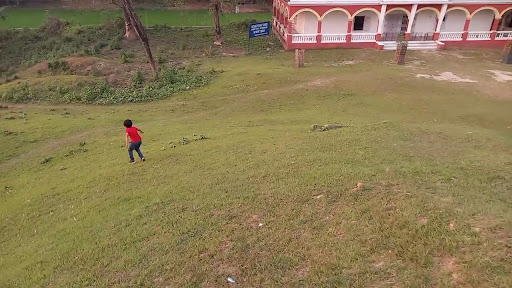
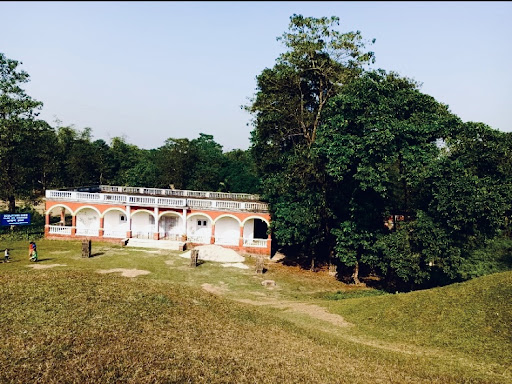
Gosanimari Rajpat used to be a palace of Kanteswar Raja, which has now become a mass of ruins. It's sad to see that the place hasn't been maintained properly, and as a result, not much is left to see. However, it was heartening to see that despite the neglect, young teenagers still flock to this place on holidays. There seems to be an inexplicable fascination with the ruins among the youth. As for me, I found myself drawn to the vast expanse of land that was once the palace. It's like a ground now, but that didn't stop me from spending some quality time with my family and friends there. I would say that while there isn't much to see in terms of the palace ruins, Gosanimari Rajpat is still worth a visit. The historical significance of the place coupled with the laidback atmosphere make it an ideal spot for a lazy afternoon picnic or just hanging out with friends.
Nilanjan Saha (নীল)Nilanjan Saha (নীল)
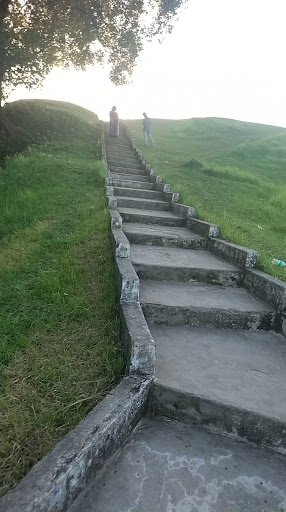
Gosanimari Rajpat Mound is an archeological site in the district of Cooch Behar, West Bengal, India. It is supposed to the site of the now ruined palace of King Kanteswar. Two wells, constructed of clay bricks, are there. Some stone utensils as well as reliefs of various deities have been unearthed by Archeological Survey of India (ASI). Numerous other ruins of the former palace are strewn all around. The view from the top of the mound is very pleasant. It is by all means an ideal place to spend a few leisurely hours with friends, family or your partner.
See more posts
See more posts
hotel
Find your stay

Pet-friendly Hotels in Dinhata - I

Find a cozy hotel nearby and make it a full experience.

The Khen dynasty replaced the weak rulers of the Kamata kingdom in the middle of the 15th century. There were only three Khen rulers. The last king, Nilambar expanded the kingdom to include the present Koch Bihar district of West Bengal, the undivided Kamrup and Darrang districts of Assam, northern Mymensingh, now in Bangladesh, and eastern parts of Dinajpur district. In 1498, its last capital at Gosanimari was attacked by the invading army of Alauddin Husain Shah Rajpat is located at 26.1518°N 89.3502°E The Kamtapur Fort was spread from the Dharla River in the east to Godaikhora in the west, and from Sitalabas in the north to Silduar-Soawariganj in the south. The palace was in the centre of the fort and is now referred to as Rajpat.[4] Note: The map alongside presents some of the notable locations in the subdivisions. All places marked in the map are linked in the larger full screen map. The fort was surrounded by a horse-shoe type high earthen wall running for around 22 kilometres (14 mi) and was open only on the side where the Dharla River was there. Now, it is mostly around 30 feet high and 35 feet wide. It was higher and wider in earlier days. The fort had seven entrance doors. There was a 250 feet wide float all around it. There was a system of providing regular water for it. Various people visiting the fort in the earlier days had seen many roads, temples, ponds and other utilities. In 1808, Dr. Buchanan Hamilton, visited the place and saw many broken structures. He also saw two brick-built walls inside the earthen enclosures. He left behind a detailed report. Now, all one can see is a large mound strewn with broken pieces of structures. Many statues or interesting items found in the fort have been kept aside for visitors to see.
Tanmay Roy

Tanmay Roy

hotel
Find your stay

Affordable Hotels in Dinhata - I

Find a cozy hotel nearby and make it a full experience.

Get the Appoverlay
Get the AppOne tap to find yournext favorite spots!
Gosanimari Rajpat used to be a palace of Kanteswar Raja, which has now become a mass of ruins. It's sad to see that the place hasn't been maintained properly, and as a result, not much is left to see. However, it was heartening to see that despite the neglect, young teenagers still flock to this place on holidays. There seems to be an inexplicable fascination with the ruins among the youth. As for me, I found myself drawn to the vast expanse of land that was once the palace. It's like a ground now, but that didn't stop me from spending some quality time with my family and friends there. I would say that while there isn't much to see in terms of the palace ruins, Gosanimari Rajpat is still worth a visit. The historical significance of the place coupled with the laidback atmosphere make it an ideal spot for a lazy afternoon picnic or just hanging out with friends.
T.C Barman (Tapasfun)

T.C Barman (Tapasfun)

hotel
Find your stay

The Coolest Hotels You Haven't Heard Of (Yet)

Find a cozy hotel nearby and make it a full experience.

hotel
Find your stay

Trending Stays Worth the Hype in Dinhata - I

Find a cozy hotel nearby and make it a full experience.

Gosanimari Rajpat Mound is an archeological site in the district of Cooch Behar, West Bengal, India. It is supposed to the site of the now ruined palace of King Kanteswar. Two wells, constructed of clay bricks, are there. Some stone utensils as well as reliefs of various deities have been unearthed by Archeological Survey of India (ASI). Numerous other ruins of the former palace are strewn all around. The view from the top of the mound is very pleasant. It is by all means an ideal place to spend a few leisurely hours with friends, family or your partner.
Nilanjan Saha (নীল)

Nilanjan Saha (নীল)

See more posts
See more posts