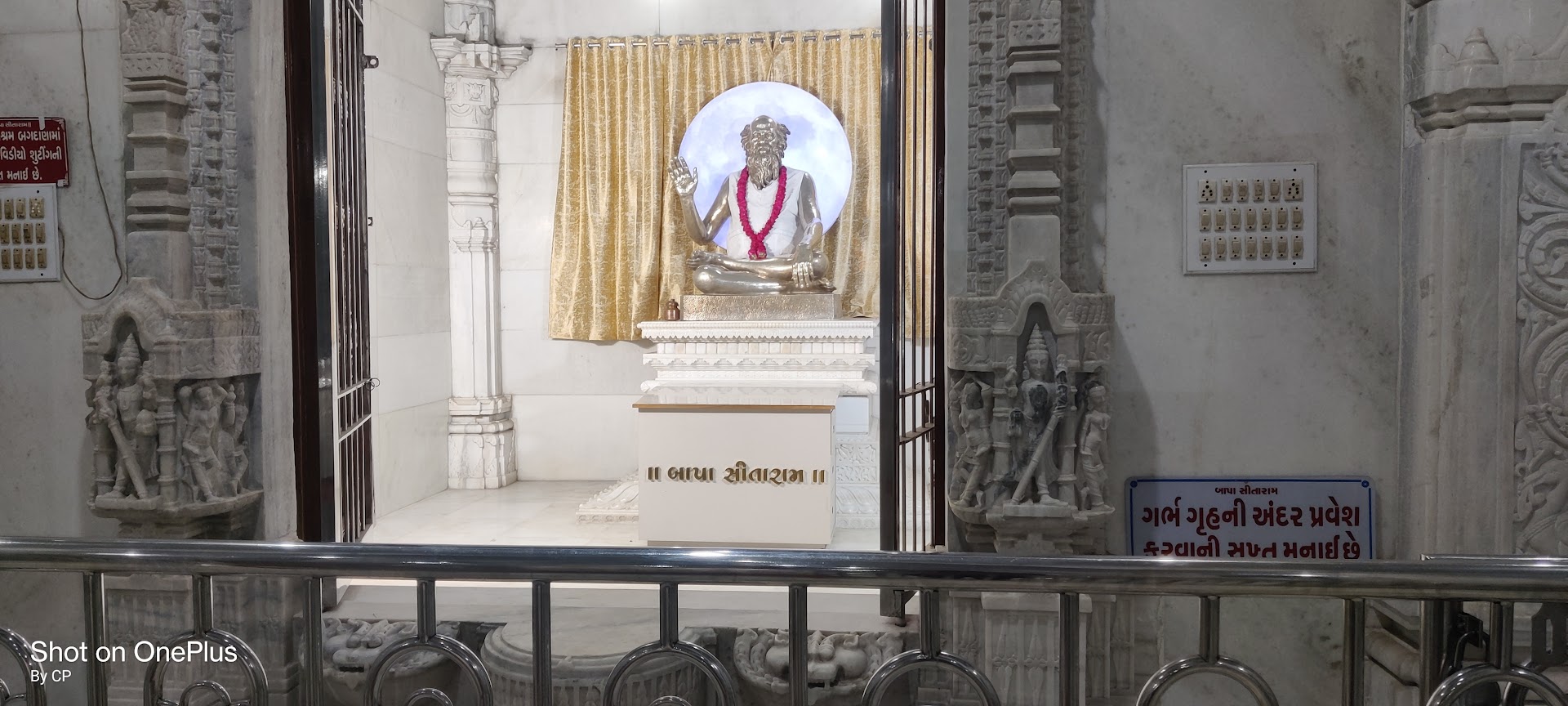
Bapa’s family background originates from Rajestan (Adhevada), and they were Ramanandi Sadhu. His mothers name was Shiwar kuwarbai and father’s name was Hiradas. Bapasitaram was born on 1906 (no exact date) at Janjariaya Hanuman Mandir, in a village called Adhe Wada in Bhaunagar. At birth his parents names him Bhaktiram. It was known to all that Bapa was the complete incarnation Shesh Narayan. He studies until the 2nd standard.
Bapa first attended Nashik kumb mela in 1915 along with his Guru Pujya Shri Sitaramdas Bapu (ashram was in Uttar Pradesh, Ayodhya). He performed his main sadhna at Mandakini river at mountain Chitrakut which is by the border of Uttar Pradesh and Madhya Pradesh. He gained yog sidh at the age of 28. His guru advised him go on his own journey and named him Bajarangdas Bapa. Bapa encouraged people to call him Bapa Sitaram so that people recite the name of mother (Maa) and father (Baap).
When he was about 30 he went on the Himaliya yatra, traveled and resided in numerous places: Mumbai, Kaanan Vistar, Surat Laxmi Mandir, Dholera for 1 year, Bhaunagar, Warugat Bai's Hanumanji place for 5 years, Palitana, Karmodar for 5 years, and then Bagdana at the age of 41.
He performed many miracles that were unexplained, but bapa never took any credit for the results.
Once during the Kumbh Mela, when thousands of Saints and Gurus Sitaramji got together at the sea bank in Mumbai. It was very hot and the water available was the salt water. How could they quench their thirst? Guruji gave Bapa the responsibility to get clean drinking water for all. Bapa did not know what to do, but naturally started digging on the sea banks. Others were surprises of what he was doing. As he continued digging, Ganga appeared on the sea bank of Mumbai. All of them began to drink the water. Guruji eyes opened for Bapa and saw him as having the capabilities of becoming a proficient saint.
Guruji Sitaramji was so impressed with Bapa that he gave him the permission to leave the monastery and work towards improving the society and the standards of life in the villages of India. His guru advised him go on his own journey and named him Bajarangdas Bapa. Bapa was very thankful for the Guru’s comments and began on his journey to fulfil Guruji’s wishes. Bapa encouraged people to call him Bapa Sitaram so that people recite the name of mother (Maa) and father (Bap).
Bapa’s first visit was to Surat, where he stayed in Laxminarayan temple on Begampara Saveria Street. He then moved on to stay at Hanol Village in Ranjit Hanumanji for seven years, but could not forget his native town. On his journey he visited Bhavnagar Jadeja’s house and then Vivagala Shoe maker’s house. He then went to Palitana, Jesar and Kalmoder. Bapa then arranged a Saptah at Kalmoder Village and decided to stay there for three years.
Bapa then came to Bagdana village and saw Triveni Sangam. It was here that he recognised 5 important elements:
Bagdana Village Bagad River Bagdeshwar Mahadev Bagladan Rishi hermitage Bajrangdas Bapa This became Bapa’s field of actions. The main aim was to improve the way of life in these areas and utilise the resources available to better the life style for those living in India.
He passed away peacefully at the Bagdana Ashram’s Madhuli at 5am on 09/01/1977 by english calendar (gujarati calendar date is Pos Vad Choth). Bapa’s death aniversary is usually celebrated by...
Read moreThe time has been observed as the peak season to visit Bagdana and rightly so. The temperatures range between 73℉ and 100℉ and the humidity that has been observed to be a usual of 80% marking the perfect climate to head out and check out the best things to do in Bagdana.A visit to Bandana Bapasitaram is not just a journey to a temple but an experience of deep spirituality, devotion, and peace. Nestled in a serene location, far from the hustle of daily life, this sacred place has become a source of faith and inspiration for countless devotees. From the moment you step into the temple premises, you can feel a divine aura that instantly calms the mind and uplifts the heart.
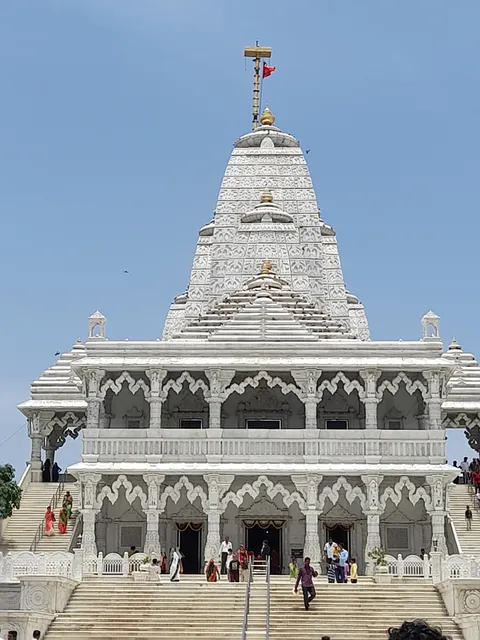
The first thing that captures your attention is the simplicity and purity of the temple surroundings. The soothing chants, the fragrance of incense, and the sight of devotees bowing their heads in reverence create an atmosphere that feels truly heavenly. The idol of Bapasitaram, adorned with flowers and lights, radiates positivity and draws every visitor into a state of devotion. Many people believe that just a glimpse of the divine idol fills the heart with hope, courage, and peace.
One of the most special experiences at Bandana Bapasitaram is participating in the daily prayers and aarti. The rhythmic chants, accompanied by the sound of bells and traditional instruments, create an energy that makes you forget all worries. Sitting among devotees, with folded hands and closed eyes, you feel a powerful connection—not only with the divine but also with your own inner self. It is this feeling of oneness and purity that keeps devotees returning again and again.
Apart from its spiritual significance, the place also offers a sense of community and togetherness. People from different walks of life come here to seek blessings, share their faith, and even volunteer in temple activities. The prasad (holy offering) is served with warmth and devotion, reminding everyone of the values of humility and service. Spending time here makes you realize how faith can bring people closer and create bonds that are beyond worldly attachments.
The surrounding area of the temple adds to its charm. The peaceful environment, the sound of birds, and the natural beauty around the temple make it a perfect spot for meditation and reflection. Many visitors sit quietly after prayers, absorbing the spiritual energy and finding answers to their personal struggles. It is believed that those who come here with a true heart often experience a sense of relief from their burdens and return home with renewed strength.
Visiting Bandana Bapasitaram is truly a life-enriching experience. It is not just about offering prayers, but about discovering inner peace, reconnecting with values, and feeling the presence of something greater than oneself. The moments spent here stay etched in the memory, guiding you through life’s ups and downs. For anyone seeking faith, hope, and tranquility, a visit to Bandana Bapasitaram is a journey worth taking—an experience that touches the soul and leaves you...
Read more॥ Bapa sitaram ॥ The temple was built by Shree Bajarangdas bapa in 1977 as small and simple Madhuli. Currently on this place big and beautiful temple constructed, dedicated to Bapa Sitaram. Along with temple, temple trust manages Bhojanalaya, Dharmshala, Gaushala, several cultural and spiritual activities.
This is the only temple where food is being served 24 hrs every day for free and accommodation in Dharmashala for night hold is also free of cost. The follower of Bapa Sitaram and Parcha of Bapa are so much so you can find Madhuli of Bapa in almost every village of Gujarat.
Bajrangdas Bapa, well knowns as Bapa Sitaram, very popular saint of Saurashtra, Gujarat was born in 1906 at Zanzariya Hanumanji Mandir in small village Adhewada, near Bhavnagar. Bajarangdas Bapa’s initial life name was Bhaktiram, his father Hiradas and mother Shiwar Kuwarbai were religious inclined people and Ramanandi family thus same nature flows in Bapa. From the early life Bajarangdas Bapa was very spiritual person, thus he attained Yog Siddhi in very early stage of life. One morning Bapa was sleeping and snake was also seated beside the Bapa thus his mother and all people thought that Bapa was the incarnation Shesh Narayan. Bapa had left his education from second standard and started for his spiritual journey at just 11 year. Saint Siraram Bapu had given Diksha to Bapa, thus Sitaram Bapu was the spiritual teacher Guru of Bajarangdas Bapa. Guruji had given the name of Bajarangdas and taught spiritual lesson. From then, Bhaktiram became popular as Bajarangdas Bapa.He visited lots of places like Nashik Kumbh Mela, Palitana, Ayodhya, Surat etc. Then Bapa came back in 1941 at Bagdana and started living in small Madhuli here. Bapa had selected this place due to Triveni Sangam of Bagad river, Bagadeshwar Mahadev, Bagdalam Rishi ashram and surrounding spiritual aura. Then in 1951, Bapa had started Ashram here and in 1959 Bhojanalaya was started where devotee can take Prasad whole day and night.
Along with the main temple of Bajarangdas Bapa, Lord Hanumanji, Lord Ganeshji, you can fine few other sacred shrine as well which includes the Samadhi Mandir, Dhyan Mandir, Ram Darbar Mandir, Kaal Bhairav idol etc. The entire temple structure made up from Arashpahan stone with huge entrance gate.
As Bagdana is very popular religious destination of Gujarat and located just at 32 km from Mahuva, 40 km from Palitana and 79 km from Bhavnagar, so it is very well connected with all major cities of Gujarat via road, rail and air network. You can easily reach with personal and private vehicle. Also you can get the government buses from Mahuva, Bhavnagar, Ahmedabad, Palitana etc. to...
Read more