Regarded as one of the most important places of pilgrimage for followers of the Swaminarayan Faith, Lord Swaminarayan stayed here for over 25 years of His active ministry.
Using the darbar of Dada Khachar as his base, Lord Swaminarayan conducted preaching tours from here. Gadhada was a witness to countless lilas of the Lord and it was here that most of the Vachanamrits were narrated.
To fulfil the wish of Dada Khachar and his family, Lord Swaminarayan planned to build His sixth and final mandir in Gadhada itself. Lord Swaminaayan Himselef selected the location for the mandir - the hillock on the banks of the River Ghela where the Lord, saints and devotees bathed daily. Lord Swaminarayan inspected the site and personally drew up detailed plans for the proposed mandir. The piece of land in question belonged jointly to Dada Khachar and his uncle Jiva Khachar. But unfortunately, Jiva Khachar refused to part with his share of the land.
Lord Swaminarayan became despondent and left Gadhada to visit neighbouring villages. When He reached Sarangpur, He prepared to build a mandir there at the request of Jiva Khachar of Sarangpur.
Meanwhile Dada Khachar and his sisters came running to Lord Swaminarayan and appealed to Him: You are Gadhada's and Gadhada is yours. Why go elsewhere, we are ready to offer you our darbar, our everything and ourselves.
Touched by their spirit of sacrifice, Lord Swaminarayan returned to Gadhada and shortly afterwards, the southern rooms of the darbar were knocked down and a huge mandir, dedicated toGopinathji Maharaj, was completed in 1829.
Nonethless, Lord Swaminarayan's original desire to build a mandir on the hilltop remained unfulfilled.
History Whilst bathing in the holy waters of the River Ghela, Shastriji Maharaj often used to turn in the direction of the hillock and say: "I see a huge 3-spired mandir here."
To fulfil Lord Swaminarayan's wish, Shastriji Maharaj had one firm desire - to build a magnificent monument in honour of Lord Swaminarayan at Gadhada. This idea was conceived in 1923. Shastriji Maharaj made serious attempts to procure the land on the hill-top but it seemed as if all the odds were against him. Due to instigation by opponents, Bhavnagar State issued a decree barring Shastriji Maharaj from acquiring any land in Gadhada. Undeterred, Shastriji Maharaj continued his efforts and prayers, remarking: "if it is Lord Swaminarayan's wish to sit here with His devotee, Gunatitanand Swami, then He will surely exercise His extraordinary spiritual powers to get this land for us to build a mandir."
And sure enough, in 1947, India gained independence and the state kings lost their kingdoms. Now Bhavnagar State affairs came under the jurisdiction of the Central Government. Govindsinh Chudasama, an ardent admirer of Shatriji Maharaj, was appointed as Collector of Bhavnagar and with his help, the land on the hillock soon became the property of Bochasanwasi Akshar Purushottam Sanstha.
The foundation stone was laid and the mammoth task of constructing a mandir totally out of white marble was commenced. As in Atladra, young Narayanswarupdas was again involved in the construction work.
The date for the image installation was fixed for 16th May 1951. For many months prior to this, Shastriji Maharaj was ill in Sarangpur, but content with the news that the mandir construction was going according to schedule. A few days prior to the installation, Shastriji Maharaj paid a visit to Gadhada. He inspected the construction work, bathed the images with the holy water of the River Ghela, adorned them with the sacred thread, offered arti and then said: "My work is now over. Yogiji Maharaj will perform the installation arti." Two days later, on 10th May 1951, Shastriji Maharaj passed away in Sarangpur. Six days later, as planned, Yogiji Maharaj pereformed the image installation ceremony in the beautiful all-marble mandir. Lord Swaminarayan's wish to see a mandir on the hill-top was finally fulfiled - after a span...
Read moreGadhada Swaminaray Mukhya Mandir
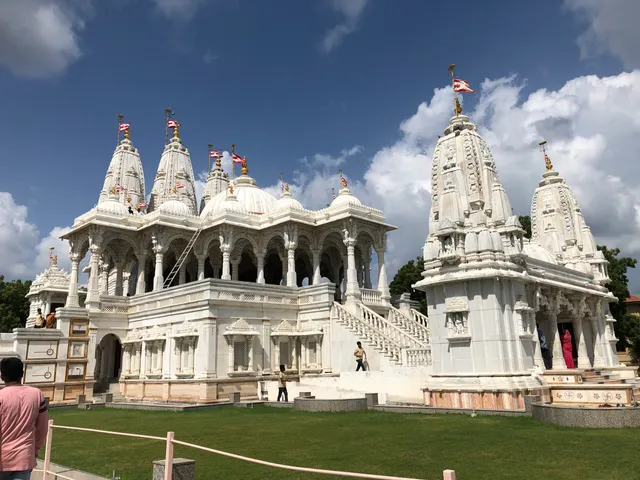
Gadhada is a small city located at middle southern region of Gujarat state. Although Gadhada city is not developed much, it holds importance because of one of the biggest Swaminarayan temple built here by Lord Swaminarayan himself. Gadhada is also known for its farm fresh agricultural products which are exported to nearby big cities.
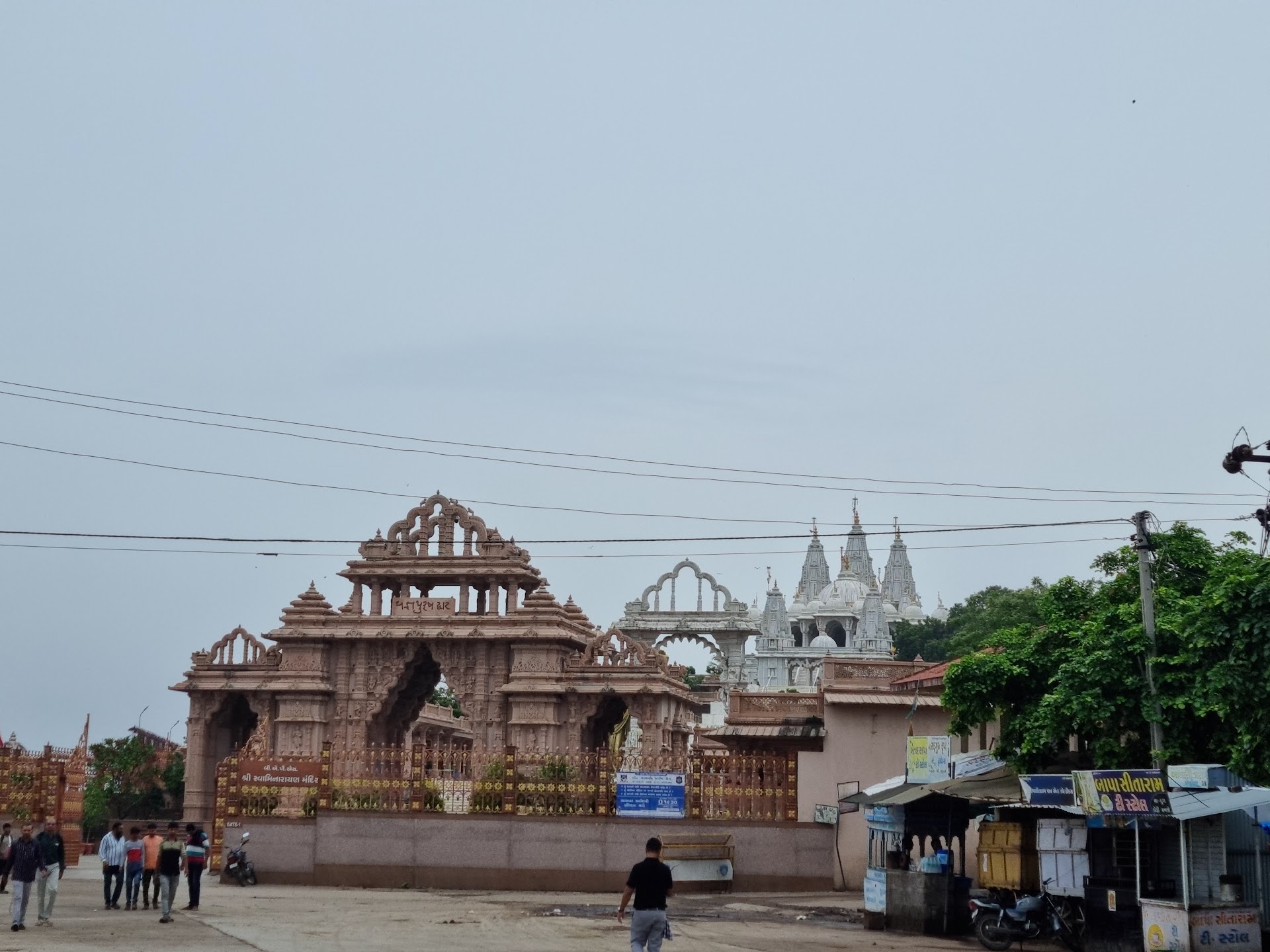
Shree Swaminarayan Temple, Gadhada, Botad in Gujarat is one of the most famous temples in the state. The temple was built by Shree Swaminarayan himself and is filled with his memories. People often visit here to commemorate Shree Swaminarayan along with worshipping the other deities.
The place for the construction of the Shree Swaminarayan temple was given by the court of Dada Khachar in Gadhada. The owner of the land, Shri Dada Khachar was a staunch devotee of Shri Swaminarayan. The whole construction of the temple was overseen and done under Shri Swaminarayan in the 1800s. It is also said that he not only did just watch the construction but also took a part in it by helping the workers to lift the stones and mortar.
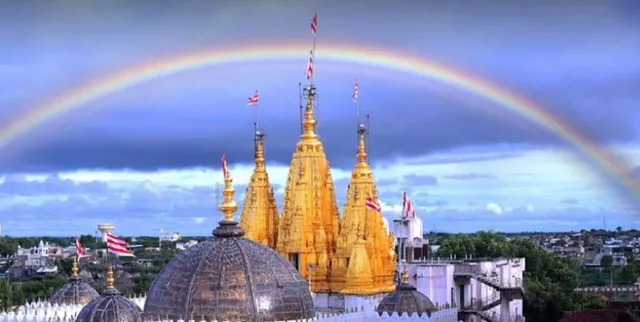
The shrines of the temple are said to have two stories and three domes, all with excellent intricate detailed carvings. There is a prasadi temple which has the prasadi items of Shri Swaminarayan all kept in a museum for display under the public eye. River
Swaminarayan Temple of Gadhada This huge temple built on a small mountain is dedicated to Lord Swaminarayan. Dada Khachar was a big devotee of Lord Swaminarayan. He donated his land of residence where this high temple was built. Dada Khachar’s residence had a big open courtyard. The temple is built in this courtyard area. Dada Khachar’s residence had court area in southern region. The court is still preserved in same form in his remembrance. It is said that Lord Swaminarayan stayed here for more than 27 years of his life and it is also one of the 9 temples founded by him.
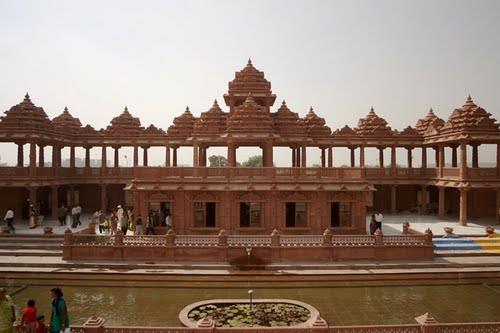
Lord Swaminarayan himself worked with people in constructing temple by lifting stones and also supervised the construction. Divine presence of Lord Swaminarayan in temple is still felt by the followers. This is the reason this city is so famous among Swaminarayan followers, although Gadhada is a small city with no commercialization. There is a huge gadh, square in shape on which temple is built. It has a huge assembly hall with kitchen and large dharamshalas for pilgrims. Idols were installed by Lord Swaminarayan himself in this temple.
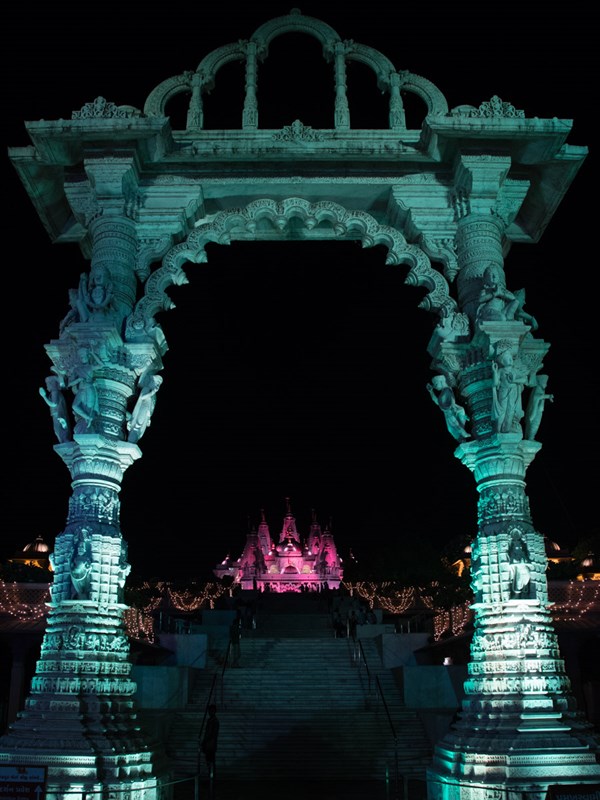
Many of them are recorded in Vachanamrut scripture. There is also a big huge neem three nearby. On the backside of temple are Gangajalio well along with Akshar Ordi, which holds heritage values as well. The huge open area in front of temple and garden area on the first storey is eye soothing especially during sunrise and sunsets. This temple is masterpiece of carvings and structures. This auspicious place becomes more divine when followers keep chanting mantras and dhun during wee or evening hours.
Lord Swaminarayan along with his saints uses to take bath in Ghela River. The river flows on the southern side of temple. Lord Swaminarayan frequently use to sat and preached on river banks and hence there are two famous river beds named Narayan Dharo and Sahasra Dharo.
Small temples of Lord Neelkanth and Lord Hanuman are situated on the bank of the river. As the river is kept intact with no constructed fences, people come and sit on the smooth stones and enjoy the scenic beauty of flowing water and surrounded greenery.
Lakshmi Wadi in Gadhada The place of cremation of Lord Swaminarayan is situated little away from the town and is known as Lakshmi Wadi. It is just a single dome temple constructed there with some remains of Lord...
Read moreWhilst bathing in the holy waters of the River Ghela, Shastriji Maharaj often used to turn in the direction of the hillock and say: "I see a huge 3-spired mandir here."
To fulfil Lord Swaminarayan's wish, Shastriji Maharaj had one firm desire - to build a magnificent monument in honour of Lord Swaminarayan at Gadhada. This idea was conceived in 1923. Shastriji Maharaj made serious attempts to procure the land on the hill-top but it seemed as if all the odds were against him. Due to instigation by opponents, Bhavnagar State issued a decree barring Shastriji Maharaj from acquiring any land in Gadhada. Undeterred, Shastriji Maharaj continued his efforts and prayers, remarking: "if it is Lord Swaminarayan's wish to sit here with His devotee, Gunatitanand Swami, then He will surely exercise His extraordinary spiritual powers to get this land for us to build a mandir."
And sure enough, in 1947, India gained independence and the state kings lost their kingdoms. Now Bhavnagar State affairs came under the jurisdiction of the Central Government. Govindsinh Chudasama, an ardent admirer of Shatriji Maharaj, was appointed as Collector of Bhavnagar and with his help, the land on the hillock soon became the property of Bochasanwasi Akshar Purushottam Sanstha.
The foundation stone was laid and the mammoth task of constructing a mandir totally out of white marble was commenced. As in Atladra, young Narayanswarupdas was again involved in the construction work.
The date for the image installation was fixed for 16th May 1951. For many months prior to this, Shastriji Maharaj was ill in Sarangpur, but content with the news that the mandir construction was going according to schedule. A few days prior to the installation, Shastriji Maharaj paid a visit to Gadhada. He inspected the construction work, bathed the images with the holy water of the River Ghela, adorned them with the sacred thread, offered arti and then said: "My work is now over. Yogiji Maharaj will perform the installation arti." Two days later, on 10th May 1951, Shastriji Maharaj passed away in Sarangpur. Six days later, as planned, Yogiji Maharaj pereformed the image installation ceremony in the beautiful all-marble mandir. Lord Swaminarayan's wish to see a mandir on the hill-top was finally fulfiled - after a span of 120 years.
In 1961, the Kalash ceremony was performed here during the historic 70th birthday celebrations of Yogiji Maharaj. On this occasion, Yogiji Maharaj initiated 51 youths into the...
Read more