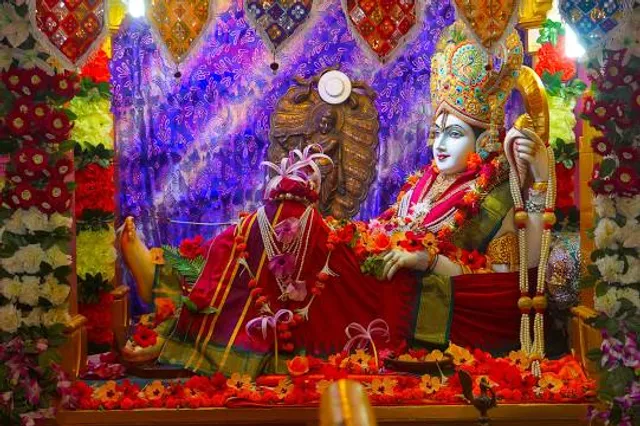
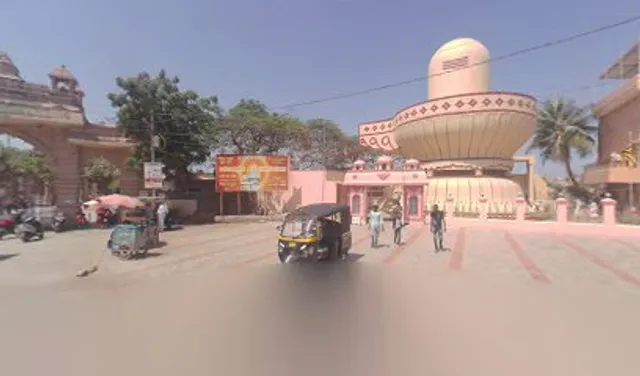
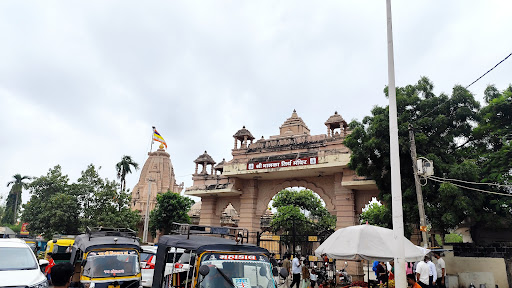
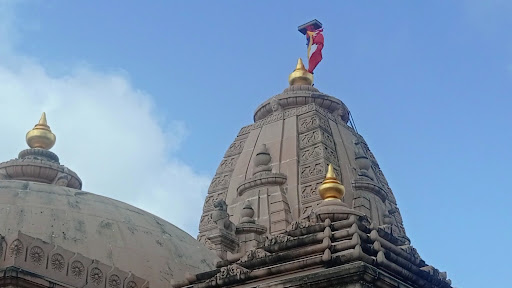
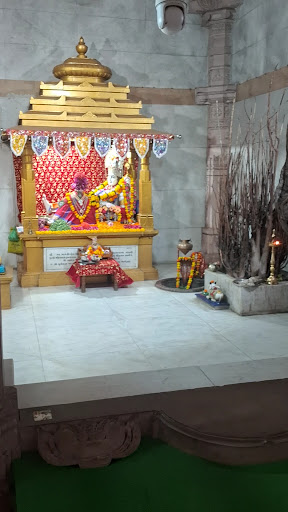
Bhalka Tirth, located near Somnath in Gujarat, holds immense religious significance in Hinduism as it is believed to be the sacred spot where Lord Krishna was accidentally struck by an arrow, leading to his eventual departure from his earthly form. This event is a pivotal moment in Hindu mythology, marking the end of the Dvapara Yuga and the beginning of the Kali Yuga. Here's a detailed overview: The Legend and Significance: Lord Krishna's Final Earthly Act: After the Kurukshetra War and the destruction of the Yadava clan, Lord Krishna retired to the forest near Prabhas Patan (the ancient name for the area around Somnath and Veraval). He was meditating under a peepal tree in a semi-reclining posture. The Hunter Jara's Mistake: A hunter named Jara, mistaking Krishna's partially visible foot (often described as resembling a deer's ear or mouth) for a deer, shot an arrow at it. The arrow struck Lord Krishna in the foot. The Departure to Goloka: Despite being wounded, Lord Krishna pardoned Jara. From Bhalka Tirth, he walked a few kilometers to the Triveni Sangam and then to a place called Dehotsarg (Golokdham Tirth), where he finally left his mortal coil and ascended to his heavenly abode (Goloka). This departure is known as "Shri Krishna Nijdham Prasthan Leela." End of an Era: This incident is considered highly significant as it symbolizes the end of the Dvapara Yuga (the third age in Hindu cosmology) and the ushering in of the Kali Yuga (the current age). Part of the Krishna Pilgrimage Circuit: Bhalka Tirth is a crucial stop for devotees on the Lord Krishna pilgrimage circuit, which includes other sacred sites like Mathura, Vrindavan, Govardhan, Kurukshetra, and Dwarka. The Temple and Its Features: Mahaprabhuji's Bethak: The temple at Bhalka Tirth is also known as "Mahaprabhuji's Bethak," referencing the visit of the great philosopher and saint Vallabhacharya, who is believed to have given discourses on the Srimad Bhagavatam here for nine days in the 9th century AD. Main Deity: The temple houses a captivating idol of Lord Krishna in a unique semi-reclining position, often depicted with an arrow wound on his foot. There's also a beautiful "Tribhangi" idol of Lord Krishna playing his flute. Peepal Tree: A sacred peepal tree stands in the courtyard, believed to be the very tree under which Lord Krishna was resting when he was shot. Hunter Jara's Statue: Interestingly, a statue of the hunter Jara is also present in front of Lord Krishna's idol, representing the moment of the fateful incident. Architecture: The temple is built from sandstone and features intricate carvings, providing a peaceful and serene atmosphere for meditation and devotion. Tulsi Tree: A tulsi (holy basil) tree has been planted in Lord Krishna's honor, adding to the sacred ambiance. Location and Accessibility: Proximity to Somnath Temple: Bhalka Tirth is conveniently located just about 4 kilometers from the main Somnath Jyotirlinga Temple, making it an easy addition to a pilgrimage to Somnath. Connectivity: It's well-connected by road from Somnath and Veraval, with local transport readily available. Visiting Bhalka Tirth: Darshan Timings: Generally, the temple is open from 6:00 AM to 7:00 PM (or sometimes 9:00 PM). It's always advisable to check...
Read moreThe Bhalka Tirth i.e. temple is under development.
Timing :- 6 AM to 9 PM
Must Visit place during Somnath Darshan 🙏
The temple is getting heritage touchdown under supervision of Govt. One Ghat like structure is available here. One Shivaling is located inside the temple compound.
Bhalka Teerth is situated almost 4 kilometres away from the Somnath temple. Presently the government has planned to develop this temple also into a major tourist attraction.
Somnath/Veraval City/Bhalka is very well connected via road and rail network. The nearest railway station is Veraval and the nearest airports are Diu & Rajkot. Bus services are available from Ahmedabad, Vadodara, Rajkot, Dwarka etc.
According to Mahabharata, the Kurukshetra war resulted in the death of all the hundred sons of Gandhari. On the night before Duryodhana's death, Krishna visited Gandhari to offer his condolences. Gandhari felt that Krishna knowingly did not put an end to the war, and in a fit of rage and sorrow, Gandhari cursed that Krishna, along with everyone else from the Yadu dynasty, would perish after 36 years. Krishna himself knew and wanted this to happen as he felt that the Yadavas had become very haughty and arrogant (adharmi), so he ended Gandhari's speech by saying "tathastu" (so be it).
After 36 years passed, a fight broke out between the Yadavas, at a festival, who killed each other. His elder brother, Balarama, left his body through Yoga. Krishna retired into the forest and started meditating under a tree.
The Mahabharata also narrates the story of a hunter who becomes an instrument for Krishna's departure from the world. The hunter Jara mistook Krishna's partly visible left foot for that of a deer, and shot an arrow, mortally wounding him. After Jara realised his mistake, while still bleeding, Krishna told Jara, "O Jara, you were Vali in your previous birth, killed by myself as Rama in Treta Yuga. Here you had a chance to even it and since all acts in this world are done as desired by me, you need not worry for this". Then Krishna, with his physical body ascended back to his eternal abode, Goloka and this event marks departure of Krishna from the earth.The news was conveyed to Hastinapur and Dwaraka by eyewitnesses to this event.The place of this incident is believed to be Bhalka, near Somnath temple.
According to Puranic sources, Krishna's disappearance marks the end of Dvapara Yuga and the start of Kali Yuga, which is dated to 17/18 February 3102 BCE.
Jay...
Read moreBhalka Tirtha (Bhalka Pilgrimage) (Hindi: भालका तीर्थ), located in the Veraval in Saurashtra on the western coast of Gujarat, India, is the place where Krishna left this holy body as the story goes , it is said he was killed by an arrow shot by a hunter named Jara, after which he worshipped Shiva, an act referred to in the Puranas as Shri Krishna Nijdham Prasthan Leela (Sanskrit: श्री कृष्ण निजधाम प्रस्थान लीला).Bhalka is part of the Lord Krishna circuit (Mathura, Vrindavan,Barsana, Govardhan, Kurukshetra and Dwarka).
According to Mahabharata, the Kurukshetra war resulted in the death of all the hundred sons of Gandhari. On the night before Duryodhana's death, Krishna visited Gandhari to offer his condolences. Gandhari felt that Krishna knowingly did not put an end to the war, and in a fit of rage and sorrow, Gandhari cursed that Krishna, along with everyone else from the Yadu dynasty, would perish after 36 years. Krishna himself knew and wanted this to happen as he felt that the Yadavas had become very haughty and arrogant (adharmi), so he ended Gandhari's speech by saying "tathastu" (so be it).
After 36 years passed, a fight broke out between the Yadavas, at a festival, who killed each other. His elder brother, Balarama, left his body through Yoga. Krishna retired into the forest and started meditating under a tree. The Mahabharata also narrates the story of a hunter who becomes an instrument for Krishna's departure from the world. The hunter Jara, mistook Krishna's partly visible left foot for that of a deer, and shot an arrow, wounding him mortally. After Jara realised the mistake, while still bleeding, Krishna told Jara, "O Jara, you were Vali in your previous birth, killed by myself as Rama in Treta Yuga. Here you had a chance to even it and since all acts in this world are done as desired by me, you need not worry for this". Then Krishna, with his physical body ascended back to his eternal abode, Goloka and this event marks departure of Krishna from the earth.The news was conveyed to Hastinapur and Dwaraka by eyewitnesses to this event. The place of this incident is believed to be Bhalka, near Somnath temple.
According to Puranic sources,Krishna's disappearance marks the end of Dvapara Yuga and the start of Kali Yuga, which is dated to February...
Read more