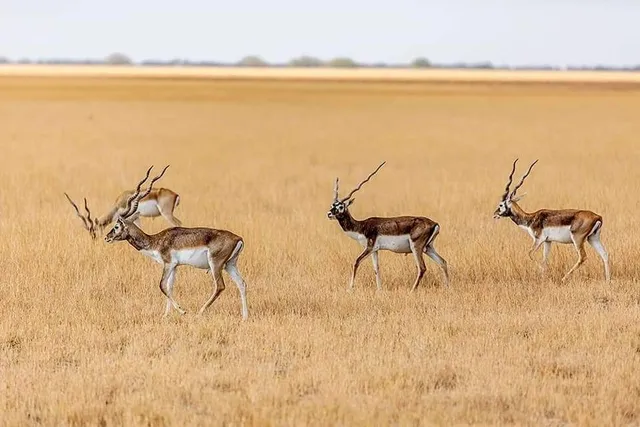
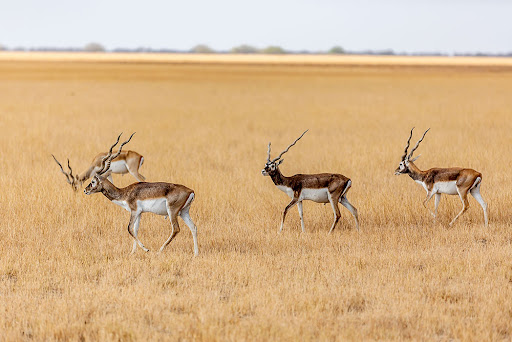
Blackbuck National Park is a national park in India located at Velavadar in the Bhavnagar District of Gujarat state, India. Established in 1976 in the Bhal region of Saurashtra, the park is located around 42 km from the district headquarters city of Bhavnagar. Hugging the coasts of the Gulf of Khambhat on the south, it is spread over an area of 34.08 km2, which was primarily a "vidi" (grassland) of the maharaja of the princely state of Bhavnagar for hunting the blackbucks with his famous hunting cheetahs. On the northern side, it is surrounded by wastelands and agriculture fields. The national park has been classified as 4B Gujarat-Rajwada biotic province of semi-arid bio-geographical zone.
Flat land, dry grasses and herds of antelope have always attracted visitors to this park which has a grassland ecosystem. Successful conservation programs for the blackbuck, wolf and lesser florican (a bustard) are ongoing. Considered to be an endemic Indian species, the lesser florican, which once lived throughout the country, has become endangered in recent decades. Today, the largest population is in this park. Local wolf numbers are increasing, as are striped hyena, with sightings quite frequent during daylight in winter 2012-2013. There several species of mammals recorded from the National Park, apart from large groups of Blackbuck; Indian Wolf, Striped Hyena, Indian Fox, Golden Jackal and Jungle cat are the main carnivores of the Park. Other mammalian species include Bluebull, Wild/feral pig, Indian Hare and several species of rodents.
Among birds, Lesser Florican (A monsoon breeding migrant) is the main attraction of the National Park. Apart from Lesser Florican, Velavadar Grasslands are one of the largest roosting grounds of and three species of migratory Harriers (Viz. Marsh Harrier, Pallid Harrier and Montagu's Harrier. Congregation of Harriers during late evening hours is the main attraction of the Park during winters. Apart from these, several species of grassland birds viz. Sandgrouse, Lark and passerines are also abundant in the Park.[1] According to Roger Geoffrey Clarke, the British harrier-expert, the harrier roost found at the park is one of the largest...
Read moreI recently had the chance to visit the Velavadar Blackbuck National Park and I must say that it was an unforgettable experience. Located in the Bhavnagar district of Gujarat, India, this national park is home to one of the largest herds of blackbuck in the country.
The first thing that struck me about this park was its vast and unspoiled landscape. The grasslands stretch as far as the eye can see, making it the perfect habitat for the blackbuck. The park is also home to other species of animals such as the Indian wolf, jackals, and various species of birds.
What makes Velavadar Blackbuck National Park unique is its conservation efforts. The park was established in 1976 with the aim of protecting the endangered blackbuck species. The park has been successful in its mission, as the blackbuck population has significantly increased over the years. It was heartwarming to see these majestic animals roaming freely in their natural habitat.
The park offers various activities for visitors, such as jeep safaris, bird watching, and nature walks. I opted for the jeep safari, and it was an exhilarating experience. Our guide was very knowledgeable and took us to all the hotspots where we could spot blackbucks and other animals. The park is also a paradise for bird watchers, with over 180 species of birds found here.
Apart from the wildlife, the park also has a rich cultural heritage. The park is home to the ancient temple of Shetrunjay Jain Tirth, which is a popular pilgrimage site for Jains. It was fascinating to see the coexistence of nature and religion in this park.
The park also has good facilities for visitors, such as a visitor center, restrooms, and a canteen. The entry fee is very reasonable, and the park is well-maintained by the forest department.
In conclusion, Velavadar Blackbuck National Park is a must-visit for nature and wildlife enthusiasts. It offers a unique experience of witnessing the blackbuck in their natural habitat and also provides an opportunity to learn about conservation efforts. I highly recommend visiting this park for a memorable and...
Read moreVelavadar Blackbuck National Park is a protected area located in the Bhavnagar district of Gujarat, India. Here are some key features of Velavadar Blackbuck National Park:
Blackbuck Sanctuary: The park is primarily known for its significant population of blackbucks, a species of antelope native to the Indian subcontinent. Velavadar provides a natural habitat for these graceful animals.
Grassland Ecosystem: Velavadar is characterized by vast grasslands, which serve as an ideal habitat for blackbucks and various other wildlife species. The park also supports a population of nilgai (blue bull), wolves, hyenas, foxes, and a variety of bird species.
Harrier Roosting Site: The park is recognized as one of the largest roosting sites for harriers in the world. Montagu's harrier and Pallid harrier are among the harrier species that can be observed in the park.
Conservation Significance: Velavadar Blackbuck National Park is significant for the conservation of blackbucks and their grassland habitat. Efforts are made to protect these animals from poaching and habitat loss.
Tourist Activities: The park offers opportunities for wildlife enthusiasts and birdwatchers. There are designated areas for safaris and wildlife viewing, allowing visitors to observe the blackbucks and other wildlife in their natural environment.
Visitor Facilities: Velavadar has basic visitor facilities, including watchtowers and interpretation centres, providing information about the park's ecology, wildlife, and conservation efforts.
Conservation Challenges: Like many natural habitats, the park faces challenges such as habitat degradation, human-wildlife conflict, and the need for sustainable conservation practices.
Velavadar Blackbuck National Park contributes significantly to the conservation of blackbucks and the unique grassland ecosystem in the region. It's a valuable destination for nature lovers and those interested in the conservation of India's...
Read more