The Modhera Sun Temple, located in the village of Modhera in Gujarat, stands as a remarkable testament to India’s rich architectural heritage and spiritual history.
This magnificent temple, dedicated to the Sun God, Surya, dates back to the early 11th century and was built during the reign of King Bhimdev I of the Solanki dynasty.
The temple exemplifies the exquisite craftsmanship of the Maru-Gurjara architectural style and reflects the grandeur and precision characteristic of this era. Set against a backdrop of lush farmlands and the tranquil Pushpavati River, the serene landscape surrounding the temple enhances its spiritual ambiance and historic significance.
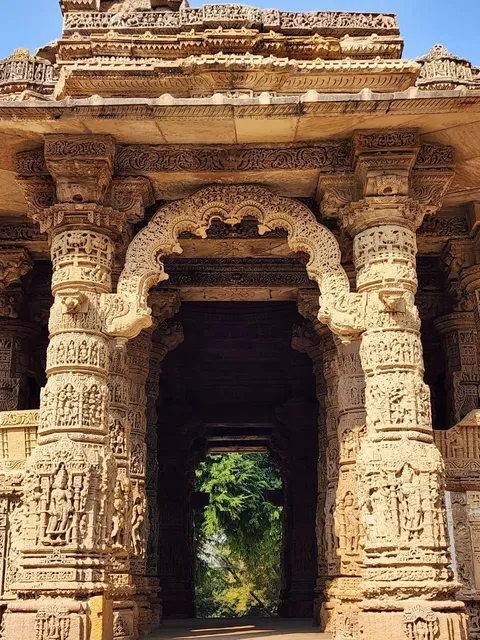
As one approaches the temple, the scale and elegance of the structure become immediately apparent. The entrance is beautifully carved and adorned with intricate sculptures and motifs that narrate stories from Hindu mythology.
These elaborate carvings depict various deities, celestial beings, and scenes from the great Indian epics like the Ramayana and Mahabharata, each detail reflecting the remarkable artistic skills of the ancient artisans. The temple’s architecture is not merely decorative but also symbolic, with each element contributing to its spiritual and cultural essence.
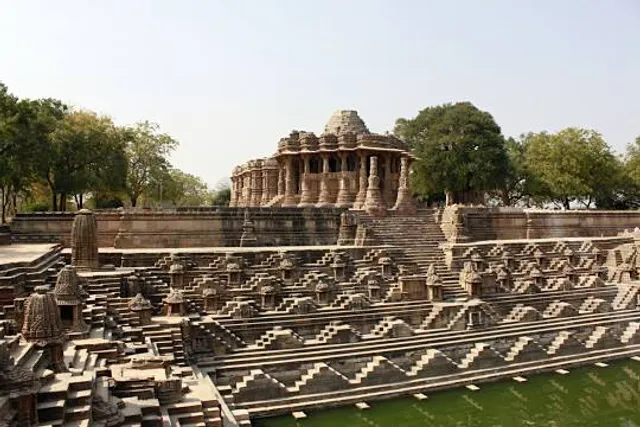
The temple complex is composed of three primary components: the Sabha Mandap, the Guda Mandap, and the Surya Kund.
The Sabha Mandap, or assembly hall, served as a space for religious gatherings and discourse. Its intricately carved pillars and walls showcase scenes from daily life and mythological stories, inviting contemplation and admiration.
Beyond the Sabha Mandap lies the Guda Mandap, which once housed the main idol of Surya, the Sun God. Though the sanctum is now devoid of the idol, it still exudes a powerful spiritual aura that draws visitors into a state of reverence and reflection. The architectural brilliance of the temple is particularly evident during the equinoxes when the first rays of the rising sun align perfectly to illuminate the sanctum, creating a breathtaking spectacle that underscores the temple’s sophisticated design and astronomical precision.
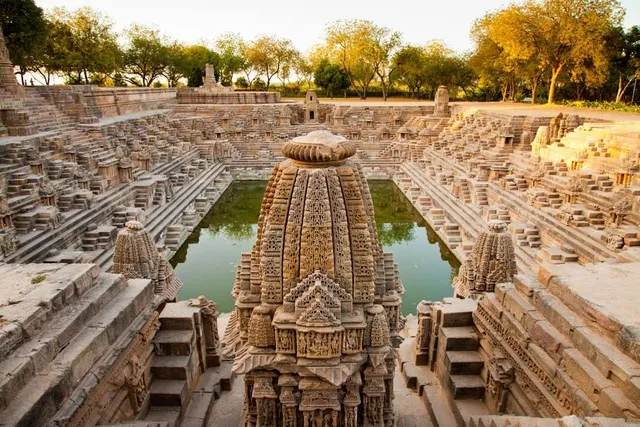
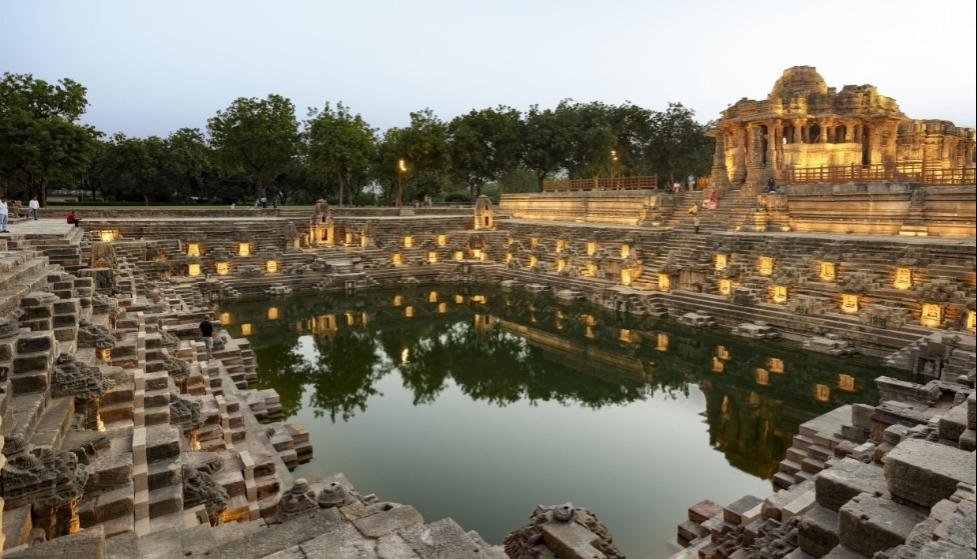
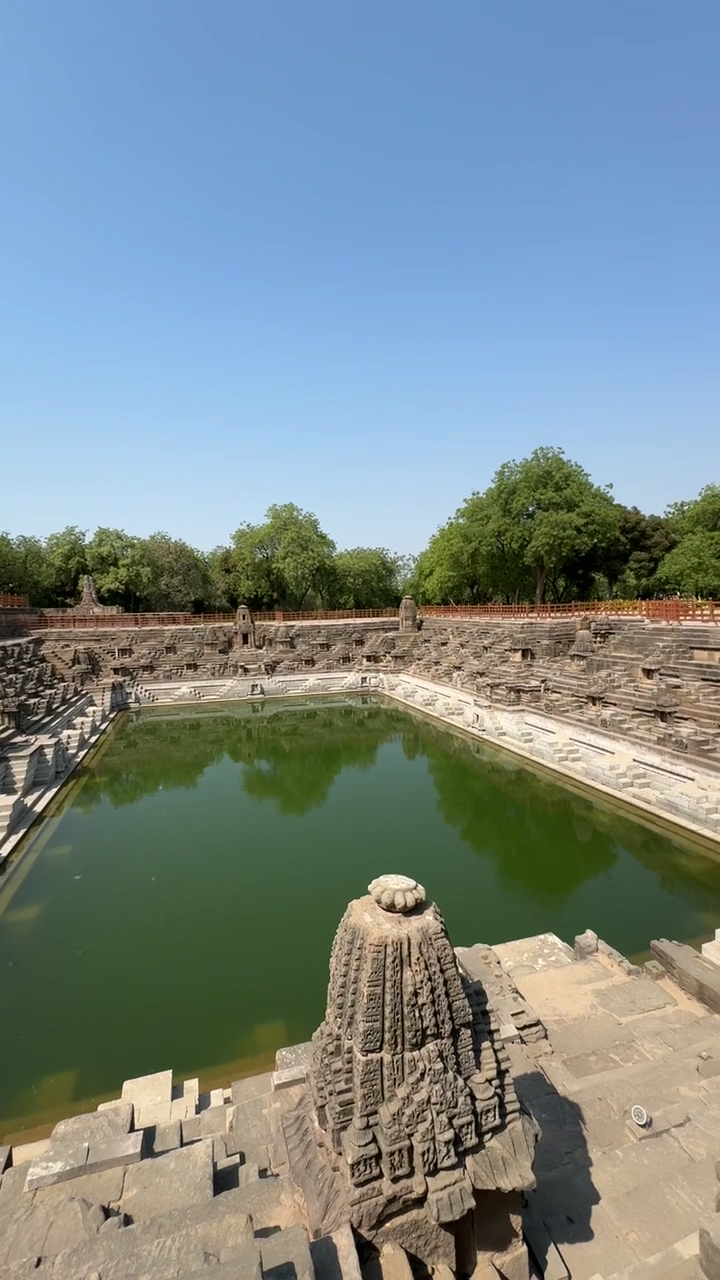
The Surya Kund, a stepped water reservoir, is another striking feature of the temple complex. This stunning stepwell not only served practical purposes but also played a vital role in the rituals dedicated to the Sun God. The reservoir is adorned with 108 miniature shrines, each dedicated to various deities, and the intricate carvings along the walls add to its enchanting atmosphere.
The Surya Kund exemplifies the seamless blend of functionality and artistry, reflecting the importance of water in Hindu rituals and the ingenuity of ancient Indian engineers. Visitors can descend the finely sculpted steps to the water’s edge, gaining a closer appreciation of the craftsmanship and spiritual symbolism embedded in the structure.
Despite enduring numerous challenges over the centuries, including invasions and natural disasters, the Modhera Sun Temple has remained resilient, by the extensive restoration efforts by the Archaeological Survey of India. These efforts have helped preserve the temple’s intricate details and historical significance, allowing present and future generations to admire its beauty and cultural legacy.
In recent years, the temple has embraced modern enhancements to enrich the visitor experience. A solar-powered 3D projection mapping show has been introduced, bringing the temple’s history and mythology to life through vibrant visual storytelling.
Modhera Sun Temple is often less crowded and the surrounding landscape is a peaceful setting for exploration and reflection. The sound of chirping birds and the gentle rustle of leaves create a serene atmosphere, making the temple a perfect retreat from the hustle and bustle of modern life.
Whether one is a history enthusiast, lover of ancient architecture, or a spiritual seeker, the temple promises an unforgettable experience that lingers long after leaving this...
Read moreGeneral: As one traverses the length and breadth of Gujarat, one constantly stumbles across architectural legacies of the' Solanki' rule. You keep coming across, living spaces and monuments of another time, offering an eclectic glimpse of the artistic and ingenious beauty that makes this exotically state vibrant. A soothing drive amidst green farmlands just 35 km away from Mehsana on the way to the temples of goddess Bahucharaji reposes the village of Modhera. Set along the backdrop of River Pushpavati, surrounded by a terra-formed garden of flowering trees and songs of birds, rests the famed Sun temple of Modhera. As you relax and soothe your nerves, become one with nature and open your mind to the poetry in stone, dedicated to the sun god, living glimpses of the era far elapsed emerge out of the intricacies of narrative sculptures . The remains of the Sun Temples at Modhera are relics of times gone by when reverence of the natural elements fire, air, earth, water and sky were at their peak sharing space with myriad manifestations of Vedic gods. The ancient philosophy venerating natural elements and its association with humans was considered the prime force and energy of the life cycle. A walk around the serene temple campus makes you aware of the positively strong aura of energy which the place radiates and through it brings one closer to the environs. The exclusively carved temple complex and the magnificently sculpted kund are jewels in the art of masonry of the Solanki period apparently which was also known as the Golden Age of Gujarat. Savor your voyage through time to the magnificent eons of the Golden period as you get welcomed personally by the life like icons, narrating stories and legends of Modhera! Things to do: Modhera is an ideal destination for being away from the hustle-bustle of city life for a day. The unruffled peaceful landscape and the majestically welcoming temple complex will ensure to take you away from the mundane routines of daily life to the glorious times back in the Golden Age. As you enter the historical complex, you first come across the magnificent kund known as the Ramakund, built in rectangular shape containing 108 shrines to various gods and demi-gods. Check out the three main shrines positioned on the three sides of the kund, dedicated to Ganesh and Vishnu and an image of Lord Shiva dancing the ‘tandav’ facing the temple of the sun which covers the fourth side. Various shrines showcasing different mudras are arrayed along the staggered configuration of steps leading down to the base of the ‘Kund’.Try following the rhythmic ups and downs of the steps Walk up the steps to the ‘Sabha Mandap’ or the assembly and convene with sculpted renderings of twelve ‘Adityas’ (another name for the sun god). The twelve representations carved on the pillars represent the sun according to the twelve months. It is believed that these ‘Adityas’ are the base myth to the temple of sun, the legend imparts Aditya’s to be sons of ‘Aditi’, the goddess of Infinity and the constant within the inter-connectedness of the universe. If you love listening to stories, make sure you find the purohit or priest who has been taking care of the temple, and stays close to the vicinity. Request him to narrate or explain the tales and sequences from epics and legends which are carved on the 52 pillars adding grace and poise to the temple section. Even if you do not find him around, do go through the carved murals which serve as a virtual encyclopedia of history of communities, lessons in mortality, descriptions of fairs and festivals and rituals of the golden era. If time permits may be you can examine each panel in turn and witness the intricate details encompassing the panels speaking and sharing about their costumes, jewelry, performing arts, erotica and the intensely enigmatic art of making love, medicinal plants, and the pharmacopoeia...
Read moreModhera Sun Temple – A Timeless Testament to Solar Worship Amidst Serene Splendor By: [Arindam Dey], Cultural Heritage Reviewer Location: Modhera, Mehsana District, Gujarat, India Rating: 5/5
Tucked away in the quiet village of Modhera in Gujarat, the Sun Temple is not merely an architectural marvel; it is a living chronicle of India's rich cultural and spiritual legacy. Built in the early 11th century during the reign of King Bhima I of the Solanki dynasty, this temple dedicated to Surya, the Sun God, is a masterwork that gracefully blends history, art, spirituality, and nature into one immersive experience.
Historical and Architectural Significance
The Modhera Sun Temple holds immense historical value, being one of the few surviving temples in India dedicated solely to the Sun God. Predating even the more internationally known Sun Temple of Konark, Modhera's temple stands as a symbol of the once flourishing devotion to solar deities in ancient India.
Built in 1026 AD, the temple is designed in a way that the first rays of the sun illuminate the image of the presiding deity at the time of the equinox — a feat of precision that underscores the advanced astronomical understanding of its time. The temple comprises three main components:
Garbhagriha (Sanctum Sanctorum) – Though the idol no longer resides here, the sanctum is geometrically aligned to catch the sunrise.
Sabha Mandapa (Assembly Hall) – Featuring intricately carved pillars and ceiling panels depicting scenes from epics like the Ramayana and Mahabharata.
Kunda (Surya Kund) – A magnificent stepped water tank surrounded by shrines, reflecting spiritual cleansing before rituals.
The carvings on the temple walls — celestial beings, dancers, animals, and mythological narratives — are both educational and awe-inspiring. Each stone, each chisel stroke seems to narrate a fragment of a thousand-year-old story, waiting to be heard.
The Parks and Environment: A Green Sanctuary
One of the most pleasantly surprising aspects of visiting the Modhera Sun Temple is the immaculate landscaping and lush greenery that surrounds the monument. The Gujarat Tourism Department has invested great effort in maintaining the grounds, and it shows.
As you walk through the well-laid pathways lined with flowering trees, you’re greeted by meticulously maintained lawns, clusters of vibrant bougainvillaeas, and shaded sitting areas perfect for reflection. The park-like environment not only enhances the temple’s visual appeal but provides a tranquil space that beautifully complements the spiritual and historic gravitas of the site.
Butterflies fluttering across marigold beds, squirrels darting through neem trees, and the soft rustling of leaves under a gentle breeze — all contribute to a meditative ambiance that invites visitors to linger longer than they intended.
Moreover, the site is remarkably clean, with thoughtful amenities such as eco-friendly waste bins, water fountains, and benches that encourage respectful tourism. For photographers and nature lovers alike, this balance of heritage and horticulture offers rich rewards.
Visitor Experience and Accessibility
The site is open to the public year-round, with peak beauty during sunrise or sunset when the golden hues of the temple stone glow ethereally. Guided tours are available, though even a self-guided stroll feels enriching thanks to information boards and signage.
There's ample parking, basic facilities like washrooms, and a small souvenir shop. The Modhera Dance Festival, held annually in January, transforms the site into a stage for classical dance performances, set against the glowing backdrop of the temple — a must-visit for culture enthusiasts.
Final Thoughts: A Harmonious Blend of Legacy and Landscape
The Modhera Sun Temple is not just a destination; it is a...
Read more