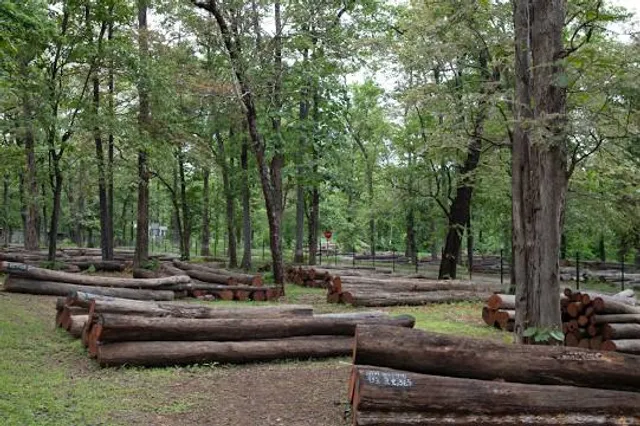
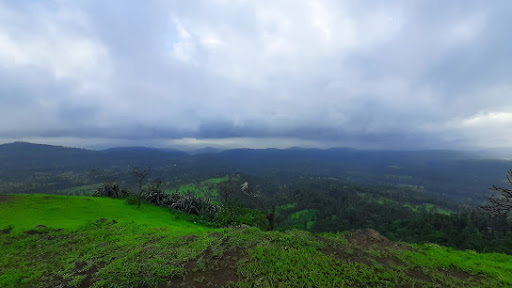
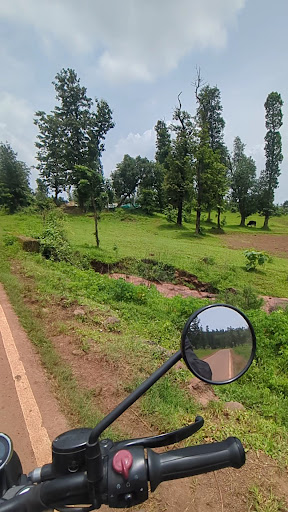
Dang district of Gujarat is full of green forests and amid the forests, Dang has number of tourism places. Most of the tourism spots are, however, unknown to majority of tourists. Dang District is a tribal district in Gujarat in India. The district headquarter is Ahwa. Girmal, Waghai, Saputara, and Mahal are the major towns of the district. The reserved forests in Dang are amongst the richest forests in the State. Dang District is gradually emerging into an agro processing and tourism hub. Rich wildlife, gardens, ropeway, sunrise point and echo point are some of the main tourist attractions in Dangs.
Geography of Dang District Geographical location of Dang District is 20.39 degree to 21.05 degree North (Latitude) and 73.29 degree to 73.51 degree East (Longitude). The district shares its border with the State of Maharashtra and is covered with high hills and dense forests. The maximum temperature of the district is 37 degree centigrade and the minimum temperature is 6 degree centigrade. Average rainfall in the district is 3048 mm and the main rivers of the place are Purna, Gira, Khapri and Ambika.
Tourism in Dang District Dang District has a lot to offer when it comes to tourism. Saputara, also known as "Abode of Serpents", is a hill resort on a plateau of the Sahyadri range of mountains that offers rich wildlife for tourists. Saputara Museum contains interesting information about the topography and anthropology of Dang. Hatgarh Fort is a beautiful piece of architecture. Purna Wildlife Sanctuary in the district has the thickest forest cover in the State and is filled with canopies of teak and stands of bamboo. Girmal Falls is the most picturesque sight in the district. Vansda National Park in Dang District is an abode to large mammals including the leopards, hyena, jungle cat, macaques and barking deer. It is also home to the endangered Great Indian Squirrel. DANG DARBAR
Dang Darbar, one of the major tribal festivals at Dang, is celebrated every year before the Holi. The fair is the perfect place to experience the lifestyle and cultural life of the native tribal people. It is held every year in the Ahwa district of Gujarat. The Dang Darbar holds an immense historical importance. It is said that neither Mughals nor Marathas were successful to conquer the region, even the Britishers were unable to overpower the invincible kings of Gadhavi, Pimpri, Amala-Linga, Vasurana, and Daher. Although the privileges of kings were revoked in 1954, the contribution of these five royal families was celebrated by giving political pension every year one the first day of the Dang Darbar Festival. People from nearby 300 villages gather during the Darbar in Ahwa to honor the five kings. The main attractions of the festival include music and dance performance, showcasing the art & culture of natives. Various event activities like magic show, dayro, and karaoke make the fair enjoyable. For visitors, Dang Festival offers a great occasion to live through the lives and culture of tribal people of the region that include Kunbis, Bhils, Gamits and Warlis. All the traditional dances in traditional costumes of the tribes along with traditional music forms the major highlight of the festivals. This festival is also referred to as the festival of costumes. All the visitors who come from around the country and world, cannot miss to this opportunity to take part in this festival.
All the places I’ve listed are accessible by road. Most of the roads are decent. Use of private vehicle is recommended.
Don Hill Station, Near Ahwa Saputara Hill Station Devinamal Campsite Shabri Dham, Mokhmal, Dang Anjan Kund (Anjani Parvat) Pampa Sarovar Chimer Waterfall Mahal Eco Campsite, Purna Wildlife Sanctuary Girmal Waterfalls, Girmal Waghai Botanical Gardens Kilad Nature Education Campsite Vansda National Park, Vansda Gira Falls, Wanarchod, Waghai – Saputara Purna...
Read morePurna Wildlife Sanctuary is a wildlife sanctuary in the Western Ghats mountain range, in the States of Gujarat and Maharashtra, India. In the South Gujarat, it is located between Vyara, Tapi District and Ahwa, Dang District, and in Maharashtra, it is located in Nandurbar District. Apart from the Dangs' District, it is a part of the Northern Division of the Dangs' Forest.13]
Purna Wildlife Sanctuary
Wildlife Sanctuary

Purna River from Campsite Wildlife Sanctuary named after Purna River


Purna Wildlife Sanctuary
Location in Gujarat, India
Show map of GujaratShow map of IndiaShow all
Coordinates: 20.91°N 73.7°ECountry IndiaStateGujaratDistrictDang District, IndiaPurna Wildlife SanctuaryJuly 1990Area
• Total160.84 km2 (62.10 sq mi)Languages
• OfficialGujarati, HindiTime zoneUTC+5:30 (IST)Vehicle registrationGJNearest cityVyaraGoverning bodyGovernment of India, Government of Gujarat
It was declared a sanctuary in July 1990.[4] It derives its name from the Purna River, which flows through it.
Geography and climateEdit
The sanctuary has thick forest cover of teak and bamboo. It has a tropical climate with moderate to heavy rainfall. The average rainfall received by this region is about 2500mm.[4]
Three distinct climatic seasons are noted: winter, summer and monsoon. Winter is from middle of November to end of February and the average temperature recorded during the coldest month of January is 10 °C (50 °F). Summer is from March to end of May when the temperature range is 35–40 °C (95–104 °F). Monsoon season sets in the middle of June or early July and lasts till September.
A popular time to visit the sanctuary is early winter when the river and rivulets are full of fresh water. The nearest large city, Surat, is 100 kilometres (62 mi) away. Surat has an airport which provides links with the rest of the country. Vyara is the nearest railway station, which is 20 kilometres (12 mi) away.[4]
In a view to develop eco-tourism, the Government of Gujarat maintains Mahal Campsite in this sanctuary.[1]
Fauna and floraEdit
The sanctuary is within the North Western Ghats moist deciduous forests' ecoregion.
There are about 700 species of plants and trees.[2]
Some of the wild animals found here are the leopard, rhesus macaque, bonnet macaque, common mongoose, Indian civet cat, Indian porcupine, four-horned antelope, barking deer, sambar, chital, hyena, and jungle cat. As with Vansda National Park, which is in Navsari District and the Dangs' Forest,[3 and Shoolpaneshwar Wildlife Sanctuary, which Narmada District shares with the State of Maharashtra, the Bengal tiger is reportedly extinct in this area, but the place where Gujarat borders the states of Madhya Pradesh and Maharashtra has tigers, nevertheless,1 making the Dangs Forest a potential habitat of the tiger.6
Between 1999 and 2003, 139 bird species were recorded here. Some of the birds found here are common grey hornbills, grey jungle fowl, barbets, woodpeckers, shrikes, leafbirds, bee-eaters, flycatchers, forest owlets and raptors.3
As recorded in 2000-2001 the sanctuary is home for 116 species...
Read morePurna Wildlife Sanctuary
Purna has the thickest forest cover in the state, and the highest average rainfall, at 2500 mm. At sunset, the 160 square km of lush rolling hills, teak and bamboo fill with the music and drums of the Dangi tribes that also populate Vansda. The main village of Mahal is at the centre of the sanctuary on the banks of the Purna River, with a forest rest house. Purna and Vansda together are the only protected forest areas in South Gujarat.
Purna is a sanctuary where luxuriant dense forests with thick bamboo brakes enchant visitors. People get surprised to see such pristine forests in the area, which happens to be an extension of the Western Ghats. For an eco-tourist this is the best place to visit. The sanctuary is a part of forests in northern part of the Dangs district in South Gujarat. The area, covering 160.8 sq. km, is a reserved forest which was notified as a sanctuary in July 1990.
Purna Sanctuary is a part of dense moist deciduous forests and supports many flora and fauna. The sanctuary, along with Vansda National Park, is the only Protected Area in South Gujarat for conserving diverse biological resources. Wild bulls, elephants, sloth bear and rhinoceros also roamed in this forest tract in the past (Mughal Period). The forests of this region satisfy the material needs of the local tribals and maintain the ecological stability of the area. About 700 identified plant species are found in the sanctuary.
Unlike most of Gujarat, the area is characterised by moderate, sometimes even heavy, rainfalls. The area falls in the highest rainfall zone of the state. The human population is totally tribal represented by Bhils, Warlis, Konkanas, Dubdas, and Kolchas. The forests support a rich tribal culture in the form of houses, dresses, jewellery, agriculture, fishing, musical instruments, folk dances, etc. When the sun sets, one may listen to the distant sounds of folk dances, tribal songs and improvised musical instruments like pavry and drums.
'Mahal', the main village in the sanctuary is centrally located on the banks of river Purna. There is a very old forest rest house on the banks of this river. This place is the most preferred site for nature education camps.
The important tree species are teak, khair, sadad, dudhalo, kalam, bamboo, haldu, karanj, tanach, chopadi bondara, etc.
Important animals: leopard, rhesus macaque, bonnet macaque, common mongoose, Indian civat cat, Indian porcupine, four-horned antelope, barking deer, sambar, chital, hyena, jungle cat, flying squirrel, python, lizards, etc.
Important birds : Common grey hornbill, grey jungle fowls, barbets, woodpeckers, shrikes, cloropsis, bee-eaters, flycatchers and many raptors.
The Vansda National Park has also joined hands with the Purna Wildlife Sanctuary located at Dangs to revive and preserve various life forms.
Accessibility: The nearest airport is Surat (130 kms). Ahmedabad is 400 kms away. The Nearest bus station is Vyara (20 kms), and the nearest railway station is Vyara (20 kms).
Accommodation: Hotels and lodges at Vyara, Saputara and Surat.
Season:...
Read more