HTML SitemapExplore
logo
Find Things to DoFind The Best Restaurants

Rudra Mahalaya — Attraction in Gujarat

Name
Rudra Mahalaya
Description
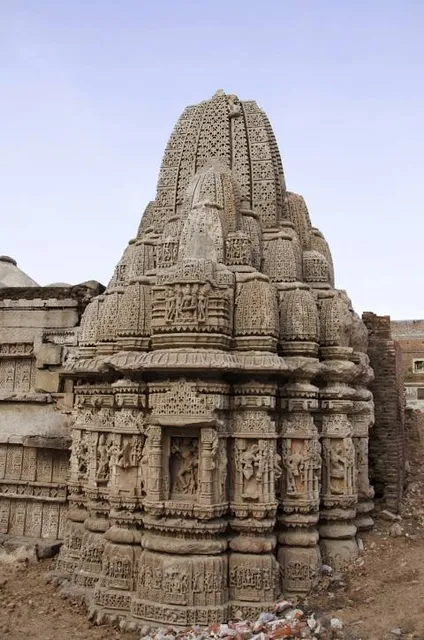
The Rudra Mahalaya Temple, also known as Rudramal, is a destroyed/desecrated Hindu temple complex at Siddhpur in the Patan district of Gujarat, India. Its construction was started in 943 CE by Mularaja and completed in 1140 CE by Jayasimha Siddharaja, a ruler of the Chaulukya dynasty.
Nearby attractions
Nearby restaurants
Related posts
Keywords
Rudra Mahalaya tourism.Rudra Mahalaya hotels.Rudra Mahalaya bed and breakfast. flights to Rudra Mahalaya.Rudra Mahalaya attractions.Rudra Mahalaya restaurants.Rudra Mahalaya travel.Rudra Mahalaya travel guide.Rudra Mahalaya travel blog.Rudra Mahalaya pictures.Rudra Mahalaya photos.Rudra Mahalaya travel tips.Rudra Mahalaya maps.Rudra Mahalaya things to do.
Rudra Mahalaya things to do, attractions, restaurants, events info and trip planning
Rudra Mahalaya
IndiaGujaratRudra Mahalaya

Basic Info

Rudra Mahalaya

W999+MXW, Old vahoravad dharmchakla, near Rang fali, Ambavadi, Siddhpur, Gujarat 384151, India
4.5(827)
Open until 7:15 PM
Save
spot

Ratings & Description

Info

The Rudra Mahalaya Temple, also known as Rudramal, is a destroyed/desecrated Hindu temple complex at Siddhpur in the Patan district of Gujarat, India. Its construction was started in 943 CE by Mularaja and completed in 1140 CE by Jayasimha Siddharaja, a ruler of the Chaulukya dynasty.

Cultural
Outdoor
Family friendly
attractions: , restaurants:
logoLearn more insights from Wanderboat AI.
Open hoursSee all hours
Fri8:45 AM - 7:15 PMOpen

Plan your stay

hotel
Pet-friendly Hotels in Gujarat
Find a cozy hotel nearby and make it a full experience.
hotel
Affordable Hotels in Gujarat
Find a cozy hotel nearby and make it a full experience.
hotel
The Coolest Hotels You Haven't Heard Of (Yet)
Find a cozy hotel nearby and make it a full experience.
hotel
Trending Stays Worth the Hype in Gujarat
Find a cozy hotel nearby and make it a full experience.

Reviews

Get the Appoverlay
Get the AppOne tap to find yournext favorite spots!
Wanderboat LogoWanderboat

Your everyday Al companion for getaway ideas

CompanyAbout Us
InformationAI Trip PlannerSitemap
SocialXInstagramTiktokLinkedin
LegalTerms of ServicePrivacy Policy

Get the app

© 2025 Wanderboat. All rights reserved.
logo

Posts

Hitendra VankaniHitendra Vankani
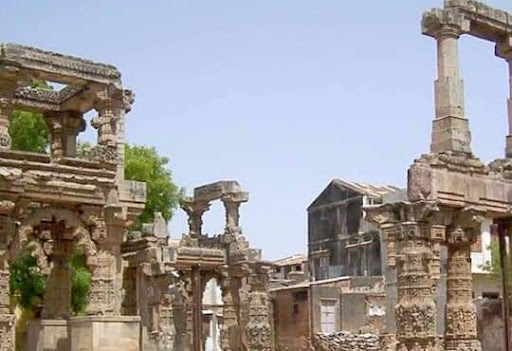
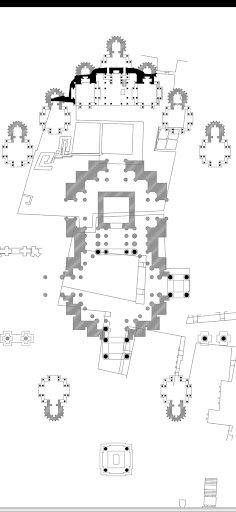
The Rudra Mahalaya Temple, also known as Rudramal, is a ruined temple complex at Siddhpur in the Patan district of Gujarat, India. Its construction was started in 943 AD by Mularaja and completed in 1140 AD by Siddharaj Jaisinh, the rulers of the Solanki dynasty. The temple was destroyed by Allauddin Khilji, and later Ahmed Shah I (1410–44) desecrated and substantially demolished this temple, and also converted part of it into the congregational mosque (Jami Masjid) of the city. Two torans (porches) and four pillars of the former central structure still stand along with western part of the complex used as a congregational mosque. Siddhpur, historically known as Sristhal. Sidhpur, under the rulers of Solanki dynasty, was a prominent town in the 10th century. In the tenth century (943 AD) Mularaja, the founder of the Solanki dynasty of Gujarat, started the erection of the Rudra Mahalay temple. In his youth, Muladev had slain his maternal uncle, usurped his throne, and murdered the whole of his mother’s kindred; and in old age his crimes hung heavily on his mind. He made pilgrimages and courted the favour of Brahmins from far and near. To a band of them he gave Sristhal, and committing the kingdom to his son Chamundaraja, he retired there to end his days in their company (996 AD). But the Rudra Mahalay was still incomplete, nor was it finished till 1140 AD. On Monday the fourteenth, in the Nakshatra Shravan and Varyan Yoga, Siddharaj, in the Rudra Mala, Shivashankar established. It was during the 12th century, in 1140 AD, that Siddharaj Jaisinh (1094–1144) consecrated the temple complex and it became the principal temple complex of Siddhpur. According to another legend, two Parmars from Malwa, named Govinddas and Madhavdas, took up their haunt among the rush grass that covered the neighbourhood of the Rudra Mahalaya, and lived by plunder. There they found the foundations of a temple and Shiva linga, and said that in the night they had seen heavenly beings. This was told to Siddharaj and led to the erection or completion of the temple. In Mirat-i-Ahmadi, Ali Muhammad Khan writes, The king on signifying his intention of building the temple, requested the astrologers, it is said, to appoint a fortunate hour; and they at this time predicted the destruction of the building. Then Siddha Raja caused images of “horse lords” and other great kings to be placed in the temple, and “near them a representation of himself in the attitude of supplication, with an inscription praying that, even if the land was laid waste, this temple might not be destroyed. Alauddin Khilji sent an army under Ulugh Khan and Nusrat Khan Jalesri who dismantled the temple complex in 1296 AD (Samvat 1353).[1] The temple was further destroyed and the western part of it was converted into congregational mosque (Jami Mosque) by Ahmed Shah I (1410–44) of Muzaffarid dynasty in 1414 or 1415. The original temple, completed in 1140 to lavish proportions with extensive ornamentation, consisted of a roof measuring 32 feet (9.8 m), much larger than the Abu temple. Its overall dimensions were 300 by 230 feet (91 m × 70 m) with the central building 150 feet (46 m) in length. It was a triple storied temple with 1,600 pillars, 12 entrance doors, and 11 shrines of Rudra positioned around it. The sanctum was located on the west and there was also a ‘mandapa’ or hall which had porches on the eastern, northern, and southern wings. Today only a few remnants of this complex are seen, such as two “torans” (porches) and four pillars. One “toran” is elaborately ornamented; the eastern gate which leads to the Saraswati river still stands; the remaining pillars have highly ornamented carvings. Kirti Stambh of North has survived. The western part of complex converted into the congregation mosque is also there.
Asis ChatterjeeAsis Chatterjee
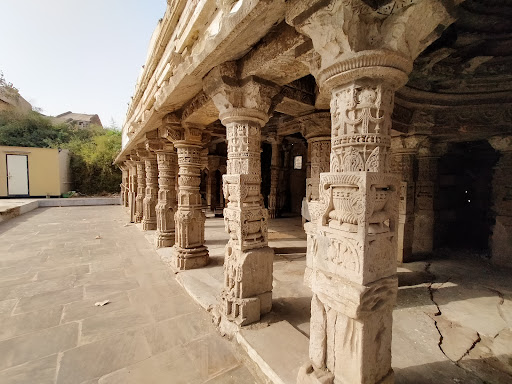
Rudra Mahalaya is a damaged temple, or better be said as the ruins of an once magnificent Shiva temple in Siddhapur (Siddhpur) town in Patan district of Gujarat. It's construction was started by king Mula raja in 943 AD and was completed in 1140 AD by king Jaysingha Siddharaja. It was a very big and majestic temple, built in Maru-Gurjara architecture style. Unfortunately, it was destroyed by the Sultan of Delhi Alauddin Khalji in late 13th century and later by Sultan of Gujarat Ahmad Shah I in early 15th century. Only two 'Toran'-s and four huge pillars of the original massive temple are standing now. Today one can see on the western side of the area a long veranda with multiple decorated stone pillars and an adjoining small temple with two components -- one Mandapa with a dome like roof and the sanctum with a small spire. There is a Nandi idol in the Mandapa and a small Shiva lingam in the sanctum. Adjacent to this temple is a partially damaged small temple with a North Indian type Shikhara. The entrance is closed. On the eastern side there is a huge Toran, and 4 huge pillars, all stone-built and highly decorated. A replica of the Toran (of much smaller size) is constructed in front of Siddhapur Museum near Bindu Sarovar. The ruins of Rudra Mahalaya are protected by ASI. For reasons not comprehensible to me, photography is not allowed in the premises of Rudra Mahalaya temple, though one can see many photos of this damaged temple in the internet.
Santosh JoshiSantosh Joshi
Rudra mahalaya temple ASI ID - GJ-164 (for temple) Construction period - 943 to 1140 CE Raja Mularaja and compleyed by raja Jaya simha siddraja Dynasty- chalukya Architecture style - Maru gurjar Construction material - sandstone Floor hight -2 This temple of Shiv deity was attacked twice by muslims. In 1296, this temple was plundered and demolished by Ulug khan and Nusrat khan Warriors of Alauddin khilji, ruler of delhi sultanat It was attacked and destroyed by Ahmedshah during 1414, who later converted some of the part of the temple into the mosque. The construction on graham gruh (sanctum sanatorium) is a 57 feet long mosque where Muslims used it for congregational purposes and did namaz. Adv. Ajay pratap singh of kshtriya Vikas trust has filed a suit for removal of illegal Construction in temple complex and since then the temple is closed for visitors. Now the temple is under ASI, and local police administration and entry to it is completely restricted. However, visitors can see it from outside of the protection boundaries and feel the grandeur of the temple complex.
See more posts
See more posts
hotel
Find your stay

Pet-friendly Hotels in Gujarat

Find a cozy hotel nearby and make it a full experience.

The Rudra Mahalaya Temple, also known as Rudramal, is a ruined temple complex at Siddhpur in the Patan district of Gujarat, India. Its construction was started in 943 AD by Mularaja and completed in 1140 AD by Siddharaj Jaisinh, the rulers of the Solanki dynasty. The temple was destroyed by Allauddin Khilji, and later Ahmed Shah I (1410–44) desecrated and substantially demolished this temple, and also converted part of it into the congregational mosque (Jami Masjid) of the city. Two torans (porches) and four pillars of the former central structure still stand along with western part of the complex used as a congregational mosque. Siddhpur, historically known as Sristhal. Sidhpur, under the rulers of Solanki dynasty, was a prominent town in the 10th century. In the tenth century (943 AD) Mularaja, the founder of the Solanki dynasty of Gujarat, started the erection of the Rudra Mahalay temple. In his youth, Muladev had slain his maternal uncle, usurped his throne, and murdered the whole of his mother’s kindred; and in old age his crimes hung heavily on his mind. He made pilgrimages and courted the favour of Brahmins from far and near. To a band of them he gave Sristhal, and committing the kingdom to his son Chamundaraja, he retired there to end his days in their company (996 AD). But the Rudra Mahalay was still incomplete, nor was it finished till 1140 AD. On Monday the fourteenth, in the Nakshatra Shravan and Varyan Yoga, Siddharaj, in the Rudra Mala, Shivashankar established. It was during the 12th century, in 1140 AD, that Siddharaj Jaisinh (1094–1144) consecrated the temple complex and it became the principal temple complex of Siddhpur. According to another legend, two Parmars from Malwa, named Govinddas and Madhavdas, took up their haunt among the rush grass that covered the neighbourhood of the Rudra Mahalaya, and lived by plunder. There they found the foundations of a temple and Shiva linga, and said that in the night they had seen heavenly beings. This was told to Siddharaj and led to the erection or completion of the temple. In Mirat-i-Ahmadi, Ali Muhammad Khan writes, The king on signifying his intention of building the temple, requested the astrologers, it is said, to appoint a fortunate hour; and they at this time predicted the destruction of the building. Then Siddha Raja caused images of “horse lords” and other great kings to be placed in the temple, and “near them a representation of himself in the attitude of supplication, with an inscription praying that, even if the land was laid waste, this temple might not be destroyed. Alauddin Khilji sent an army under Ulugh Khan and Nusrat Khan Jalesri who dismantled the temple complex in 1296 AD (Samvat 1353).[1] The temple was further destroyed and the western part of it was converted into congregational mosque (Jami Mosque) by Ahmed Shah I (1410–44) of Muzaffarid dynasty in 1414 or 1415. The original temple, completed in 1140 to lavish proportions with extensive ornamentation, consisted of a roof measuring 32 feet (9.8 m), much larger than the Abu temple. Its overall dimensions were 300 by 230 feet (91 m × 70 m) with the central building 150 feet (46 m) in length. It was a triple storied temple with 1,600 pillars, 12 entrance doors, and 11 shrines of Rudra positioned around it. The sanctum was located on the west and there was also a ‘mandapa’ or hall which had porches on the eastern, northern, and southern wings. Today only a few remnants of this complex are seen, such as two “torans” (porches) and four pillars. One “toran” is elaborately ornamented; the eastern gate which leads to the Saraswati river still stands; the remaining pillars have highly ornamented carvings. Kirti Stambh of North has survived. The western part of complex converted into the congregation mosque is also there.
Hitendra Vankani

Hitendra Vankani

hotel
Find your stay

Affordable Hotels in Gujarat

Find a cozy hotel nearby and make it a full experience.

Get the Appoverlay
Get the AppOne tap to find yournext favorite spots!
Rudra Mahalaya is a damaged temple, or better be said as the ruins of an once magnificent Shiva temple in Siddhapur (Siddhpur) town in Patan district of Gujarat. It's construction was started by king Mula raja in 943 AD and was completed in 1140 AD by king Jaysingha Siddharaja. It was a very big and majestic temple, built in Maru-Gurjara architecture style. Unfortunately, it was destroyed by the Sultan of Delhi Alauddin Khalji in late 13th century and later by Sultan of Gujarat Ahmad Shah I in early 15th century. Only two 'Toran'-s and four huge pillars of the original massive temple are standing now. Today one can see on the western side of the area a long veranda with multiple decorated stone pillars and an adjoining small temple with two components -- one Mandapa with a dome like roof and the sanctum with a small spire. There is a Nandi idol in the Mandapa and a small Shiva lingam in the sanctum. Adjacent to this temple is a partially damaged small temple with a North Indian type Shikhara. The entrance is closed. On the eastern side there is a huge Toran, and 4 huge pillars, all stone-built and highly decorated. A replica of the Toran (of much smaller size) is constructed in front of Siddhapur Museum near Bindu Sarovar. The ruins of Rudra Mahalaya are protected by ASI. For reasons not comprehensible to me, photography is not allowed in the premises of Rudra Mahalaya temple, though one can see many photos of this damaged temple in the internet.
Asis Chatterjee

Asis Chatterjee

hotel
Find your stay

The Coolest Hotels You Haven't Heard Of (Yet)

Find a cozy hotel nearby and make it a full experience.

hotel
Find your stay

Trending Stays Worth the Hype in Gujarat

Find a cozy hotel nearby and make it a full experience.

Rudra mahalaya temple ASI ID - GJ-164 (for temple) Construction period - 943 to 1140 CE Raja Mularaja and compleyed by raja Jaya simha siddraja Dynasty- chalukya Architecture style - Maru gurjar Construction material - sandstone Floor hight -2 This temple of Shiv deity was attacked twice by muslims. In 1296, this temple was plundered and demolished by Ulug khan and Nusrat khan Warriors of Alauddin khilji, ruler of delhi sultanat It was attacked and destroyed by Ahmedshah during 1414, who later converted some of the part of the temple into the mosque. The construction on graham gruh (sanctum sanatorium) is a 57 feet long mosque where Muslims used it for congregational purposes and did namaz. Adv. Ajay pratap singh of kshtriya Vikas trust has filed a suit for removal of illegal Construction in temple complex and since then the temple is closed for visitors. Now the temple is under ASI, and local police administration and entry to it is completely restricted. However, visitors can see it from outside of the protection boundaries and feel the grandeur of the temple complex.
Santosh Joshi

Santosh Joshi

See more posts
See more posts

Reviews of Rudra Mahalaya

4.5
(827)
avatar
4.0
1y

The Rudra Mahalaya Temple, also known as Rudramal, is a ruined temple complex at Siddhpur in the Patan district of Gujarat, India. Its construction was started in 943 AD by Mularaja and completed in 1140 AD by Siddharaj Jaisinh, the rulers of the Solanki dynasty. The temple was destroyed by Allauddin Khilji, and later Ahmed Shah I (1410–44) desecrated and substantially demolished this temple, and also converted part of it into the congregational mosque (Jami Masjid) of the city. Two torans (porches) and four pillars of the former central structure still stand along with western part of the complex used as a congregational mosque.

Siddhpur, historically known as Sristhal. Sidhpur, under the rulers of Solanki dynasty, was a prominent town in the 10th century. In the tenth century (943 AD) Mularaja, the founder of the Solanki dynasty of Gujarat, started the erection of the Rudra Mahalay temple. In his youth, Muladev had slain his maternal uncle, usurped his throne, and murdered the whole of his mother’s kindred; and in old age his crimes hung heavily on his mind. He made pilgrimages and courted the favour of Brahmins from far and near. To a band of them he gave Sristhal, and committing the kingdom to his son Chamundaraja, he retired there to end his days in their company (996 AD). But the Rudra Mahalay was still incomplete, nor was it finished till 1140 AD.

On Monday the fourteenth, in the Nakshatra Shravan and Varyan Yoga, Siddharaj, in the Rudra Mala, Shivashankar established. It was during the 12th century, in 1140 AD, that Siddharaj Jaisinh (1094–1144) consecrated the temple complex and it became the principal temple complex of Siddhpur. According to another legend, two Parmars from Malwa, named Govinddas and Madhavdas, took up their haunt among the rush grass that covered the neighbourhood of the Rudra Mahalaya, and lived by plunder. There they found the foundations of a temple and Shiva linga, and said that in the night they had seen heavenly beings. This was told to Siddharaj and led to the erection or completion of the temple.

In Mirat-i-Ahmadi, Ali Muhammad Khan writes, The king on signifying his intention of building the temple, requested the astrologers, it is said, to appoint a fortunate hour; and they at this time predicted the destruction of the building. Then Siddha Raja caused images of “horse lords” and other great kings to be placed in the temple, and “near them a representation of himself in the attitude of supplication, with an inscription praying that, even if the land was laid waste, this temple might not be destroyed.

Alauddin Khilji sent an army under Ulugh Khan and Nusrat Khan Jalesri who dismantled the temple complex in 1296 AD (Samvat 1353).[1] The temple was further destroyed and the western part of it was converted into congregational mosque (Jami Mosque) by Ahmed Shah I (1410–44) of Muzaffarid dynasty in 1414 or 1415. The original temple, completed in 1140 to lavish proportions with extensive ornamentation, consisted of a roof measuring 32 feet (9.8 m), much larger than the Abu temple. Its overall dimensions were 300 by 230 feet (91 m × 70 m) with the central building 150 feet (46 m) in length. It was a triple storied temple with 1,600 pillars, 12 entrance doors, and 11 shrines of Rudra positioned around it. The sanctum was located on the west and there was also a ‘mandapa’ or hall which had porches on the eastern, northern, and southern wings.

Today only a few remnants of this complex are seen, such as two “torans” (porches) and four pillars. One “toran” is elaborately ornamented; the eastern gate which leads to the Saraswati river still stands; the remaining pillars have highly ornamented carvings. Kirti Stambh of North has survived. The western part of complex converted into the congregation mosque...

   Read more

avatar
5.0
7y

The Rudra Mahalaya Temple, also known as Rudramal, is a destroyed/desecrated temple complex at Siddhpur in the Patan district of Gujarat, India. Its construction was started in 943 AD by Mularaja and completed in 1140 AD by Jayasimha Siddharaja, the rulers of the Chaulukya dynasty. The temple was destroyed by Alauddin Khalji, and later Ahmed Shah I (1410–44) desecrated and substantially demolished this temple, and also converted part of it into the congregational mosque (Jami Masjid) of the city. Two torans (porches) and four pillars of the former central structure still stand along with western part of the complex used as a congregational mosque.

Siddhpur, historically known as Sristhal. Sidhpur, under the rulers of Chaulukya dynasty, was a prominent town in the 10th century. In the tenth century (943 AD) Mularaja, the founder of the Chaulukya dynasty of Gujarat, started the erection of the Rudra Mahalay temple. In his youth, Muladev had slain his maternal uncle, usurped his throne, and murdered the whole of his mother's kindred; and in old age his crimes hung heavily on his mind. He made pilgrimages and courted the favour of Brahmins from far and near. To a band of them he gave Sristhal, and committing the kingdom to his son Chamundaraja, he retired there to end his days in their company (996 AD). But the Rudra Mahalay was still incomplete, nor was it finished till 1140 AD.

It was during the 12th century, in 1140 AD, that Jayasimha Siddharaja (1094–1144) consecrated the temple complex and it became the principal temple complex of Siddhpur.

According to another legend, two Parmars from Malwa, named Govinddas and Madhavdas, took up their haunt among the rush grass that covered the neighbourhood of the Rudra Mahalaya, and lived by plunder. There they found the foundations of a temple and Shiva linga, and said that in the night they had seen heavenly beings. This was told to Siddharaj and led to the erection or completion of the temple.

In Mirat-i-Ahmadi, Ali Muhammad Khan writes, "The king on signifying his intention of building the temple, requested the astrologers, it is said, to appoint a fortunate hour; and they at this time predicted the destruction of the building." Then Siddha Raja caused images of "horse lords" and other great kings to be placed in the temple, and "near them a representation of himself in the attitude of supplication, with an inscription praying that, even if the land was laid waste, this temple might not be destroyed."

Alauddin Khalji sent an army under Ulugh Khan and Nusrat Khan, who dismantled the temple complex in 1296 AD (Samvat 1353). The temple was further destroyed and the western part of it was converted into congregational mosque (Jami Mosque) by Ahmed Shah I (1410–44) of Muzaffarid dynasty in...

   Read more
avatar
4.0
4y

Rudra Mahalaya is a damaged temple, or better be said as the ruins of an once magnificent Shiva temple in Siddhapur (Siddhpur) town in Patan district of Gujarat. It's construction was started by king Mula raja in 943 AD and was completed in 1140 AD by king Jaysingha Siddharaja. It was a very big and majestic temple, built in Maru-Gurjara architecture style. Unfortunately, it was destroyed by the Sultan of Delhi Alauddin Khalji in late 13th century and later by Sultan of Gujarat Ahmad Shah I in early 15th century. Only two 'Toran'-s and four huge pillars of the original massive temple are standing now.

Today one can see on the western side of the area a long veranda with multiple decorated stone pillars and an adjoining small temple with two components -- one Mandapa with a dome like roof and the sanctum with a small spire. There is a Nandi idol in the Mandapa and a small Shiva lingam in the sanctum. Adjacent to this temple is a partially damaged small temple with a North Indian type Shikhara. The entrance is closed.

On the eastern side there is a huge Toran, and 4 huge pillars, all stone-built and highly decorated. A replica of the Toran (of much smaller size) is constructed in front of Siddhapur Museum near Bindu Sarovar.

The ruins of Rudra Mahalaya are protected by ASI. For reasons not comprehensible to me, photography is not allowed in the premises of Rudra Mahalaya temple, though one can see many photos of this damaged temple in...

   Read more
Page 1 of 7
Previous
Next