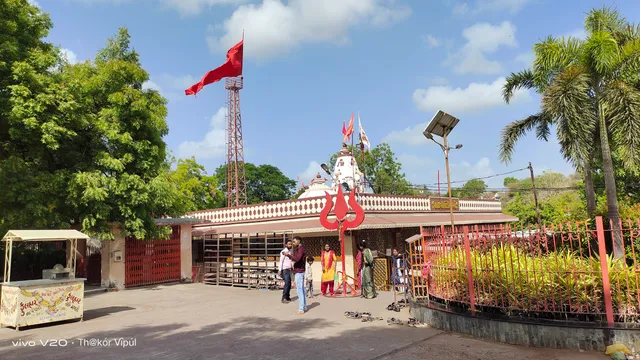
Khodiyar Mandir Rajpara is a Hindu temple dedicated to the goddess Khodiyar Mata, located in Rajpara, a village in the state of Gujarat, India. The temple is one of the most popular and revered temples in the region, and attracts a large number of devotees throughout the year.
The temple is believed to have been built in the 10th century by the Solanki dynasty, who were known for their patronage of art and architecture. The temple complex is spread over an area of several acres and comprises several shrines, a large courtyard, and a water tank.
The main shrine of the temple is dedicated to Khodiyar Mata, who is believed to be an incarnation of the goddess Durga. She is revered as the protector of the village and is worshipped for her blessings of health, wealth, and prosperity. The idol of Khodiyar Mata is made of black stone and is adorned with jewellery and silk clothes.
The temple complex also houses several other shrines dedicated to various deities, including Lord Shiva, Lord Ganesha, and Lord Hanuman. The courtyard of the temple is a peaceful and serene space, where devotees can sit and meditate or offer prayers to the deities.
One of the unique features of the temple is the water tank, which is located within the complex. The tank is believed to have healing properties and is said to cure various ailments. Devotees often take a dip in the tank and offer prayers to Khodiyar Mata for the well-being of their family and loved ones.
The temple is known for its vibrant festivals and celebrations, which are held throughout the year. The most popular festival is the Khodiyar Mata Jayanti, which marks the birth anniversary of the goddess. The festival is celebrated with great pomp and show, with processions, music, and dance performances.
The temple is also known for its charitable activities and social welfare programs. The temple trust runs several schools and hospitals in the region, which provide free education and healthcare to the underprivileged.
Overall, Khodiyar Mandir Rajpara is a symbol of the rich cultural heritage and spiritual traditions of Gujarat. The temple has a special place in the hearts of the people of Rajpara and is a must-visit destination for anyone interested in exploring the vibrant and diverse...
Read moreKhodiyar Mandir, Rajpara stands on the shore of the beautiful Lake Tataliya. The temple lies on the Bhavnagar - Rajkot highway, just before Rajpara village.
Built by Maharaja Krishnakumarsinhji of Bhavnagar, the Khodiyar Mandir railway station is on the Bhavnagar - Dhola rail line, making it easily accessible for the local devotees.
A small temple established by Maharaja Wakhatsinhji and built as it is today, by Maharaja Krishnakumarsinhji , the temple has grown to become a symbol of faith, belief, hope and certitude for millions of devotees in present times.
The holy shrine of Mata Khodiyar, rooted on the land of the saints and warriors, Gohilwad, is day after day thronged by devotees.
On the eve of Sundays, Tuesdays as well as Full moon or Poonam, devotees start moving towards the temple on foot to reach in time for the auspicious aarti at dawn.
Aai Shri Khodiyar Mata is the ‘Sahayak devi’ for the Gohil Rajputs. There are many folktales as to how Shri Khodiyar Mata came to be the ‘Sahayak devi’ of the Gohils.
In the 13th century, Maharaja Ranji Gohil took over the village of Vana. At the time Shri Khodiyar mata was the considered ‘Lokdevi’.
The Gohil rulers were very devotional. It is believed that Maharaja Wakhatsinhji was a devotee of Shri Khodiyar Mata. He made a small shrine of Mata in Rajpara, which many years later continued to be visited.
Maharaja Krishnakumarsinhji used to visit this shrine time and again. Having complete faith in Mataji, he built the temple as we see it today and also arranged for drinking water and a proper road from the temple to the Khodiyar railway station to make it more accessible.
Maharaja Krishnakumarsinhji went on to build a hospital on the way from the railway station to the temple as well as a lake to provide water to the wild animals in the Bhal region. Further arrangements were made to provide water automatically with pumping, which is used till date.
In order to continue improving the temple and its amenities Maharaja Krishnakumarsinhji, set up the Khodiyar Mandir Trust in 1953. Upholding his principles and values, the Trust has been...
Read moreEven though the Khodiyar temple, on the outskirts of Bhavnagar (15km), was built only as recent as early 20th century, it has a staunch following amongst devotees of Janbai (Khodiyar Ma). The temple lies on the edge of the Tataniya Wali Lake and has a ropeway at the back that connects the base to a shrine on the top of a hill. Lapsi (broken wheat dessert) is the main prasad of the temple.
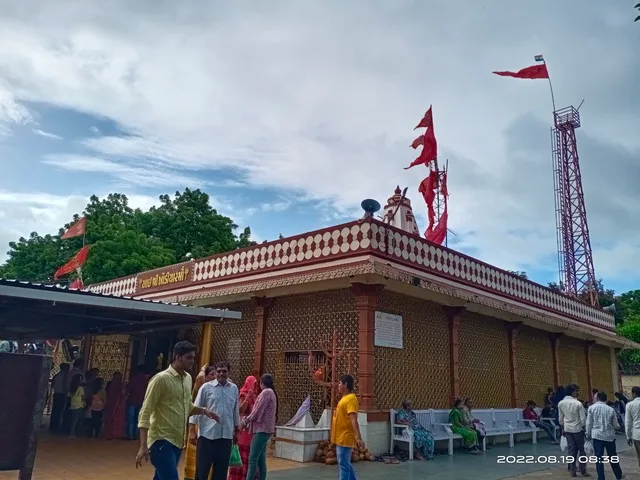
Brief History: Khodiyar Mata is believed to be a warrior Hindu goddess born as a member of the Charan caste around 700 AD. She is said to be the daughter of Mamad Ji Charan, who was blessed by Lord Shiva and Nagdev with seven daughters and a son. One of the daughters was Khodiyar Mata, who has temples all over Gujarat, Rajasthan and Mumbai. There is an interesting legend around the Goddess and the construction of this temple.
Maharaja Wakhatsinghji Gohil, who ruled the state of Bhavnagar from 1748 to 1816, is said to be the one who built this temple. He was a devout follower of Khodiyar Mata. Once, he prayed to the goddess to present herself in her physical form in Sihor, the capital of Bhavnagar. Khodiyar Mata appeared in front of him and asked him to lead the way, only on the condition that he doesn’t turn around and check if she is following him. Wakhatsinghji walked on for many hours until he stopped just short of Sihor, in Rajpara, to see if she was still there. The Goddess was very much there but kept to her promise and never moved an inch ahead. She and her sisters decided to stay put and this is where the shrine was built.
Best time to visit: November–February is the best period to visit.
How to get there
By Road
Frequent bus connections, link towns and cities all over the state; Rajkot (4hours), Ahmedabad (5 hours), Vadodara (6 hours), Palitana (2 hours).
By Train You can opt for a train to connect to Ahmedabad and Mumbai with frequent connections.
By Air
Bhavnagar Airport is about 3.5km from town and is reasonably well connected to major...
Read more