Swaminarayan Mandir, Vadtal: A Sacred Landmark of Devotion
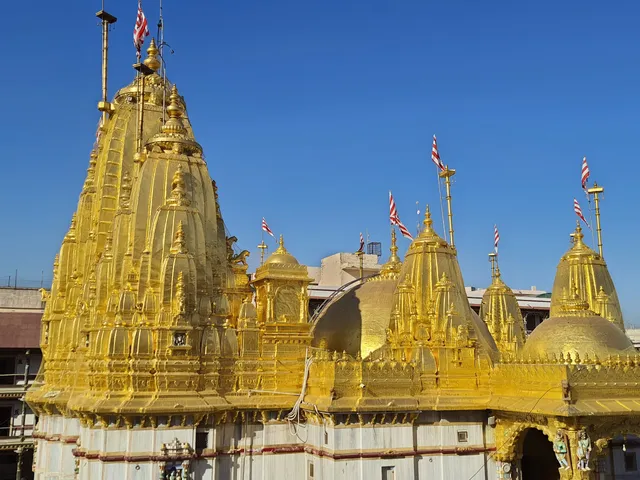
The Swaminarayan Mandir in Vadtal, located in Gujarat, India, is a prominent temple and a significant center for followers of the Swaminarayan sect of Hinduism. Established by Lord Swaminarayan in 1824, this temple holds immense spiritual, cultural, and architectural importance. Vadtal, also known as Vadtal Dham, attracts thousands of devotees from across the world who come to offer prayers and partake in the temple's vibrant spiritual life.
Historical Background
Lord Swaminarayan, the founder of the Swaminarayan sect, was a revered Hindu saint and spiritual leader of the 19th century. His teachings emphasized morality, devotion to God, and social reform. One of his key initiatives was the establishment of temples across India to foster unity, devotion, and a sense of community among his followers. Vadtal is one of the six temples he directly built during his lifetime, making it a central hub for the Swaminarayan Sampradaya.
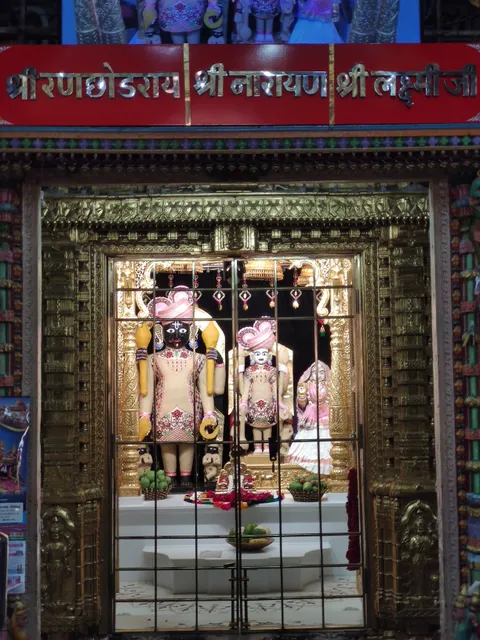
The foundation of the Vadtal temple was laid on the auspicious day of Kartik Sud Ekadashi in 1824. The structure was designed and built according to traditional Hindu temple architecture, with contributions from devotees and artisans. Lord Swaminarayan himself consecrated the main idols of Laxmi-Narayan, which are the primary deities of the temple. This act of consecration by the spiritual leader himself adds to the temple's sacredness and historical significance.
Architectural Splendor
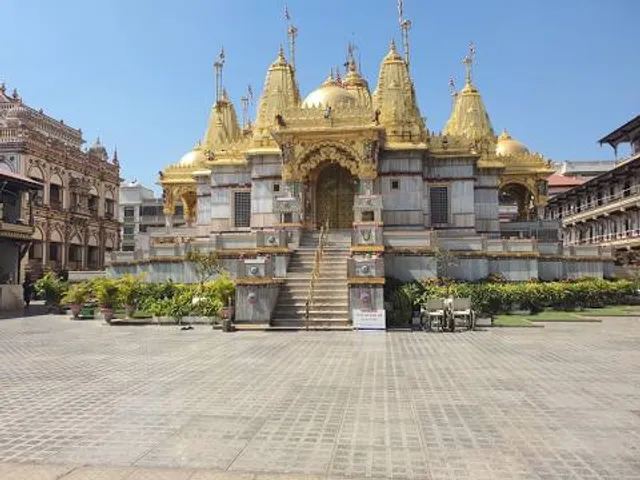
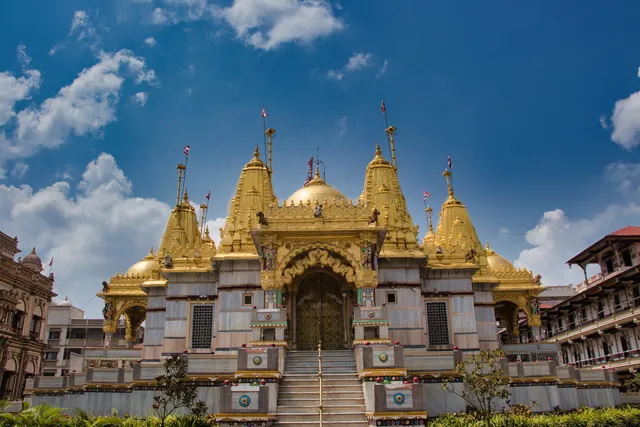
The Vadtal Swaminarayan Mandir is a striking example of intricate craftsmanship and traditional temple architecture. Built using marble and sandstone, the temple boasts ornate carvings and sculptures that depict various episodes from Hindu mythology and the life of Lord Swaminarayan. The temple's three spires (shikhar) symbolize the three main deities enshrined in the temple—Laxmi-Narayan, Radha-Krishna, and Dharmadev-Bhakti Mata.
The central sanctum of the temple houses the idol of Laxmi-Narayan, which represents Lord Vishnu and his consort, Goddess Laxmi. Flanked by other shrines dedicated to deities like Radha-Krishna, this layout symbolizes the cosmic order of the universe, where devotion and righteousness are emphasized. The walls and ceilings of the temple are adorned with colorful murals and frescoes depicting stories from the Bhagavad Gita, Ramayana, Mahabharata, and the life of Lord Swaminarayan, offering devotees a visual representation of spiritual teachings.
The temple's spacious courtyard and surrounding gardens add to its tranquil and sacred ambiance, providing a peaceful environment for worship and meditation. The intricate stone carvings and detailed artwork stand as a testament to the skilled artisans who contributed to its construction, making it a symbol of both religious devotion and artistic excellence.
Religious and Cultural Significance
The Vadtal Swaminarayan Mandir is more than just a place of worship; it serves as a spiritual and cultural center for the Swaminarayan community. Daily rituals, prayers, and aarti (devotional singing) are conducted with great devotion, creating a serene and uplifting atmosphere. One of the temple's most significant daily rituals is the Thal, where food is offered to the deities, and later distributed as Prasad (blessed food) to devotees.
The temple also celebrates major Hindu festivals such as Diwali, Holi, Janmashtami, and Maha Shivaratri with grandeur and fervor. However, the most prominent festival at the Vadtal temple is the Prabodhini Ekadashi, marking the day when Lord Swaminarayan consecrated the temple. This day draws large crowds of devotees who come to partake in the spiritual celebrations, discourses, and processions.
In addition to its religious activities, the temple plays an important role in promoting social and educational initiatives. Schools, hospitals, and charitable institutions operated by the Swaminarayan sect are associated with the temple, contributing to the welfare of the community. The temple also serves as a center for...
Read moreThe town of Vadtal is also known as Vadtal Swaminarayan. The temple here is in the shape of a lotus, with nine domes in the inner temple. The land for this shrine was donated by Joban Pagi, a dacoit converted into a devotee by Shree Swaminarayan Bhagwan. The temple was constructed under the supervision of S.G. Brahmanand Swami. Devotees from Vadtal had gone to Shreeji Maharaj on the day of Nirjala Ekadashi to meet him in Gadhada. On the next day, the twelfth day of the bright half of Jyestha, they requested Shree Swaminarayan to construct a Shri Krishna Mandir in Vadtal. Shreeji Maharaj commanded his disciple Brahmanand Swami to temporarily leave the construction of the Muli temple and proceed with a team of saints to plan and supervise the construction of a temple. The construction of this temple was completed within 15 months and the idols of Laxminarayan Dev were installed by Shree Swaminarayan Bhagwan himself on the 3rd of November 1824, amidst chants of vedic hymns and devotional fervour of the installation ceremony. In the middle of the temple, he installed the idols of Laxminarayan Dev and Ranchhodji. In the north, there are the idols of Dharmdev and Bhaktimata and his own form Harikrishna Maharaj. And in the south, Shree Swaminarayan Bhagwan installed the idols of RadhaKrishna Dev and Harikrishna Maharaj.
Besides the Gods sitting in the central temple, in the south of the middle temple, were installed the form of Dakshinavart Shankh (Southern-sea conch) and Shaligrama (icon of Vishnu). In the inner dome, there are the stone idols of the ten incarnations of god, besides the idols of Vishnu resting on the seat of Sheshnaag (heavenly snake).
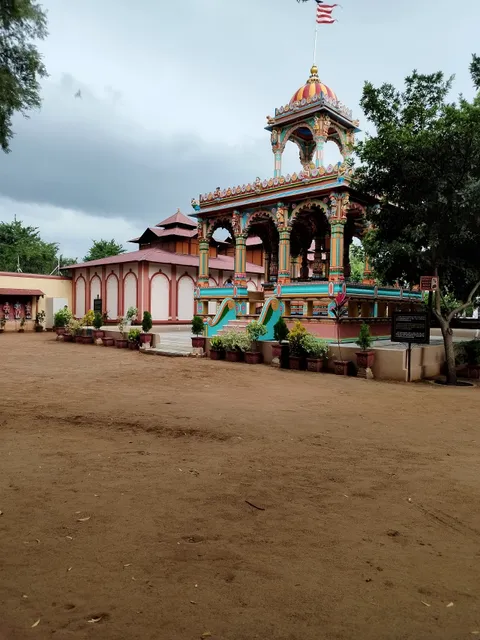
The temple is the highest seat of the Acharya and preceptor of the Dakshin Desh (Laxminarayan Dev Gadi). On the south end of the main temple, there is a place called the Akshar Bhavan. Its first floor has standing idols of Ghanshyam Maharaj. On the second floor, there is the idol of Ghanshyam Maharaj in sitting posture. Personal objects of Swaminarayan are kept here. On the west there is a place called the Hari Mandap where Shree Swaminarayan Bhagwan wrote the Shikshapatri.
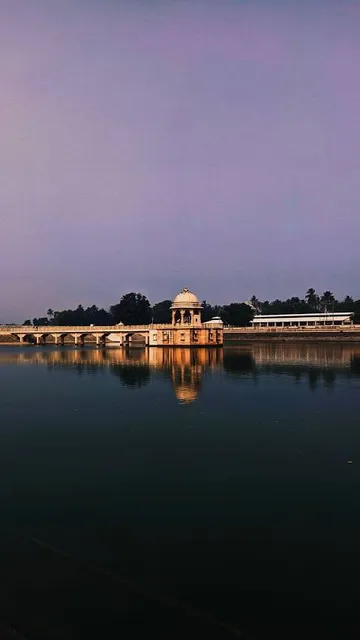
In the east of the town, there is a mango garden where Shree Swaminarayan Bhagwan ignited Holi and played with colours. A canopy has been constructed at this place. On the south side of this place, Shree Swaminarayan Bhagwan had swung on a swing of twelve doors. A marble seat has been constructed at that place. The Gomati lake which was dug by Swaminarayan is in the north of the town. In the middle of the lake is a shelter and a canopy is built on the west of it. Shree Swaminarayan Bhagwan used to sit there at the place of the present canopy when the lake was being excavated. Shree Swaminarayan Bhagwan had preached Vachanamrit under a mango tree next...
Read moreThe town of Vadtal is also known as Vadtal Swaminarayan. The temple here is in the shape of a lotus, with nine domes in the inner temple. The land for this shrine was donated by Joban Pagi, a dacoit converted into a devotee by Shree Swaminarayan Bhagwan. The temple was constructed under the supervision of S.G. Brahmanand Swami. Devotees from Vadtal had gone to Shreeji Maharaj on the day of Nirjala Ekadashi to meet him in Gadhada. On the next day, the twelfth day of the bright half of Jyestha, they requested Shree Swaminarayan to construct a Shri Krishna Mandir in Vadtal. Shreeji Maharaj commanded his disciple Brahmanand Swami to temporarily leave the construction of the Muli temple and proceed with a team of saints to plan and supervise the construction of a temple. The construction of this temple was completed within 15 months and the idols of Laxminarayan Dev were installed by Shree Swaminarayan Bhagwan himself on the 3rd of November 1824, amidst chants of vedic hymns and devotional fervour of the installation ceremony. In the middle of the temple, he installed the idols of Laxminarayan Dev and Ranchhodji. In the north, there are the idols of Dharmdev and Bhaktimata and his own form Harikrishna Maharaj. And in the south, Shree Swaminarayan Bhagwan installed the idols of RadhaKrishna Dev and Harikrishna Maharaj.
Besides the Gods sitting in the central temple, in the south of the middle temple, were installed the form of Dakshinavart Shankh (Southern-sea conch) and Shaligrama (icon of Vishnu). In the inner dome, there are the stone idols of the ten incarnations of god, besides the idols of Vishnu resting on the seat of Sheshnaag (heavenly snake).
The temple is the highest seat of the Acharya and preceptor of the Dakshin Desh (Laxminarayan Dev Gadi). On the south end of the main temple, there is a place called the Akshar Bhavan. Its first floor has standing idols of Ghanshyam Maharaj. On the second floor, there is the idol of Ghanshyam Maharaj in sitting posture. Personal objects of Swaminarayan are kept here. On the west there is a place called the Hari Mandap where Shree Swaminarayan Bhagwan wrote the Shikshapatri.
In the east of the town, there is a mango garden where Shree Swaminarayan Bhagwan ignited Holi and played with colours. A canopy has been constructed at this place. On the south side of this place, Shree Swaminarayan Bhagwan had swung on a swing of twelve doors. A marble seat has been constructed at that place. The Gomati lake which was dug by Swaminarayan is in the north of the town. In the middle of the lake is a shelter and a canopy is built on the west of it. Shree Swaminarayan Bhagwan used to sit there at the place of the present canopy when the lake was being excavated. Shree Swaminarayan Bhagwan had preached Vachanamrit under a mango tree next...
Read more