HTML SitemapExplore
logo
Find Things to DoFind The Best Restaurants

Shree Trinetreshwar Mahadev Temple — Attraction in Gujarat

Name
Shree Trinetreshwar Mahadev Temple
Description
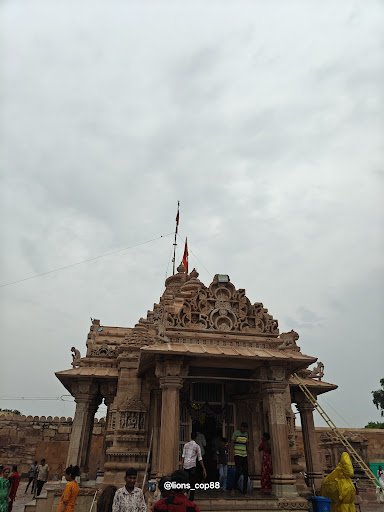
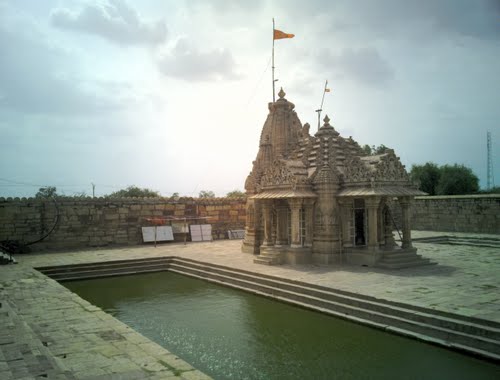
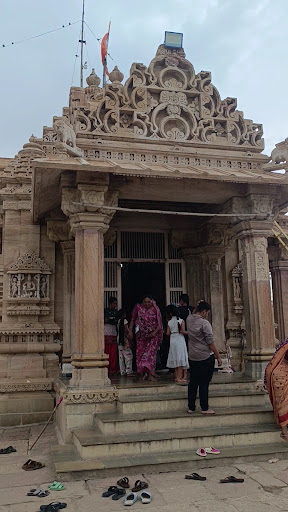
Trineteshwar temple is a Lord Shiva temple of Gurjar Pratihar style, located in the Tarnetar village of Surendranagar district, Gujarat. It was built by Mihir Bhoj of Gurjara pratihara dynasty, in the eighth century.
Nearby attractions
Nearby restaurants
Nearby hotels
Related posts
Keywords
Shree Trinetreshwar Mahadev Temple tourism.Shree Trinetreshwar Mahadev Temple hotels.Shree Trinetreshwar Mahadev Temple bed and breakfast. flights to Shree Trinetreshwar Mahadev Temple.Shree Trinetreshwar Mahadev Temple attractions.Shree Trinetreshwar Mahadev Temple restaurants.Shree Trinetreshwar Mahadev Temple travel.Shree Trinetreshwar Mahadev Temple travel guide.Shree Trinetreshwar Mahadev Temple travel blog.Shree Trinetreshwar Mahadev Temple pictures.Shree Trinetreshwar Mahadev Temple photos.Shree Trinetreshwar Mahadev Temple travel tips.Shree Trinetreshwar Mahadev Temple maps.Shree Trinetreshwar Mahadev Temple things to do.
Shree Trinetreshwar Mahadev Temple things to do, attractions, restaurants, events info and trip planning
Shree Trinetreshwar Mahadev Temple
IndiaGujaratShree Trinetreshwar Mahadev Temple

Basic Info

Shree Trinetreshwar Mahadev Temple

J6W6+5C9, GJ SH 119, Taranetar, Gujarat 363530, India
4.6(259)
Open 24 hours
Save
spot

Ratings & Description

Info

Trineteshwar temple is a Lord Shiva temple of Gurjar Pratihar style, located in the Tarnetar village of Surendranagar district, Gujarat. It was built by Mihir Bhoj of Gurjara pratihara dynasty, in the eighth century.

Cultural
Scenic
Family friendly
Accessibility
attractions: , restaurants:
logoLearn more insights from Wanderboat AI.
Phone
+91 98254 40674

Plan your stay

hotel
Pet-friendly Hotels in Gujarat
Find a cozy hotel nearby and make it a full experience.
hotel
Affordable Hotels in Gujarat
Find a cozy hotel nearby and make it a full experience.
hotel
The Coolest Hotels You Haven't Heard Of (Yet)
Find a cozy hotel nearby and make it a full experience.
hotel
Trending Stays Worth the Hype in Gujarat
Find a cozy hotel nearby and make it a full experience.

Reviews

Get the Appoverlay
Get the AppOne tap to find yournext favorite spots!
Wanderboat LogoWanderboat

Your everyday Al companion for getaway ideas

CompanyAbout Us
InformationAI Trip PlannerSitemap
SocialXInstagramTiktokLinkedin
LegalTerms of ServicePrivacy Policy

Get the app

© 2025 Wanderboat. All rights reserved.
logo

Posts

Virendrabhai DhadhalVirendrabhai Dhadhal
Visited the majestic Trinetrashwar Mahadev Temple in Tarnetar today (August 17, 2025), located in the heart of Surendranagar district, Gujarat. As a devotee of Lord Shiva, this was a long-awaited pilgrimage for me, and it truly exceeded my expectations in every way. The temple, dedicated to Trinetrashwar Mahadev (a three-eyed form of Lord Shiva), is steeped in ancient history and mythology, believed to date back centuries with legends tied to the Mahabharata era where Draupadi's swayamvar is said to have taken place nearby. It's not just a place of worship but a cultural gem that hosts the famous Tarnetar Fair annually, though my visit was during a quieter time, allowing for a more intimate spiritual experience. Getting there was straightforward – I drove from Ahmedabad, which took about 3-4 hours via the well-maintained highways (NH947 and state roads). The temple is easily accessible by car or bus from Surendranagar city (around 75 km away), with ample parking space available near the entrance, though it might get crowded during festivals. Upon arrival, I was greeted by the serene rural surroundings: vast open fields, a beautiful lake (the Tarnetar Lake) adjacent to the temple, and the iconic colorful umbrellas that symbolize the fair's traditions. The temple complex itself is sprawling yet peaceful, with clean pathways and well-kept gardens that add to the tranquil vibe. Architecturally, the temple is a stunning example of traditional Gujarati style – intricate carvings on the stone walls depicting scenes from Hindu epics, a towering shikhara (spire) that stands out against the sky, and the main sanctum housing the Trinetrashwar idol, which is mesmerizing with its three-eyed representation. I arrived early in the morning for the aarti, and the chants, bells, and incense created an incredibly divine atmosphere. The priests were welcoming and performed the rituals with great devotion, explaining the significance to visitors like me. Inside, the temple is spotless, with proper lighting and ventilation, making it comfortable even in the summer heat. I spent over two hours exploring the premises, including the smaller shrines dedicated to other deities like Ganesh and Parvati, and even dipped my feet in the holy lake for blessings. What struck me most was the sense of peace and positive energy here – far from the chaos of urban temples. There were a few local families and tourists offering prayers, but it wasn't overcrowded, allowing for quiet meditation. Facilities-wise, there's a small shop for prasad and souvenirs (don't miss the traditional chaniya cholis if you're into cultural shopping), basic restrooms that were reasonably clean, and nearby eateries serving authentic Gujarati thali at affordable prices (I had a delicious meal for under ₹200). However, I'd suggest bringing your own water bottle as options are limited, and wear comfortable footwear since there's some walking involved. Overall, this visit was spiritually rejuvenating and a perfect escape into Gujarat's rich heritage. Highly recommend it to anyone seeking a blend of devotion, history, and natural beauty – whether you're a solo traveler, family, or group. If you're planning a trip, aim for the Tarnetar Mela in September for the vibrant folk dances and matchmaking traditions, but even on a regular day like today, it's worth every mile. 5 stars without hesitation! Jai Bholenath!
Jatinsinh N DodiyaJatinsinh N Dodiya
At a distance of 8.5 km away from than town is the ancient Trinetreshwar temple, in the Tarnetar village in the Surendranagar district of Gujarat. The mandir is an ornate and evolved example of its time portraying the Gujarat Pratihar vogue. Attributable to the reign of the Pratihar king, the regions were later known as the Panchal region. An acclaimed ability Shastri Harkrishna Prabhashankar Trivedi holds the temple to be the lot of beauteous religious monuments and the finest archetype of artful carve in Gujarat.  The Trinetreshwar Mandir is profusely sculpted with exquisite designs and figures of deities fired by an astonishing degrees of ability tapped on the stone of the temple. The reigning deity is visited by thousands of holiday makers who return to village to hunt his holy blessings. The temple remain magnificent not in terms of gold and offerings however in terms of its sculptural wealth and spiritual significance. One cannot help to take pleasure of observing the nice sculptural exuberance and renowned architectural creation. Thirty three deities are carved on the temple walls exemplifying good execution and elegant expressions. The Mandir is surrounded by 3 Kunds, the Krishna, Bhrahma and the Shiva Kund. The temple was after reconstructed alteration its architectural adorableness by the King of Lakthar - 'Karansinghji' in anamnesis of his son. Bagwan Shiva was from then advanced referred to as the 'Trinetreshwar'.  The Kund adjacent to the temple also includes a myth related. Bathing during this kund is considered to be as holy as taking a dip in the holy waters of the Ganges by the individuals of Gujarat. The kund is also popularly known as the 'Papnashu' (destroyer of sins). Whereas you make a visit to Gujarat State, a visit to the present tourist Guide is a must. Tarnetar is a village in the Surendranagar district of the state of Gujarat in India. It is situated near the city of Thangadh. The nearest national airport is 90 kilometres (56 mi) away at Rajkot, and the nearest international airport is at Ahmedabad, 200 kilometres (120 mi) away. Tarnetar is widely known for Trinetreshwar Temple, and the fair held here. It is believed that the temple belongs to the Solanki Era. The Pratihara kings, predominantly the worshipers of Lord Shiva were great builders and architecturally brilliant. They were ardent patrons of art and sculpture. The Trinetreshwar temple is an ornate and evolved example of its time portraying the Gurjjar Pratihar style. Owing to the reign of the Pratihar kings, the regions were later called as the Panchal region. The temple was later reconstructed without changing its architectural beauty by the King of Lakthar, Karansinghji in memory of his son. The Trinetreshwar temple is profusely sculpted with exquisite designs. 33 deities have been carved on the temple walls exemplifying perfect execution and sublime expressions. The Tarnetar temple is surrounded by three Kunds : the Vishnu Kund, the Bhrahma Kund and the Shiv Kund - south of which a cellar is built. It is popularly believed that a dip in its waters is as holy as a dip in the sacred River Ganges.
Ravindra ChauhanRavindra Chauhan
temple is a Lord Shiva temple of Gurjar Pratihar style, located in the Tarnetar village of Surendranagar district, Gujarat. It was built by Mihir Bhoj, in 8th century. Tarnetar Temple also famous as Trinetreshwar Temple at Tarnetar. The history of this beautiful temple festival which is attended by more than 50000 people every year. The legend is related to Draupadi’s swayamavar, an episode from the Indian epic, the Mahabharata. Arjun, one of the main characters, and a Pandava, had participated in the swayamvar. In order to marry Draupadi, he pierced the eye of a rotating fish by just looking at the fish’s reflection in the water. Also, Arjun was a brilliant and undefeatable archer! It is said that this traditional fair, celebrating Draupadi’s swayamvar, began some 200 to 250 years ago. The festival and fair is organised at the Trinetreshwar Mahadev temple (the three-eye-god), which was constructed back in the 19th century. This temple is the focal point of the fair, and this is where all the festivities are held. It dates back to the Solanki era, and celebrates the three-day festival with much enthusiasm. Inside the temple, there is a Brahma Kund, a Shiva Kund, and a Vishnu Kund and it is believed that taking a plunge in these three water reservoirs is equivalent to taking a dip in the waters of the holy Ganges. It is believed that Tarnetar Temple was built in Solanki Era, around in 10th century by King Pratihara, great devotee of Lord Shiva. The name of the Temple Trinetreshwar is derived from the three eyed Shiva. This temple is surrounded by three Holy Kunds, Vishnu Kund, Brahm Kund and Shiv Kund and it is believed that dip in this water is as holy as dip in River Ganga and also as per the folklore, River Ganga used to flow here. Thus devote and tourist must take holy dip in this Kund. The original temple complex was dismantle in 1898 and replaced by the present monument.
See more posts
See more posts
hotel
Find your stay

Pet-friendly Hotels in Gujarat

Find a cozy hotel nearby and make it a full experience.

Visited the majestic Trinetrashwar Mahadev Temple in Tarnetar today (August 17, 2025), located in the heart of Surendranagar district, Gujarat. As a devotee of Lord Shiva, this was a long-awaited pilgrimage for me, and it truly exceeded my expectations in every way. The temple, dedicated to Trinetrashwar Mahadev (a three-eyed form of Lord Shiva), is steeped in ancient history and mythology, believed to date back centuries with legends tied to the Mahabharata era where Draupadi's swayamvar is said to have taken place nearby. It's not just a place of worship but a cultural gem that hosts the famous Tarnetar Fair annually, though my visit was during a quieter time, allowing for a more intimate spiritual experience. Getting there was straightforward – I drove from Ahmedabad, which took about 3-4 hours via the well-maintained highways (NH947 and state roads). The temple is easily accessible by car or bus from Surendranagar city (around 75 km away), with ample parking space available near the entrance, though it might get crowded during festivals. Upon arrival, I was greeted by the serene rural surroundings: vast open fields, a beautiful lake (the Tarnetar Lake) adjacent to the temple, and the iconic colorful umbrellas that symbolize the fair's traditions. The temple complex itself is sprawling yet peaceful, with clean pathways and well-kept gardens that add to the tranquil vibe. Architecturally, the temple is a stunning example of traditional Gujarati style – intricate carvings on the stone walls depicting scenes from Hindu epics, a towering shikhara (spire) that stands out against the sky, and the main sanctum housing the Trinetrashwar idol, which is mesmerizing with its three-eyed representation. I arrived early in the morning for the aarti, and the chants, bells, and incense created an incredibly divine atmosphere. The priests were welcoming and performed the rituals with great devotion, explaining the significance to visitors like me. Inside, the temple is spotless, with proper lighting and ventilation, making it comfortable even in the summer heat. I spent over two hours exploring the premises, including the smaller shrines dedicated to other deities like Ganesh and Parvati, and even dipped my feet in the holy lake for blessings. What struck me most was the sense of peace and positive energy here – far from the chaos of urban temples. There were a few local families and tourists offering prayers, but it wasn't overcrowded, allowing for quiet meditation. Facilities-wise, there's a small shop for prasad and souvenirs (don't miss the traditional chaniya cholis if you're into cultural shopping), basic restrooms that were reasonably clean, and nearby eateries serving authentic Gujarati thali at affordable prices (I had a delicious meal for under ₹200). However, I'd suggest bringing your own water bottle as options are limited, and wear comfortable footwear since there's some walking involved. Overall, this visit was spiritually rejuvenating and a perfect escape into Gujarat's rich heritage. Highly recommend it to anyone seeking a blend of devotion, history, and natural beauty – whether you're a solo traveler, family, or group. If you're planning a trip, aim for the Tarnetar Mela in September for the vibrant folk dances and matchmaking traditions, but even on a regular day like today, it's worth every mile. 5 stars without hesitation! Jai Bholenath!
Virendrabhai Dhadhal

Virendrabhai Dhadhal

hotel
Find your stay

Affordable Hotels in Gujarat

Find a cozy hotel nearby and make it a full experience.

Get the Appoverlay
Get the AppOne tap to find yournext favorite spots!
At a distance of 8.5 km away from than town is the ancient Trinetreshwar temple, in the Tarnetar village in the Surendranagar district of Gujarat. The mandir is an ornate and evolved example of its time portraying the Gujarat Pratihar vogue. Attributable to the reign of the Pratihar king, the regions were later known as the Panchal region. An acclaimed ability Shastri Harkrishna Prabhashankar Trivedi holds the temple to be the lot of beauteous religious monuments and the finest archetype of artful carve in Gujarat.  The Trinetreshwar Mandir is profusely sculpted with exquisite designs and figures of deities fired by an astonishing degrees of ability tapped on the stone of the temple. The reigning deity is visited by thousands of holiday makers who return to village to hunt his holy blessings. The temple remain magnificent not in terms of gold and offerings however in terms of its sculptural wealth and spiritual significance. One cannot help to take pleasure of observing the nice sculptural exuberance and renowned architectural creation. Thirty three deities are carved on the temple walls exemplifying good execution and elegant expressions. The Mandir is surrounded by 3 Kunds, the Krishna, Bhrahma and the Shiva Kund. The temple was after reconstructed alteration its architectural adorableness by the King of Lakthar - 'Karansinghji' in anamnesis of his son. Bagwan Shiva was from then advanced referred to as the 'Trinetreshwar'.  The Kund adjacent to the temple also includes a myth related. Bathing during this kund is considered to be as holy as taking a dip in the holy waters of the Ganges by the individuals of Gujarat. The kund is also popularly known as the 'Papnashu' (destroyer of sins). Whereas you make a visit to Gujarat State, a visit to the present tourist Guide is a must. Tarnetar is a village in the Surendranagar district of the state of Gujarat in India. It is situated near the city of Thangadh. The nearest national airport is 90 kilometres (56 mi) away at Rajkot, and the nearest international airport is at Ahmedabad, 200 kilometres (120 mi) away. Tarnetar is widely known for Trinetreshwar Temple, and the fair held here. It is believed that the temple belongs to the Solanki Era. The Pratihara kings, predominantly the worshipers of Lord Shiva were great builders and architecturally brilliant. They were ardent patrons of art and sculpture. The Trinetreshwar temple is an ornate and evolved example of its time portraying the Gurjjar Pratihar style. Owing to the reign of the Pratihar kings, the regions were later called as the Panchal region. The temple was later reconstructed without changing its architectural beauty by the King of Lakthar, Karansinghji in memory of his son. The Trinetreshwar temple is profusely sculpted with exquisite designs. 33 deities have been carved on the temple walls exemplifying perfect execution and sublime expressions. The Tarnetar temple is surrounded by three Kunds : the Vishnu Kund, the Bhrahma Kund and the Shiv Kund - south of which a cellar is built. It is popularly believed that a dip in its waters is as holy as a dip in the sacred River Ganges.
Jatinsinh N Dodiya

Jatinsinh N Dodiya

hotel
Find your stay

The Coolest Hotels You Haven't Heard Of (Yet)

Find a cozy hotel nearby and make it a full experience.

hotel
Find your stay

Trending Stays Worth the Hype in Gujarat

Find a cozy hotel nearby and make it a full experience.

temple is a Lord Shiva temple of Gurjar Pratihar style, located in the Tarnetar village of Surendranagar district, Gujarat. It was built by Mihir Bhoj, in 8th century. Tarnetar Temple also famous as Trinetreshwar Temple at Tarnetar. The history of this beautiful temple festival which is attended by more than 50000 people every year. The legend is related to Draupadi’s swayamavar, an episode from the Indian epic, the Mahabharata. Arjun, one of the main characters, and a Pandava, had participated in the swayamvar. In order to marry Draupadi, he pierced the eye of a rotating fish by just looking at the fish’s reflection in the water. Also, Arjun was a brilliant and undefeatable archer! It is said that this traditional fair, celebrating Draupadi’s swayamvar, began some 200 to 250 years ago. The festival and fair is organised at the Trinetreshwar Mahadev temple (the three-eye-god), which was constructed back in the 19th century. This temple is the focal point of the fair, and this is where all the festivities are held. It dates back to the Solanki era, and celebrates the three-day festival with much enthusiasm. Inside the temple, there is a Brahma Kund, a Shiva Kund, and a Vishnu Kund and it is believed that taking a plunge in these three water reservoirs is equivalent to taking a dip in the waters of the holy Ganges. It is believed that Tarnetar Temple was built in Solanki Era, around in 10th century by King Pratihara, great devotee of Lord Shiva. The name of the Temple Trinetreshwar is derived from the three eyed Shiva. This temple is surrounded by three Holy Kunds, Vishnu Kund, Brahm Kund and Shiv Kund and it is believed that dip in this water is as holy as dip in River Ganga and also as per the folklore, River Ganga used to flow here. Thus devote and tourist must take holy dip in this Kund. The original temple complex was dismantle in 1898 and replaced by the present monument.
Ravindra Chauhan

Ravindra Chauhan

See more posts
See more posts

Reviews of Shree Trinetreshwar Mahadev Temple

4.6
(259)
avatar
5.0
16w

Visited the majestic Trinetrashwar Mahadev Temple in Tarnetar today (August 17, 2025), located in the heart of Surendranagar district, Gujarat. As a devotee of Lord Shiva, this was a long-awaited pilgrimage for me, and it truly exceeded my expectations in every way. The temple, dedicated to Trinetrashwar Mahadev (a three-eyed form of Lord Shiva), is steeped in ancient history and mythology, believed to date back centuries with legends tied to the Mahabharata era where Draupadi's swayamvar is said to have taken place nearby. It's not just a place of worship but a cultural gem that hosts the famous Tarnetar Fair annually, though my visit was during a quieter time, allowing for a more intimate spiritual experience. Getting there was straightforward – I drove from Ahmedabad, which took about 3-4 hours via the well-maintained highways (NH947 and state roads). The temple is easily accessible by car or bus from Surendranagar city (around 75 km away), with ample parking space available near the entrance, though it might get crowded during festivals. Upon arrival, I was greeted by the serene rural surroundings: vast open fields, a beautiful lake (the Tarnetar Lake) adjacent to the temple, and the iconic colorful umbrellas that symbolize the fair's traditions. The temple complex itself is sprawling yet peaceful, with clean pathways and well-kept gardens that add to the tranquil vibe. Architecturally, the temple is a stunning example of traditional Gujarati style – intricate carvings on the stone walls depicting scenes from Hindu epics, a towering shikhara (spire) that stands out against the sky, and the main sanctum housing the Trinetrashwar idol, which is mesmerizing with its three-eyed representation. I arrived early in the morning for the aarti, and the chants, bells, and incense created an incredibly divine atmosphere. The priests were welcoming and performed the rituals with great devotion, explaining the significance to visitors like me. Inside, the temple is spotless, with proper lighting and ventilation, making it comfortable even in the summer heat. I spent over two hours exploring the premises, including the smaller shrines dedicated to other deities like Ganesh and Parvati, and even dipped my feet in the holy lake for blessings. What struck me most was the sense of peace and positive energy here – far from the chaos of urban temples. There were a few local families and tourists offering prayers, but it wasn't overcrowded, allowing for quiet meditation. Facilities-wise, there's a small shop for prasad and souvenirs (don't miss the traditional chaniya cholis if you're into cultural shopping), basic restrooms that were reasonably clean, and nearby eateries serving authentic Gujarati thali at affordable prices (I had a delicious meal for under ₹200). However, I'd suggest bringing your own water bottle as options are limited, and wear comfortable footwear since there's some walking involved. Overall, this visit was spiritually rejuvenating and a perfect escape into Gujarat's rich heritage. Highly recommend it to anyone seeking a blend of devotion, history, and natural beauty – whether you're a solo traveler, family, or group. If you're planning a trip, aim for the Tarnetar Mela in September for the vibrant folk dances and matchmaking traditions, but even on a regular day like today, it's worth every mile. 5 stars without hesitation!...

   Read more
avatar
5.0
8y

At a distance of 8.5 km away from than town is the ancient Trinetreshwar temple, in the Tarnetar village in the Surendranagar district of Gujarat. The mandir is an ornate and evolved example of its time portraying the Gujarat Pratihar vogue.

Attributable to the reign of the Pratihar king, the regions were later known as the Panchal region. An acclaimed ability Shastri Harkrishna Prabhashankar Trivedi holds the temple to be the lot of beauteous religious monuments and the finest archetype of artful carve in Gujarat.


The Trinetreshwar Mandir is profusely sculpted with exquisite designs and figures of deities fired by an astonishing degrees of ability tapped on the stone of the temple. The reigning deity is visited by thousands of holiday makers who return to village to hunt his holy blessings. The temple remain magnificent not in terms of gold and offerings however in terms of its sculptural wealth and spiritual significance.

One cannot help to take pleasure of observing the nice sculptural exuberance and renowned architectural creation. Thirty three deities are carved on the temple walls exemplifying good execution and elegant expressions. The Mandir is surrounded by 3 Kunds, the Krishna, Bhrahma and the Shiva Kund. The temple was after reconstructed alteration its architectural adorableness by the King of Lakthar - 'Karansinghji' in anamnesis of his son.

Bagwan Shiva was from then advanced referred to as the 'Trinetreshwar'.  The Kund adjacent to the temple also includes a myth related. Bathing during this kund is considered to be as holy as taking a dip in the holy waters of the Ganges by the individuals of Gujarat. The kund is also popularly known as the 'Papnashu' (destroyer of sins).

Whereas you make a visit to Gujarat State, a visit to the present tourist Guide is a must.

Tarnetar is a village in the Surendranagar district of the state of Gujarat in India. It is situated near the city of Thangadh. The nearest national airport is 90 kilometres (56 mi) away at Rajkot, and the nearest international airport is at Ahmedabad, 200 kilometres (120 mi) away.

Tarnetar is widely known for Trinetreshwar Temple, and the fair held here. It is believed that the temple belongs to the Solanki Era. The Pratihara kings, predominantly the worshipers of Lord Shiva were great builders and architecturally brilliant. They were ardent patrons of art and sculpture. The Trinetreshwar temple is an ornate and evolved example of its time portraying the Gurjjar Pratihar style. Owing to the reign of the Pratihar kings, the regions were later called as the Panchal region. The temple was later reconstructed without changing its architectural beauty by the King of Lakthar, Karansinghji in memory of his son.

The Trinetreshwar temple is profusely sculpted with exquisite designs. 33 deities have been carved on the temple walls exemplifying perfect execution and sublime expressions.

The Tarnetar temple is surrounded by three Kunds : the Vishnu Kund, the Bhrahma Kund and the Shiv Kund - south of which a cellar is built. It is popularly believed that a dip in its waters is as holy as a dip in the sacred...

   Read more

avatar
5.0
1y

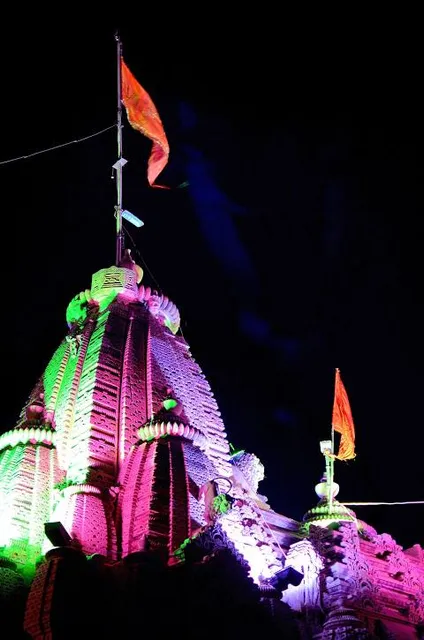
temple is a Lord Shiva temple of Gurjar Pratihar style, located in the Tarnetar village of Surendranagar district, Gujarat. It was built by Mihir Bhoj, in 8th century. Tarnetar Temple also famous as Trinetreshwar Temple at Tarnetar.

The history of this beautiful temple festival which is attended by more than 50000 people every year. The legend is related to Draupadi’s swayamavar, an episode from the Indian epic, the Mahabharata. Arjun, one of the main characters, and a Pandava, had participated in the swayamvar. In order to marry Draupadi, he pierced the eye of a rotating fish by just looking at the fish’s reflection in the water. Also, Arjun was a brilliant and undefeatable archer! It is said that this traditional fair, celebrating Draupadi’s swayamvar, began some 200 to 250 years ago. The festival and fair is organised at the Trinetreshwar Mahadev temple (the three-eye-god), which was constructed back in the 19th century. This temple is the focal point of the fair, and this is where all the festivities are held. It dates back to the Solanki era, and celebrates the three-day festival with much enthusiasm. Inside the temple, there is a Brahma Kund, a Shiva Kund, and a Vishnu Kund and it is believed that taking a plunge in these three water reservoirs is equivalent to taking a dip in the waters of the holy Ganges. It is believed that Tarnetar Temple was built in Solanki Era, around in 10th century by King Pratihara, great devotee of Lord Shiva. The name of the Temple Trinetreshwar is derived from the three eyed Shiva. This temple is surrounded by three Holy Kunds, Vishnu Kund, Brahm Kund and Shiv Kund and it is believed that dip in this water is as holy as dip in River Ganga and also as per the folklore, River Ganga used to flow here. Thus devote and tourist must take holy dip in this Kund. The original temple complex was dismantle in 1898 and replaced by the...

   Read more
Page 1 of 7
Previous
Next