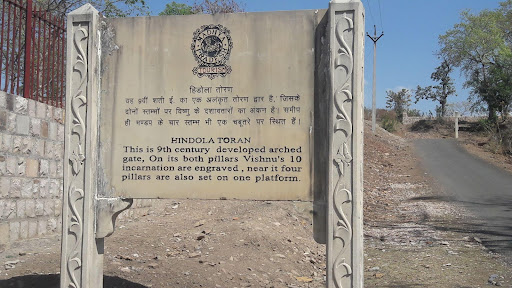
The Hindola Torana at Gyaraspur, in Vidisha district, Madhya Pradesh, is a remarkable remnant of a grand 10th-century Brahmanical temple dedicated to Lord Vishnu. The term Torana refers to an ornamental gateway, and here it served as the ceremonial entrance to the temple’s mandapa (pillared hall). Today, only the plinth and four central pillars survive, yet they speak volumes about the artistic and cultural zenith of the era.
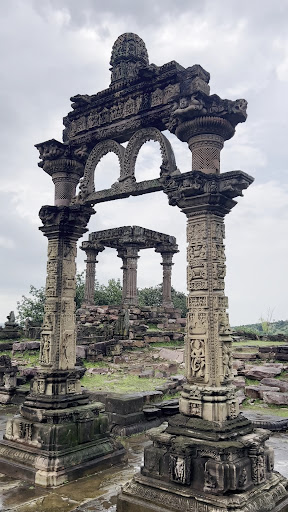
Carved from local sandstone, the Hindola Torana is adorned with intricate reliefs depicting the Dashavatara—the ten incarnations of Vishnu—rendered in high relief panels on the pillar shafts. The capitals and bracket areas display exuberant motifs: celestial beings (apsaras and gandharvas), floral scrolls, and vyalas (mythical beasts). The upper lintel bears miniature friezes narrating mythological episodes, framed within ornamental arches (chaitya windows). The name “Hindola” (meaning swing) comes from the gentle inward curve of the pillars, giving an impression of suspension.
Architecturally, the torana showcases the Pratihara style—characterized by richly modelled figures, geometric banding, and a harmonious interplay of sculpture and structural form. The fluted pot-and-foliage motifs atop the pillars (amalaka-like capitals) further enhance the vertical rhythm.
Located about 40 km from Vidisha and 100 km from Bhopal, Gyaraspur is accessible by road via NH146. The nearest railhead is Vidisha, a major station on the Delhi–Chennai route, from where taxis and buses connect to the site. Bhopal, the state capital, offers air connectivity and onward road travel.
Today, amidst the rural landscape, the Hindola Torana stands not merely as a fragment of stone but as a testament to the devotion, craftsmanship, and architectural grandeur of central India’s medieval temple tradition. Its aesthetic elegance and narrative richness continue to inspire historians, architects, and...
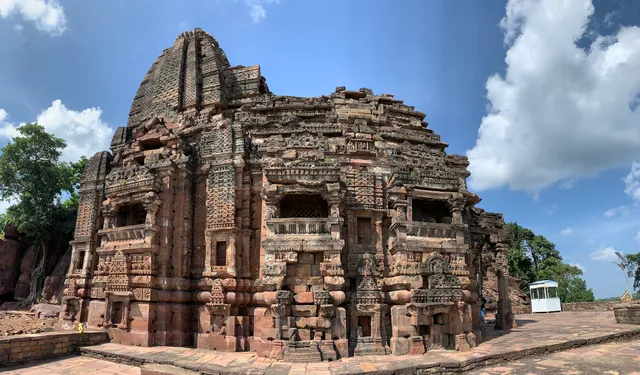
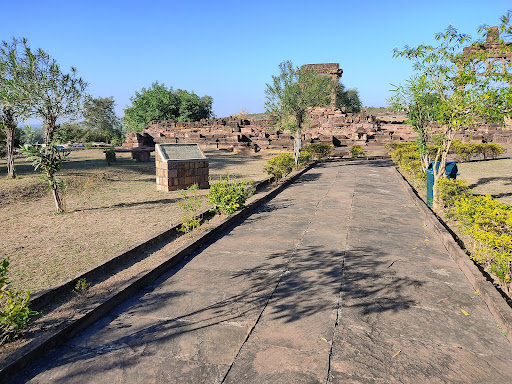
Read moreHindola Torana, is the remains of a large 9th to 10th century Hindu temple dedicated to Vishnu in Gyaraspur, in the Bharatiya state of Madhya Pradesh. This site was likely a much larger mandapa and temples complex as it contains several foundations and temple platforms.
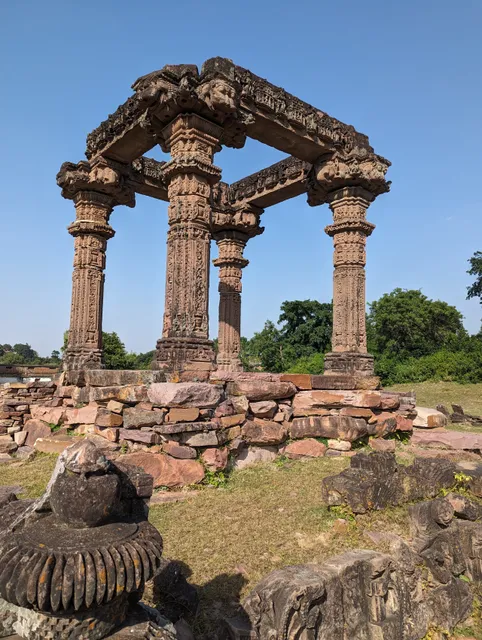
The Hindola Torana was the gateway of the lost temple. It has two profusely carved pillars, where the main panels are of dasavatara. At the top too are profusely decorated beams, with artwork from the Vaishnava tradition. The lower beam emanates from the mouths of two makaras, and on it are two loops. The locals believe it serve as a stand for a swing (hindola), which gives it name. The distinctive name is useful in locating this site, but there is no evidence that this gateway was ever used as a swing, or can. The defaced dasavatara panels include – Matsya, Kurma, Varaha, Narasimha, Vamana, Parashurama, Rama, a badly damaged panel, Buddha and Kalki. The badly damaged panel could be Krishna...
Read moreतोरण-द्वार और चौखम्बा, ग्यारसपुर, जि० विदिशा
ग्यारसपुर बस-स्टैंड से मालादेवी मन्दिर की ओर जाते समय करीब आधा कि.मी. की दूरी पर मार्ग के बाई तरफ एक विशाल प्रांगण में एक मन्दिर की नींव तथा टीले पर चार स्तम्भ तथा टीले के चारों तरफ के उतार पर अनेक शिल्पकृत शिलाखंड पड़े हुए है| इन्ही अवशेषों में क्षतिग्रस्त तोरण द्वार के स्तम्भ-खण्ड भी बिखरे पड़े थे| भारतीय पुरातत्व सर्वेक्षण विभाग द्वारा कुछ वर्ष पूर्व इन स्तंभों और शिलाखंडों को जोड़कर पूरा तोरण-द्वार फिर से बना दिया गया है तथा टीले की खुदाई भी की गई है| उससे जो अवशेष उजागर हुए है उन्हें देखकर ऐसा लगता है कि पूर्व-पश्चिम-150 फीट xxxxX उत्तर-दक्षिण-85 फीट के क्षेत्र में एक ऊँचे चबूतरे पर यह मंदिर कच्छपघात शैली में दसवी शताब्दी में बनाया गया होगा| ऐसा माना जाता है कि यहाँ विष्णु मन्दिर (जिसे कुछ विशेषज्ञ त्रिमूर्ति मन्दिर भी कहते है) रहा होगा| वर्तमान में दिखने वाले चार स्तम्भ पूर्वाभिमुख मन्दिर के मण्डप या गर्भ-गृह के हो सकते है तथा तोरण-द्वार मन्दिर का दक्षिण-द्वार हो सकता है, जिसके स्तंभों पर विष्णु के दस अवतारों की प्रतिमाएँ खुदी हुई है|
ऐसा माना जाता है कि पूरे विश्व में ईसाईयत, इस्लाम, बौद्ध तथा जैन धर्मों का प्रचार और प्रसार राजाश्रय से ही होता था| ईसा पूर्व तीसरी शताब्दी में कलिंग युद्ध के बाद सम्राट अशोक (जोकि पहले उज्जयनी में मालवा का सूबेदार था और जिसकी ससुराल विदिशा में थी) द्वारा बौद्ध धर्म स्वीकार करने के बाद उसके पुत्र-पुत्री द्वारा सम्पूर्ण भारत तथा श्रीलंका, अफगानिस्तान, चीन और पूर्वी एशिया के अन्य देशों में बौद्ध-संघ भेजकर बौद्धमत के प्रचार-प्रसार का कार्य किया गया| बाद की शताब्दियों में राजाश्रय मिलने के कारण बौद्ध-धर्म इन क्षेत्रों में खूब फला-फूला और सनातन धर्म से लोगों का मोह-भंग होने लगा, इस कारण से उस समय के धर्माचार्यों ने छठवी-सातवी शताब्दी से ही भगवान बुद्ध को विष्णु का नौवा अवतार घोषित कर सनातन हिन्दू धर्म का पुनरोद्धार करते हुए राजाश्रय से अनेक मन्दिर बनवाकर जनता के सनातन-धर्म में वापसी के प्रयास किये गये| इसी वजह से स्वतन्त्रता-पूर्व तक पूरे भारतवर्ष में बौद्धमत को मानने वाले बहुत कम लोग नज़र आते थे|
इस पूरे परिसर के चारों ओर कंपाउंड वाल बनाई गई है तथा खुदाई में निकलने वाली मूर्तियों को सुरक्षित रखने के लिये एक गोडाउन भी बनाया गया है| वर्त्तमान में इस परिसर का रखरखाव, सुधार, सुरक्षा और शोधकार्य का संचालन भारतीय पुरातत्व सर्वेक्षण विभाग द्वारा...
Read more