20th Centuryedit
The proposal for the construction of a tunnel across Rohtang Pass was first conceived in 1942 by Dr. John Bicknell Auden, Geological Survey of India (GSI) who at that time visited this pass intending to divert the water of Chandra river to Beas.[11]
When Atal Bihari Vajpayee became the Prime Minister, locals suggested his childhood friend Arjun Gopal, To visit him and to talk about Rohtang Tunnel. Gopal and two companions, Chhering Dorje and Abhay Chand, moved to Delhi. After a year of discussions, Vajpayee went to Lahaul in June 2000 and declared that the Rohtang Tunnel would be constructed.[12] RITES conducted a feasibility study.
In 2000, the project was estimated to cost ₹500 crore and be completed in seven years.[13] On 26 May 2002, the Border Roads Organisation (BRO), a tri-service organisation of the Defence Ministry specialising in road and bridge construction in difficult terrains, headed by Lt. Gen. Prakash Suri, PVSM, was put in charge of construction.[14] The approach road to the tunnel entrance was inaugurated by Atal Bihari Vajpayee.
However the project did not move beyond the tree-felling stage by May 2003. By December 2004, the cost estimate had grown to ₹900 crore.[15] In May 2007, the government of Dr. Manmohan Singh awarded the contract to SMEC (Snowy Mountains Engineering Corporation) International Private Limited, an Australian company, and the completion date was revised to 2014. However, there was no progress for the next three years, until May 2010.[16]
Finally, the Cabinet Committee on Security in UPA government cleared the Rohtang Tunnel Project. The work was awarded to a joint venture of AFCONS Infrastructure Limited, an Indian construction company of Shapoorji Pallonji Group, and STRABAG AG, Austria, in September 2009.[17] The drilling of the Rohtang Tunnel through the Himalayan ranges began on 28 June 2010 at the South Portal, 25 km (16 mi) north of Manali. Some of the anchoring and slope stabilisation work was subcontracted to Spar Geo Infra Pvt Ltd. Permanent maintenance free earthing system design, supply and installation was sub-contracted to Manav Energy Pvt. Ltd.[18]
Prime Minister Narendra Modi renamed the tunnel as the Atal Tunnel, in honour of Shree Atal Bihari Vajpayee, on 25 December 2019, Vajpayee's birthday.[12]
The Atal Tunnel has been planned to ensure an all-seasons, all-weather road route to strategically important areas of Ladakh and the remote Lahaul-Spiti valley. However, the tunnel will provide this connectivity only up to Darcha, north of Keylong in the Lahaul region of Himachal Pradesh. Connectivity to Ladakh will require more tunnels: either at Shikun La, or at the passes located on the present Leh-Manali road. Director General Border Roads Lt Gen Rajeev Chaudhry, VSM has initiated plans for construction of tunnel...
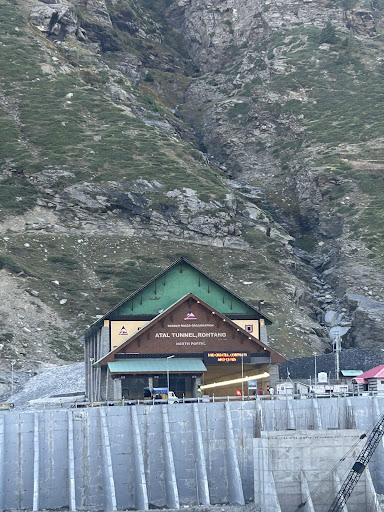
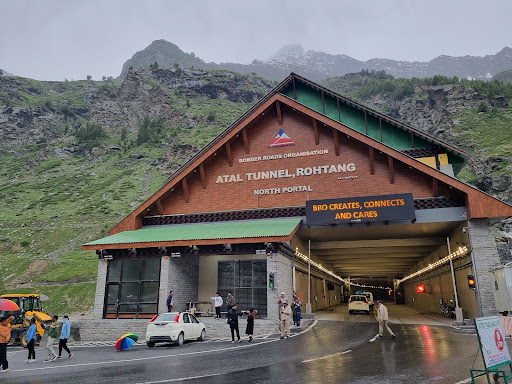
Read moreWhat an incredible experience visiting the Atal Tunnel North Portal! This magnificent structure stands as a tribute to India's engineering prowess and stands tall among the world's most remarkable high-altitude tunnels. The moment you approach the North Portal, you're greeted with an overwhelming sense of awe at the sheer scale and ambition of this project.
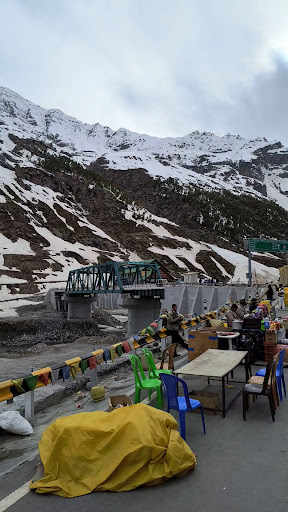
The location itself is nothing short of spectacular. Surrounded by towering snow-clad peaks and pristine Himalayan landscapes, the North Portal offers visitors breathtaking views that are worth the journey alone. The air is crisp and refreshing, and the natural beauty of the Lahaul Valley creates a stunning backdrop for this modern engineering wonder.
What truly sets this place apart is the excellent infrastructure and facilities. The approach roads are well-maintained and safe, with clear signage throughout. The parking area is spacious and well-organized, making it convenient for tourists to stop and explore. The washroom facilities are clean and functional, which is particularly impressive given the remote high-altitude location.
The information displays and interpretive panels provide fascinating insights into the tunnel's construction, including the remarkable challenges faced during excavation. Learning about how engineers overcame obstacles like the Seri Nala fault zone adds an educational dimension to the visit. It's inspiring to see how technology and human determination came together to create this lifeline between Manali and the Lahaul-Spiti valley.
The tunnel has completely transformed accessibility to the region, allowing year-round connectivity where previously the Rohtang Pass would close for months during winter. This is a game-changer for local communities and tourism. The smooth, well-lit interior of the tunnel ensures a comfortable journey through the mountains.
For photography enthusiasts, the North Portal offers countless opportunities to capture stunning images of the Himalayan landscape. The play of light and shadow on the mountains, combined with the modern structure of the tunnel entrance, creates a beautiful contrast between nature and human achievement.
Highly recommend visiting this landmark – it's much more than just a tunnel entrance. It's a symbol of progress, a testament to engineering excellence, and a gateway to exploring the beautiful and remote regions of Himachal Pradesh. An absolute must-visit for anyone...
Read moreMy recent visit to the Atal Tunnel, the world's longest tunnel at the highest altitude in India, left me absolutely awe-inspired. Crossing this engineering marvel felt like stepping into a whole new world, accompanied by breathtaking and mesmerizing views that made it an unforgettable experience.
Emerging from the tunnel, I was greeted by panoramic vistas that were truly awe-inspiring. The surrounding mountain ranges, pristine landscapes, and the sheer scale of nature's beauty left me speechless. It was as if I had entered a different world altogether, one filled with majestic peaks, serene valleys, and unspoiled natural wonders. The views from various viewpoints along the road were nothing short of mesmerizing, providing ample opportunities for photography and taking in the breathtaking scenery.
The journey through the Atal Tunnel also offered a glimpse into the rich history and culture of the region. The tunnel is named after the late Prime Minister Atal Bihari Vajpayee, a visionary leader who played a crucial role in its construction. Information boards along the route provided interesting facts about the tunnel, its construction process, and the significance it holds for the local communities.
The infrastructure around the Atal Tunnel was well-maintained and organized. Restrooms and parking facilities were readily available, ensuring a hassle-free experience for visitors. The staff present at the tunnel were helpful and efficient, providing assistance and ensuring the smooth flow of traffic.
In conclusion, a visit to the Atal Tunnel is an absolute must for anyone traveling in the region. It offers a unique and exhilarating experience, taking you through a remarkable engineering feat and immersing you in awe-inspiring natural beauty. The tunnel provides seamless connectivity while opening doors to explore the enchanting landscapes of the surrounding area. I highly recommend visiting the Atal Tunnel for an unforgettable journey that will leave you with memories to cherish...
Read more