Love it🤩🤩 The Bhakra-Nangal multipurpose dams were among the earliest river valley development schemes undertaken by India after independence though the project had been conceived long before India became a free nation. The agreement for this project had been signed by the then Punjab Revenue Minister, Sir Chhotu Ram in November 1944 with Raja of Bilaspur and finalised the project plan on 8 January 1945. Preliminary works commenced in 1946. Construction of the dam started in 1948; Jawaharlal Nehru poured the first bucket of concrete into the dry riverbed of the Sutlej on 17 November 1955, as a symbolic initiation of the work. Addressing a gathering there, he said, "This is a gift to the people of India and to the future generations from the workers who built this dam", calling for "rais[ing] a memorial" at the dam "in honour" of the workers.[3]The dam was completed by the end of 1963. Successive stages were completed by the early 1970s.
Initially, the construction of the dam was started by Sir Louis Dane, the Lieutenant Governor of Punjab. But the project got delayed and was restarted soon after independence under the chief architect Rai Bahadur Kunwar Sen Gupta. It was financed entirely by the union government. The Control Board for the project included representatives from union government, and of the governments of Punjab, Patiala and East Punjab States Union, Rajasthan, Bilaspur and Himachal Pradesh. The organisation evolved for the purpose of design and construction was divided into three parts. The Designs Directorate provided the designs and drawings. The Construction and Plant Design Directorate was to look after its execution and installing of the plant, while the Directorate of Inspection and Control ensured that the specifications are accorded to safety requirements were met.[4]
In October 1963, at the ceremony to mark the dedication of the Bhakra–Nangal project to the nation, Prime Minister Nehru said, "This dam has been built with the unrelenting toil of man for the benefit of mankind and therefore is worthy of worship. May you call it a Temple or a Gurdwara or a Mosque, it inspires our admiration and reverence". On 22 October 2013, the Government of India approved the release of a commemorative stamp to mark the 50th anniversary of the Bhakra Dam. As how successful India was at that time that it was the only dam in Asia which could produce...
Read moreBHAKRA NANGAL DAM Bhakra-Nangal Project is a joint venture by the states of Punjab, Rajasthan and Haryana. This project is considered as the major multi-purpose project in India. The Bhakra-Nangal Project was started in the year 1948 and it was completed in 1968. The name of this project came from the two dams Bhakra and Nangal dams, constructed on a tributary of the Indus River, the Sutlej River.
This jointly-undertaken project consists of the Nangal and the Bhakra dams, two power houses at Bhakra dam, the Nangal Hydel channel and two power stations situated in Kotla and Ganguwal. Nangal Dam is at a distance of about 13 kilometres to the downstream of Bhakra Dam and is of a height of 95 feet. This dam comprises 26 bays of 30 feet each, modeled to divert the water of Sutlej River into the Nangal Hydel Channel and Anandpur Sahib Hydel Channel for the generation of power and irrigation purpose. Apart from the prevention of floods, Bhakra-Nangal Project provides water for the irrigation purposes in the state of Rajasthan, Delhi, Punjab, Haryana and Himachal Pradesh. This project also generates one million kilowatt of hydro-electricity.
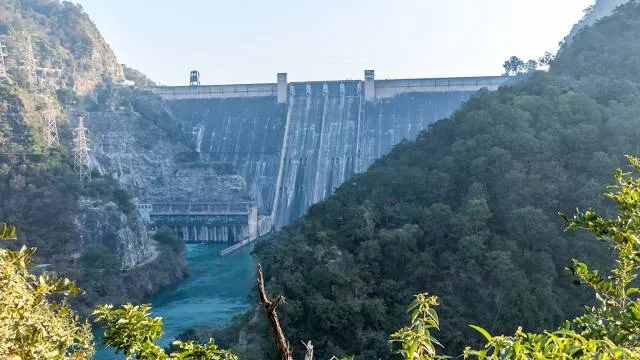
The Bhakra dam was erected on the River Sutlej. It is situated at the foot of the Shivalik Hills in the state of Himachal Pradesh. Late, Pundit Jawaharlal Nehru, the first prime minister of India, dedicated this dam to the nation on the 20th of November, 1963. Bhakra dam is the uppermost concrete gravity dam in Asia. Bhakra dam has played a significant role in inspection the floods in the river Sutlej. The Nangal dam was erected over the River Sutlej and it is about twelve kilometers downstream at Nangal in the state of Punjab. This reservoir is used as a backup in case the Bhakra dam fluctuates. Storing the water of the Sutlej River coming from the Bhakra dam, a six kilometre long artificial lake is formed by the Nangal dam. The height of the Nangal dam is 29 metres and the length of it is 304.8 metres. This dam is also a part of the...
Read moreHistory of the dam The Bhakra Dam, located on the Sutlej River in Himachal Pradesh, India, is one of the largest gravity dams in the world. Here's a brief history of the Bhakra Dam:
Planning and Construction: The idea for the Bhakra Dam was conceived in the early 20th century to harness the waters of the Sutlej River for irrigation and hydroelectric power generation. The initial surveys and planning began in the 1940s.
Construction Phase (1948-1963): The construction of the dam started in 1948 under the leadership of Sir Louis Dane, the then Chief Engineer of Punjab. It was a monumental engineering feat involving thousands of workers and engineers. The main contractor for the project was the American company, Morrison-Knudsen.
Completion and Inauguration: The Bhakra Dam was completed in 1963. It was inaugurated by Prime Minister Jawaharlal Nehru on October 22, 1963. At the time of its completion, it was one of the highest straight gravity dams in the world, standing at 226 meters (740 feet).
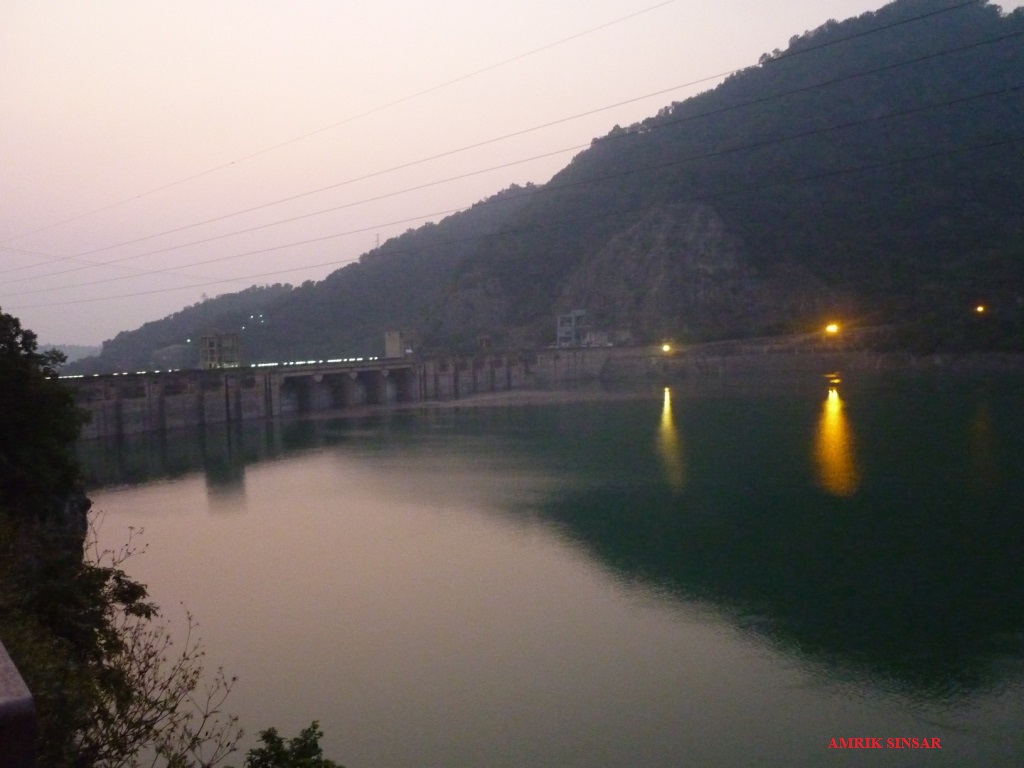
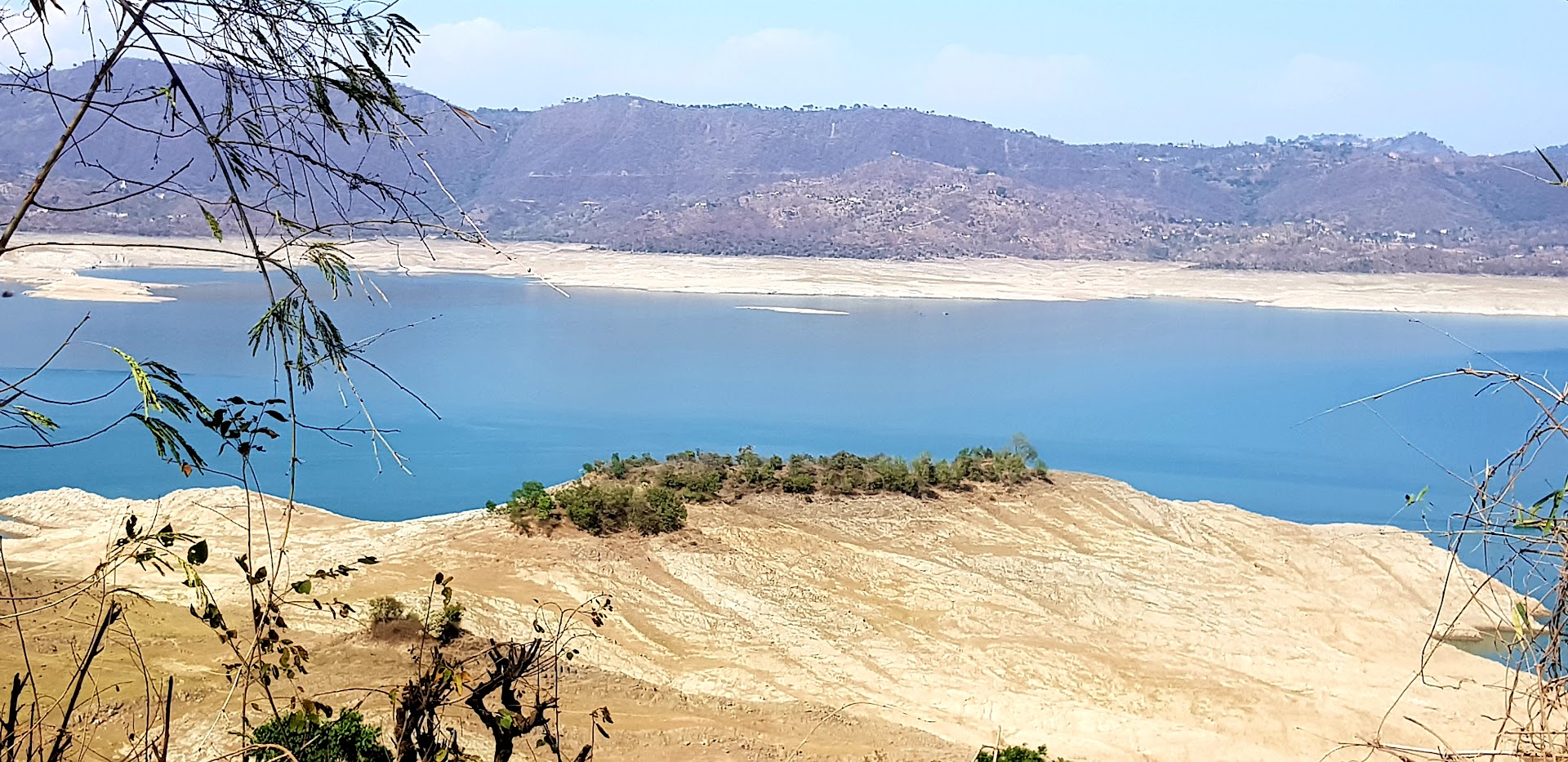
Purpose and Benefits: The primary purposes of the Bhakra Dam are irrigation, hydroelectric power generation, and flood control. It created the Bhakra Nangal reservoir, which is one of the largest man-made reservoirs in India, covering an area of about 168.35 square kilometers (65 square miles).
Hydroelectric Power Generation: The Bhakra Dam has a power generation capacity of 1,325 megawatts (MW) through its various powerhouses. It supplies electricity to several states in northern India.
Impact: The dam and its reservoir have significantly boosted agricultural productivity in the region by providing water for irrigation, particularly in Punjab, Haryana, and Rajasthan. It also helps in controlling floods during monsoon seasons by regulating the flow of the Sutlej River.
Overall, the Bhakra Dam stands as a symbol of India's engineering prowess and has been instrumental in the socio-economic development of the region by providing water and...
Read more