HTML SitemapExplore
logo
Find Things to DoFind The Best Restaurants

Tabo Monastery — Attraction in Himachal Pradesh

Name
Tabo Monastery
Description
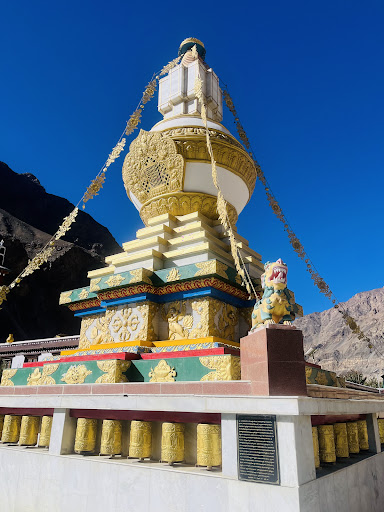
Tabo Monastery is located in the Tabo village of Spiti Valley, Himachal Pradesh, northern India. It was founded in 996 CE in the Tibetan year of the Fire Ape by the Tibetan Buddhist lotsawa Rinchen ...
Nearby attractions
Nearby restaurants
Nearby hotels
Maitreya Mud House Tabo by Eco Hospitality
old monastry, near tabo, Tabo, Dhar Gangchhumi, Himachal Pradesh 172113, India
Tabo Coffee House
Village and P.O. Tabo, Distt, Spiti, Himachal Pradesh 172113, India
Namkha Homestay and Camps
Vpo, Distt, Tabo, Himachal Pradesh 172113, India
Phuntsok Homestay
near Tabo Monastery, Tabo, Dhar Angla, Himachal Pradesh 172113, India
Hotel tabo Zamling Donkhang
Near, V.p.o, Tabo, Himachal Pradesh 172113, India
The Khawa Karpo Tabo
VPO, Tabo, Dhar Angla, Himachal Pradesh 172113, India
Tabo monastery guest house / Millenium Monastery Guest house
39VM+G47, Tabo, Dhar Gangchhumi, Himachal Pradesh 172113, India
Spiti Mud Huts Tabo
near helipad, Tabo, Dhar Gangchhumi, Himachal Pradesh 172113, India
Kesang Home Stay guesthouse
PHC, Gonpa road Opposite, Tabo, Himachal Pradesh 172113, India
Yangdon Homestay
V.P.O, near Post Office, Tabo, Dhar Angla, Himachal Pradesh 172113, India
Related posts
Keywords
Tabo Monastery tourism.Tabo Monastery hotels.Tabo Monastery bed and breakfast. flights to Tabo Monastery.Tabo Monastery attractions.Tabo Monastery restaurants.Tabo Monastery travel.Tabo Monastery travel guide.Tabo Monastery travel blog.Tabo Monastery pictures.Tabo Monastery photos.Tabo Monastery travel tips.Tabo Monastery maps.Tabo Monastery things to do.
Tabo Monastery things to do, attractions, restaurants, events info and trip planning
Tabo Monastery
IndiaHimachal PradeshTabo Monastery

Basic Info

Tabo Monastery

39VM+C56, Tabo, Dhar Gangchhumi, Himachal Pradesh 172113, India
4.8(1.2K)
Closed
Save
spot

Ratings & Description

Info

Tabo Monastery is located in the Tabo village of Spiti Valley, Himachal Pradesh, northern India. It was founded in 996 CE in the Tibetan year of the Fire Ape by the Tibetan Buddhist lotsawa Rinchen ...

Cultural
Outdoor
Family friendly
attractions: , restaurants:
logoLearn more insights from Wanderboat AI.
Phone
+91 94189 63082
Website
tabomonastery.org
Open hoursSee all hours
Mon9 AM - 5 PMClosed

Plan your stay

hotel
Pet-friendly Hotels in Himachal Pradesh
Find a cozy hotel nearby and make it a full experience.
hotel
Affordable Hotels in Himachal Pradesh
Find a cozy hotel nearby and make it a full experience.
hotel
The Coolest Hotels You Haven't Heard Of (Yet)
Find a cozy hotel nearby and make it a full experience.
hotel
Trending Stays Worth the Hype in Himachal Pradesh
Find a cozy hotel nearby and make it a full experience.

Reviews

Get the Appoverlay
Get the AppOne tap to find yournext favorite spots!
Wanderboat LogoWanderboat

Your everyday Al companion for getaway ideas

CompanyAbout Us
InformationAI Trip PlannerSitemap
SocialXInstagramTiktokLinkedin
LegalTerms of ServicePrivacy Policy

Get the app

© 2025 Wanderboat. All rights reserved.
logo

Reviews of Tabo Monastery

4.8
(1,151)
avatar
5.0
7w

Tabo Monestry in the Spiti Valley of Himachal Pradesh, India, is the earliest Tibetan Buddhist monument preserved in its entirety, at its content fully reflects its renovation finished in 1042 CE.

It's identifying captions and inscriptions that Tabo was founded 46 years earlier under the auspices of King Yeshe Wo, while it's renovation was commissioned by his grandnephew Jangchub Wo. Both are portrayed in the temple's mural, Yeshe Wo flanked by his sons on the south wall of the entry hall, and Jangchub Wo at the access to the ambulatory above the renovation inscription, which provides the twelve -year cycle date.

The entry hall preserves most of the foundation period decoration- a white range of the protective deities, flag means of the wheel of life and the cosmos, as well as ayou donar depiction headed by Yeshe Wo and his sons.

The assembly hall is dominated by the 33 life size sculptures of the Vajradhatu mandala, which forms the dynamic centre of the iconographic program of this room. Two narratives are painted underneath them. On the south side, the narrative of Sudhan's pilgrimage to different teachers according to the Gandavyuha Sutra culminates in Sudhan's assimilation of Samantabhadra in the presence of Vairochana and all the Buddha's . Thereby Vairochana is the Buddha Skyamuni's glorified aspect and he is also the main Buddha of the Vajradhatu mandala.

The ascending movement is counterbalanced by the descending moment of Vairochana displaying the Buddha's life on the north side of the assembly hall. The multiplicity of Buddhas across space is manifest in the Buddhas of the Ten Directions, occupying the top level on the south and north walls.

The Dharmadhatu mandala assembly, while the lower ones complement the Vajradhatu mandala assembly. Their presence supplements the thousand Buddhas of the Fortunate Aeon that, together with the group of eight Buddhas of Past and Future, occupy the remaining space of the ambulatory. Thus, while the assembly hall emphasizes the spatial spread of the Buddhas, the ambulatory focuses on the temporal spread from the past into the future. Underneath the Buddhas and Bodhisattvas in the third narrative, Sadapradita's search for the Perfection of Wisdom, the symbolic Mother of all Buddhas.

The main sculpture in the sanctum is Vairochana, who presides over a Bodhisattva and Goddesses retinue looked over by future Buddhas. The flanking Bodhisattvas are Avalokiteshvara on the left and Vajrasattva on the right, who together with the central Buddha form a three -family configuration that symbolically counters the three poisons that keep sentient begins in the cycle of existence.

Overall, the Tabo monastery is stunning. The identification of the full Dharmadhatu mandala assembly has clear that the temple must be read as an integrated whole across the three spatial units. While the core of the two mandala assemblies in the assembly hall, the pan- Indian protective deities in the entry hall represent their outer perimeter. On the other side temple, the Bodhisattvas of the Fournate Aeon strech the assembly into the ambulatory. This complex program supersedes the three - family configuration seen in the sculptures of the foundation period in the sanctum and the two protectors in the entry hall. The sanctum and its ambulatory stand for the result, the attainment of the Perfection of Wisdom, the presence of Buddhas and the Buddhahood itself. This cautioness is the the direct result of the conservative attitude of the temple's founder towards...

   Read more

avatar
5.0
1y

Tabo Monastery (or Tabo Chos-Khor Monastery is located in the Tabo village of Spiti Valley, Himachal Pradesh, northern India. It was founded in 996 CE in the Tibetan year of the Fire Ape  by the Tibetan Buddhist lotsawa (translator) Rinchen Zangpo (Mahauru Ramabhadra), on behalf of the king of western Himalayan Kingdom of Guge, Yeshe-Ö.  Tabo is noted for being the oldest continuously operating Buddhist enclave in both India and the Himalayas.  A large number of frescoes displayed on its walls depict tales from the Buddhist pantheon.  There are many priceless collections of thankas (scroll paintings), manuscripts, well-preserved statues, frescos and extensive murals which cover almost every wall. The monastery is in need of refurbishing as the wooden structures are aging and the thanka scroll paintings are fading.  After the earthquake of 1975, the monastery was rebuilt, and in 1983 a new Du-kang or Assembly Hall was constructed. It is here that the 14th Dalai Lama held the Kalachakra ceremonies in 1983 and 1996. The monastery is protected by the Archaeological Survey of India (ASI) as a national historic treasure of India.

Tabo Monastery (Tabo 'Chos-hKhor' or Doctrinal Enclave now has nine temples, four decorated stupas, and cave shrines. The paintings date to the 10th-11th centuries for main temple (Tsug la Khang), 13th-14th centuries for the stupas, and from the 15th to the 20th centuries for all the other temples. Yeshe-Ö and his two sons when they built the monastery in 996 AD blended the provincial and regional characteristics with that of India and Central Asia. One particular feature mentioned in this regard is the iconographic themes of non-Buddhist traditions emanating from the protectress deity Wi-nyu-myin. The main temple is conjectured to represent the entire Vajradhatu Mandala.The monastery has a huge collection of manuscripts and Pramana texts, which were filmed between 1991 and 1998. The dark main temple room is lit by a small sky window and hence the room appears dark. In the inner vestibule, there are colorful frescoes of Buddhist and Hindu-Buddhist gods. Next to the vestibule is the small room where garments for the ritual dances are kept. The main hall at the centre is studded with images, and at the centre is a Buddha image in the Lotus position. This image is flanked on either side by divine figures. On the pedestals next to the main image are many more brass images of Lamas. Tapestries cover the walls, doors and columns, and paintings of various Buddha incarnations, starting with Siddhartha and that of the Panchen Lamas, give it a divine atmosphere. About 50 clay images and full size busts of gods and demons are seen in the back wall of the main hall. The 108 holy scriptures are also part of the main hall display and weigh...

   Read more
avatar
5.0
7y

In the village Tabo, the most important seat of Buddhism is located as Tabo Chos-khor. It is the large monastery in Spiti, having examples of the golden period of Indo-Tibetan collaboration of preparing Buddhist culture in the Himalayan region. Harcourt has reported that Lahaul was at one point of limit under Guge’s jurisdiction. But to the scholarly world it is a wild remark as Spiti, Kinnaur and some parts of Ladakh were part of Guge’s empire of western Tibet, but it had no hold over Lahaul. Moreover, culturally due to its sitting on the border with Tibet, it has similar traits of as Tibet. Even Lamaism or Buddhism got its entry into Lahaul through Tibet. Under this influence a beautiful monastery at Tabo was founded by Lotsab Rinchen Sangpo, (958-1055 C.E.) a great Tibetan translator and his patron, king of Gu-ge, Yeshe O. (967-1040 C.E.). Nearly twenty years back the king Yeshe O had sent twenty one young scholars to study Buddhist practices in India, so that they might be able to translate and transmit Buddhist teachings in Tibet. Rinchen Sangpo was one of only two individuals who survived and fulfilled his endeavor. Among many establishments founded by the Great Lotsabo Rinchen Sangpo, at Tabo, a few have been designated as the chos-khors to signify the pre-eminent position of these establishments among the foundations associated with him or his contemporaries. The chor-khars literally means a ‘doctrinal circle’ or ‘doctrinal enclave’. T he Tibetan term ‘chos’ may also be identified with the Sanskrit term dharma and the ‘khars’ (khor) with the parivara. Thus, ‘choskhars’ may also be explained as a dharma-parivara. The choskhars at Tabo commanded great importance and hostel for a considerable period many lotsabas and scholars. Among them, the name of Kashmir Tantra scholar Jhanashri lived in this choskhar for seven years. He learned Bhoti and taught Tantra to Nima sherap (Nyi-Ma-Shes-rab) of Gnal, who was a disciple of Shagspa Sherap (Hphags-pa –shes-rab), the Lotsaba of Zanskar. It is southern most temples in located in the main chos-khar. gSer-khang, meant for the golden temple. Earlier, the eternal wall and surface of this temple had a layer of gold as thick as yak’s skin, so the people started to call it gSer-khang as this type of trace can be seen on the painted walls of monastery. The interior of gSer-khang was done anew in the 16th century C.E. under the patronage of Senge Namgyal, who was the great Buddhist king of Ladakh. It is decorated with murals. The front portion and the two sidewalls are covered with two sets of divinities containing one on each wall. Protected deities are depicted on the forth wall and on the entrance. Birds, Gandharvas and floral motifs can be seen on...

   Read more
Page 1 of 7
Previous
Next

Posts

Aishi SarkarAishi Sarkar
Tabo Monestry in the Spiti Valley of Himachal Pradesh, India, is the earliest Tibetan Buddhist monument preserved in its entirety, at its content fully reflects its renovation finished in 1042 CE. It's identifying captions and inscriptions that Tabo was founded 46 years earlier under the auspices of King Yeshe Wo, while it's renovation was commissioned by his grandnephew Jangchub Wo. Both are portrayed in the temple's mural, Yeshe Wo flanked by his sons on the south wall of the entry hall, and Jangchub Wo at the access to the ambulatory above the renovation inscription, which provides the twelve -year cycle date. The entry hall preserves most of the foundation period decoration- a white range of the protective deities, flag means of the wheel of life and the cosmos, as well as ayou donar depiction headed by Yeshe Wo and his sons. The assembly hall is dominated by the 33 life size sculptures of the Vajradhatu mandala, which forms the dynamic centre of the iconographic program of this room. Two narratives are painted underneath them. On the south side, the narrative of Sudhan's pilgrimage to different teachers according to the Gandavyuha Sutra culminates in Sudhan's assimilation of Samantabhadra in the presence of Vairochana and all the Buddha's . Thereby Vairochana is the Buddha Skyamuni's glorified aspect and he is also the main Buddha of the Vajradhatu mandala. The ascending movement is counterbalanced by the descending moment of Vairochana displaying the Buddha's life on the north side of the assembly hall. The multiplicity of Buddhas across space is manifest in the Buddhas of the Ten Directions, occupying the top level on the south and north walls. The Dharmadhatu mandala assembly, while the lower ones complement the Vajradhatu mandala assembly. Their presence supplements the thousand Buddhas of the Fortunate Aeon that, together with the group of eight Buddhas of Past and Future, occupy the remaining space of the ambulatory. Thus, while the assembly hall emphasizes the spatial spread of the Buddhas, the ambulatory focuses on the temporal spread from the past into the future. Underneath the Buddhas and Bodhisattvas in the third narrative, Sadapradita's search for the Perfection of Wisdom, the symbolic Mother of all Buddhas. The main sculpture in the sanctum is Vairochana, who presides over a Bodhisattva and Goddesses retinue looked over by future Buddhas. The flanking Bodhisattvas are Avalokiteshvara on the left and Vajrasattva on the right, who together with the central Buddha form a three -family configuration that symbolically counters the three poisons that keep sentient begins in the cycle of existence. Overall, the Tabo monastery is stunning. The identification of the full Dharmadhatu mandala assembly has clear that the temple must be read as an integrated whole across the three spatial units. While the core of the two mandala assemblies in the assembly hall, the pan- Indian protective deities in the entry hall represent their outer perimeter. On the other side temple, the Bodhisattvas of the Fournate Aeon strech the assembly into the ambulatory. This complex program supersedes the three - family configuration seen in the sculptures of the foundation period in the sanctum and the two protectors in the entry hall. The sanctum and its ambulatory stand for the result, the attainment of the Perfection of Wisdom, the presence of Buddhas and the Buddhahood itself. This cautioness is the the direct result of the conservative attitude of the temple's founder towards esoteric Buddhism.
Rahul BakshiRahul Bakshi
In the village Tabo, the most important seat of Buddhism is located as Tabo Chos-khor. It is the large monastery in Spiti, having examples of the golden period of Indo-Tibetan collaboration of preparing Buddhist culture in the Himalayan region. Harcourt has reported that Lahaul was at one point of limit under Guge’s jurisdiction. But to the scholarly world it is a wild remark as Spiti, Kinnaur and some parts of Ladakh were part of Guge’s empire of western Tibet, but it had no hold over Lahaul. Moreover, culturally due to its sitting on the border with Tibet, it has similar traits of as Tibet. Even Lamaism or Buddhism got its entry into Lahaul through Tibet. Under this influence a beautiful monastery at Tabo was founded by Lotsab Rinchen Sangpo, (958-1055 C.E.) a great Tibetan translator and his patron, king of Gu-ge, Yeshe O. (967-1040 C.E.). Nearly twenty years back the king Yeshe O had sent twenty one young scholars to study Buddhist practices in India, so that they might be able to translate and transmit Buddhist teachings in Tibet. Rinchen Sangpo was one of only two individuals who survived and fulfilled his endeavor. Among many establishments founded by the Great Lotsabo Rinchen Sangpo, at Tabo, a few have been designated as the chos-khors to signify the pre-eminent position of these establishments among the foundations associated with him or his contemporaries. The chor-khars literally means a ‘doctrinal circle’ or ‘doctrinal enclave’. T he Tibetan term ‘chos’ may also be identified with the Sanskrit term dharma and the ‘khars’ (khor) with the parivara. Thus, ‘choskhars’ may also be explained as a dharma-parivara. The choskhars at Tabo commanded great importance and hostel for a considerable period many lotsabas and scholars. Among them, the name of Kashmir Tantra scholar Jhanashri lived in this choskhar for seven years. He learned Bhoti and taught Tantra to Nima sherap (Nyi-Ma-Shes-rab) of Gnal, who was a disciple of Shagspa Sherap (Hphags-pa –shes-rab), the Lotsaba of Zanskar. It is southern most temples in located in the main chos-khar. gSer-khang, meant for the golden temple. Earlier, the eternal wall and surface of this temple had a layer of gold as thick as yak’s skin, so the people started to call it gSer-khang as this type of trace can be seen on the painted walls of monastery. The interior of gSer-khang was done anew in the 16th century C.E. under the patronage of Senge Namgyal, who was the great Buddhist king of Ladakh. It is decorated with murals. The front portion and the two sidewalls are covered with two sets of divinities containing one on each wall. Protected deities are depicted on the forth wall and on the entrance. Birds, Gandharvas and floral motifs can be seen on the ceiling.
yogesh singhyogesh singh
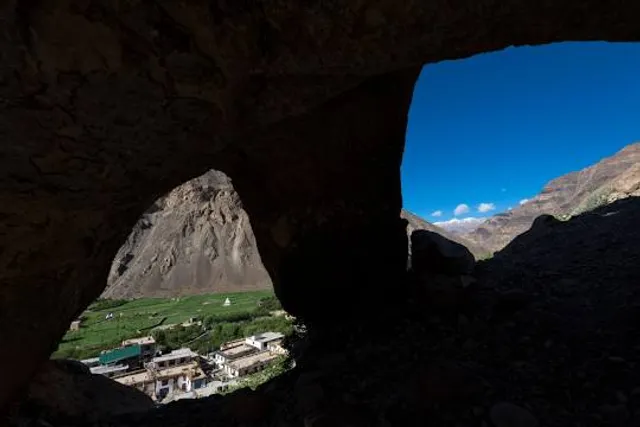
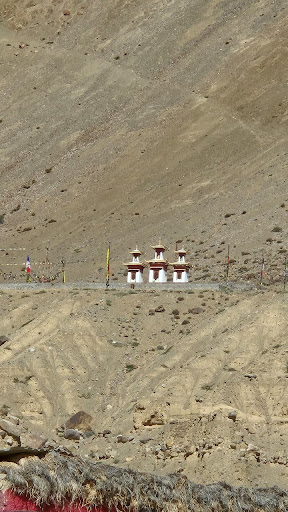
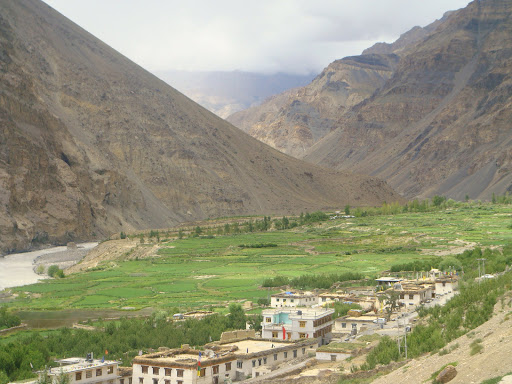
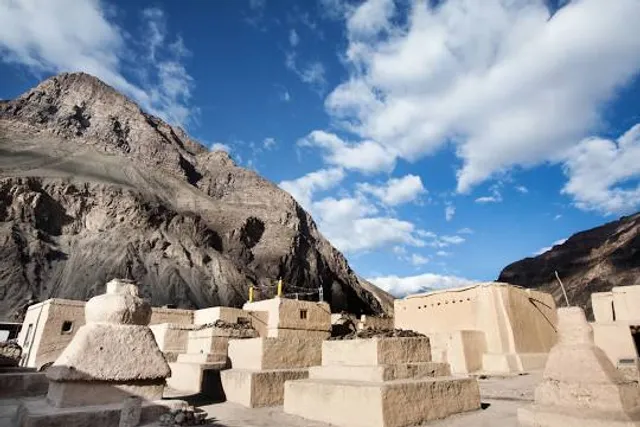
Tabo Monastery, nestled in the serene and rugged landscapes of the Spiti Valley, is an absolute marvel and a must-visit for anyone traveling through this remote region. Often hailed as the "Ajanta of the Himalayas," this ancient complex is truly a living testament to over a thousand years of Buddhist history and artistry. What makes Tabo so extraordinary is its age and remarkable preservation. Founded in 996 AD, it is one of the oldest continuously functioning Buddhist monasteries in both India and the Himalayas. Unlike many other monasteries built on hilltops, Tabo sits quietly in a flat, bowl-shaped valley, surrounded by dramatic barren mountains. The structures, primarily made of mud bricks, blend seamlessly with the natural environment, creating a sense of understated grandeur. Stepping inside the monastery complex is like stepping back in time. It comprises several temples, stupas, and cave shrines, each holding unique treasures. The most captivating aspect is undoubtedly the intricate murals, frescoes, and stucco sculptures that adorn the walls. These ancient artworks, some dating back to the 10th and 11th centuries, depict scenes from the life of Buddha, Buddhist deities, and mandalas with astounding detail and vibrant colors (even after centuries!). You'll need to use a torch in many of the dimly lit chambers to fully appreciate these masterpieces, and photography inside is generally not permitted to preserve them. The peaceful ambiance within the monastery is palpable. You can feel centuries of devotion radiating from every corner. It's not just a historical site; it's a living spiritual center where monks still reside and practice. Observing their daily rituals or simply meditating in the tranquil caves above the monastery adds to the profound experience. Tabo is also an important center for Buddhist learning and a significant pilgrimage site. The intricate blend of Indian and Tibetan architectural styles and artistic influences found here highlights the rich cultural exchange that has occurred over millennia. While modern amenities are limited in Tabo village, this contributes to the authentic experience. There are guesthouses and homestays that offer a glimpse into local Spitian life and cuisine. Remember to carry cash and dress respectfully when visiting the monastery. In conclusion, Tabo Monastery is more than just a tourist attraction; it's a profound journey into history, art, and spirituality. Its unparalleled preservation and the sheer depth of its cultural significance make it an absolute highlight of any trip to Spiti Valley. It leaves a lasting impression, reminding you of the enduring power of faith and artistic expression in one of the world's most remote and beautiful regions.
See more posts
See more posts
hotel
Find your stay

Pet-friendly Hotels in Himachal Pradesh

Find a cozy hotel nearby and make it a full experience.

Tabo Monestry in the Spiti Valley of Himachal Pradesh, India, is the earliest Tibetan Buddhist monument preserved in its entirety, at its content fully reflects its renovation finished in 1042 CE. It's identifying captions and inscriptions that Tabo was founded 46 years earlier under the auspices of King Yeshe Wo, while it's renovation was commissioned by his grandnephew Jangchub Wo. Both are portrayed in the temple's mural, Yeshe Wo flanked by his sons on the south wall of the entry hall, and Jangchub Wo at the access to the ambulatory above the renovation inscription, which provides the twelve -year cycle date. The entry hall preserves most of the foundation period decoration- a white range of the protective deities, flag means of the wheel of life and the cosmos, as well as ayou donar depiction headed by Yeshe Wo and his sons. The assembly hall is dominated by the 33 life size sculptures of the Vajradhatu mandala, which forms the dynamic centre of the iconographic program of this room. Two narratives are painted underneath them. On the south side, the narrative of Sudhan's pilgrimage to different teachers according to the Gandavyuha Sutra culminates in Sudhan's assimilation of Samantabhadra in the presence of Vairochana and all the Buddha's . Thereby Vairochana is the Buddha Skyamuni's glorified aspect and he is also the main Buddha of the Vajradhatu mandala. The ascending movement is counterbalanced by the descending moment of Vairochana displaying the Buddha's life on the north side of the assembly hall. The multiplicity of Buddhas across space is manifest in the Buddhas of the Ten Directions, occupying the top level on the south and north walls. The Dharmadhatu mandala assembly, while the lower ones complement the Vajradhatu mandala assembly. Their presence supplements the thousand Buddhas of the Fortunate Aeon that, together with the group of eight Buddhas of Past and Future, occupy the remaining space of the ambulatory. Thus, while the assembly hall emphasizes the spatial spread of the Buddhas, the ambulatory focuses on the temporal spread from the past into the future. Underneath the Buddhas and Bodhisattvas in the third narrative, Sadapradita's search for the Perfection of Wisdom, the symbolic Mother of all Buddhas. The main sculpture in the sanctum is Vairochana, who presides over a Bodhisattva and Goddesses retinue looked over by future Buddhas. The flanking Bodhisattvas are Avalokiteshvara on the left and Vajrasattva on the right, who together with the central Buddha form a three -family configuration that symbolically counters the three poisons that keep sentient begins in the cycle of existence. Overall, the Tabo monastery is stunning. The identification of the full Dharmadhatu mandala assembly has clear that the temple must be read as an integrated whole across the three spatial units. While the core of the two mandala assemblies in the assembly hall, the pan- Indian protective deities in the entry hall represent their outer perimeter. On the other side temple, the Bodhisattvas of the Fournate Aeon strech the assembly into the ambulatory. This complex program supersedes the three - family configuration seen in the sculptures of the foundation period in the sanctum and the two protectors in the entry hall. The sanctum and its ambulatory stand for the result, the attainment of the Perfection of Wisdom, the presence of Buddhas and the Buddhahood itself. This cautioness is the the direct result of the conservative attitude of the temple's founder towards esoteric Buddhism.
Aishi Sarkar

Aishi Sarkar

hotel
Find your stay

Affordable Hotels in Himachal Pradesh

Find a cozy hotel nearby and make it a full experience.

Get the Appoverlay
Get the AppOne tap to find yournext favorite spots!
In the village Tabo, the most important seat of Buddhism is located as Tabo Chos-khor. It is the large monastery in Spiti, having examples of the golden period of Indo-Tibetan collaboration of preparing Buddhist culture in the Himalayan region. Harcourt has reported that Lahaul was at one point of limit under Guge’s jurisdiction. But to the scholarly world it is a wild remark as Spiti, Kinnaur and some parts of Ladakh were part of Guge’s empire of western Tibet, but it had no hold over Lahaul. Moreover, culturally due to its sitting on the border with Tibet, it has similar traits of as Tibet. Even Lamaism or Buddhism got its entry into Lahaul through Tibet. Under this influence a beautiful monastery at Tabo was founded by Lotsab Rinchen Sangpo, (958-1055 C.E.) a great Tibetan translator and his patron, king of Gu-ge, Yeshe O. (967-1040 C.E.). Nearly twenty years back the king Yeshe O had sent twenty one young scholars to study Buddhist practices in India, so that they might be able to translate and transmit Buddhist teachings in Tibet. Rinchen Sangpo was one of only two individuals who survived and fulfilled his endeavor. Among many establishments founded by the Great Lotsabo Rinchen Sangpo, at Tabo, a few have been designated as the chos-khors to signify the pre-eminent position of these establishments among the foundations associated with him or his contemporaries. The chor-khars literally means a ‘doctrinal circle’ or ‘doctrinal enclave’. T he Tibetan term ‘chos’ may also be identified with the Sanskrit term dharma and the ‘khars’ (khor) with the parivara. Thus, ‘choskhars’ may also be explained as a dharma-parivara. The choskhars at Tabo commanded great importance and hostel for a considerable period many lotsabas and scholars. Among them, the name of Kashmir Tantra scholar Jhanashri lived in this choskhar for seven years. He learned Bhoti and taught Tantra to Nima sherap (Nyi-Ma-Shes-rab) of Gnal, who was a disciple of Shagspa Sherap (Hphags-pa –shes-rab), the Lotsaba of Zanskar. It is southern most temples in located in the main chos-khar. gSer-khang, meant for the golden temple. Earlier, the eternal wall and surface of this temple had a layer of gold as thick as yak’s skin, so the people started to call it gSer-khang as this type of trace can be seen on the painted walls of monastery. The interior of gSer-khang was done anew in the 16th century C.E. under the patronage of Senge Namgyal, who was the great Buddhist king of Ladakh. It is decorated with murals. The front portion and the two sidewalls are covered with two sets of divinities containing one on each wall. Protected deities are depicted on the forth wall and on the entrance. Birds, Gandharvas and floral motifs can be seen on the ceiling.
Rahul Bakshi

Rahul Bakshi

hotel
Find your stay

The Coolest Hotels You Haven't Heard Of (Yet)

Find a cozy hotel nearby and make it a full experience.

hotel
Find your stay

Trending Stays Worth the Hype in Himachal Pradesh

Find a cozy hotel nearby and make it a full experience.

Tabo Monastery, nestled in the serene and rugged landscapes of the Spiti Valley, is an absolute marvel and a must-visit for anyone traveling through this remote region. Often hailed as the "Ajanta of the Himalayas," this ancient complex is truly a living testament to over a thousand years of Buddhist history and artistry. What makes Tabo so extraordinary is its age and remarkable preservation. Founded in 996 AD, it is one of the oldest continuously functioning Buddhist monasteries in both India and the Himalayas. Unlike many other monasteries built on hilltops, Tabo sits quietly in a flat, bowl-shaped valley, surrounded by dramatic barren mountains. The structures, primarily made of mud bricks, blend seamlessly with the natural environment, creating a sense of understated grandeur. Stepping inside the monastery complex is like stepping back in time. It comprises several temples, stupas, and cave shrines, each holding unique treasures. The most captivating aspect is undoubtedly the intricate murals, frescoes, and stucco sculptures that adorn the walls. These ancient artworks, some dating back to the 10th and 11th centuries, depict scenes from the life of Buddha, Buddhist deities, and mandalas with astounding detail and vibrant colors (even after centuries!). You'll need to use a torch in many of the dimly lit chambers to fully appreciate these masterpieces, and photography inside is generally not permitted to preserve them. The peaceful ambiance within the monastery is palpable. You can feel centuries of devotion radiating from every corner. It's not just a historical site; it's a living spiritual center where monks still reside and practice. Observing their daily rituals or simply meditating in the tranquil caves above the monastery adds to the profound experience. Tabo is also an important center for Buddhist learning and a significant pilgrimage site. The intricate blend of Indian and Tibetan architectural styles and artistic influences found here highlights the rich cultural exchange that has occurred over millennia. While modern amenities are limited in Tabo village, this contributes to the authentic experience. There are guesthouses and homestays that offer a glimpse into local Spitian life and cuisine. Remember to carry cash and dress respectfully when visiting the monastery. In conclusion, Tabo Monastery is more than just a tourist attraction; it's a profound journey into history, art, and spirituality. Its unparalleled preservation and the sheer depth of its cultural significance make it an absolute highlight of any trip to Spiti Valley. It leaves a lasting impression, reminding you of the enduring power of faith and artistic expression in one of the world's most remote and beautiful regions.
yogesh singh

yogesh singh

See more posts
See more posts