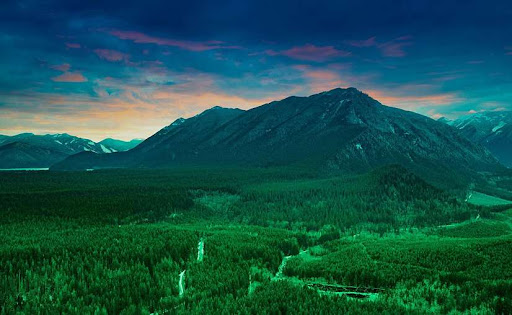
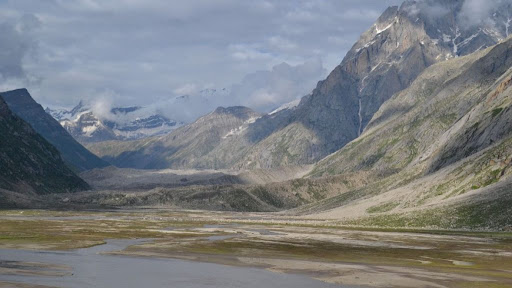
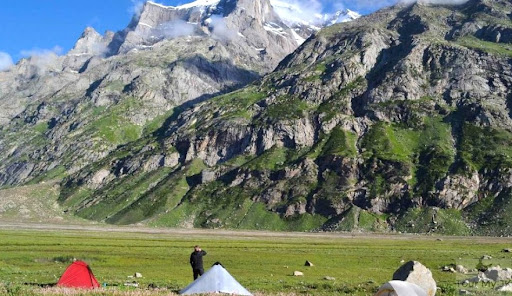
Kishtwar National Park is a national park located in the Kishtwar district of Jammu and Kashmir, India. It is bounded to the north by Rinnay river, south by Kibar Nala catchment, east by main divide of Great Himalaya and west by Marwa river.The National Park encompasses the catchments of Kiar, Nath and Kibar Nalas, all of which drain south-west into Marwa River which joins the Chenab River just above Kishtwar Town. The terrain is generally rugged and steep, with narrow valleys bounded by high ridges opening in their upper glacial parts. The area lies in the Central Crystalline belt of the Great Himalayas. Rocks are strongly folded in places and composed mainly of granite, gneiss and schist, with the occasional bed of marble. The shallow, slightly alkaline soils are mostly alluvial with gravel deposits (Kurt,1976;Bacha, 1986).
Climate The influence of the monsoon is weak. Mean annual rainfall at palmar and Sirshi (1,761 m), located near the periphery of the national park, is 827 mm and 741 mm, respectively, precipitation is maximal and in excess of 100 mm per month in March and April, and again in July and August.Most snow fall in December and January when the whole area becomes snowbound. Mean maximum and minimum temperatures recorded at Sirshi are 130 and -70 in January and 350c and 110c in July respectively (Kurt, 1976;Bacha,1986).
Vegetation Based on revised classification of Champion and Seth (1968), some 13 vegetation types are represented (Bacha,1986). In general, silver fir 'Abies pindrow' and spruce 'Picea wallichian', mixed with cedar Cedrus deodar and blue pine Pinus griffithii are predominant from 2,400m to 3,000m. Notable is the small expanse of chilgoza pine Pinus geradiana in the Dachan Range. At lower altitudes (1,700-2,400m) occur nearly pure stands of cedar and blue pine, and moist temperate deciduous forest, represented by horsechestnut, Aesculus indica, walnut Juglans regia, maple, Acer spp. poplar, Populus ciliata, hazel Corylus cornutam bird cherry Pasus corfnuta, ash Fraxinus cornuta and yew Taxus wallichiana. The sub-alpine zone, from 3,000m to the tree line at 3,700m, supports mostly silver fir and birch Betula utilis forest and this merges with birch -rhododendron Rhododendron campanulatum scrub, above which is alpine pasture.
Among the animals that make their home here include the Himalayan snowcock and the brown bear.Racial groups include Thakurs, Kashmiris, Gujars, Rajputs and Brahmans (Bacha, 1986)There are permanent settlements but some 1,115 families of nomadic graziers, with 25,000 head of livestock, and an unspecified number of families from nearby villages, with 10,000 head, have grazing rights in the national park. Some agriculture is practised in peripheral areas....
Read moreKishtwar National Park – complete detail – updated. Dominant flora and fauna of Kishtwar National Park. Geography of Kishtwar National Park. How to reach Kishtwar National Park. Kishtwar National Park is a beautiful place, located in the Kishtwar district of the state of Jammu and Kashmir. The National Park encompasses the catchments of Kiar, Nath and Kibar Nalas, all of which drain south-west into Marwa River which joins the Chenab River just above Kishtwar Town. The park is surrounded by Rinnay River in the north, Kibar Nala catchments in the southern part, the Great Himalaya in the east and Marwa River in the west……….. Total area of the park is 425.00 Km2. This national park was basically made to protect the endangered species of snow leopards and was given the status of a national park in 1981. The Park is famous for its unique and rich wildlife and bird species. The flora mainly comprises coniferous, alpine, meadows and scrub forests. The rich wildlife includes Brown Bear, Himalayan Black bear, Musk Deer, Ibex, Markhor, Snow Leopard, Wild boar, Bharal, Indian Muntijal, Serow, and Rhesus macaque (Hangul and Kashmiri stag that migrate in winters from Dachigam National Park). National park is an area which is strictly reserved for the betterment of the wildlife & biodiversity, and where activities like developmental, forestry, poaching, hunting and grazing on cultivation are not permitted. Their boundaries are well marked and circumscribed.
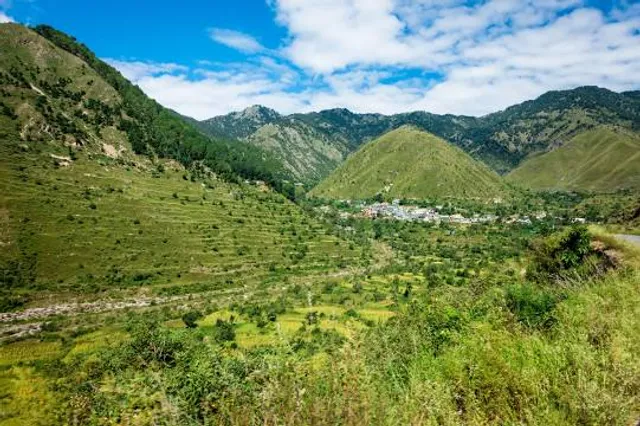
Kishtwar National Park is a beautiful place, located in the Kishtwar district of the state of Jammu and Kashmir. The Park is named after the district in which it is located.
It was majorly founded to protect the Snow Leopards that are now slowly vanishing from the nature. Total area of the park...
Read moreKishtwar National Park is a national park located in the Kishtwar district of Jammu and Kashmir, India. Here are some key details about Kishtwar National Park:
Location: Situated in the eastern part of Jammu and Kashmir, Kishtwar National Park is known for its picturesque landscapes and diverse ecosystems.
Establishment: The park was established to protect the unique flora and fauna of the region. The exact year of establishment might be subject to updates, so it's advisable to check with local authorities for the latest information.
Ecosystem: Kishtwar National Park is characterized by a variety of ecosystems, including alpine meadows, coniferous forests, and high-altitude areas.
Flora: The park is home to a range of plant species adapted to the harsh mountainous environment, including conifers, alpine herbs, and medicinal plants.
Fauna: The park is known for its diverse wildlife, including the Hangul deer (Kashmir stag), Himalayan brown bear, markhor, and various species of pheasants.
Scenic Beauty: Kishtwar National Park is known for its scenic beauty, with snow-capped peaks, pristine lakes, and dense forests attracting nature enthusiasts and trekkers.
Accessibility: The park is accessible by road, and trekking is a popular activity for those seeking to explore its natural beauty.
Conservation Significance: The national park holds conservation significance for the preservation of the unique biodiversity...
Read more