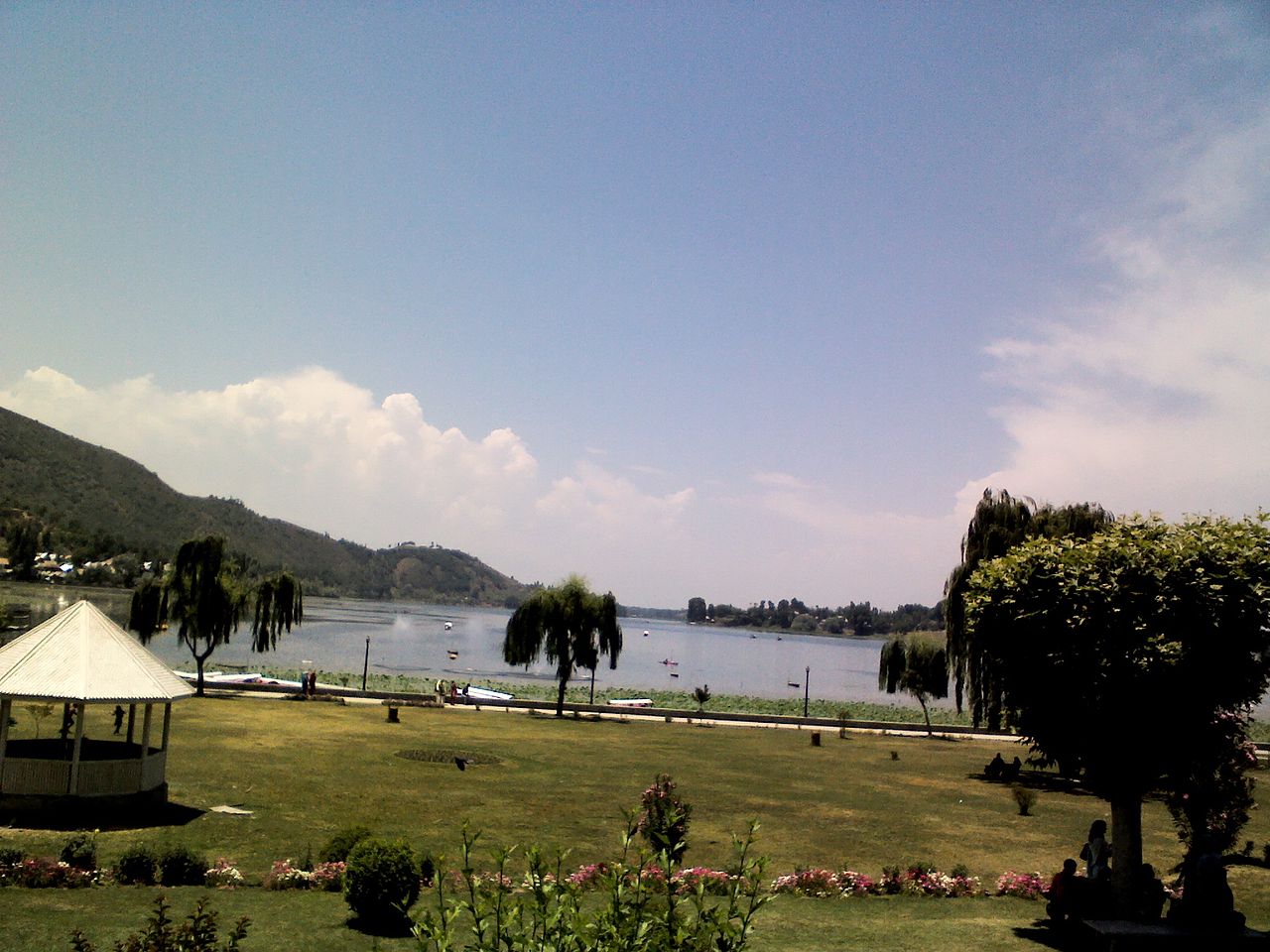
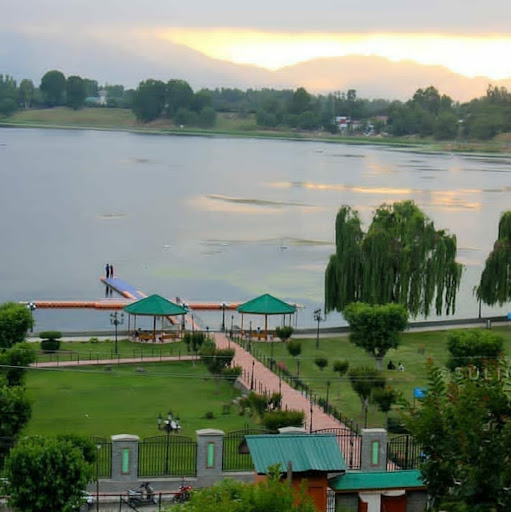
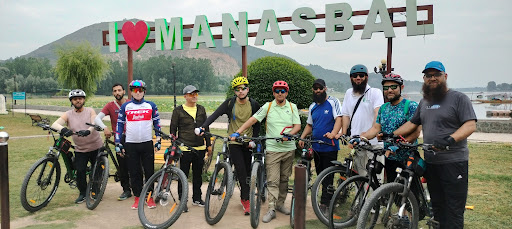
Manasbal Lake is located in Safapora area of Ganderbal District in the union territory of Jammu and Kashmir in India. The name Manasbal is said to be a derivative of the Lake Manasarovar.2] Lake is encircled by four villages viz., Jarokbal, Kondabal, Nesbal (also called Kiln place, is situated on the north-eastern side of the lake) and Gratbal.[3] The large growth of lotus (Nelumbo nucifera) at the periphery of the lake (blooms during July and August) adds to the beauty of the clear waters of the lake. The Mughal garden, called the Jaroka Bagh, (meaning bay window) built by Nur Jahan overlooks the lake. The lake is a good place for birdwatching as it is one of the largest natural stamping grounds of Aquatic birds in Kashmir and has the sobriquet of "supreme gem of all Kashmir Lakes".[5 The rootstocks of lotus plant which grows extensively in the lake are harvested and marketed, and also eaten by the local people. The lake is approached from Srinagar by a 30-kilometre (19 mi) road via Shadipora, Nasim and Gandarbal. Road to Wular Lake, the largest lake in Kashmir, passes through this lake, via Safapora.[2] It is also easy to reach to Manasbal from Sonmarg via ganderbal. It is believed to be an ancient lake by locals but exact dating is yet to be done. Close to the northern shore of the lake are the ruins of a 17th-century fort, called the jarogabagh, built by the Moghuls, used in the past by caravans traveling from Punjab to Srinagar. The lake is surrounded by the Baladar mountains on the east, by an elevated plateau known as 'Karewa' comprising lacustrine, fluviatile and loessic deposits on the north and bounded by the Ahtung hills in the south, which are used for limestone extraction.[5]
Along the course of the Jhelum River, the Manasbal Lake falls under the third series of high altitude lakes of the Himalayas (designated with respect to their origin, altitudinal situation and nature of biota they contain) as the valley lakes (Dal, Anchar Lake, Manasbal etc.) situated at the altitudinal zone of 1,585–1,600 m (5,200–5,249 ft); the other two types being the high altitude wetlands (altitude 1,585–4,000 m or 5,200–13,123 ft amsl) of the second series of lakes (Nilnag) in the lower fringes of Pir Panjal ranges right in the midst of pine forests, and the glaciated lakes of the first series situated on the inner Himalayas between 3,000–4,000 m (9,800–13,100 ft) amsl (Alipathar, Sheshnag, Kounsarnag, Tar Sar, Marsar, Vishansar, Gangbal, Kishan Sar, Kyo Tso, Pangong Tso, etc.) which have probably originated during the third Himalayan glaciation.[7] A fissure is reported to be running from east to west at the centre of the lake. Important vegetation in the catchment of the lake comprise Orchards (apple, mulberry), some Platanus (Chinar trees) and Salix trees. Safar, a nearby village of Safapur which has a grove of Chinar trees, is known as Badshah Boni, royal Chinar, and was planted in imitation of the Nasim Bagh in Srinagar. Maize, mustard and wheat are generally the main crops grown in the agricultural lands of the catchment. In recent years, land use pattern has changed with more land used for horticulture and also diversion of land for construction purposes. The fauna recorded in the lake are the zooplankton, benthos and fish. The economically important fishes reported are:[5]
Schizothorax niger, S. esocinus, Cyprinus carpio specularis+, C. carpio communis+ and Neomacheilus latius. Note:+ considered economically important
Cyprinus, an exotic species, has proliferated extensively after its introduction in 1956. A decline in the population of indigenous species due to rapid changes in the environment...
Read moreManasbal lake is situated in Ganderbal District in the union territory of Jammu and Kashmir in India. The name Manasbal is said to be a derivative of the Lake Manasarovar.2] Lake is encircled by three villages viz., Jarokbal, Kondabal (also called Kiln place, is situated on the north-eastern side of the lake) and Ganderbal.[citation needed] The large growth of lotus (Nelumbo nucifera) at the periphery of the lake (blooms during July and August) adds to the beauty of the clear waters of the lake. The Mughal garden, called the Jaroka, (meaning bay window) built by Nur Jahan overlooks the lake.[3]
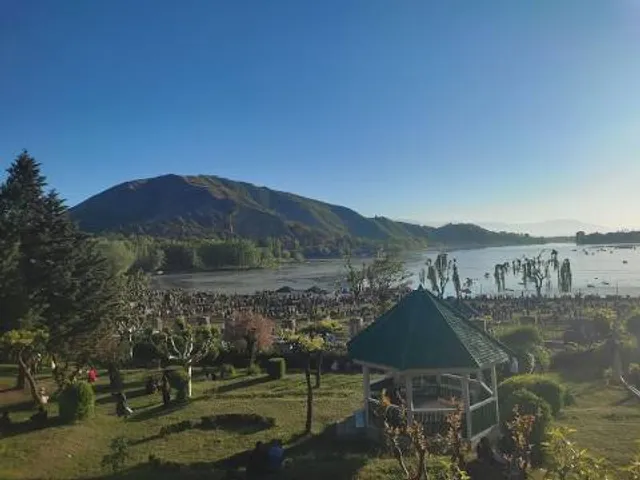
Manasbal LakeLocationSafapora Kashmir ValleyCoordinates34°15′N 74°40′ELake typeFresh waterCatchment area33 km2 (13 sq mi)Basin countriesIndiaMax. length5 km (3.1 mi)Max. width1 km (0.62 mi)[1]Surface area2.81 km2 (1.08 sq mi)Average depth4.5 m (15 ft)Max. depth13 m (43 ft)Water volume0.0128 km3 (0.0031 cu mi)Residence time1.2 yearsShore length110.2 km (6.3 mi)Surface elevation1,583 m (5,194 ft)SettlementsKondabal1 Shore length is not a well-defined measure.
The lake is a good place for birdwatching as it is one of the largest natural stamping grounds of Aquatic birds in Kashmir and has the sobriquet of "supreme gem of all Kashmir Lakes".[4 The rootstocks of lotus plant which grows extensively in the lake are harvested and marketed, and also eaten by the local people.2]
Access
HistoryEdit
It is believed to be an ancient lake by locals but exact dating is yet to be done. Close to the northern shore of the lake are the ruins of a 17th-century fort, called the jarogabagh, built by the Moghuls, used in the past by caravans traveling from Punjab to Srinagar.[2
TopographyEdit
The lake is surrounded by the Baladar mountains on the east, by an elevated plateau known as 'Karewa' comprising lacustrine, fluviatile and loessic deposits on the north and bounded by the Ahtung hills in the south, which are used for limestone extraction.[4]
Along the course of the Jhelum River, the Manasbal Lake falls under the third series of high altitude lakes of the Himalayas (designated with respect to their origin, altitudinal situation and nature of biota they contain) as the valley lakes (Dal, Anchar Lake, Manasbal etc.) situated at the altitudinal zone of 1,585–1,600 m (5,200–5,249 ft); the other two types being the high altitude wetlands (altitude 1,585–4,000 m or 5,200–13,123 ft amsl) of the second series of lakes (Nilnag) in the lower fringes of Pir Panjal ranges right in the midst of pine forests, and the glaciated lakes of the first series situated on the inner Himalayas between 3,000–4,000 m (9,800–13,100 ft) amsl (Alipathar, Sheshnag, Kounsarnag, Tar Sar, Marsar, Vishansar, Gangbal, Kishan Sar, Kyo Tso, Pangong Tso, etc.) which have probably originated during the third Himalayan glaciation.[6] A fissure is reported to be running from east to west at the centre...
Read moreManasbal Lake is located about 30 km north of Srinagar, the summer capital of Jammu and Kashmir State. It has predominantly rural surroundings with three villages, Kondabal, Jarokbal and Gratbal overlooking the lake. Manasbal is considered as the 'supreme gem of all Kashmir lakes' with lotus (Nelumbo nucifera) nowhere more abundant or beautiful than on the margins of this lake during July and August. It is the deepest lake of Kashmir valley and perhaps the only one that develops stable summer stratification. Manasbal is classified as warm monomictic lake and circulates once in a year for a short time. The other lakes in the region either have weak stratification or are polymictic. Close to the northern shore are the ruins of a fort which was built in 17th century by a Moghul king to cater the needs of caravans that used to travel from Panjab to Srinagar. On the south, overlooking the lake is a hillock-Ahtung which is used for limestone extraction. The eastern part is mainly mountainous and towards the north is an elevated plateau known as 'Karewa' consisting of lacustrine, fluviatile and loessic deposits. The lake has no major inflow channels and the water supply is maintained through spring water inflow and precipitation. An outlet channel connects the lake with the Jhelum River. The outflow of water is regulated artificially. The local population uses the lake as a source of water, for fishing and for obtaining food and fodder plants. Many people are involved in harvesting and marketing of lotus rootstocks which are extensively eaten in the State. In recent years, tourism has caught up with the Manasbal Lake in a big way and as a consequence there are lots of pressure on the terrestrial ecosystem which is being exploited at many places. The origin of the lake is still unresolved but there is no denying the fact that Manasbal is very ancient. The local people believe in the legend that the lake is bottomless. Over the years as a result of human pressure the lake has become eutrophic. The water body is virtually choked with submerged weeds particularly during summer which is the high tourist season. The deep water layers become anoxic with considerable accumulation of...
Read more