HTML SitemapExplore
logo
Find Things to DoFind The Best Restaurants

Wular Lake — Attraction in Jammu and Kashmir

Name
Wular Lake
Description
Wular Lake, also known as Wolar in Kashmiri, is one of the largest fresh water lakes in South Asia. It is located near Bandipora town in the Bandipora district of Jammu and Kashmir, India. The lake basin was formed as a result of tectonic activity and is fed by the Jhelum River and stream Madhumati and Arin.
Nearby attractions
Nearby restaurants
Nearby hotels
Related posts
Keywords
Wular Lake tourism.Wular Lake hotels.Wular Lake bed and breakfast. flights to Wular Lake.Wular Lake attractions.Wular Lake restaurants.Wular Lake travel.Wular Lake travel guide.Wular Lake travel blog.Wular Lake pictures.Wular Lake photos.Wular Lake travel tips.Wular Lake maps.Wular Lake things to do.
Wular Lake things to do, attractions, restaurants, events info and trip planning
Wular Lake
IndiaJammu and KashmirWular Lake

Basic Info

Wular Lake

4.5(563)
Open 24 hours
Save
spot

Ratings & Description

Info

Wular Lake, also known as Wolar in Kashmiri, is one of the largest fresh water lakes in South Asia. It is located near Bandipora town in the Bandipora district of Jammu and Kashmir, India. The lake basin was formed as a result of tectonic activity and is fed by the Jhelum River and stream Madhumati and Arin.

Outdoor
Adventure
Family friendly
attractions: , restaurants:
logoLearn more insights from Wanderboat AI.

Plan your stay

hotel
Pet-friendly Hotels in Jammu and Kashmir
Find a cozy hotel nearby and make it a full experience.
hotel
Affordable Hotels in Jammu and Kashmir
Find a cozy hotel nearby and make it a full experience.
hotel
The Coolest Hotels You Haven't Heard Of (Yet)
Find a cozy hotel nearby and make it a full experience.
hotel
Trending Stays Worth the Hype in Jammu and Kashmir
Find a cozy hotel nearby and make it a full experience.

Reviews

Get the Appoverlay
Get the AppOne tap to find yournext favorite spots!
Wanderboat LogoWanderboat

Your everyday Al companion for getaway ideas

CompanyAbout Us
InformationAI Trip PlannerSitemap
SocialXInstagramTiktokLinkedin
LegalTerms of ServicePrivacy Policy

Get the app

© 2025 Wanderboat. All rights reserved.
logo

Posts

Shibu PatraShibu Patra
Lake Wular belongs to the largest freshwater lakes in India and lies in the Kashmir Valley, 40 km northwest of Srinagar City in the Northwest of India. With a size of 189 sq. km, Wular Lake is also one of the largest freshwater lakes in Asia. The lake lies at an altitude of 1,580 m. Its maximum depth is 14 metres, it has a length of 16 km and a breadth of 10 km. Wular Lake plays a significant role in the hydrographic system of the Kashmir Valley by acting as huge absorption basin for annual floodwater. The lake and its surrounding extensive marshes have an important natural wildlife. The rivers Bohnar, Madamati and Erin from the mountain ranges and the rivers Vetasta (Jhelum) and the Ningal from the south bring hundreds of tons of silt into the lake every year. This rampant siltation and the human encroachments have devastating effects on the lake. In recognition of its biological, hydrological and socio-economic values, the lake was included in 1986 as a Wetland of National Importance under the Wetlands Programme of the Ministry of Environment and Forests, Government of India for intensive conservation and management purposes. Subsequently in 1990, it was designated as a Wetland of International Importance under the Ramsar Convention. Wular Lake is a sustainable wintering site for a number of migratory waterfowl species such as Little Egzet (Egretta garzetta), Cattle Egzet (Bubulcus ibis), Shoveler (Anas clypeata), Common Pochard (Aythya farina) and Mallard. Birds like Marbled Teal (Marmaronetta angustirostris) and Pallas´s Fish-eagle (Haliaeetus leucoryphus) are species listened in the Red List of IUCN. Many terrestrial bird species observed around the lake are Short-toed Eagle (Circaetus gallicus), Little Cuckoo (Piaya minuta), European Hoopoe (Upupa epops), Monal Pheasant (Lophophorus impejanus) and Himalayan Pied Woodpecker (Dendrocopos himalayensis albescens). Wular Lake is also an important habitat for fish and contributes about 60 percent of the fish yield of the Kashmir Valley. The dominant fish species found in the lake are: Cyprinus carpio, Barbus conchonius, Gambusia affinis, Nemacheilus sp., Crossocheilus latius, Schizothorax curvifrons, S. esocinus, S. planifrons, S. micropogon, S. longipinus and S. niger. More than 8,000 fishermen earn their livelihood from Wular Lake. The pollution from fertilizers and animals as well as human wastes, the conversion of vast catchment into agriculture land and the hunting pressure on waterfowl and migratory birds are the biggest problems in the region. The partner organisation South Asian Voluntary Association of Environmentalists (SAVE) is a joined initiative of individuals with the aim to protect the ecology and to conserve the nature at Wular Lake.
Avijit SurAvijit Sur
Wular Lake also known as Wolar in Kashmiri, is one of the largest fresh water lakes in South Asia. It is located near Bandipora town in Bandipora district of Jammu and Kashmir. The lake basin was formed as a result of tectonic activity and is fed by the Jhelum River and stream madhumati. The lake's size varies seasonally from 30 to 189 square kilometres. The Lake is surrounded by the marshes and have a good natural wildlife. Various water birds are also seen in the lake. Fishing is also important aspect of walur contributes approx.. 60% of fish yield of Kashmir. However it faces environmental threats including the conversion of large parts of the lake’s catchment areas into agriculture land, pollution from fertilizers and animal wastes, hunting of waterfowl and migratory birds and weed infestation in the lake itself. The lake is embraced by majestic mountains and has a great view. The best time to visit is late afternoon as the light is beautiful for photos. When the afternoon lights reflect from the lake and the weeds, it creates beautiful landscape. It takes around 2.30 hrs from Srinagar to reach any one side of Wular Lake by Car. On the way to Wular, you can visit Manasbal Lake also. It will take around 1.30 hrs more if you travel around the whole lake by car through main road. So, you have to spend one full day for this trip. However, very few tourists visit this place. I must also admit that apart from raw natural beauty of the lake and surroundings, there is nothing else to see here. There are very few restaurants near the main attraction points of the lake (however you can find many on our way). Also, lake of maintenance and development is visible near the main attraction points of the lake. So nature lovers will find this place interesting but general tourist may not find this place attractive. But for me, the Wular lake is certainly a beautiful place and worth a visit.
Explore with Rohit MauryaExplore with Rohit Maurya
Wular Lake also known as Wolar in Kashmiri, is one of the largest fresh water lakes in South Asia. It is located near Bandipora town in Bandipora district of Jammu and Kashmir. The lake basin was formed as a result of tectonic activity and is fed by the Jhelum River and stream madhumati. The lake's size varies seasonally from 30 to 189 square kilometres. The Lake is surrounded by the marshes and have a good natural wildlife. Various water birds are also seen in the lake. Fishing is also important aspect of walur contributes approx.. 60% of fish yield of Kashmir. However it faces environmental threats including the conversion of large parts of the lake’s catchment areas into agriculture land, pollution from fertilizers and animal wastes, hunting of waterfowl and migratory birds and weed infestation in the lake itself. The lake is embraced by majestic mountains and has a great view. The best time to visit is late afternoon as the light is beautiful for photos. When the afternoon lights reflect from the lake and the weeds, it creates beautiful landscape. It takes around 2.30 hrs from Srinagar to reach any one side of Wular Lake by Car. On the way to Wular, you can visit Manasbal Lake also. It will take around 1.30 hrs more if you travel around the whole lake by car through main road. So, you have to spend one full day for this trip. However, very few tourists visit this place. I must also admit that apart from raw natural beauty of the lake and surroundings, there is nothing else to see here. There are very few restaurants near the main attraction points of the lake (however you can find many on our way). Also, lake of maintenance and development is visible near the main attraction points of the lake. So nature lovers will find this place interesting but general tourist may not find this place attractive. But for me, the Wular lake is certainly a beautiful place and worth a visit.
See more posts
See more posts
hotel
Find your stay

Pet-friendly Hotels in Jammu and Kashmir

Find a cozy hotel nearby and make it a full experience.

Lake Wular belongs to the largest freshwater lakes in India and lies in the Kashmir Valley, 40 km northwest of Srinagar City in the Northwest of India. With a size of 189 sq. km, Wular Lake is also one of the largest freshwater lakes in Asia. The lake lies at an altitude of 1,580 m. Its maximum depth is 14 metres, it has a length of 16 km and a breadth of 10 km. Wular Lake plays a significant role in the hydrographic system of the Kashmir Valley by acting as huge absorption basin for annual floodwater. The lake and its surrounding extensive marshes have an important natural wildlife. The rivers Bohnar, Madamati and Erin from the mountain ranges and the rivers Vetasta (Jhelum) and the Ningal from the south bring hundreds of tons of silt into the lake every year. This rampant siltation and the human encroachments have devastating effects on the lake. In recognition of its biological, hydrological and socio-economic values, the lake was included in 1986 as a Wetland of National Importance under the Wetlands Programme of the Ministry of Environment and Forests, Government of India for intensive conservation and management purposes. Subsequently in 1990, it was designated as a Wetland of International Importance under the Ramsar Convention. Wular Lake is a sustainable wintering site for a number of migratory waterfowl species such as Little Egzet (Egretta garzetta), Cattle Egzet (Bubulcus ibis), Shoveler (Anas clypeata), Common Pochard (Aythya farina) and Mallard. Birds like Marbled Teal (Marmaronetta angustirostris) and Pallas´s Fish-eagle (Haliaeetus leucoryphus) are species listened in the Red List of IUCN. Many terrestrial bird species observed around the lake are Short-toed Eagle (Circaetus gallicus), Little Cuckoo (Piaya minuta), European Hoopoe (Upupa epops), Monal Pheasant (Lophophorus impejanus) and Himalayan Pied Woodpecker (Dendrocopos himalayensis albescens). Wular Lake is also an important habitat for fish and contributes about 60 percent of the fish yield of the Kashmir Valley. The dominant fish species found in the lake are: Cyprinus carpio, Barbus conchonius, Gambusia affinis, Nemacheilus sp., Crossocheilus latius, Schizothorax curvifrons, S. esocinus, S. planifrons, S. micropogon, S. longipinus and S. niger. More than 8,000 fishermen earn their livelihood from Wular Lake. The pollution from fertilizers and animals as well as human wastes, the conversion of vast catchment into agriculture land and the hunting pressure on waterfowl and migratory birds are the biggest problems in the region. The partner organisation South Asian Voluntary Association of Environmentalists (SAVE) is a joined initiative of individuals with the aim to protect the ecology and to conserve the nature at Wular Lake.
Shibu Patra

Shibu Patra

hotel
Find your stay

Affordable Hotels in Jammu and Kashmir

Find a cozy hotel nearby and make it a full experience.

Get the Appoverlay
Get the AppOne tap to find yournext favorite spots!
Wular Lake also known as Wolar in Kashmiri, is one of the largest fresh water lakes in South Asia. It is located near Bandipora town in Bandipora district of Jammu and Kashmir. The lake basin was formed as a result of tectonic activity and is fed by the Jhelum River and stream madhumati. The lake's size varies seasonally from 30 to 189 square kilometres. The Lake is surrounded by the marshes and have a good natural wildlife. Various water birds are also seen in the lake. Fishing is also important aspect of walur contributes approx.. 60% of fish yield of Kashmir. However it faces environmental threats including the conversion of large parts of the lake’s catchment areas into agriculture land, pollution from fertilizers and animal wastes, hunting of waterfowl and migratory birds and weed infestation in the lake itself. The lake is embraced by majestic mountains and has a great view. The best time to visit is late afternoon as the light is beautiful for photos. When the afternoon lights reflect from the lake and the weeds, it creates beautiful landscape. It takes around 2.30 hrs from Srinagar to reach any one side of Wular Lake by Car. On the way to Wular, you can visit Manasbal Lake also. It will take around 1.30 hrs more if you travel around the whole lake by car through main road. So, you have to spend one full day for this trip. However, very few tourists visit this place. I must also admit that apart from raw natural beauty of the lake and surroundings, there is nothing else to see here. There are very few restaurants near the main attraction points of the lake (however you can find many on our way). Also, lake of maintenance and development is visible near the main attraction points of the lake. So nature lovers will find this place interesting but general tourist may not find this place attractive. But for me, the Wular lake is certainly a beautiful place and worth a visit.
Avijit Sur

Avijit Sur

hotel
Find your stay

The Coolest Hotels You Haven't Heard Of (Yet)

Find a cozy hotel nearby and make it a full experience.

hotel
Find your stay

Trending Stays Worth the Hype in Jammu and Kashmir

Find a cozy hotel nearby and make it a full experience.

Wular Lake also known as Wolar in Kashmiri, is one of the largest fresh water lakes in South Asia. It is located near Bandipora town in Bandipora district of Jammu and Kashmir. The lake basin was formed as a result of tectonic activity and is fed by the Jhelum River and stream madhumati. The lake's size varies seasonally from 30 to 189 square kilometres. The Lake is surrounded by the marshes and have a good natural wildlife. Various water birds are also seen in the lake. Fishing is also important aspect of walur contributes approx.. 60% of fish yield of Kashmir. However it faces environmental threats including the conversion of large parts of the lake’s catchment areas into agriculture land, pollution from fertilizers and animal wastes, hunting of waterfowl and migratory birds and weed infestation in the lake itself. The lake is embraced by majestic mountains and has a great view. The best time to visit is late afternoon as the light is beautiful for photos. When the afternoon lights reflect from the lake and the weeds, it creates beautiful landscape. It takes around 2.30 hrs from Srinagar to reach any one side of Wular Lake by Car. On the way to Wular, you can visit Manasbal Lake also. It will take around 1.30 hrs more if you travel around the whole lake by car through main road. So, you have to spend one full day for this trip. However, very few tourists visit this place. I must also admit that apart from raw natural beauty of the lake and surroundings, there is nothing else to see here. There are very few restaurants near the main attraction points of the lake (however you can find many on our way). Also, lake of maintenance and development is visible near the main attraction points of the lake. So nature lovers will find this place interesting but general tourist may not find this place attractive. But for me, the Wular lake is certainly a beautiful place and worth a visit.
Explore with Rohit Maurya

Explore with Rohit Maurya

See more posts
See more posts

Reviews of Wular Lake

4.5
(563)
avatar
5.0
5y

The Tulbul Project is a "navigation lock-cum-control structure" at the mouth of Wular Lake.9] According to the original Indian plan, the barrage was expected to be of 439 feet (134 m) long and 40 feet (12 m) wide, and would have a maximum storage capacity of 300,000 acre⋅ft (370×106 m3) of water.[10] One aim was to regulate the release of water from the natural storage in the lake to maintain a minimum draught of 4.5 feet (1.4 m) in the river up to Baramulla during the lean winter months. The project was conceived in the early 1980s and work began in 1984. The average annual inflows or outflows from the lake is nearly 7 billion cubic meters[11] There has been an ongoing dispute between India and Pakistan over the Tulbul Project since 1987, when Pakistan objected that it violated the 1960 Indus Waters Treaty (IWT).[12] India stopped work on the project that year, but has since pressed to restart construction. The Jhelum River passing through the Kashmir valley below Wular Lake which is a connecting lake as per IWT, provides an important means of transport for goods and people. To sustain navigation throughout the year, a minimum depth of water is needed. India contends that the Tulbul Project is permissible per paragraphs 7 (c) and 9 of Annexure E, IWT while Pakistan maintains that the project is a violation of the treaty if the storage is above 10,000 acre feet (12×106 m3) for non-power generation purpose.[13] India says suspension of work is harming the interests of people of Jammu and Kashmir and also depriving irrigation and power benefits to the people of Pakistan that may accrue from regulated water releases. The lake storage capacity can be increased per IWT to 300,000 acre feet or more up to 1580 m MSL by considering it as a reservoir for a run of the river (RoR) hydro power plant by envisaging a low head (nearly 8 meters rated head) power plant.[14] The available deepened river bed level at the toe of the dam can be below 1,570 m (5,151 ft) MSL for 4,000 cusecs flow.[15] Simultaneously, the enlarged lake can also meet the downstream navigational requirements fully during the lean flow season. The regulated buffer / surcharge water storage in the Wular lake would substantially enhance the power generation from the downstream Lower Jhelum (105 MW), Uri (720 MW), proposed 1124 MW Kohala (in PaK), proposed 720 MW Azad Pattan (in PaK), 590-MW Mahl hydropower project (in PaK) and proposed 720 MW Karot (in PaK) RoR hydel projects though its own power plant's generation is marginal.[1618 Construction of a RoR power plant with sufficient sluice gates would also flush the sediment from the lake area to preserve the lake.20] The lean season water inflows into the Wular Lake are enhanced from the Kishanganga river by the Kishanganga Hydroelectric Plant after generating electricity. Other lakes such as Manasbal Lake, Anchar Lake, Dal Lake, etc. which are not located on Jhelum Main river can be used similar to Wular Lake to impound flood waters for flood protection in downstream areas, hydro electricity generation, navigation throughout the year, irrigation, municipal and industrial uses.[21]

RecognitionEdit

In recognition of its biological, hydrological and socio-economic values, the lake was included in 1986 as a Wetland of National Importance under the Wetlands Programme of the Ministry of Environment and Forests, Government of India for intensive conservation and management purposes. Subsequently, in 1990, it was designated as a Wetland of International Importance under the Ramsar Convention.[22 Against the Ramsar Conventions, the lake area is being used for garbage dumping.[23]

RestorationEdit

Amongst other developments, two million trees will be cut to restore Wular Lake under the National Lake Conservation Programme.[24] The Environment Ministry of India approved Rs 4 billion for the restoration project for the lake that will take 5 to 10 years and was after long delays scheduled to start in December 2011.[25] The partner organisation South Asian Voluntary Association of...

   Read more
avatar
5.0
1y

Wular Lake, located in the Bandipora district of Jammu and Kashmir, India, is one of the largest freshwater lakes in Asia. However, it faces significant environmental challenges, primarily due to pollution. Here is a 2000-word article on Wular Lake and the causes of its pollution:

Wular Lake: An Overview

Wular Lake, also known as Wullar Lake, is a vital component of the Kashmir Valley's ecosystem. It covers an area of approximately 189 square kilometers and has a maximum depth of 14 meters. The lake is fed by several rivers, including the Jhelum, and plays a crucial role in regulating the region's water cycle.

Causes of Pollution:

Agricultural Runoff: Fertilizers and pesticides from nearby agricultural fields contaminate the lake's water, harming aquatic life.

Domestic Sewage: Untreated sewage from surrounding villages and towns flows into the lake, increasing nutrient levels and promoting harmful algal growth.

Industrial Waste: Industrial units, such as paper mills and textile factories, release untreated effluents into the lake, further degrading water quality.

Deforestation: The destruction of surrounding forests leads to soil erosion, increasing sedimentation and nutrient loading in the lake.

Over-Tourism: The increasing number of tourists and recreational activities, such as boating and fishing, contribute to pollution and habitat disruption.

Lack of Waste Management: Inadequate waste disposal infrastructure in the surrounding areas results in litter and debris entering the lake.

Climate Change: Changes in temperature and precipitation patterns affect the lake's water level, quality, and ecosystem balance.

Effects of Pollution:

Water Quality Degradation: Pollution threatens the lake's water quality, making it unsuitable for human consumption and aquatic life.

Loss of Biodiversity: Pollution and habitat destruction lead to the decline of native species, compromising the lake's ecological balance.

Economic Impacts: Pollution affects the local economy, as fishing and tourism industries suffer due to the lake's degraded condition.

Conservation Efforts:

Government Initiatives: The Jammu and Kashmir government has launched several initiatives to restore the lake, including wastewater treatment plants and afforestation programs.

Community Involvement: Local communities are being engaged in conservation efforts, such as cleaning drives and awareness campaigns.

Research and Monitoring: Scientific studies are being conducted to better understand the lake's ecosystem and develop effective conservation strategies.

In conclusion, Wular Lake faces significant pollution challenges, threatening its ecological balance and economic importance. Addressing these issues requires a multi-faceted approach, involving government initiatives, community participation, and...

   Read more

avatar
5.0
4y

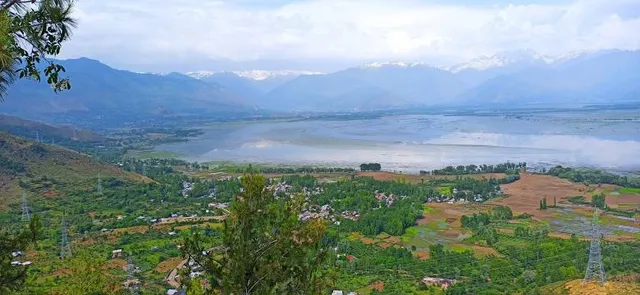
Lake Wular belongs to the largest freshwater lakes in India and lies in the Kashmir Valley, 40 km northwest of Srinagar City in the Northwest of India. With a size of 189 sq. km, Wular Lake is also one of the largest freshwater lakes in Asia. The lake lies at an altitude of 1,580 m. Its maximum depth is 14 metres, it has a length of 16 km and a breadth of 10 km.

Wular Lake plays a significant role in the hydrographic system of the Kashmir Valley by acting as huge absorption basin for annual floodwater. The lake and its surrounding extensive marshes have an important natural wildlife. The rivers Bohnar, Madamati and Erin from the mountain ranges and the rivers Vetasta (Jhelum) and the Ningal from the south bring hundreds of tons of silt into the lake every year. This rampant siltation and the human encroachments have devastating effects on the lake.

In recognition of its biological, hydrological and socio-economic values, the lake was included in 1986 as a Wetland of National Importance under the Wetlands Programme of the Ministry of Environment and Forests, Government of India for intensive conservation and management purposes. Subsequently in 1990, it was designated as a Wetland of International Importance under the Ramsar Convention.

Wular Lake is a sustainable wintering site for a number of migratory waterfowl species such as Little Egzet (Egretta garzetta), Cattle Egzet (Bubulcus ibis), Shoveler (Anas clypeata), Common Pochard (Aythya farina) and Mallard. Birds like Marbled Teal (Marmaronetta angustirostris) and Pallas´s Fish-eagle (Haliaeetus leucoryphus) are species listened in the Red List of IUCN. Many terrestrial bird species observed around the lake are Short-toed Eagle (Circaetus gallicus), Little Cuckoo (Piaya minuta), European Hoopoe (Upupa epops), Monal Pheasant (Lophophorus impejanus) and Himalayan Pied Woodpecker (Dendrocopos himalayensis albescens).

Wular Lake is also an important habitat for fish and contributes about 60 percent of the fish yield of the Kashmir Valley. The dominant fish species found in the lake are: Cyprinus carpio, Barbus conchonius, Gambusia affinis, Nemacheilus sp., Crossocheilus latius, Schizothorax curvifrons, S. esocinus, S. planifrons, S. micropogon, S. longipinus and S. niger. More than 8,000 fishermen earn their livelihood from Wular Lake.

The pollution from fertilizers and animals as well as human wastes, the conversion of vast catchment into agriculture land and the hunting pressure on waterfowl and migratory birds are the biggest problems in the region.

The partner organisation South Asian Voluntary Association of Environmentalists (SAVE) is a joined initiative of individuals with the aim to protect the ecology and to conserve the nature...

   Read more
Page 1 of 7
Previous
Next