Tantric Shaktism began in the 7th century. Shaktism holds that the mother goddess (Matrushakti) is the source of power and of highest spiritual bliss. During the early Bhaumakar rule, in 736 A.D, the eight-armed Mahinsamardini Durga appeared in the sculptural masterpieces of Odisha. Some eight-armed Mahinsamardini idols found in other parts of Odisha in the 8th century resembled the Goddess Sarala. Archaeologists and scholars have concluded that the worship of the Goddess Sarala in Jhankad began during the 8th century CE.
The worship of the goddess was popularized in the 15th century CE by the work of Sidheshwar Parida, a small-time farmer and part-time Oriya Paika. He was an ardent follower of the goddess, and later took the name Sarala Das, the servant of Maa Sarala. He became the foremost poet of Oriya literature, composing the great epics Oriya Mahabharata, Bilanka Ramayan, Chandipuran and Laxminarayan bachanika.[citation needed] He attributed the composition of these works to divine inspiration by the goddess.
Tantric culture Edit In the Oriya Mahabharata, the Goddess Sarala was popularly known as ‘Sarola Chandi’. The worship of the goddess Sarala derives from the worship of Chandi in the Markandeya Purana. As described in the text, the goddess possesses Shiva's trident, Vishnu's Chakra, Vayu's bow, Surya's arrow, Vishwakarma's Axe. Indra's thunder, Ayiravata's bell and Himavan's Lion. Sacred verses of this text are chanted at the Shrine daily.
Tantric rituals are still in practice from time immemorial, including the daily offering of coconut water, cakes made of blackgram and different kinds of rice. Dancers also pay tribute to the goddess in the ghata nrutya.[4] In the past, animal sacrifices were made on the occasion of Maha Ashtami, another tantric practice. The features present in the image of the goddess reflect an amalgamation of Matangi and Mahishamardini.
Attribution of entity as Saraswati Edit The aspect of the goddess Sarala known as Vāc devi is the eternal source of all wisdom, intelligence and inspiration. She personifies “Brahmavidya”, the mystic knowledge of the absolute. She is also known as Utkal Bharati, where Utkal signifies the state of Odisha and Bharati is one of the epithets of Saraswati and Tantrik Matangi, and Sharada, to signify that the substance of life and the power of knowledge are given by the goddess.
Legendary origin Edit In one legend, the goddess's origins date back to the sixth incarnation of Vishnu, Parashurama the Brahmin warrior. During his travels, Parashurama swam in the river Chandrabhaga and took a rest under a banyan tree. While meditating, he became aware of a power (Shakti) that had been hidden and desired to have self-expression. He recovered a shining stone (Parasmanisila), a form of glittering basalt, from underneath the earth and carved the divine image of the goddess with his arrow. The goddess was named Sarada, since her image was carved out by the arrow (Sara) of Parasurama.[citation needed]
In another legend, Sati, the original source of power and the wife of Shiva, caused herself to be sacrificed in the fireplace because she could not tolerate humiliation of her husband by her father, Daksha. Out of grief and remorse, Lord Shiva started roaming relentlessly, holding her corpse on his shoulder. Fearing that the anger of Shiva might be detrimental for mankind, Lord Vishnu sliced her body into pieces using his great weapon wheel (the Sudarshana Chakra) and scattered pieces of her body over 51 places. Around each place where a part of her body landed there grew up a sacred place of worship of the mother goddess. According to the legend, the tongue of Sati fell...
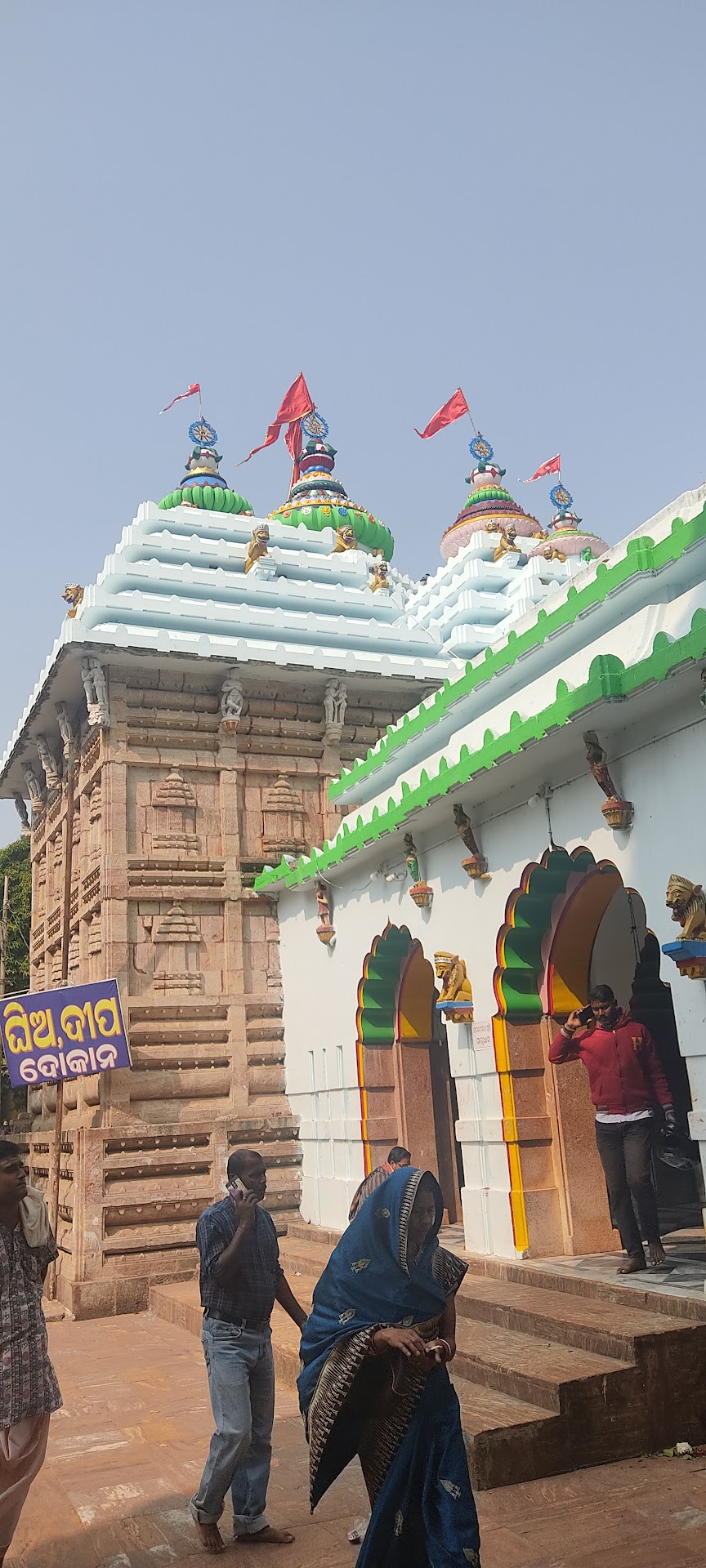
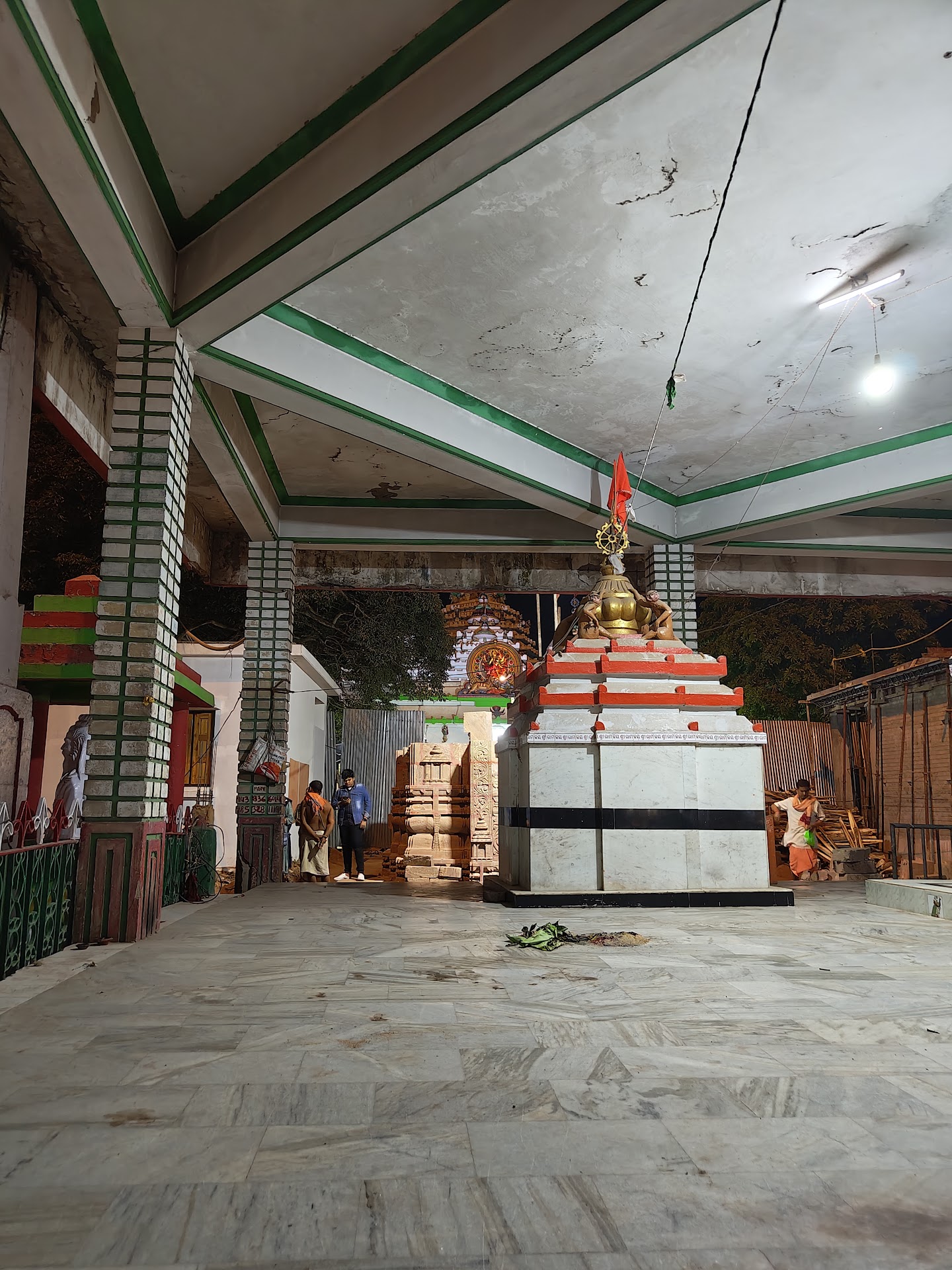
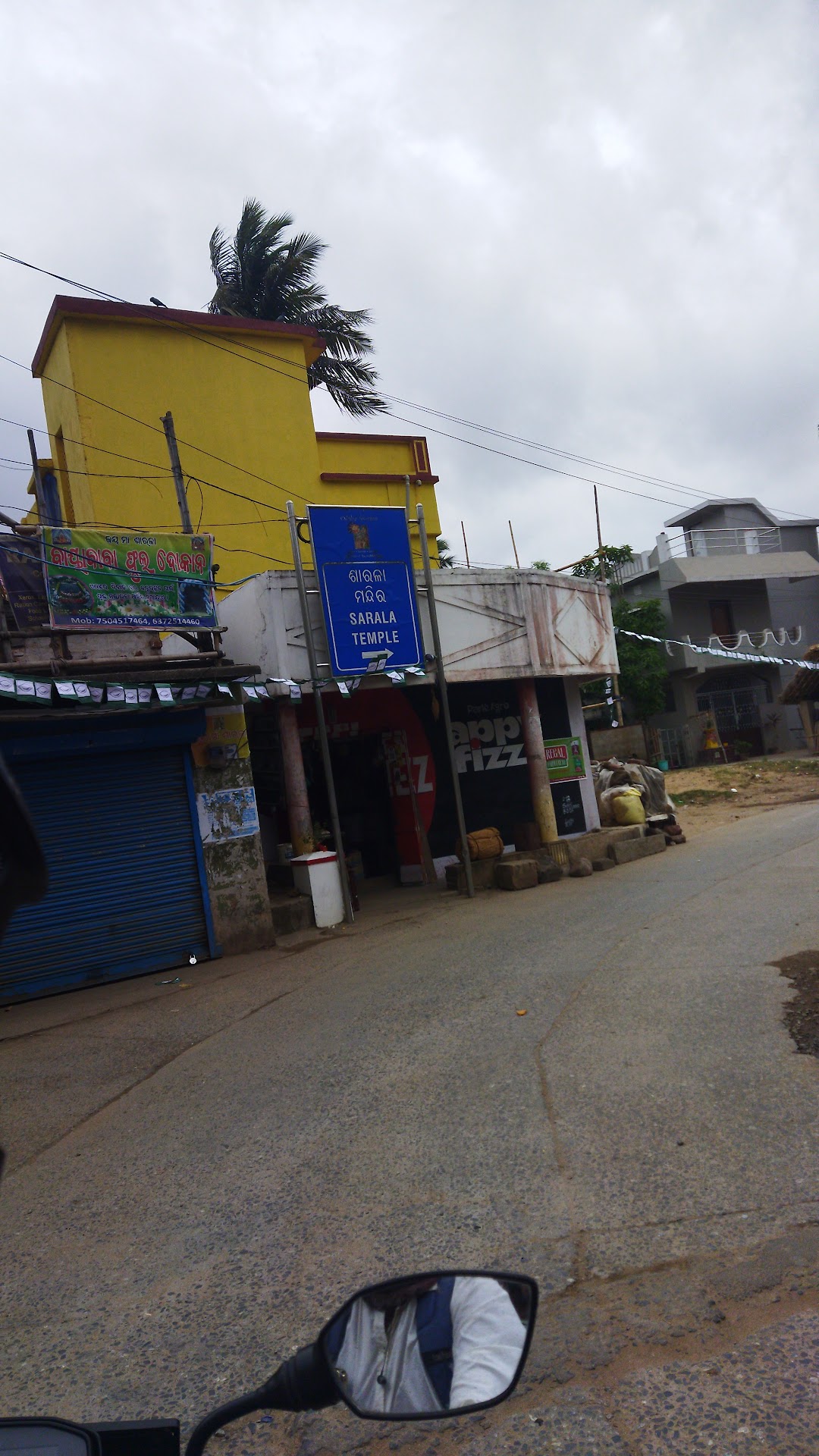
Read moreThe Maa Sarala Temple is a Hindu temple in the district of Jagatsinghpur, Odisha, India. It is one of the eight most famous Shakta shrines of Odisha. In Hindu culture, 'Maa Sarala' is a Goddess who acts as a patron of the followers of Vaishnav and Shakta. It is rare for a single deity to straddle both of these Hindu denominations. She is sometimes suspected to be a Buddhist tantric figure, as she holds a book, Veena and handbell, which are Mahayana symbols. Goddess Sarala is also known as Vak Devi, the Goddess of Knowledge and Wisdom, and Jhankad Vaasini Sharada. Folklore regarding the goddess goes back to thousands of years, to the age of Parashurama. It is said that it was the god Parashurama who carved the goddess with the tip of his arrow. The worship of the Goddess is said to have been popularized in the 15th century CE by Sidheshwar Parida, a small-time farmer and part-time Odia Paika. He was an ardent follower of the Goddess, and later became Sarala Das, the author of the Odia Mahabharata. At many points and on many occasions he calls Goddess Sarala as Durga, Aparna, Parvati, Narayani, Bhavani, Mahalakshmi, Mahakali, Katyayani, Mahasaraswati, Chandi, Ugratara, Bhairavi, Bhagavati, Mangala, Hingula, Tripura, Vasuli, Barati, Maha Yogeswari, Tarini, Ambika, Charchika, Kamala, Parama Vaisnavi and Maheswari etc. The current temple is approximately 500 years old, and was built by the Raja of Manijanga.The remnants of the old temple are not visible, but folklore suggests that it was sited at Badasarol, where a temple to Ganesha now stands. Many festivals are celebrated in the temple, including Parbana, Sharadiya Utsav, Pana Sankranti, Dola Purnima, and Chandan Jatra. The people of the Kendrapara, Jagatsinghpur and Cuttack districts are so attached to the goddess that they make it a point to visit the temple at least once per year. Historical evidence suggests that the original temple was constructed during the Bhauma-Kara in the 8th century. The Goddess Maa Sarala was worshiped in this temple till the end of Hindu rule in 1568 A.D.[citation needed] In 1568 AD the Supreme Commander of the Muslim army Kalapahada of Bengali Sultan Suleman Karani raided the original shrine and partly destroyed the Shakti temple. A hundred years later, during the reign of Moghul emperor Aurangzeb, the old temple was completely destroyed. The ruined temple was renovated in 1982 and is now dedicated to the worship of Lord Ganesh under the patronage of the Sarala...
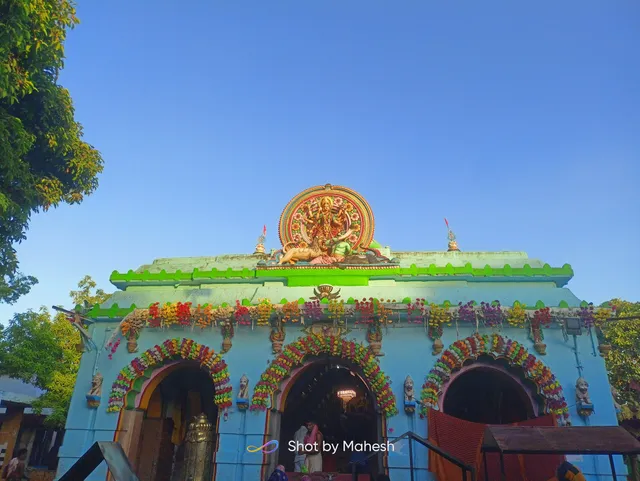
Read moreI and my family went to Maa Sarala Mandir, Jhankada, Odisha with great devotional feelings on 11/10/2016. But the pandits spoiled it all. There was a conflict with the pandits over money issue.
The pandits threatened us if we didn't give Rs. 500, then we won't be able to give our offerings to MAA, one of the pandits challenged us "Puja Kari ke dekhao" (I will see...how you do Puja)and also said "Rajdhani ru asichanti bali sabu jinsa sasta darkar" (since you have come from capital city, you want everything cheap). The other pandit standing at the inner entrance door, held the hand of one of my family member very roughly and shouted abruptly "Paisa naa dele bhituru ku jai paribo ni....au kehi puja karibe ni"(if you don't give money, you won't be allowed inside and no one will do Puja).
We were forced to give Rs. 40/- in the donation plate. After that when one of the blind Pandit agreed to do puja for us, but the other pandit standing at the door shouted that " 500 tanka na dele puja hei paribo ni"(if you don't give Rs. 500 then you won't be allowed to do puja), we refused to give Rs. 500 and stood there for at least 25 minutes but all the pandits were instructed not to offer our prasad to MAA. We ignored them and kept the offerings at Maa's feet and donated Rs. 500 in the hundi but we didn't give it to the pandits.
The pandits are very arrogant, ill-behaved and ready to quarrel with the devotees at any point of time, if their demands are not fulfilled. It really spoils the worshiping feeling within a devotee. . It was a real bad experience.
Is MAA SARALA available only to those devotees who offer money to pandits??? Obviously not...but yes the atmosphere is spoiled due to the Pandits greed!!!!
If these pandits behave with the people of Odisha like this then it is unimaginable how they must be behaving with the tourists. It ultimately hampers the image of Odisha and India on the whole.
I request to make a one point donation at the entrance with receipt to stop this kind of...
Read more