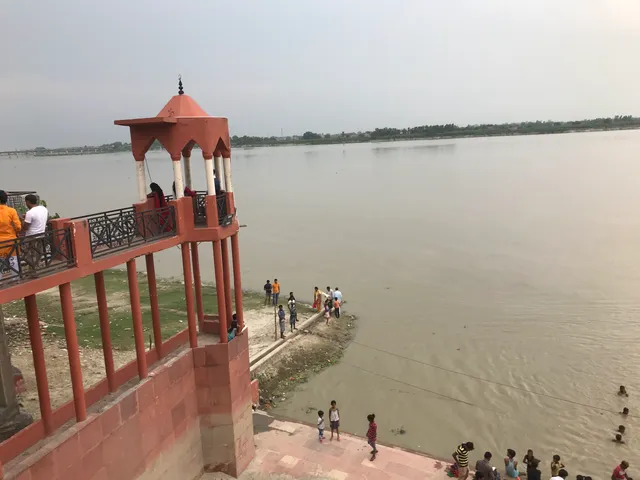
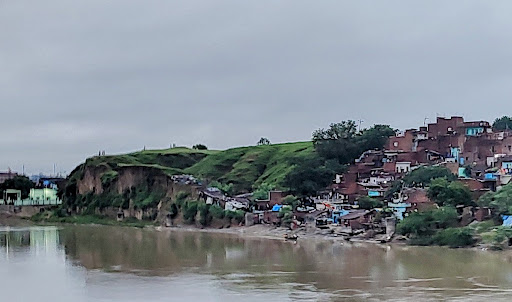
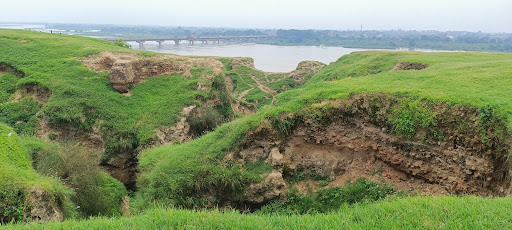
Jajmau fort is one of the oldest forts, now in ruins, located in Kanpur located alongside the river Ganga. Jajmau also known as Jajesmow, is a suburb of Kanpur, and is nicknamed as the Leather Cluster of Kanpur. It is located at a distance of 12 kms from the Kanpur city center.
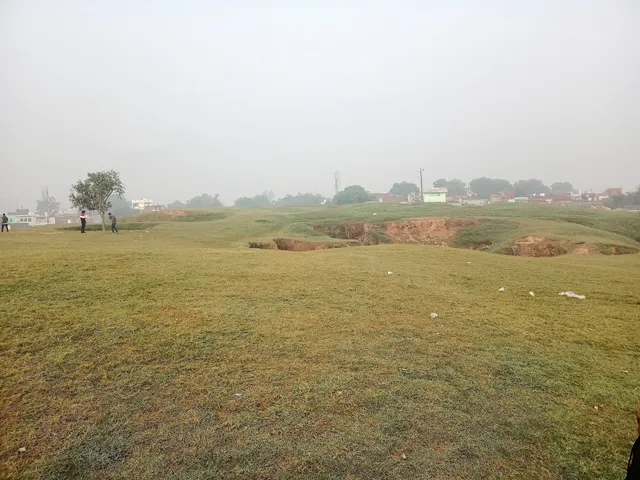
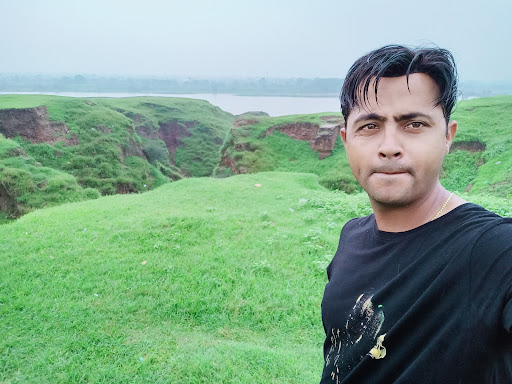
Situated on the banks of river Ganga, the high mound which is over-hanging Ganga is said to be the site of this fort. Once the Jajmau fort stood well depicting the strength of the mighty ruler Yayati, but now the fort has turned to a mound. The King was known for his bravery, and intelligence and some historians have also arrived at the conclusions that a fort of the king, overlooking the Ganges was situated on the high mound. Excavations of the mound undertaken during 1957-58 unearthed antiquities ranging from 600 B. C to 1600 A. D. Jajmau was also known as Siddhapuri in the ancient times and is believed to have been a capital city during the reign of King Yayati. Jajmau houses the temples of Lord Siddhanath and mother Siddha Devi, the mausoleum of Makhdum Shah Ala-ud Haq, the famous Sufi Saint, built by Firoz Shah Tughlaq in 1358 and a mosque built by Kulchin Khan in 1679. The famous Siddhanath temple of Lord Shiva and Siddha Devi temple at Jajmau belongs to the Buddhist period. The Jajmau Fort mound also exposed the existence of pre-Mauryan period after the Mauryan period, Sunga and Kushan, Gupta and Mediaeval. Only the relics of Jajmau fort which had an immense historical significance in the times of King Yayati exist today. Excavations were carried out by the Archaeological Survey of India and the Uttar Pradesh State Archaeology Department in 1956-58 and 1973-78. The excavations led to the recovery of numerous articles like potteries, utensils, and busts. All other excavations have resulted in unearthing various items that throw light and times of later Vedic period and beyond.
There are as such no special events conducted here, but the high mound provides a great place for sightseeing. The Jinnat mosque nearby is a holy place of Khuda where people visit to calm there mind and soul. There is Dargah Shreef Jajmau near the fort where Muslim people can go and other religion if they wish to. The best time to visit the place is in the morning. Visitors can spend approximately 1 to 2 hours here. The place is open 24 hours and is open every day.
The place is great for those people who want to know more about the history of the place. The students who want to know about the history of the place and study the site must visit. People who want a break from their busy lives, and want to enjoy the peace here must visit the Jajmau fort. The best time to visit the Jajmau fort is between 5:30...
Read more
 Learn more insights from Wanderboat AI.