The Doddagaddavalli Lakshmi Devi Temple is a fascinating and lesser-known gem of Hoysala architecture, located about 16 km from Hassan on the Hassan–Belur highway in Karnataka.
⸻
🏛️ History & Significance • Built around 1113–1114 CE, this temple was commissioned by wealthy merchant Kullahana Rahuta and his wife Sahaja Devi, under King Vishnuvardhana’s reign . • It’s one of the earliest known Hoysala temples, predating famous sites like Belur’s Chennakeshava .
⸻
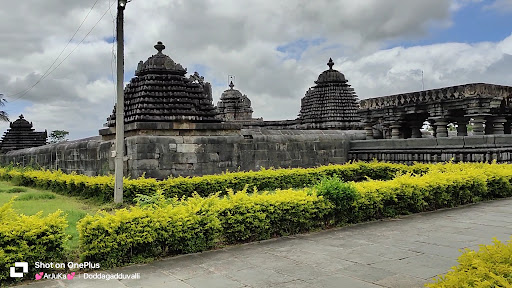
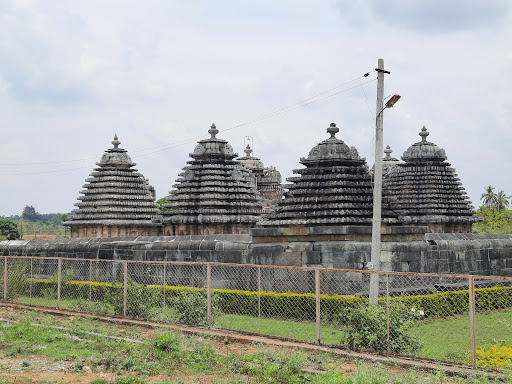
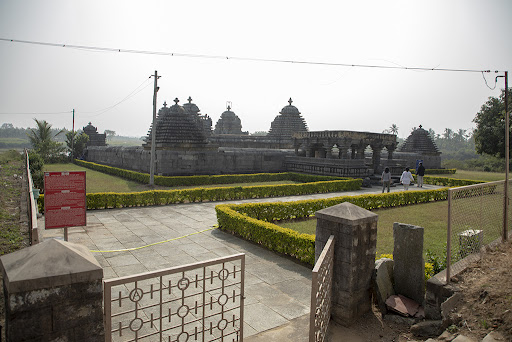
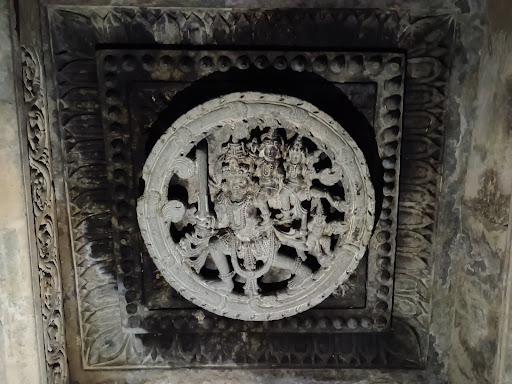
Architectural Highlights • Chatuskuta layout: Features four sanctums (shrines) arranged around a central navaranga (hall), each dedicated to: • East: Mahalakshmi • West: Shiva (Boothanatha Linga) • North: Kali • South: originally Vishnu, now empty due to iconoclasm; later replaced by Bhairava in a separate shrine  . • Unique design elements: • Lacks the typical Hoysala jagati (star-shaped platform)  . • Surrounded by a 7-ft stone prakara wall, with shrines at each corner and an independent Bhairava shrine—totaling nine towers . • Three-tiered Kadamba-Nagara style shikharas, with stepped pyramidal towers on three shrines and a more ornate east tower . • Lathe-turned pillars support beautiful carved ceilings depicting the Ashta-dikpalakas, lotuses, and a central Tandaveshwara (dancing Shiva) panel . • Outer walls feature decorative miniature towers (aedicula) instead of the typical narrative friezes; base mouldings and a single eave surround the structure .
⸻
Sculptural & Iconographic Details • The east shrine houses a 3-ft standing idol of Lakshmi with four arms holding a conch, discus, rosary, and mace—similar in style to the Mahalakshmi idol from Kolhapur, Maharashtra . • Guardian figures: Sculptural betala figures flank entrances, along with snakes (naga) maidens—rare in Hoysala temples . • Lintel panels: Includes Gajalakshmi, Yoga-Narasimha, and Tandaveshwara motifs above respective shrine doorways . • Hoysala emblem (Sala slaying the tiger) adorns all temple towers, including corner shrines .
⸻
Visitor Info • Live temple: Daily puja is carried out by priests; ASI maintains the site . • Timings: Typically open 6 AM–6 PM (some say 9:30 AM–6 PM); entry is free . • Access: Best reached via private car or taxi from Hassan. Nearest rail is Hassan; no airport. On-site amenities are minimal—carry water and snacks . • Best time to visit: October to February for pleasant weather .
⸻
Why Visit? • A quiet, offbeat Hoysala experience: Here you can absorb the architecture without crowds—a refreshing contrast to Belur and Halebidu . • Architectural evolution: As one of the earliest Hoysala temples, it shows experimentation with design that later matured at Belur and Halebidu. • Spiritual richness: Hosts multiple deities—Vaishnava and Shaiva—under one roof, a rarity in Hoysala design  .
In Summary
This early 12th-century temple is a rare chatuskuta Hoysala masterpiece—historically significant, architecturally unique, and spiritually enriching. Its serene rural setting, modest crowds, and rich iconography make it a must-visit for anyone exploring Hoysala heritage beyond...
Read moreVisiting the Ancient Hoysala Shri Doddagaddavalli Lakshmi Devi Temple is like stepping into a living chapter of India’s architectural and spiritual heritage. Nestled in the serene village of Doddagaddavalli in Karnataka’s Hassan district, this temple is a hidden gem that radiates timeless beauty and tranquility. Built in 1113 CE by the merchant Kullahana Rahuta and his wife Sahaja Devi during the reign of King Vishnuvardhana, it stands as one of the earliest known examples of Hoysala architecture.
What makes this temple truly special is its unique layout. Unlike most Hoysala temples, which are built on raised platforms and adorned with elaborate carvings, the Lakshmi Devi Temple is refreshingly simple yet profoundly elegant. It features a rare chatushkuta design—four shrines sharing a common hall—each aligned to a cardinal direction. The eastern shrine is dedicated to Goddess Lakshmi, the northern to Kali, the western to Shiva, and the southern shrine, once devoted to Vishnu, now stands empty. This arrangement reflects a harmonious blend of Shaiva, Vaishnava, and Shakta traditions, making it a spiritual confluence of divine energies.
The temple’s architecture is a fascinating mix of Kadamba and Dravidian styles. Its pyramidal Nagara-style towers, likely influenced by northern Indian design, rise gracefully above the sanctums, creating a striking silhouette against the sky. The use of soapstone gives the structure a soft, earthy texture that complements the surrounding landscape of coconut groves and a tranquil lake. The absence of ornate sculptures allows visitors to focus on the purity of form and the spiritual ambiance that envelops the complex.
Walking through the temple grounds, one can’t help but feel a deep sense of peace. The quietude of the village, the gentle rustling of leaves, and the soft chants from the temple priest during pooja ceremonies create an atmosphere that is both meditative and uplifting. It’s a place where time slows down, inviting reflection and reverence.
Accessibility is another plus. Located just a short drive from Hassan, the temple is perfect for a day trip. Whether you’re a history enthusiast, a spiritual seeker, or simply someone looking to escape the bustle of modern life, the Lakshmi Devi Temple offers a rare blend of cultural richness and natural serenity.
In every sense, the Ancient Hoysala Shri Doddagaddavalli Lakshmi Devi Temple is a treasure. It’s not just a monument—it’s a soulful experience that leaves you with a deeper appreciation for India’s artistic legacy and spiritual depth. A visit here is not just recommended; it’s...
Read moreA different kind of adrenalin rush was going through , when we set ourselves to visit this Unique temple. On the same route to Belur , possibly 15 kms away from Hassan, stands this Majestic temple for past 900 years . Very different and unique four shrined - chatuskuta construction with vimanas in the kadamba architecture style. This temple possibly was one of earliest one to be constructed in 1114 a.d .The temple was commissioned by a merchant called Kullahana Rahuta and his wife Sahaja Devi. Another unusual feature of the temple is the existence of four more minor shrines at each corner of the temple complex with two sides of each shrine attached to the courtyard wall. Each of these minor shrines has its own tower, kalasa and Hoysala emblem. In all, the temple complex has nine towers which is unusual for a Hoysala temple.
The Lakshmi Devi temple here is situated in a courtyard, enclosed by a seven-feet-high stone wall. The temple has two main entrances - one facing east and the other facing west. Some of the main attractions of the temple here are the four small shrines surmounted by stone towers and the Hoysala crests found at the corners of the enclosure. This consortium of stone towers are constructed on the lines of Kadamba Naagara style, resembling pyramids from one end, and the mantapa in the front is supported by 18 carved pillars.
Although this temple is not built on a star-shaped, three feet platform, which is usually the case with the Hoysala style of construction, it is resplendent in the unique architectural style of the Hoysala period. The main garbagriha (sanctorum) of this temple has the presiding Goddess Lakshmi Devi, beautifully sculptured, with an attendant on either side. The four hands of the goddess are finely done, with a conch in the upper right hand, a discuss (chakra) in the upper left hand, a rosary in the lower right hand and a mace in the lower left hand.
This rare quadruple-shaped temple consists of four garbagrihas facing north, south, east and west, with idols of Kali, Vishnu, Lakshmi and Bootha-natha Linga, respectively. The square-shaped navaranga has seven artistically-executed ceilings, projecting circular panels. The central ceiling has a circular panel in the middle with the beautiful Tandaveshwara. The ceilings are equally very interesting and amazing ones , away from the other Hoysala temples .
One of the main attractions of the temple are the elegantly carved betalas, situated in the vestibule (sukanasi) of the eight-handed...
Read more