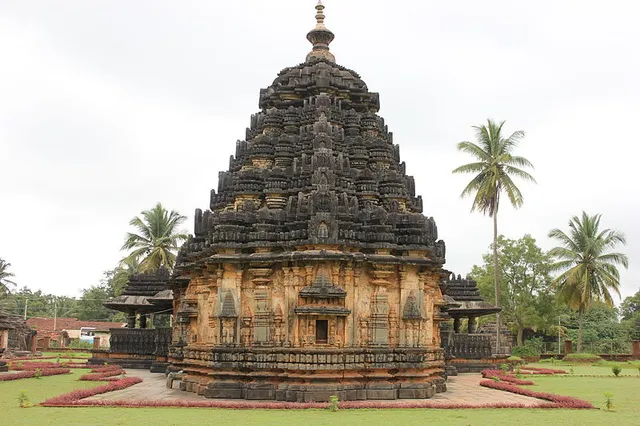
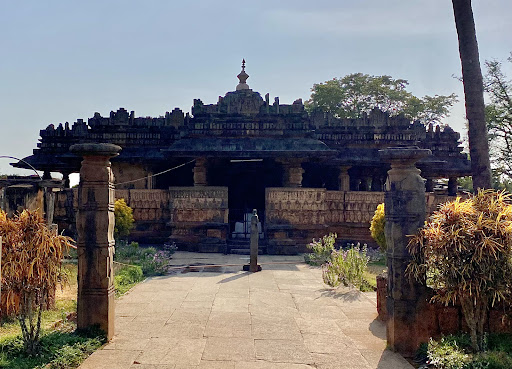
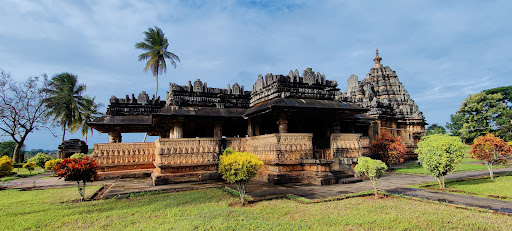
Great place to know the history. The temple has a single square shaped shrine (garbhagriha) with an east–west orientation, a vestibule that connects the sanctum (cella or vimana) to the main large open hall (mukhamantapa) that has a staggered square plan and can be entered from five sides;two lateral and one each in the north, south and east. The walls of the shrine and vestibule stand on a base (adisthana) that is composed of five moldings. The superstructure over the sanctum is four-tiered (chatustala arpita). It is crowned by a large domed roof that looks like a "helmet" (amalaka) and whose shape follows the shape of the shrine (square in this case). The "helmet" is the largest sculptural piece in the temple, it is beautifully carved and well decorated. Atop the dome is a beautiful water-pot like stone structure that forms the pinnacle of the tower. In case of those temples where the original pinnacle is lost, a metallic structure is normally used as a replacement. The tower over the vestibule (sukanasior "nose), which is actually a protrusion of the main tower, faces east.The open mantapa is large and its ceiling is supported by massive lathe-turned circular pillars. The relief work in the central panel of the hall ceiling is particularly noteworthy and the overall preservation of the...
Read moreAncient Kaitabeshwara Temple in Kubatturu, it was an unforgettable experience. The temple's serene ambiance and ancient architecture transport you to a different era. The intricate carvings and detailed craftsmanship are a testament to the skill of the artisans of that time. The temple grounds are well-maintained, and the surrounding natural beauty adds to the charm. Whether you're a history buff or seeking spiritual solace, this temple is a must-visit destination. Highly recommend paying a visit and immersing yourself in its rich cultural heritage. Lord Shiva, the primary deity of this temple, was referred to as Kotishvara or Kotinatha, as evident from the inscriptions within the temple. The place where the temple is located, Kubatur, has been known by different names over time, including Kuppattur, Kuntala Nagara, and Kotipura, as mentioned in these inscriptions. Furthermore, Kubatur emerged as a significant center for the Kalamukha sect during the 11th century CE. This historical and religious context provides valuable insights into the temple’s cultural and spiritual significance in the region during that...
Read moreThe Kaitabheshvara temple (also spelt Kaitabhesvara or Kaitabheshwara, known also as Kotisvara) is located in the town of Kubatur (also spelt Kubattur or Kuppattur, and called Kuntalanagara or Kotipura in ancient inscriptions), near Anavatti in the Shimoga district of Karnataka state, India. The temple was constructed during the reign of Hoysala King Vinayaditya around 1100 AD. The Hoysala ruling family was during this time a powerful feudatory of the imperial Western Chalukya Empire ruled by King Vikramaditya VI. According to the Archaeological Survey of India, the architectural signature of the temple is mainly “Chalukyan”. Art historian Adam Hardy classifies the style involved in the construction of the temple as “Later Chalukya, non mainstream, far end of spectrum”. The building material used is soapstone.
The temple is protected as a monument of national importance by the Archaeological Survey of India.
Today the two temples are in Karnataka and approximately twenty kilometres apart- one is in Banavasi and the other is...
Read more