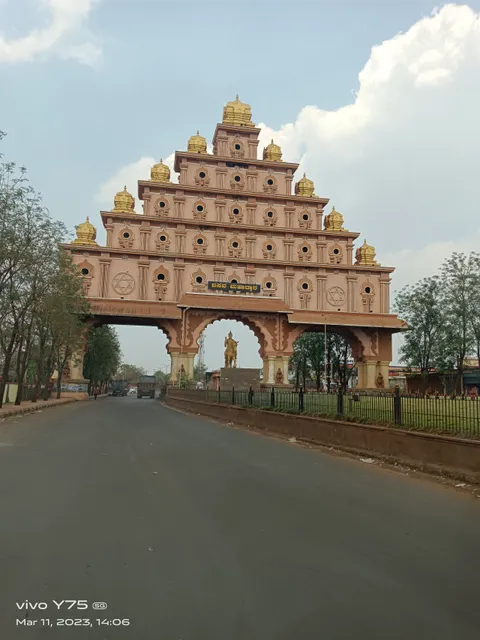
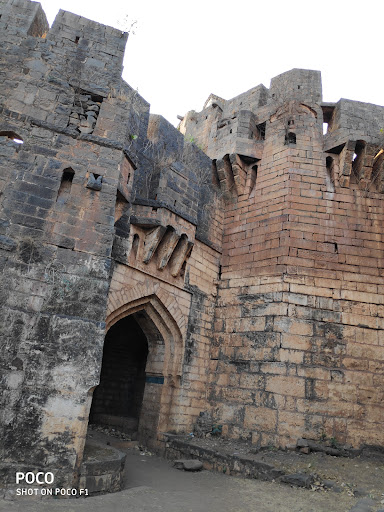
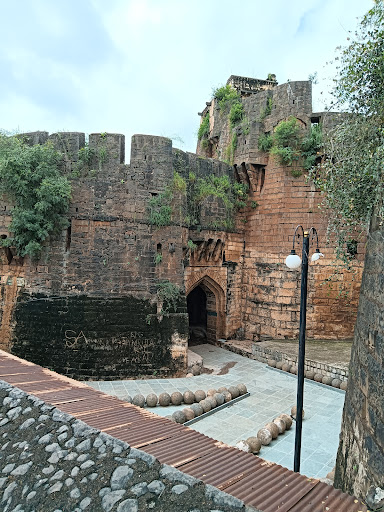
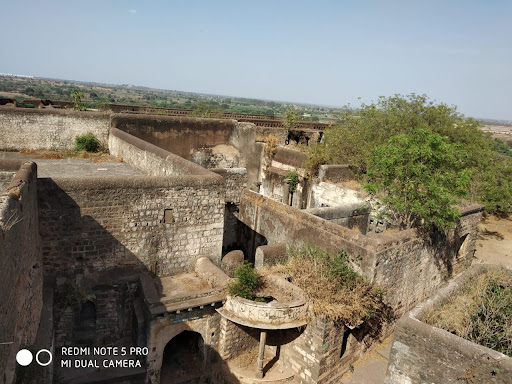
Basavakalyana fort, earlier known as Kalyana fort is located in Bidar district in the Indian state of Karnataka. Its historic importance is dated to the 10th century. The capital of Chalukyas was also shifted from Manyakheta to Kalyana in the 10th century. The fort, integral to the Basavakalyana town, is also famous as Karmabhoomi of Basavanna (founder of Lingayatha community) and hundreds of other Sharanas (saints of Lingayatha community)
Basavakalyana (known in the history as Kalyana) with its fort was the centre of a great social and religious movement, in the 12th century, because of Basaveshwara, the social reformer. It became a seat of learning. Basaveshwara, Akka Mahadevi, Channabasavanna, Siddarama and many more Sharanas are associated with Basavakalyana. Basaveshwara, in particular, fought against casteism and orthodoxy in Hinduism.
[History]
The later Chalukyas, under Tailapa II (973–997 CE), defeated the Rashtrakutas. They established their capital at Kalyana, now renamed officially after Indian independence in 1947, as Basavakalyana in Bidar district. During the Kalyana Chalukya's reign of Taila II itself, the fort was constructed in 973 by Nalaraja. Inscriptions at the fort ascribe to this fact.
Basavakalyana, with its fort as its headquarters, was the royal capital of the Western Chalukya (Kalyani Chalukya) dynasty from 1050 to 1195. Someshvara I (1041–1068) made Kalyana as his capital, recognised as Kalyani Chalukyas to differentiate with Badami Chalukyas. Later it was ruled by Someshvara II, Vikramaditya VI, Someshvara III, Jagadeka Malla III and Tailapa III. During 10th-12th centuries, this dynasty controlled nearly half of India.[citation needed] Subsequent rulers such as Kalachuri dynasty, Yadavas, Gayasuddin Khilji, Muhammad bin Tughlaq, Sultan of Bidar, Bijapur Sultans, Sultan of Ahmadnagar, the Vijayanagar Empire, the Mughals, and the Nizams controlled the fort and refurbished it.
In fact, the Bijjala Deva (1130–1167) of the Kalachuri dynasty who was feudatory Chief of the Chalukyas from 1156 to 1168, overthrew the Tailapa III of the Chalukya Kingdom, killed the ruler and his entire Chalukya family,[citation needed] and ruled for a short spell of 5 years, from 1163–1167, over the entire Deccan and Kalinga. He shifted his capital from Mangaliveda (Mangalavada) to Kalyani and made it his new capital. He abdicated in 1167 in favour of his son Sovideva, but was murdered later in 1168. Bijjala was a Jain but is said to have patronized and favored spread of Virashaivism - a new religious belief started by Basaveshwara. Basaveshwara also became the powerful Prime Minister under Bijjala and used his authority to spread his religious philosophy. Kalachuri's rule was short-lived and Chalukays regained their kingdom, though for a short time.
In 1310, the fort was attacked by Mallil Kafur during his southern invasion. In the 16th century, Vijayanagar Emperor Rama Raya (1484–1565) traced his ancestry with the past Chalukyan Kingdom (974–1190) and also with this dynasty's capital, Kalyana. He was also called the ‘Lord of Kalyana’, apart from being known as the "Chalukyan Emperor". He had aligned with different Muslim rulers of the Deccan during his reign to have a symbolic control of the Kalyan fort. In 1543, he defeated the Sultan of Bidar and gave control of the fort to Sultan of Bijapur. In 1549, when equations changed, he allied with Sultan of Ahmadnagar and attacked the Kalyana fort and gave its control to his ally. However, in 1558, after the death of Bijapur Sultan, his son Adil Shah I forged friendship with Rama Raya and defeated the Sultan of Ahmadnagar. Raya had set three conditions of surrender to the defeated Sultan of Ahmadnagar, one was that the Sultan would meet him in his tent and accept paan (combination of betel not and betel leaf), the second was that the Sultan's general would be executed and the third was to hand over the key of Kalyana fort to him personally. All three conditions were met. The key to the Kalyana fort was handed over by the Hussain of Ahmadnagar formally to...
Read more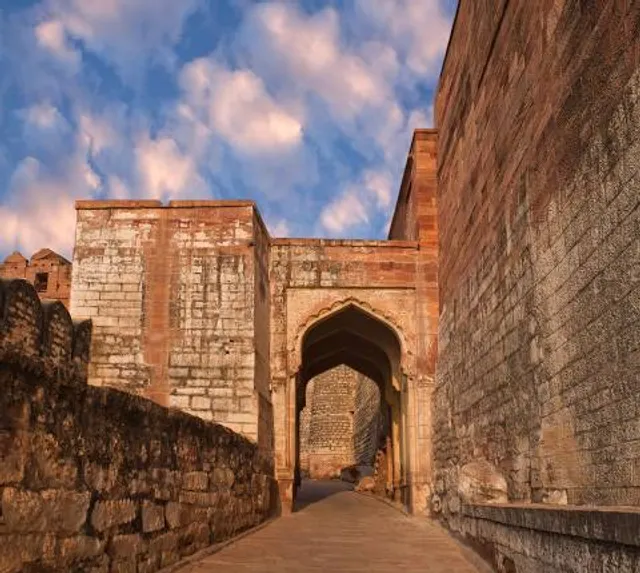
 Learn more insights from Wanderboat AI.