MythologyEdit
Chandravalli (moon shaped) was known as Chandanavati, name attributed to the king as this place was once ruled by Chandrahasa (king of Kuntala).
Chandravalli cave templeEdit
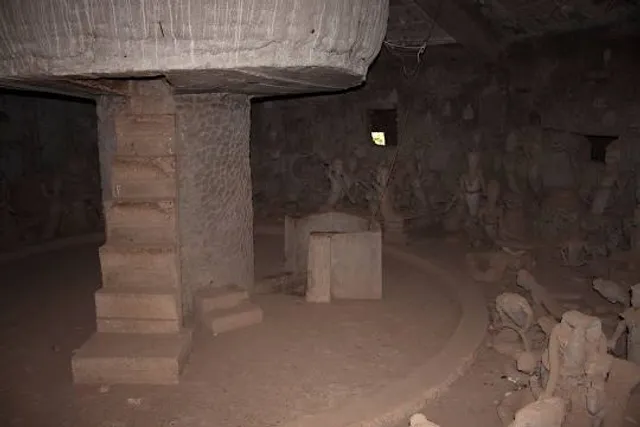
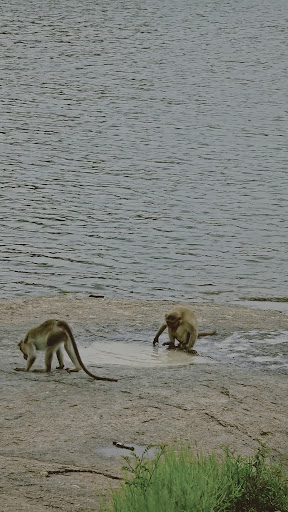
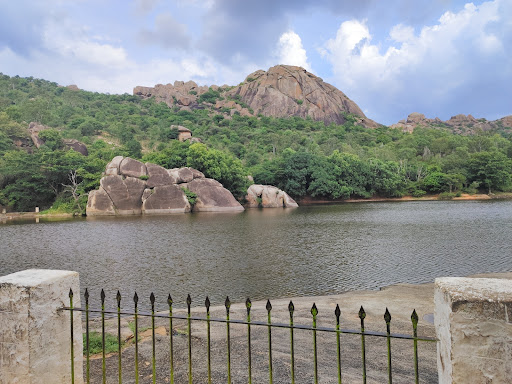
The Chandravalli cave temple (also known as the Ankali Mutt - Saints from Ankalagi (Belgaum) came here for meditation)5] is semilunar in shape located between two giant monolithic rocks, a pre-historic site is about three km from Chitradurga. There is a lake which is adds the importance to cave temple.
HistoryEdit
At Chandravalli there is a rock inscription of the first Kannada dynasty Kadambas founder Mayurasharma (450 CE) found in the Bhairaweshwara temple.
Pre-historic periodEdit
Chandravalli is pre-historic archaeological site, historians found painted pottery and coins from the pre-historic and Shatavahana period and found that the human habitation existed during the Iron Age.
Excavation historyEdit
In 1909 B L Rice, R Narasimhachar and R Shamashastry carried out the excavation work at Chandravalli. During 1929-30 M H Krishna did the significant contribution.[6]
Chandravalli was first excavated by R. Narasimhachar who was the Director of Department of Archaeology and Museums of the Mysore state.[2 Further excavations were carried out by H. M. Krishna in 1928-29 and finally by Mortimer Wheeler under the guidance of the Archaeological Survey of India in 1947.[2]
Findings
Two distinct periods; megalithic and Satavahana were noticed during the excavations. It was found that Chandravalli was inhabited from Iron Age onwards. The inscriptions found in the nearby hillocks belonged to the Chalukya and Hoysala period, with one belonging to the king Mayurasharma, the founder of the Kadamba dynasty.[2]
General layout
The total measurement of the site excavated was 730 m × 730 m, and the general layout of the site contained a housing complex with walls of bricks, covered stone drains, red-gravel rammed floors and fireplaces made of bricks.[2] It was also a mortuary site.[3]
Earthen ware
The earthen ware found included megalithic pottery, painted vessels coated by a russet coloured wash (Russet-coated painted ware), red and black coloured ware as well as rouletted ware.[2] The paintings on these wares were linear and geometric and consisted of criss-cross, dotted lines, hatched triangles and other patterns. The shapes of these wares were vessels with funnel-shaped lid, carinated bowls, three-legged vessels and other forms.[2]
Coins
Coins of the following Indian kings were found: Krishnaraja Wodeyar III of Mysore, Krishnadevaraya of Vijayanagar, various Satavahana kings and Viraraya of Hoysala kingdom. Among the foreign coins found were denarii of Augustus Caesar and a coin of the Chinese Han dynasty Emperor Wu Ti.[2]
Other objects
Other objects found included neoliths, a cist with a skeleton in it, pots containing bones and teeth of animals and a Roman bulla. One of the cists also appeared to contain the legs of...
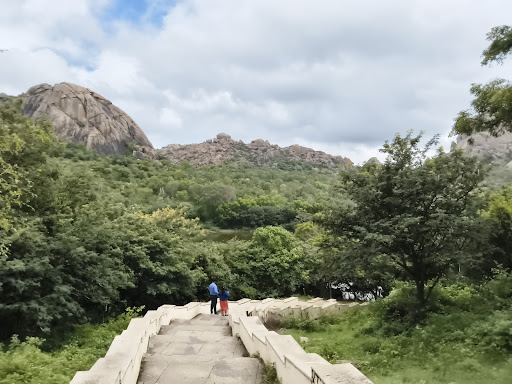
Read moreChandravalli cave temple is about 3 kms from Chitradurga. This pre-historic site, which is semilunar in shape is located between 3 hills, Chitradurga, Cholagudda and Kirubanakallu. Excavations here have shown that this place was inhabited since Iron Age. Surrounded by hills with a lake in the middle, makes it a perfect picture.The cave is between two giant single rocks. One of these rocks also used for rock climbing. It is also called Ankali matt. It is named so because saints from Ankalagi, in Belgaum, came and meditated here. Apart from its religious importance the cave offers many hair rising stories. The whole cave looks like a well maintained accommodation for Sadhus of yesteryears. You cannot feel, in any stage that you are going down the earth. This is the cave where you can pass every entrance with your head straighten up, except for a few places. Surprisingly breeze welcomes you in the cave though a ray of light is rare to see. There are corridors to ensure the ventilation in the caves and you wonder at the amazing engineering that was done under huge boulders about 120 ft high, which is standing the test of time even today after couple of millenniums. These are underground caves where one gets around 80 feet down from ground level. Better to reach out to this place with a guide as you can easily get lost inside the caves, which has a different exit route. Completely dark at any time of the day, one has to carry a source of light like torch or candle while exploring the place. Caves though dark have outlets for ventilation and comprises of anything a math could have like a place of worship with Shiva linga, visitor room, rooms for Sadhus, shelves to keep belongings, carvings and paintings on the walls. Historians claim that it is an ancient archaeological site. They found painted pottery and coins from the Shatavahana empire and pre historic period. There is also a rock inscription of king Mayurasharma, the founder of first Kannada dynasty Kadambas, dated back to 450 CE. The rock inscription can be traced in Bhairaweshwara temple which Chandravalli houses. It is said that cave was used as place for doing Samadhi by saints. The stone carvings indicate both the Hindu and the Buddhist influence. The paintings have been done using the vegetable colours and those colors are...
Read moreChandravalli, located near Chitradurga in Karnataka, India, is a significant archaeological site that offers a captivating glimpse into ancient civilizations. This semi-arid valley, bordered by the Chitradurga, Kirabanakallu, and Jolagudda hills, has been a focal point for excavations revealing artifacts from various historical periods. 
Archaeological Significance:
Excavations at Chandravalli have unearthed a diverse array of artifacts, including earthen pots, painted bowls, and coins from Indian dynasties such as the Satavahanas, Hoysalas, and Vijayanagar. Notably, foreign coins like Roman denarii of Emperor Augustus Caesar and a coin from the Chinese Han dynasty’s Emperor Wu Ti have been discovered, indicating ancient trade links.  
Chandravalli Cave Complex:
Adjacent to the archaeological site is the Chandravalli cave temple, also known as Ankali Mutt. This semi-lunar shaped cave, nestled between two massive monolithic rocks, has historical significance dating back to the Iron Age. The cave’s intricate network of passages and chambers offers a unique exploration experience. Visitors are advised to carry torches and consider hiring local guides to navigate the dark and complex interiors safely.  
Visitor Experience:
The serene environment surrounding Chandravalli, complemented by a nearby lake and forested areas, enhances its appeal. It’s an ideal spot for history enthusiasts and nature lovers alike. However, some visitors have noted the absence of official guides and recommend reading up on the site’s history beforehand to fully appreciate its significance. 
Conservation Concerns:
The maintenance of the Chandravalli cave complex has faced challenges, especially with the managing authority encountering legal issues. Guides have taken personal initiatives to keep the area clean, but additional support from archaeological departments or state authorities would greatly benefit the preservation of this cultural monument. 
Conclusion:
Chandravalli stands as a testament to India’s rich historical tapestry, offering visitors an immersive journey into the past. While the site provides a unique blend of archaeological intrigue and natural beauty, potential visitors should be mindful of the current maintenance challenges and plan their visit...
Read more