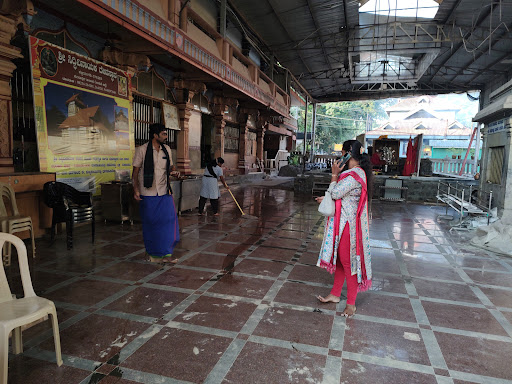
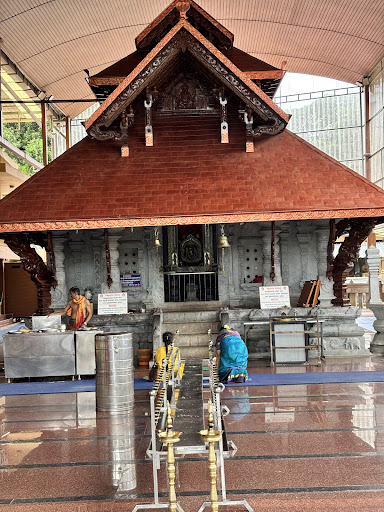
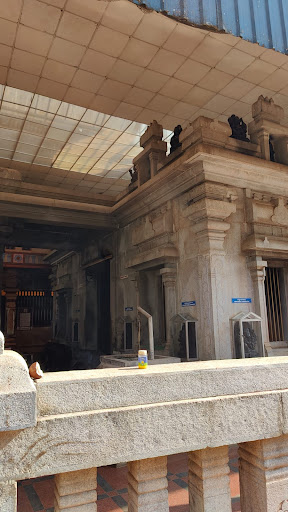
The eighth century Sri Siddhivinayaka Temple at Hattiyangadi in Kundapur taluk is a historical and well-known pilgrimage centre for Hindus of the coast. Hattiyangadi (Pattinagara) was the capital of Alupa Kings, who ruled the Tulunadu during seventh and eighth centuries. They had close ties with some other Jain cities such as Purigere (Lakshmeeshwara) and Hombuja (Humcha). Later Hoysala and Honnekambala Kings ruled Hattiyangadi, which was also known as Goshtipura, as it hosted a number of intellectual debates.Hattiangadi, about 8 kms to the the northeast of Kundapur, which is famous for the ancient Siddhi Vinayaka Temple, also houses many other ancient Temples and Jaina Basadis. Gopalakrishna, Lokanatheshwara, Maraladevi, Shankaranarayan, Shivamunishwara, Ekantheshwara and Shaktharabrahma Temples are found here.Hattiyangadi, which was once a capital of Alupa Kings, is now a small village. But it has still managed to retain its attraction with lush green mountains on one side and the curvaceous Varahi River on the other. On the bank of the river there is a spot called Aramane Adi, which earlier housed a palace. At an elevated spot nearby is the Chandranatha Basadi and behind it is the Jattiraya’s Temple. It was a sacred place for the meditation of Sri Govindarama Yathivarya (Saint) during 16th century. The Saint blessed his disciple and the then Temple priest Rama Bhatta, who later cultivated a number of poetic works and got the reputation as Kavi (poet) Rama. The saint had also predicted that the Temple would become famous worldwide during next three hundred years. What a true prediction it was! Now, the Temple is attracting a number of devotees from all parts of the world.Hattiangadi is well known for its Siddivinayaka Temple, which is supposed to have been constructed around the seventh or eighth century. The Lord Ganapathi Temple is situated on the bank of River Varahi. It is the only Temple in India, where the idol of Lord Vinayaka sports a jata-hair. The idol itself is carved of a Saligrama stone and is 2.5 feet high and Vinayaka’s curly hair is left loose at the back. The trunk is bent towards the left.It is believed that the idol may be in standing posture. The deity’s right hand is situated inside the basement and holds a vessel full of Modakas in...
Read morepoojas such as Ashtadravyathmaka Ganahavana and Thrikala Pooja every day.
The renovated Temple was inaugurated in 1980 by the then Chief Minister of Karnataka Devaraj Arasu. The Temple was once again renovated and was built in granites in 1997. Thirty-two Ganapathi idols as explained in Mudgala Purana were also installed in the Temple premises. A Navagraha Mandir was also added. A concrete tower has been established on Tallur Vandse Highway to welcome the devotees coming to Hattiyangadi Siddhivinayaka Temple. The Temple is running the Central Gurukula English Medium residential school, which is intending to impart quality education.
The management is also developing the Varahi Thapovana (herbal plantation) at a cost of Rs one crore. This also includes Navagraha Vana, Rashivana, Nakshathravana Saptharshivana and
Panchayathanavana as explained in Hindu Holy books. Thapovana covers a guesthouse, Guru Kuteera, fountain and other light and sound equipment intending to entertain visitors.
Managing trustee of the Temple Sri Ramachandra Bhat has put great efforts in developing the Temple as a perfect Hindu pilgrimage. The Temple was provided with all basic amenities including an approach road. The devotees coming from far are provided free food at Sri Balchandra Prasada the Temple-dining hall that accommodates 400-500 people at one sitting. On the top floor are the Pravachana Mandir and Sabhagruha. The Temple has well-equipped lodges, choultry, seminar hall, Yaga Shala. Goshala (cowshed), and Kalyana Mantapa for the benefit of the devotees.
The Temple also houses the Siddivinayaka School of ancient scriptures, where students are given free accommodation, food, clothes and education. Various developmental activities are conducted with help of the money received in charity. Various cultural activities are held throughout the year along with state-level Yakshagana Kammata-workshop, study and demonstration of medicinal herbs and shrubs, agricultural and...
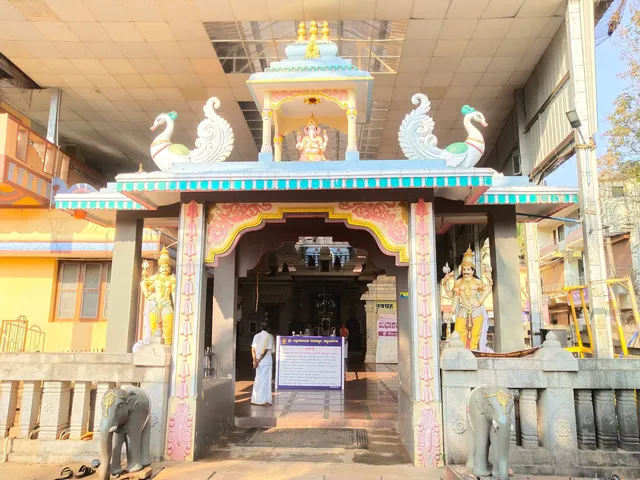
Read moreThe Hattiangadi Sri Siddhivinayaka Temple in Karnataka is an ancient Ganesha temple, believed to be from the 7th or 8th century, known for its unique Saligrama idol with jata-hair (curly hair). Located in the village of Hattiangadi, near Kundapura, it is a significant pilgrimage site where devotees believe wishes are granted by the Lord. The temple's most sacred ritual involves arecanut flowers,which are believed to fall from the deity's crown during the aarti as a sign of wish fulfillment. The main idol of Lord Vinayaka is carved from a black Saligrama stone and is the only one in India with loose jata-hair. The temple dates back to the 7th or 8th century, when Hattiangadi was the capital of the Alupa kings. The temple is named "Siddhi Vinayaka," meaning "giver of all accomplishments and success," and devotees perform special poojas to have their wishes granted. A unique and sacred ritual is the offering of arecanut flowers at the crown of the deity, which fall during the aarti, signifying the acceptance of a devotee's prayer. The temple is situated in Hattiangadi, a village in the Kundapura taluk of Udupi district, Karnataka. It is a prominent pilgrimage center, attracting devotees from all over the world, The site was once a sacred place for the meditation of Saint Sri Govindarama Yathivarya in the 16th century. You can find more details and contact information on the official temple website. The temple offers facilities for devotees, including restrooms and free meals, and has a residential school and an...
Read more