HTML SitemapExplore
logo
Find Things to DoFind The Best Restaurants

Kittur Fort — Attraction in Karnataka

Name
Kittur Fort
Description
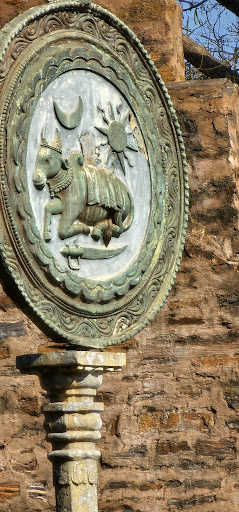
Kittur is a fort located in the Karnataka state of India, it is the former capital of a minor principality as well as a major archaeological site.
Nearby attractions
Nearby restaurants
Nearby hotels
Related posts
Keywords
Kittur Fort tourism.Kittur Fort hotels.Kittur Fort bed and breakfast. flights to Kittur Fort.Kittur Fort attractions.Kittur Fort restaurants.Kittur Fort travel.Kittur Fort travel guide.Kittur Fort travel blog.Kittur Fort pictures.Kittur Fort photos.Kittur Fort travel tips.Kittur Fort maps.Kittur Fort things to do.
Kittur Fort things to do, attractions, restaurants, events info and trip planning
Kittur Fort
IndiaKarnatakaKittur Fort

Basic Info

Kittur Fort

JQ2R+FHV, Kittur Fort Rd, Kittur, Karnataka 591115, India
4.3(2.2K)
Closed
Save
spot

Ratings & Description

Info

Kittur is a fort located in the Karnataka state of India, it is the former capital of a minor principality as well as a major archaeological site.

Cultural
Outdoor
Family friendly
attractions: , restaurants:
logoLearn more insights from Wanderboat AI.
Phone
+91 80 2235 2828
Open hoursSee all hours
MonClosedClosed

Plan your stay

hotel
Pet-friendly Hotels in Karnataka
Find a cozy hotel nearby and make it a full experience.
hotel
Affordable Hotels in Karnataka
Find a cozy hotel nearby and make it a full experience.
hotel
The Coolest Hotels You Haven't Heard Of (Yet)
Find a cozy hotel nearby and make it a full experience.
hotel
Trending Stays Worth the Hype in Karnataka
Find a cozy hotel nearby and make it a full experience.

Reviews

Get the Appoverlay
Get the AppOne tap to find yournext favorite spots!
Wanderboat LogoWanderboat

Your everyday Al companion for getaway ideas

CompanyAbout Us
InformationAI Trip PlannerSitemap
SocialXInstagramTiktokLinkedin
LegalTerms of ServicePrivacy Policy

Get the app

© 2025 Wanderboat. All rights reserved.
logo

Reviews of Kittur Fort

4.3
(2,181)
avatar
5.0
2y


Menu


Home  Hinduism History  Heroes of Bharatiya War of Independence  Kittur Rani Chennamma : Earliest ruler to fight British rule

Kittur Rani Chennamma : Earliest ruler to fight British rule


Rani Chennamma : Valiant Queen who fought against British

“She did not step back looking at the mighty army of British, but fought with great vigour, expertise skill and courage.”

Index

Introduction of Rani Chennamma

Early Life of Rani Chennamma

Rani Chennamma during British Rule

War against the British

Introduction of Rani Chennamma

Rani Chennamma was the first woman independence activist of Bharat. She stood all alone with a vibrant fiery eye against the British Empire. Rani Chennamma did not succeed in driving them away, but she did provoke many women to rise against the British rule. She was Chennamma Queen of the princely state Kittur in Karnataka. Today she is well known as Kittur Rani Chennamma. Let us take a few steps back in history to know more about her.

Early Life

Rani Chennamma was born in Kakati (a small village in north of Belgaum in Karnataka), in 1778 that is almost 56 years earlier than Rani Lakshmi Bai of Jhansi. From a very young age she received training in horse riding, sword fighting and archery. She was well known for her brave acts across her town.

Rani Chennamma was married to Mallasarja Desai, ruler of Kittur at the age of 15. Her married life seemed to be a sad tale after her husband died in 1816. With this marriage she had only one son, but fate seemed to play a tragic game in her life. Her son breathed his last in 1824, leaving the lonely soul to fight against the British rule.

Queen Chennamma during the British rule

The Doctrine of Lapse was imposed on native states by the British. Under this declaration, native rulers were not allowed to adopt a child if they had no children of their own. Their territory formed part of the British Empire automatically.

The state of Kittur came under the administration of Dharwad collectorate in charge of Mr. Thackeray. Mr. Chaplin was the commissioner of the region. Both did not recognize the new ruler and the regent, and informed that Kittur had to accept the British regime.

War against the British

Rani Chennamma and the local people opposed strongly British high handedness. Thackeray invaded Kittur. In the battle that ensued, hundreds of British soldiers were killed along with Thackeray.

The humiliation of defeat at the hands of a small ruler was too much for the British to swallow. They brought in bigger armies from Mysore and Sholapur and surrounded Kittur.

Rani Chennamma tried her best to avoid war; she negotiated with Chaplin and Governor of Bombay Presidency under whose regime Kittur fell. It had no effect. Chennamma was compelled to declare war. For 12 days, the valiant Queen and her soldiers defended their fort, but as is the common trait, traitors sneaked in and mixed mud and dung in the gunpowder in the canons. The Rani was defeated (1824 CE). She was taken a prisoner and kept in the fort of Bailhongal for life. She spent her days reading holy texts and performing pooja till her death in 1829 CE.

Kittur Rani Chennamma could not win the war against British, but she etched her presence for many centuries in the world of history. Along with Onake Obavva, Abbakka Rani and Keladi Chennamma, she is much revered in Karnataka as an icon of bravery.

Rani Chennamma has become a legend. During the freedom movement, her brave resistance to British formed theme of plays, songs, and song stories. Folk songs or lavanis were a legion and freedom struggle got a good boost through singing bards who moved throughout the region.

It is heartening news that a statue of Kittur Chennamma was installed in the Parliamentary Building premises at New Delhi on 11th September 2007. It is the most fitting tribute to a brave queen, who was the earliest ruler in Bharat to fight the...

   Read more

avatar
5.0
7y

Kittur Fort is one of the major historical monuments in Karnataka and one of its famous tourist attractions. The fort is located in the town of Kittur is situated at a distance of about 50 km from Belgaum and around 32 km from Dharwad. The small town of Kittur gained fame and recognition due to its presence of Kittur Fort and immense historical significance.

Kittur Fort is also known as Kittur Chennamma Fort as it is closely associated with Rani Chennamma, the brave ruler who ruled over her estate from the fort. With its old palaces, monuments and statues Kittur exudes historic attraction for tourists from all over the country and beyond. But it’s most famous attraction is the Kittur Fort that stands as evidence of one of the first freedom struggles of the country that was led by Rani Chennamma. Kittur Fort also has a palace within it that is popularly known as Rani Chennamma’s palace.

The Kittur Fort was built by Allppa Gowda SarDesai, the fifth ruler of the Kittur dynasty during his rule from 1660 to 1691 A.D. He also constructed a grand palace inside the fort that served as his residence. The fort was constructed by using black basalt rock that was found in plenty in the surrounding areas of Kittur.

The Kittur Fort was the place from where Rani Chennamma had carried out an armed rebellion against the British rulers in response to their undesired interference in tax collection in her estate. The remarkable fact is that she fought this war in the year 1824, thirty-three years before the uprising of armed 1857 that is considered in history as the first war of India’s independence.

The armed rebellion of Kittur started on 3rd December, 1824. The heroic Rani Chennamma fought bravely against the British rulers but the Kittur Fort fell in the hands of the British forces on 5th December, 1824 after a fierce fighting of three days. Rani Chennamma was captured and sent to a jail in Bailhongal.

The then British Commissioner of the Deccan region named Chaplin confiscated 16 lakhs of rupees, precious ornaments and valuables from the Kittur Fort. He destroyed the fort and the palace to avenge the deaths of fellow British Commissioner John Thackeray and other British officers engaged in the armed rebellion. Chaplin gave a free hand to the British soldiers to ransack the fort and the palace and rob anything valuable found there. He also sold the precious wooden doors and windows of the palace. Thus, the British forces robbed off everything in the Kittur Fort and destroyed the rich heritage of the fort.

Rani Chennamma, who had cultivated the dream of a free country, breathed her last in the year 1829, while still being a captive under the British rule.

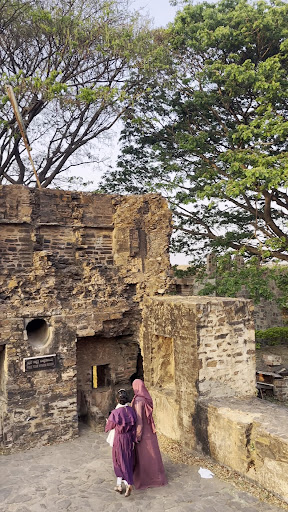
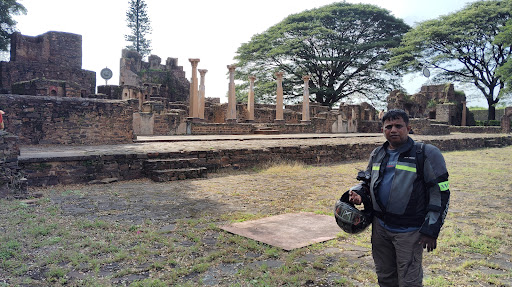
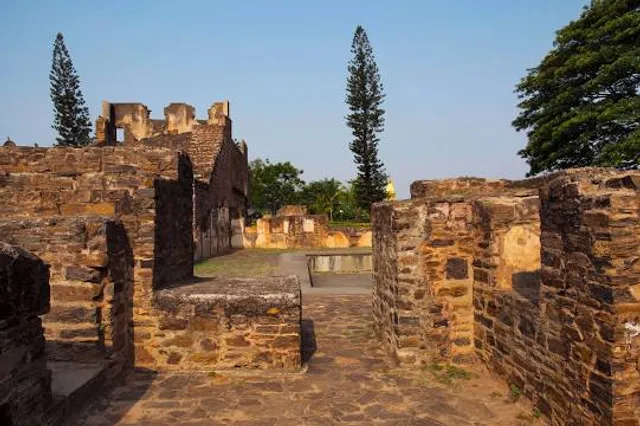
All that remains of the great legacy of Kittur Fort today are some ruined walls and a very rich history associated with the ruined structure.

Within the Kittur Fort The archaeological museum of the fort is a treasure trove of antiques and relics. The museum has a rich collection of ancient weapons, stone idols, swords, shields, mail-coats, engraved wooden doors and windows of the Kittur palace, inscriptions, paintings, idols of Vishnu, Surya, Durga, etc. and many other priceless antiques. There are also a couple of cannons and stone sculptures that are exhibited in the open space just outside the museum building.

The archaeological museum was inaugurated by the late Mrs. Indira Gandhi, the then prime minister of India, on 10th January, 1967. The museum is managed by the Department of Archaeology and Museums, Government...

   Read more
avatar
5.0
2y

Kittu Fort is an ancient fort located in the Kolar district of Karnataka, India. It is situated on a hilltop and provides stunning panoramic views of the surrounding area. The fort is believed to have been built during the Chola dynasty and has a rich history that dates back several centuries.

The fort is named after its builder, King Kittu, who was a local chieftain. It is believed that the fort was built to serve as a strategic defense outpost and to protect the region from invading armies. The fort is constructed of granite blocks, and the walls are over six meters high and three meters thick.

The fort has several notable features, including a series of underground tunnels and chambers that were used for storage and as escape routes during times of war. The fort also has a large water tank, which provided a reliable source of water to the inhabitants during prolonged sieges.

Kittu Fort is not only an important historical monument but also an important pilgrimage site for Hindus. The fort is home to several ancient temples, including the Lord Venkateshwara Temple, which is believed to have been built during the Chola dynasty.

Today, the fort is a popular tourist destination and attracts visitors from all over India and the world. The fort's stunning architecture, rich history, and scenic location make it a must-visit destination for anyone interested in history and architecture.

In conclusion, Kittu Fort is an ancient and historically significant fort that is located in the Kolar district of Karnataka. Its impressive architecture, underground tunnels, and water tank make it an important monument that provides insights into India's rich history. The fort's location on a hilltop also provides breathtaking views of the surrounding area, making it a popular tourist destination

Kittur is a town located in the Belgaum district of Karnataka, India. It is famous for being the birthplace of Rani Chennamma, one of India's first female freedom fighters who fought against the British East India Company.

Some small points about Rani Chennamma and her legacy include:

Rani Chennamma was born in 1778 and was married to the Raja of Kittur at a young age. After her husband's death, she took over as the ruler of Kittur. In 1824, the British East India Company attempted to annex Kittur, but Rani Chennamma fiercely resisted and led a rebellion against them. Rani Chennamma's bravery and leadership inspired many people in Karnataka to rise up against British colonial rule. She is considered a symbol of resistance and a national hero in India. Rani Chennamma was eventually captured by the British and imprisoned until her death in 1829. However, her legacy and contributions to the freedom struggle continue to be celebrated and honored in India. The Kittur Utsav, a festival that celebrates Rani Chennamma's life and legacy, is held every year in Kittur. The festival attracts visitors from all over India and features cultural programs, exhibitions, and other events. In honor of her contributions to the freedom struggle, Rani Chennamma has been featured on postage stamps and currency notes in India. Several universities and institutions in Karnataka have also been...

   Read more
Page 1 of 7
Previous
Next

Posts

Bharat AnnigeriBharat Annigeri
Kittur Fort is one of the major historical monuments in Karnataka and one of its famous tourist attractions. The fort is located in the town of Kittur is situated at a distance of about 50 km from Belgaum and around 32 km from Dharwad. The small town of Kittur gained fame and recognition due to its presence of Kittur Fort and immense historical significance. Kittur Fort is also known as Kittur Chennamma Fort as it is closely associated with Rani Chennamma, the brave ruler who ruled over her estate from the fort. With its old palaces, monuments and statues Kittur exudes historic attraction for tourists from all over the country and beyond. But it’s most famous attraction is the Kittur Fort that stands as evidence of one of the first freedom struggles of the country that was led by Rani Chennamma. Kittur Fort also has a palace within it that is popularly known as Rani Chennamma’s palace. The Kittur Fort was built by Allppa Gowda SarDesai, the fifth ruler of the Kittur dynasty during his rule from 1660 to 1691 A.D. He also constructed a grand palace inside the fort that served as his residence. The fort was constructed by using black basalt rock that was found in plenty in the surrounding areas of Kittur. The Kittur Fort was the place from where Rani Chennamma had carried out an armed rebellion against the British rulers in response to their undesired interference in tax collection in her estate. The remarkable fact is that she fought this war in the year 1824, thirty-three years before the uprising of armed 1857 that is considered in history as the first war of India’s independence. The armed rebellion of Kittur started on 3rd December, 1824. The heroic Rani Chennamma fought bravely against the British rulers but the Kittur Fort fell in the hands of the British forces on 5th December, 1824 after a fierce fighting of three days. Rani Chennamma was captured and sent to a jail in Bailhongal. The then British Commissioner of the Deccan region named Chaplin confiscated 16 lakhs of rupees, precious ornaments and valuables from the Kittur Fort. He destroyed the fort and the palace to avenge the deaths of fellow British Commissioner John Thackeray and other British officers engaged in the armed rebellion. Chaplin gave a free hand to the British soldiers to ransack the fort and the palace and rob anything valuable found there. He also sold the precious wooden doors and windows of the palace. Thus, the British forces robbed off everything in the Kittur Fort and destroyed the rich heritage of the fort. Rani Chennamma, who had cultivated the dream of a free country, breathed her last in the year 1829, while still being a captive under the British rule. All that remains of the great legacy of Kittur Fort today are some ruined walls and a very rich history associated with the ruined structure. Within the Kittur Fort The archaeological museum of the fort is a treasure trove of antiques and relics. The museum has a rich collection of ancient weapons, stone idols, swords, shields, mail-coats, engraved wooden doors and windows of the Kittur palace, inscriptions, paintings, idols of Vishnu, Surya, Durga, etc. and many other priceless antiques. There are also a couple of cannons and stone sculptures that are exhibited in the open space just outside the museum building. The archaeological museum was inaugurated by the late Mrs. Indira Gandhi, the then prime minister of India, on 10th January, 1967. The museum is managed by the Department of Archaeology and Museums, Government of Karnataka.
shadab jamadarshadab jamadar
Kittu Fort is an ancient fort located in the Kolar district of Karnataka, India. It is situated on a hilltop and provides stunning panoramic views of the surrounding area. The fort is believed to have been built during the Chola dynasty and has a rich history that dates back several centuries. The fort is named after its builder, King Kittu, who was a local chieftain. It is believed that the fort was built to serve as a strategic defense outpost and to protect the region from invading armies. The fort is constructed of granite blocks, and the walls are over six meters high and three meters thick. The fort has several notable features, including a series of underground tunnels and chambers that were used for storage and as escape routes during times of war. The fort also has a large water tank, which provided a reliable source of water to the inhabitants during prolonged sieges. Kittu Fort is not only an important historical monument but also an important pilgrimage site for Hindus. The fort is home to several ancient temples, including the Lord Venkateshwara Temple, which is believed to have been built during the Chola dynasty. Today, the fort is a popular tourist destination and attracts visitors from all over India and the world. The fort's stunning architecture, rich history, and scenic location make it a must-visit destination for anyone interested in history and architecture. In conclusion, Kittu Fort is an ancient and historically significant fort that is located in the Kolar district of Karnataka. Its impressive architecture, underground tunnels, and water tank make it an important monument that provides insights into India's rich history. The fort's location on a hilltop also provides breathtaking views of the surrounding area, making it a popular tourist destination Kittur is a town located in the Belgaum district of Karnataka, India. It is famous for being the birthplace of Rani Chennamma, one of India's first female freedom fighters who fought against the British East India Company. Some small points about Rani Chennamma and her legacy include: Rani Chennamma was born in 1778 and was married to the Raja of Kittur at a young age. After her husband's death, she took over as the ruler of Kittur. In 1824, the British East India Company attempted to annex Kittur, but Rani Chennamma fiercely resisted and led a rebellion against them. Rani Chennamma's bravery and leadership inspired many people in Karnataka to rise up against British colonial rule. She is considered a symbol of resistance and a national hero in India. Rani Chennamma was eventually captured by the British and imprisoned until her death in 1829. However, her legacy and contributions to the freedom struggle continue to be celebrated and honored in India. The Kittur Utsav, a festival that celebrates Rani Chennamma's life and legacy, is held every year in Kittur. The festival attracts visitors from all over India and features cultural programs, exhibitions, and other events. In honor of her contributions to the freedom struggle, Rani Chennamma has been featured on postage stamps and currency notes in India. Several universities and institutions in Karnataka have also been named after her.
ACCOUNTANCY KARNATAKAACCOUNTANCY KARNATAKA
Introducers- #Shivaraj nandane Kittur Fort is one of the major historical monuments in Karnataka and one of its famous tourist attractions. The fort is located in the town of Kittur that is situated at a distance of about 50 km from Belgaum and around 32 km from Dharwad. The small town of Kittur gained fame and recognition due to the presence of Kittur Fort and its immense historical significance. Kittur Fort is also known as Kittur Chennamma Fort as it is closely associated with Rani Chennamma, the brave ruler who ruled over her estate from the fort. With its old palaces, monuments and statues Kittur exudes historic attraction for tourists from all over the country and beyond. But it’s most famous attraction is the Kittur Fort that stands as evidence of one of the first freedom struggles of the country that was led by Rani Chennamma. Kittur Fort also has a palace within it that is popularly known as Rani Chennamma’s palace. Information for visitors The Kittur Fort and the palace are open to all and can be visited at any time of the year. The archaeological museum of the Kittur Fort levies no entry fees for the visitors. It is best to visit the fort from September to April, as the weather is pleasant during those months of the year. Water is available within the fort and visitors can quench their thirst from the cool water. There are no food stalls inside the fort but a lot of food stalls and hotels are present outside the fort. Where to stay The Kittur Fort has no provision for providing accommodation to the visitors. However, there are decent places for accommodation in Belgaum or Dharwad. A few hotels and inns that provide comfortable accommodation for guests at reasonable prices are: How to reach Kittur Fort and Palace The Kittur Fort and Palace can be easily reached as the town of Kittur lies on the Pune Bangalore Highway and is well connected to the nearby cities of Belgaum and Dharwad. By Air Kittur is a small town that has no airport of its own. The nearest airport is located at Belgaum. The Belgaum airport operates flights to Bangalore and Chennai. From Belgaum visitors can avail local means of transport to reach the Kittur Fort. By Train Kittur is not directly connected by the rail network. The nearest railway station lies at Dharwad. The Belgaum Railway Station is one of the oldest stations in this region. Both the stations are connected to major towns and cities across Karnataka and the nearby states. Moreover, there are plenty of local transport options available from Belgaum and Dharwad to reach to kittur. By Road There are a number of buses that are available from several places like Bangalore, Goa, Mumbai, Belgaum, Dharwad and many other nearby towns and cities for reaching Kittur. Karnataka State Road Transport (KSRT) buses and a few other private buses are available from these places for Kittur. Apart from the buses, local means of transport like taxis and hired vehicles are also available for reaching the Kittur Fort comfortably.
See more posts
See more posts
hotel
Find your stay

Pet-friendly Hotels in Karnataka

Find a cozy hotel nearby and make it a full experience.

Kittur Fort is one of the major historical monuments in Karnataka and one of its famous tourist attractions. The fort is located in the town of Kittur is situated at a distance of about 50 km from Belgaum and around 32 km from Dharwad. The small town of Kittur gained fame and recognition due to its presence of Kittur Fort and immense historical significance. Kittur Fort is also known as Kittur Chennamma Fort as it is closely associated with Rani Chennamma, the brave ruler who ruled over her estate from the fort. With its old palaces, monuments and statues Kittur exudes historic attraction for tourists from all over the country and beyond. But it’s most famous attraction is the Kittur Fort that stands as evidence of one of the first freedom struggles of the country that was led by Rani Chennamma. Kittur Fort also has a palace within it that is popularly known as Rani Chennamma’s palace. The Kittur Fort was built by Allppa Gowda SarDesai, the fifth ruler of the Kittur dynasty during his rule from 1660 to 1691 A.D. He also constructed a grand palace inside the fort that served as his residence. The fort was constructed by using black basalt rock that was found in plenty in the surrounding areas of Kittur. The Kittur Fort was the place from where Rani Chennamma had carried out an armed rebellion against the British rulers in response to their undesired interference in tax collection in her estate. The remarkable fact is that she fought this war in the year 1824, thirty-three years before the uprising of armed 1857 that is considered in history as the first war of India’s independence. The armed rebellion of Kittur started on 3rd December, 1824. The heroic Rani Chennamma fought bravely against the British rulers but the Kittur Fort fell in the hands of the British forces on 5th December, 1824 after a fierce fighting of three days. Rani Chennamma was captured and sent to a jail in Bailhongal. The then British Commissioner of the Deccan region named Chaplin confiscated 16 lakhs of rupees, precious ornaments and valuables from the Kittur Fort. He destroyed the fort and the palace to avenge the deaths of fellow British Commissioner John Thackeray and other British officers engaged in the armed rebellion. Chaplin gave a free hand to the British soldiers to ransack the fort and the palace and rob anything valuable found there. He also sold the precious wooden doors and windows of the palace. Thus, the British forces robbed off everything in the Kittur Fort and destroyed the rich heritage of the fort. Rani Chennamma, who had cultivated the dream of a free country, breathed her last in the year 1829, while still being a captive under the British rule. All that remains of the great legacy of Kittur Fort today are some ruined walls and a very rich history associated with the ruined structure. Within the Kittur Fort The archaeological museum of the fort is a treasure trove of antiques and relics. The museum has a rich collection of ancient weapons, stone idols, swords, shields, mail-coats, engraved wooden doors and windows of the Kittur palace, inscriptions, paintings, idols of Vishnu, Surya, Durga, etc. and many other priceless antiques. There are also a couple of cannons and stone sculptures that are exhibited in the open space just outside the museum building. The archaeological museum was inaugurated by the late Mrs. Indira Gandhi, the then prime minister of India, on 10th January, 1967. The museum is managed by the Department of Archaeology and Museums, Government of Karnataka.
Bharat Annigeri

Bharat Annigeri

hotel
Find your stay

Affordable Hotels in Karnataka

Find a cozy hotel nearby and make it a full experience.

Get the Appoverlay
Get the AppOne tap to find yournext favorite spots!
Kittu Fort is an ancient fort located in the Kolar district of Karnataka, India. It is situated on a hilltop and provides stunning panoramic views of the surrounding area. The fort is believed to have been built during the Chola dynasty and has a rich history that dates back several centuries. The fort is named after its builder, King Kittu, who was a local chieftain. It is believed that the fort was built to serve as a strategic defense outpost and to protect the region from invading armies. The fort is constructed of granite blocks, and the walls are over six meters high and three meters thick. The fort has several notable features, including a series of underground tunnels and chambers that were used for storage and as escape routes during times of war. The fort also has a large water tank, which provided a reliable source of water to the inhabitants during prolonged sieges. Kittu Fort is not only an important historical monument but also an important pilgrimage site for Hindus. The fort is home to several ancient temples, including the Lord Venkateshwara Temple, which is believed to have been built during the Chola dynasty. Today, the fort is a popular tourist destination and attracts visitors from all over India and the world. The fort's stunning architecture, rich history, and scenic location make it a must-visit destination for anyone interested in history and architecture. In conclusion, Kittu Fort is an ancient and historically significant fort that is located in the Kolar district of Karnataka. Its impressive architecture, underground tunnels, and water tank make it an important monument that provides insights into India's rich history. The fort's location on a hilltop also provides breathtaking views of the surrounding area, making it a popular tourist destination Kittur is a town located in the Belgaum district of Karnataka, India. It is famous for being the birthplace of Rani Chennamma, one of India's first female freedom fighters who fought against the British East India Company. Some small points about Rani Chennamma and her legacy include: Rani Chennamma was born in 1778 and was married to the Raja of Kittur at a young age. After her husband's death, she took over as the ruler of Kittur. In 1824, the British East India Company attempted to annex Kittur, but Rani Chennamma fiercely resisted and led a rebellion against them. Rani Chennamma's bravery and leadership inspired many people in Karnataka to rise up against British colonial rule. She is considered a symbol of resistance and a national hero in India. Rani Chennamma was eventually captured by the British and imprisoned until her death in 1829. However, her legacy and contributions to the freedom struggle continue to be celebrated and honored in India. The Kittur Utsav, a festival that celebrates Rani Chennamma's life and legacy, is held every year in Kittur. The festival attracts visitors from all over India and features cultural programs, exhibitions, and other events. In honor of her contributions to the freedom struggle, Rani Chennamma has been featured on postage stamps and currency notes in India. Several universities and institutions in Karnataka have also been named after her.
shadab jamadar

shadab jamadar

hotel
Find your stay

The Coolest Hotels You Haven't Heard Of (Yet)

Find a cozy hotel nearby and make it a full experience.

hotel
Find your stay

Trending Stays Worth the Hype in Karnataka

Find a cozy hotel nearby and make it a full experience.

Introducers- #Shivaraj nandane Kittur Fort is one of the major historical monuments in Karnataka and one of its famous tourist attractions. The fort is located in the town of Kittur that is situated at a distance of about 50 km from Belgaum and around 32 km from Dharwad. The small town of Kittur gained fame and recognition due to the presence of Kittur Fort and its immense historical significance. Kittur Fort is also known as Kittur Chennamma Fort as it is closely associated with Rani Chennamma, the brave ruler who ruled over her estate from the fort. With its old palaces, monuments and statues Kittur exudes historic attraction for tourists from all over the country and beyond. But it’s most famous attraction is the Kittur Fort that stands as evidence of one of the first freedom struggles of the country that was led by Rani Chennamma. Kittur Fort also has a palace within it that is popularly known as Rani Chennamma’s palace. Information for visitors The Kittur Fort and the palace are open to all and can be visited at any time of the year. The archaeological museum of the Kittur Fort levies no entry fees for the visitors. It is best to visit the fort from September to April, as the weather is pleasant during those months of the year. Water is available within the fort and visitors can quench their thirst from the cool water. There are no food stalls inside the fort but a lot of food stalls and hotels are present outside the fort. Where to stay The Kittur Fort has no provision for providing accommodation to the visitors. However, there are decent places for accommodation in Belgaum or Dharwad. A few hotels and inns that provide comfortable accommodation for guests at reasonable prices are: How to reach Kittur Fort and Palace The Kittur Fort and Palace can be easily reached as the town of Kittur lies on the Pune Bangalore Highway and is well connected to the nearby cities of Belgaum and Dharwad. By Air Kittur is a small town that has no airport of its own. The nearest airport is located at Belgaum. The Belgaum airport operates flights to Bangalore and Chennai. From Belgaum visitors can avail local means of transport to reach the Kittur Fort. By Train Kittur is not directly connected by the rail network. The nearest railway station lies at Dharwad. The Belgaum Railway Station is one of the oldest stations in this region. Both the stations are connected to major towns and cities across Karnataka and the nearby states. Moreover, there are plenty of local transport options available from Belgaum and Dharwad to reach to kittur. By Road There are a number of buses that are available from several places like Bangalore, Goa, Mumbai, Belgaum, Dharwad and many other nearby towns and cities for reaching Kittur. Karnataka State Road Transport (KSRT) buses and a few other private buses are available from these places for Kittur. Apart from the buses, local means of transport like taxis and hired vehicles are also available for reaching the Kittur Fort comfortably.
ACCOUNTANCY KARNATAKA

ACCOUNTANCY KARNATAKA

See more posts
See more posts