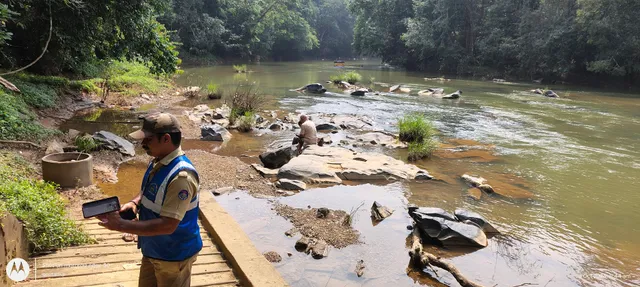
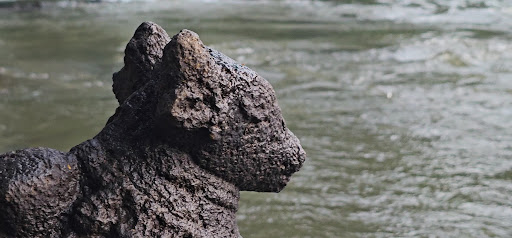
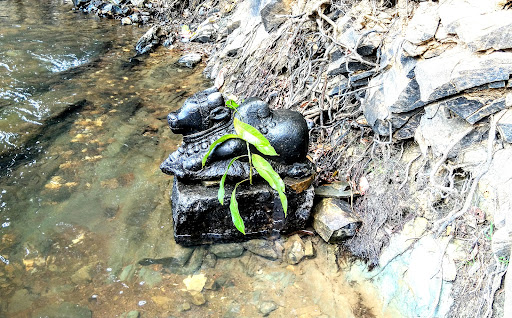
Sahasralinga, situated on the banks of the Shalmala River near Sirsi in Karnataka, is a unique pilgrimage site renowned for its thousands of Shiva Lingas carved on rocks across the riverbed. Surrounded by dense forests and natural beauty, this sacred destination holds deep spiritual and historical importance. Each linga is accompanied by a carved Nandi (bull), symbolizing devotion to Lord Shiva. Over the years, Sahasralinga has become a blend of spiritual retreat, cultural heritage, and nature tourism, attracting pilgrims, photographers, and travelers alike.
The origins of Sahasralinga date back to the reign of the Sonda dynasty, rulers of the Sirsi region in Uttara Kannada district, Karnataka. It is believed that the kings of this dynasty, especially Sadashivaraya, commissioned the carving of thousands of Shiva Lingas and Nandi idols on the natural rocks spread across the Shalmala River. Their intention was to create a holy site where devotees could worship Lord Shiva in multiple forms at one place.
Over the centuries, Sahasralinga became a prominent Shaivite pilgrimage site and a spiritual symbol of devotion and power. The flowing waters of the river sanctify the lingas daily, representing the eternal presence of Lord Shiva. Even today, devotees flock here during Maha Shivaratri to perform special pujas, believing that offering prayers at Sahasralinga is as meritorious as visiting countless Shiva temples. Sahasralinga Sahasralinga is considered one of the most sacred Shiva pilgrimage sites in Karnataka, where thousands of devotees visit to seek divine blessings. Each linga carved on the riverbed represents a unique form of Lord Shiva, while the presence of Nandi statues symbolizes eternal devotion and protection.
According to belief, offering prayers at Sahasralinga is equivalent to worshipping at a thousand Shiva temples, making it a highly auspicious site for devotees. The continuous flow of the Shalmala River over the lingas is seen as a natural abhishekam (holy bathing) performed by nature itself, signifying purity and spiritual energy.
During Maha Shivaratri, Sahasralinga transforms into a vibrant pilgrimage hub, with special rituals, pujas, and offerings performed by thousands of devotees. The site is also considered sacred for conducting ancestral rites (pitru puja), as it is believed to grant peace and liberation...
Read moreSahasralingeshwara temple in Uppinangady is situated on the banks of the river Netravati and Kumaradhara, where thousand lingas are found. The story goes like: After Kurukshetra war, Krishna suggests Pandavas to get "Pushpa Mruga" to hold Rajasooryadwara Yaga.Bheema dashed to "Mahendragiri" to fetch it.On the way he meets Hanuman taking rest, which is stretched on his way.Bheema finds it difficult to cross the tail of Hanuman and requests to remove the tail. Hanuman asks Bheema to lift tail but he struggles and fails.Later both realised that both are devine powers.Hanuman comes to know the purpose of Bheem's journey and offers him hair from his tail for the protection.Bheem,after reaching Mahendragiri meets pushpamruga and it agrees on a condition that it would follow him only a "manovega"-speed at which mind moves. Bheem agrees trusting the tail hair. While leading the animal, whenever Bheem finds he cannot keep the pace with the animal,he drops a hair.Strangely a "Shivalinga" appears just on the spot and Pushpamruga proceeds only after worshipping the linga.This gives Bheem sufficient time to adjust his speed. When they reach the place called "Uppinangady", Bheem finds difficult and drops remaining one thousand tail hair.There appears 1000 lingas and by the time animal completes worship,Bheem safely reaches Yagamantap.Thus it is believed that 1000 Lingas are found in the temple vicinity.One out of those Lingas found in the middle of the river sand becomes visible in the month of February The lingas in Uppinangady are under the river and are natural appearing, not carved.
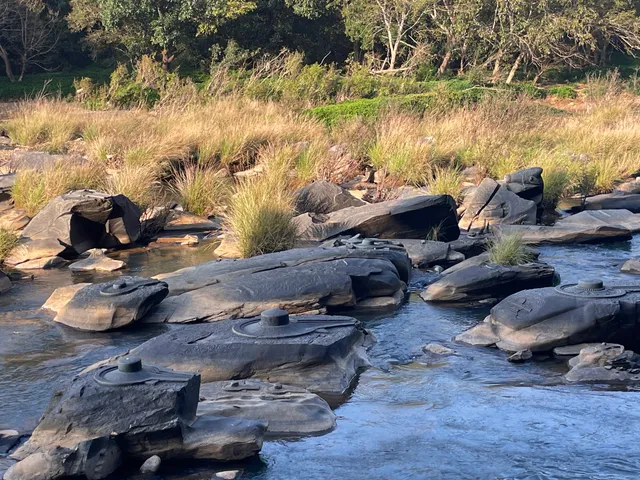
Sahasralinga is a pilgrimage place, located around 14 km from the Sirsi Taluk in the district of Uttara Kannada of Karnataka state in India. It is in the river Shalmala and is famous for being the location where around a thousand lingas are carved on rocks in the river and on its banks.
The Shiva Lingas were built under the patronage of Sadashivarayavarma, king of the Sirsi kingdom (1678-1718). It is also possible to see many Basava (bulls) which are carved in front of...
Read moreHidden in the serene forests of the Western Ghats, Sahasralinga is a mystical site that captivates both devotees and nature lovers. Known for its unique and spiritual ambiance, this place is renowned for the thousands of Shiva Lingas carved into the rocks of the Shalmala River.
The name "Sahasralinga" translates to "a thousand lingas," and the site lives up to its name. The riverbed and surrounding rocks are adorned with innumerable Shiva Lingas, each meticulously carved, showcasing the devotion and craftsmanship of ancient times. The sheer number and variety of Lingas are awe-inspiring, making it a significant site for Shiva worship.
The natural surroundings of Sahasralinga add to its charm. Nestled amidst lush greenery and flowing water, the site offers a tranquil and scenic escape. The sound of the river flowing over the Lingas creates a soothing symphony that enhances the spiritual experience. Visiting during the monsoon season can be particularly enchanting as the river swells, making the sight even more mesmerizing.
For devotees of Lord Shiva, Sahasralinga is a place of deep spiritual significance. The Lingas are believed to have been installed by Sadashiva Raya of the Vijayanagara Empire, symbolizing the eternal presence of Lord Shiva. Performing rituals and offering prayers here is considered highly auspicious.
The site is well-maintained, with pathways and signage to guide visitors. There are several small shrines and meditation spots where visitors can sit and
Carry water and snacks, as there are limited facilities nearby. Visit early in the morning to avoid the afternoon heat and crowds. Respect the sanctity of the site by maintaining silence and cleanliness. Capture the beauty of the place with your camera, but be mindful of the natural beauty.
Explore the hanging...
Read more