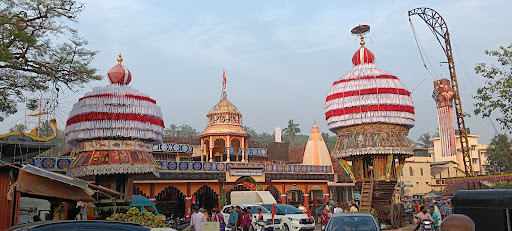
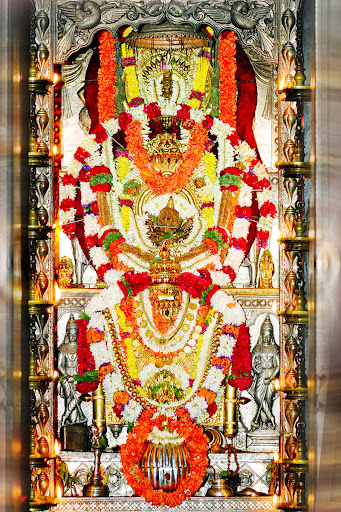
Volalanke: Mulki happened to be the capital of a small kingdom of Jain rulers called Savanths. Standing on the banks of river Shambhavi, close to the Arabian sea the town boasts of one of the most prominent temples of GSB community. On the eastern part of Mulki facing East is our Shri Venkataramana Temple located in an area called Vola-Lanke which if literally translated into English means the Inner Lanka. The presiding Lord of this Temple Lord Ugra Narasimha is popularly known as Volalanke Ugra Narasimha or Volalankadisha. Why is this place called as Volalanke ? The Sthala Purana says that Lord Hanuman on his way back carrying the mountain of herbs mistook this beautiful locality for Lanka and started descending. But soon he realised that this is not Lanka and therefore at once ascended and resumed his journey calling this as Volalanke. The word Mulki is actually derived from Moolikapura. Moolika – means medicinal herbs. This place was quite famous for the herbs and roots of medicinal properties prompting people to name it Moolikapura. People say that a few herbs had fallen here in Mulki from the mountain of herbs that Hanuman was carrying and hence the herbs and medicinal plants grew here.
The temple was originally consecrated as “Vittala Gudi”. On invitation from the Jain rulers 5 GSB families from Bhatkal came and settled in Mulki. The Vittala idol belonging to the Vatsa Gotra family was installed in a small temple and called as the Vittala Gudi. This is believed to be sometime in the 13th century. Later more families came and settled in Mulki and made it their home.
Sometime in early 16th century (about 500 years back) because of some political upheavals in Karkala there was threat to the Shri Venkataramana Temple of Karkala. Karkala is famously known as Padu Tirupati. In order to protect their beloved Lord Venkataramana’s Idol the people of Karkala secretly carried the idols and hid them in a well in Mulki Vittala Gudi. After sometime when normalcy had returned at Karkala they came to Mulki to retrieve the idols from the well. But however much they tried they could not find the idols in the well. Much to the delight of Mulki people they could find the idols when they searched for it. Mulki people claimed that since Karkala people had not found the idols and they had found it – it shows that the Lord wants to stay back in Mulki. People from Karkala were very much disappointed and worried and did not know what to do. The Lord appeared in a dream to them and said that they should go back and one Sanyasi will give them an Idol of Lord in Karkala itself in a few days. People of Mulki happily consecrated the idol of Lord Venkataramana in the Vittala Gudi and the Vittala Gudi became – Shri Venkataramana...
Read moreNestled on the banks of the Shambhavi River, the Shri Venkataramana Temple in Mulki is a serene and historic place of worship. Located about 29 km from both Mangalore and Udupi, this 12th-century temple is a significant spiritual hub for the Gowda Saraswath Brahmin (GSB) community. The temple is situated in the picturesque area of Vola-Lanke, which translates to "Inner Lanka," offering a peaceful retreat for devotees and visitors.
The temple is primarily dedicated to Lord Venkateswara, a form of Vishnu, along with deities such as Bindu Madhava, Lord Vittala, and Ugra Narasimha. It is believed that the image of Ugra Narasimha was installed here by Sri Vijayendra Yathi of the Kashi Mutt in 1565. The temple’s architecture and its association with the Vijayanagar era are evident in its design and spiritual aura.
Mulki, previously known as Mulikapur, was once ruled by Samantha kings, and remnants of their history, including a palace and fort ruins, are still visible. The temple is also close to other notable shrines, including the Bappanadu Durga Parameshwari Temple and the temples of Somanath and Narayana.
The Shri Venkataramana Temple hosts vibrant festivals, the most prominent being the Annual Car Festival in December, celebrating the installation day (Pratistha Poornima) of Lord Narasimha. Visitors can also witness the unique buffalo race, Arasu Kambala, held annually.
The temple operates from 6:30 AM to 1 PM and 6 PM to 8:30 PM, and it’s easily accessible by bus or cab. Many visitors pair their trip here with a visit to the nearby Bappanadu Durga Parameshwari Temple,...
Read moreWe stayed in Shree Venkatramana Temple Trust from 13th to 16th Nov 2022..this review is written by Mishti Sanghani 10yrs old Open Learner
It's nice calm peaceful place is perfect after a lot of travel. And if you have a low budget, Shree Venkatramana Temple Trust is the place for you. Clean rooms, big bath room, good sized bed and pocket friendly. Any time you can go down to the big eating hall where you eat sathvik temple food. For the food, you can give as much as you want. No forced charges.
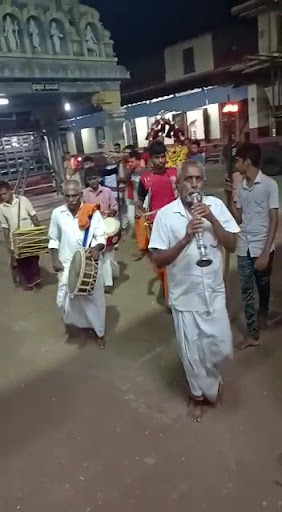
And the temple itself, has a pooja in the morning and the evening, and you can go and see the entire aarti and procession. It's a quiet place and you can sleep all day long in the comfy beds. Talking about beds, just saying that there are no bedbugs or fleas or anything. Like I said, it's very clean and well kept.
Even the roads leading to the temple are properly made and you will find a good amount of fruit and vegetable vendors, along with a bunch if bakeries, if you want some cake or there's a birthday or something. The only problem is, that if your a hardcore veg and don't want to eat South Indian food, things become problematic.
Because mostly it's be non-veg and if it's veg it'll have only idly vada or South Indian thali. But that's ok. You can figure that out. The only thing I'm trying to say is, the temple is perfect, the food is explorible and they are too good to be true. I would rate it 8.8 out of 10 and I hope you guys also gave a good experience with the place and the...
Read more