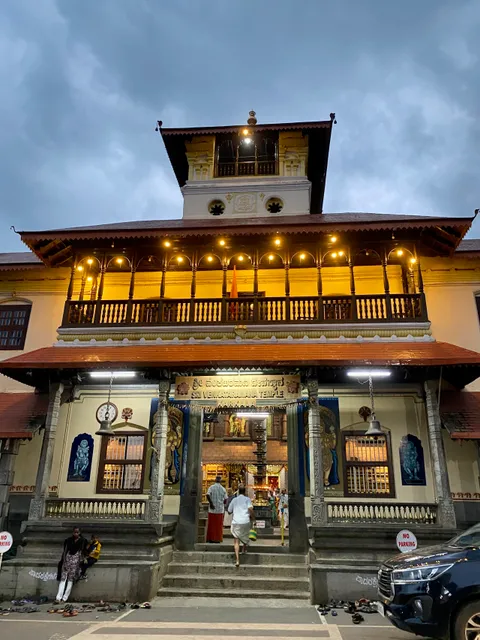
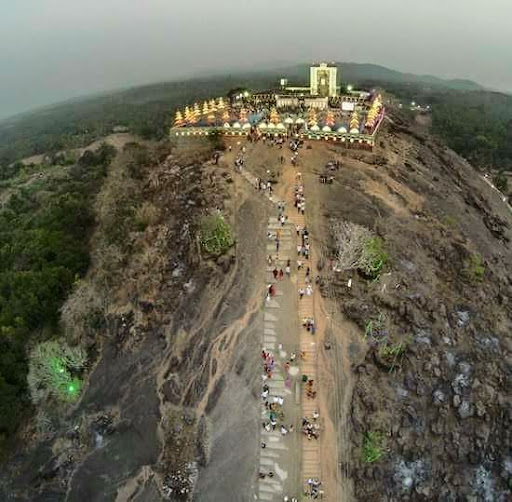
Sree Karkala Venkataramana temple is known as Padu Tirupati or western Tirupati. Dedicated to Lord Shrinivasa, a form of Lord Vishnu, this temple is a major pilgrimage center, especially important to Gaud Saraswat Brahmans. This temple is considered equivalent to Tirupati, and deity is known as Shrinivasa or Venkataramana, just like in Tirupati. The History says that the Gaud Saraswat Brahmans (GSB) migrated from Goa to Karnataka after the Portuguese invaded Goa. They came to Karnataka in the 14th century, when this region was ruled by Jain Bhairarasa Odeyars. The rulers welcomed these Brahmans and gifted them land to continue their traditional profession as farmers. Karkala was then called Pandya Nagari. The GSB community settled in various places in Karnataka and Kerala during this time.
A family of this community brought the idol of Sree Venkataramana with them. They requested permission from the Jain king to build a temple to house this idol. The king gave them permission and also gifted land to them. A lady who was living in a part of the land was also requested to give up her claim to the land in favor of the temple. This lady gave them permission on condition that the four Shivaganas she had worshipped should continue to be honored and worshipped regularly just as had been done traditionally. This was readily agreed to and the temple was built. Lord Venkataramana was installed there.
Story goes that when a group of dacoist had attacked the temple during 1500 A.D, the priests of the temple had tried to prevent the main idol of the Lord and certain other valuable belongings of the temple from being taken away or destroyed by the invaders, by casting them away into a well near Mulki. After the situation cooled down, the priests got back all the valuable belongings which they had cast away into the well, except for the main idol of the Lord. One day person from Mulki found the main idol in the well. On knowing this, the people of Karkala rushed to Mulki to get back the idol. By the time they reached Mulki, people over there had installed it in ‘Shri Veera Vittala temple’. From this incident,the people of Karkala assumed that the Lord wanted to grace the land of Mulki by his presence there. They found themselves in a dilemma as to what had to be done. They found it hard to believe that the Lord wanted to preside over Mulki, instead of Karkala. As if for giving a solution to their dilemma, Lord appeared in the dreams of the people of Karkala and asked them to hand over his idol in Mulki to the people of Mulki. The Lord told his devotees that in the days to come, a hermit (sanyasi who used to collect Kanika from the devotees to be taken to Tirupati) would come to Karkala and give them another idol of the Lord in which he would have himself enshrined. As per the predictions,a few days later a hermit from Tirupati,who was an ardent devotee of Lord Venkatramana came to Karkala and handed over an idol of the Lord to the people. That idol was installed in the temple. The hermit laid down a condition that the idol would be taken every year to Tirupati along with the Kanika received and the hermit settled down in Karkala itself.
The Kanika received in the name of the Lord of Tirupati is offered religiously to Tirupati temple, periodically in a pilgrimage called “Rama Dandu”. So far five such Yatras in the history of the temple, the latest being in 1970, have taken place. Once a year in a grand and ceremonious procession Lord Shri Shrinivasa is taken out in golden mandapa and Lord Shri have been taken to Tirupati. Incidentally,this is the only day in a year, when the Lord Shrinivasa is taken out of the temple. T by the devotees, as the daily poojas here are almost like the...
Read moreA temple on main road with powerful deity and great history...
This shrine lies to the west of Tirupati while original shrine is in the east. The name itself signifies its meaning. Padu means 'West' in Kannada and Tirupathi means Tirumala temple.
Sri Venkataramana Temple, Karkala, also known as Padutirupathi, is a temple in Karnataka, India. It was built by Goud Saraswat Brahmins of Karkala and was installed on April 25, 1537.
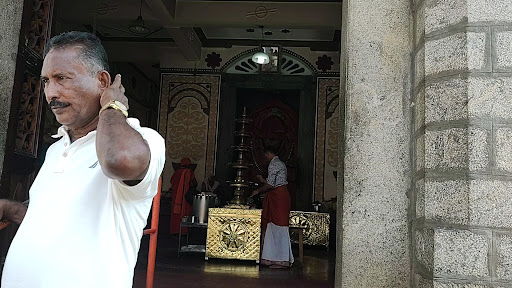
Since this temple is related to Tirumala it follows the same rituals as in TirupathiTemple. In the morning at 6:00 (in some cases it is 5:30 am during Ashwija month) the temple doors are opened with Dwara Pooja and Suprabhatam. Dwara Pooja is performed for the door keepers Jaya-Vijaya (in Vishnu Loka they represent DwaraPaalakaas).
Suprabhatam is a special slokha recited to wake up the Lord from his sleeps. Then after the end of Suprabhata Nirmala Visarjana (removal of old flowers and decoration of new ones to deities) is performed with Ganji Naivedyam (serving of rice and rice item foods, including Navaneetham mixture of butter, til and sugar) at about 6:30 am. At 10:00 am Panchaamrutha abhishekha is performed for the Saligrama. This abhishekha is a typical one as performed in Tirupathi. In Tirumala this is performed on Lord Venkateshwara's stone statue and to honour the same here it is performed on the Saligrama.
At noon Naivedyam is performed wherein several items are served for the Lord in a huge plate and utensil made out of copper. Once the Naivedya is over little bit of rice is served in small utensils and is kept in front of Parivar Devas while one is offered to Sree Veeramaruthi Temple. After this Maha Puja is performed at 1:00 pm, this is called Raajopchaara Puja. The temple doors are closed after this for Vishrama Seva.
In the evening at about 6:00, temple doors are again opened with lighting of oil lamps. A special shlokha is sung called as "Deevtige Salaam Shlokham." Cassettes of bhajans are played on loudspeakers at this divine time of sunset. At 6:30 people from all over the town come to temple to sing the hymns of Lord Almighties, and this goes on until 8:00 pm.
At 8:00 again Naivedyam is offered with Mangalaarthi. Once Mangalaaarthi finishes, night Utsava is offered. This is usually an outing to the town except on Amavasya and Ekadashi. Once Utsava returns to temple there are five rounds inside; the first one is Vaadya Sutthu (instrumental), second and third is Rigveda and Yajurveda Sutthu, fourth is Sangeetha Sutthu (Yakshagana's Thaala Maddhale) and last one is Sarva Vaadya Sutthu. After the utsav ends with Vasantha Puja (Lord is given Uyaala Seva with recitals of shlokhas) deities are put to sleep which is known as Ekaantha Seva (11:30pm or on festive days depends on...
Read moreKarkala Sri Venkatramana temple is an ancient temple belonging to Gowda Saraswat Brahmin (GSB) community and it is also the main attraction of Karkala. The devotees from all corners visit the temple and obtain the grace of the Lord Sri Venkatramana. hermit from Tirupati,who was an ardent devotee of Lord Venkatramana came to Karkala and handed over an idol of the Lord to the people. That idol was installed in the temple. The hermit laid down a condition that the idol would be taken every year to Tirupati along with the Kanika received and the hermit settled down in Karkala itself.
The Kanika received in the name of the Lord of Tirupati is offered religiously to Tirupati Temple,periodically in a pilgrimage called “Rama Dandu”. So far five such Yatras in the History of the Temple, the latest being in 1970, have taken place. Once a year in a grand and ceremonious procession Lord Shri Srinivasa is taken out in Golden Mandapa and Lord Shri Venkatramana in the Golden palanquins for Vanabhojana which literally means an outing to the forest in a magnificent Hagalu Utsav,to the eastern part of Karkala. Since Tirupati is in the east,Lord Srinivasa is supposed to have been taken to Tirupati. Incidentally,this is the only day in a year when the Lord Srinivasa is taken out of the temple. Thus the word given to the hemit is symbolically kept up year after year. The presiding deity over here Lord Srinivasa is called the Lord of Tirupati by the devotees, as the daily poojas here are almost like the ones offered at Tirupati. Therefore Karkala is also known as “Padu Tirupati” (Western Tirupati). The gold, silver & wooden “Vahanas” and also the other paraphernalia of the temple,speak volumes about the glory and the greatness of...
Read more