HTML SitemapExplore
logo
Find Things to DoFind The Best Restaurants

Tungabhadraa Dam and Pampasagara — Attraction in Karnataka

Name
Tungabhadraa Dam and Pampasagara
Description
Nearby attractions
T B Dam Zoo & Park
TB Board Garden, Road, Hosapete, Karnataka 583225, India
Nearby restaurants
Nearby hotels
HIDEAWAY FARM STAY HAMPI
Power canal bund road, near to t.b.dam, Hosapete, Karnataka 583225, India
Related posts
Keywords
Tungabhadraa Dam and Pampasagara tourism.Tungabhadraa Dam and Pampasagara hotels.Tungabhadraa Dam and Pampasagara bed and breakfast. flights to Tungabhadraa Dam and Pampasagara.Tungabhadraa Dam and Pampasagara attractions.Tungabhadraa Dam and Pampasagara restaurants.Tungabhadraa Dam and Pampasagara travel.Tungabhadraa Dam and Pampasagara travel guide.Tungabhadraa Dam and Pampasagara travel blog.Tungabhadraa Dam and Pampasagara pictures.Tungabhadraa Dam and Pampasagara photos.Tungabhadraa Dam and Pampasagara travel tips.Tungabhadraa Dam and Pampasagara maps.Tungabhadraa Dam and Pampasagara things to do.
Tungabhadraa Dam and Pampasagara things to do, attractions, restaurants, events info and trip planning
Tungabhadraa Dam and Pampasagara
IndiaKarnatakaTungabhadraa Dam and Pampasagara

Basic Info

Tungabhadraa Dam and Pampasagara

Tungabhadra Dam Rd, Hosapete, Munirabad Project Area, Karnataka 583222, India
4.4(415)
Closed
Save
spot

Ratings & Description

Info

Outdoor
Scenic
Adventure
Relaxation
Family friendly
Accessibility
attractions: T B Dam Zoo & Park, restaurants:
logoLearn more insights from Wanderboat AI.
Open hoursSee all hours
ThuClosedClosed

Plan your stay

hotel
Pet-friendly Hotels in Karnataka
Find a cozy hotel nearby and make it a full experience.
hotel
Affordable Hotels in Karnataka
Find a cozy hotel nearby and make it a full experience.
hotel
The Coolest Hotels You Haven't Heard Of (Yet)
Find a cozy hotel nearby and make it a full experience.
hotel
Trending Stays Worth the Hype in Karnataka
Find a cozy hotel nearby and make it a full experience.

Reviews

Nearby attractions of Tungabhadraa Dam and Pampasagara

T B Dam Zoo & Park

T B Dam Zoo & Park

T B Dam Zoo & Park

4.3

(2K)

Closed
Click for details
Get the Appoverlay
Get the AppOne tap to find yournext favorite spots!
Wanderboat LogoWanderboat

Your everyday Al companion for getaway ideas

CompanyAbout Us
InformationAI Trip PlannerSitemap
SocialXInstagramTiktokLinkedin
LegalTerms of ServicePrivacy Policy

Get the app

© 2025 Wanderboat. All rights reserved.
logo

Reviews of Tungabhadraa Dam and Pampasagara

4.4
(415)
avatar
5.0
5y

The Tungabhadra Dam also known as Pampa Sagar is constructed across the Tungabhadra River, a tributary of the Krishna River. The dam is in Hosapete, Ballari district of Karnataka. It is a multipurpose dam serving irrigation, electricity generation, flood control, etc. This is a joint project of erstwhile Hyderabad state and erstwhile Madras Presidency when the construction was started; later it became a joint project of Karnataka and Andhra Pradesh after its completion in 1953. The main architect of the dam was Vepa Krishnamurthy, ISE, Engineer-in-Chief, Hyderabad State, after Police Action, an engineer from Madras PWD. There is a dispute between Andhra Pradesh,Telangana and Karnataka for the water of Tungabhadra reservoir. He argued for the stability and longevity of the Dam, built of Surki Mortar viz a combination of mud and limestone. It's the only non-cement and concrete dam in the country and has withstood the test of time for over 70 years, and may well cross many more decades. He envisioned it as being built with a large contingent of manual labour, as best suited to Indian labouravailabilty and employment. The main contractor for the dam was Venkat Reddy Mulamalla, from Konour village, Mahabubnagar, Hyderabad state.

The famine region of Rayalseema, comprising the districts of Bellary, Anantapur, Kurnool and Cuddapah attracted the attention of the British Engineers as early as 1860. To relieve the intensity of famine in these districts, proposals were made in 1860 to utilize the waters of Tungabhadra through a storage reservoir and a system of canals to provide irrigation for the lands.

Sir Arthur Cotton originally conceived the Tungabhadra Project in the year 1860. The proposals were further modified and developed subsequently evolving it into a joint scheme with Hyderabad. N. Paramseswaran Pillai accordingly revised the Scheme in 1933. Several agreements were concluded in the past for harvesting and imposing certain restrictions on utilizing the Tungabhadra waters. Protracted negotiations and investigations lasted for about eighty years. The Government of Madras in 1940 ordered for the detailed investigation of the scheme. Based on the agreements concluded and examination of a number of alternatives by L. Venkata Krishna Iyer, the then Superintending Engineer, Bellary, and F. M. Dowley, Chief Engineer, Irrigation, further detailed investigations of the project was done by M. S. Thirumale Iyengar on the Madras side in the year 1942. The Agreement between Madras and Hyderabad of June 1944 enabled the Madras and Hyderabad Governments finally to start the construction of the Tungabhadra project.

The Tungabhadra Project was formally inaugurated by laying foundation stone on 28th February, 1945 by "Prince of Berar" on the left side and by Sir Arthur Hope, Governor of Madras on right side. However, much headway could not be made up to January 1949. Difference of opinion in certain technical matters and settled political situation in Hyderabad were the reasons for the slow progress. The Madras and the Hyderabad engineers were sharply divided on:

Nature of mortar to be used in the construction of the dam Design of spillway Design of over flow and non-overflow sections of the dam and Contraction joints These differences were referred to a Board of Engineers under the Chairmanship of M. Visveswaraya, a Statesman-cum-Engineer.

Dam construction

Excavation in the riverbed was started in 1947 and masonry construction on 15 April 1949. With help of a cofferdam constructed earlier, foundation excavation was continued during flood season also. The river bed portion was tackled during the summer of 1950 (1949–50). Masonry in the riverbed blocks was started in the year 1951. Thereafter there was vigorous progress in works. By October 1953 the structures were completed substantially enabling the storage of water in the reservoir up to +1613.00 ft. Acquisition of lands and villages and rehabilitation of persons displaced from the water spread area up to 1630 ft contour were completed by September, 1953 in...

   Read more

avatar
5.0
6y

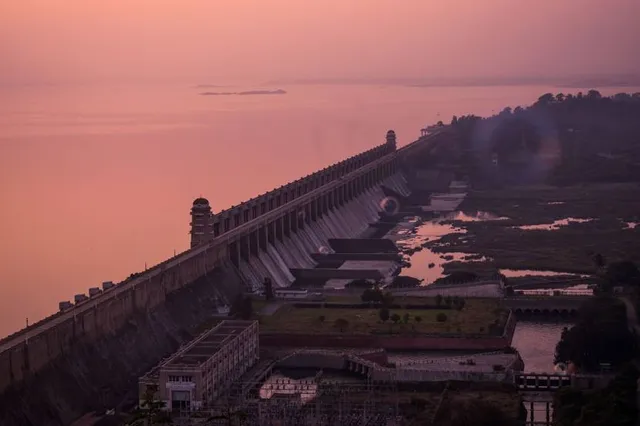
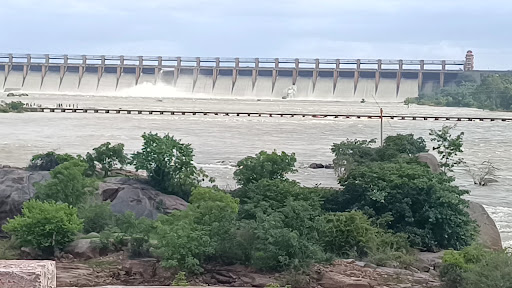
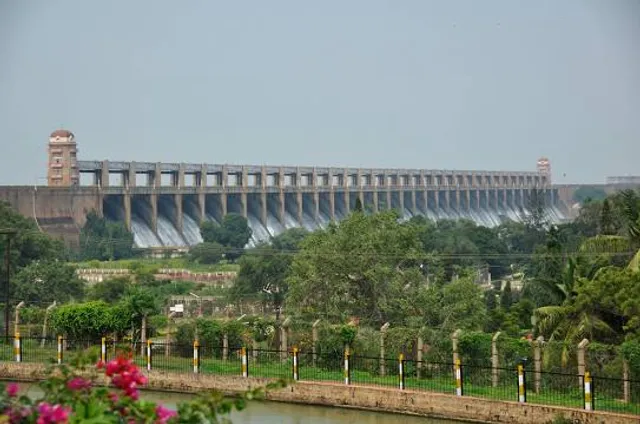
The view of the dam and the Tungabhadra river is splendid, especially during sunrise or sunset. Gardens are okay and they have a deer park but that closes by late evening. Also, there was a musical fountain . 33 Crest Gates are bliss to admire when all gates are open during July-Aug. Ample parking place for the cars/vehicles.Entry is free for this place.There is bus facility available which covers 3 places.1. Top Point (Government Guest house) - The view of the Dam from this place is too good.2. Dam.3. Probating.The distance from gate to Dam is about 1 km and distance to top point is around 3 km.The cost is 20/- per person.Boating can also be done, which is very close to entry gate.Pedal boats are the only type of boats available.Cost is Rs. 50/- per person and there is no time limit on using the...

   Read more
avatar
5.0
8y

A good place to visit in the evening !!!

I got a chance to visit this place during my recent visit to Hampi. Reaching this place is very easy. Ample parking place for the cars/vehicles. Entry is free for this place.

There is bus facility available which covers 3 places. 1.Top Point(Government Guest house) - The view of the Dam from this place is too good. Dam 3.Park/Boating

The distance from gate to Dam is about 1 km and distance to top point is around 3 kms. The cost is 20/- per person.

Boating can also be done,which is very close to entry gate. Pedal boats are the only type of boats available. Cost is 50/- per person and there is no time limit on using the...

   Read more
Page 1 of 7
Previous
Next

Posts

Prashanth U MPrashanth U M
The Tungabhadra Dam also known as Pampa Sagar is constructed across the Tungabhadra River, a tributary of the Krishna River. The dam is in Hosapete, Ballari district of Karnataka. It is a multipurpose dam serving irrigation, electricity generation, flood control, etc. This is a joint project of erstwhile Hyderabad state and erstwhile Madras Presidency when the construction was started; later it became a joint project of Karnataka and Andhra Pradesh after its completion in 1953. The main architect of the dam was Vepa Krishnamurthy, ISE, Engineer-in-Chief, Hyderabad State, after Police Action, an engineer from Madras PWD. There is a dispute between Andhra Pradesh,Telangana and Karnataka for the water of Tungabhadra reservoir. He argued for the stability and longevity of the Dam, built of Surki Mortar viz a combination of mud and limestone. It's the only non-cement and concrete dam in the country and has withstood the test of time for over 70 years, and may well cross many more decades. He envisioned it as being built with a large contingent of manual labour, as best suited to Indian labouravailabilty and employment. The main contractor for the dam was Venkat Reddy Mulamalla, from Konour village, Mahabubnagar, Hyderabad state. The famine region of Rayalseema, comprising the districts of Bellary, Anantapur, Kurnool and Cuddapah attracted the attention of the British Engineers as early as 1860. To relieve the intensity of famine in these districts, proposals were made in 1860 to utilize the waters of Tungabhadra through a storage reservoir and a system of canals to provide irrigation for the lands. Sir Arthur Cotton originally conceived the Tungabhadra Project in the year 1860. The proposals were further modified and developed subsequently evolving it into a joint scheme with Hyderabad. N. Paramseswaran Pillai accordingly revised the Scheme in 1933. Several agreements were concluded in the past for harvesting and imposing certain restrictions on utilizing the Tungabhadra waters. Protracted negotiations and investigations lasted for about eighty years. The Government of Madras in 1940 ordered for the detailed investigation of the scheme. Based on the agreements concluded and examination of a number of alternatives by L. Venkata Krishna Iyer, the then Superintending Engineer, Bellary, and F. M. Dowley, Chief Engineer, Irrigation, further detailed investigations of the project was done by M. S. Thirumale Iyengar on the Madras side in the year 1942. The Agreement between Madras and Hyderabad of June 1944 enabled the Madras and Hyderabad Governments finally to start the construction of the Tungabhadra project. The Tungabhadra Project was formally inaugurated by laying foundation stone on 28th February, 1945 by "Prince of Berar" on the left side and by Sir Arthur Hope, Governor of Madras on right side. However, much headway could not be made up to January 1949. Difference of opinion in certain technical matters and settled political situation in Hyderabad were the reasons for the slow progress. The Madras and the Hyderabad engineers were sharply divided on: Nature of mortar to be used in the construction of the dam Design of spillway Design of over flow and non-overflow sections of the dam and Contraction joints These differences were referred to a Board of Engineers under the Chairmanship of M. Visveswaraya, a Statesman-cum-Engineer. Dam construction Excavation in the riverbed was started in 1947 and masonry construction on 15 April 1949. With help of a cofferdam constructed earlier, foundation excavation was continued during flood season also. The river bed portion was tackled during the summer of 1950 (1949–50). Masonry in the riverbed blocks was started in the year 1951. Thereafter there was vigorous progress in works. By October 1953 the structures were completed substantially enabling the storage of water in the reservoir up to +1613.00 ft. Acquisition of lands and villages and rehabilitation of persons displaced from the water spread area up to 1630 ft contour were completed by September, 1953 in all respects.
Krishna Sai VoliveruKrishna Sai Voliveru
The view of the dam and the Tungabhadra river is splendid, especially during sunrise or sunset. Gardens are okay and they have a deer park but that closes by late evening. Also, there was a musical fountain . 33 Crest Gates are bliss to admire when all gates are open during July-Aug. Ample parking place for the cars/vehicles.Entry is free for this place.There is bus facility available which covers 3 places.1. Top Point (Government Guest house) - The view of the Dam from this place is too good.2. Dam.3. Probating.The distance from gate to Dam is about 1 km and distance to top point is around 3 km.The cost is 20/- per person.Boating can also be done, which is very close to entry gate.Pedal boats are the only type of boats available.Cost is Rs. 50/- per person and there is no time limit on using the boats.Worth a visit.
srjsrj
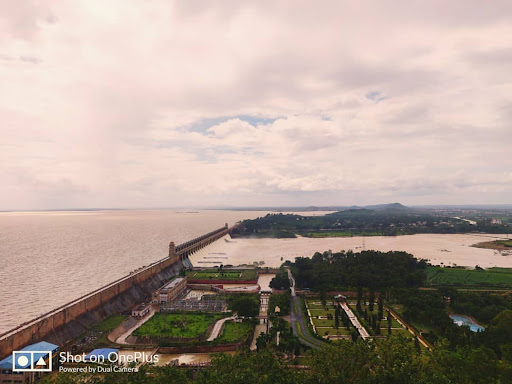
This is the another biggest dam I have seen after mysore's KSR DAM. Built in 1953 and still standing stiff. You can get aerial view of this dam and vast spreaded sea like looking catchment area(river) from sunsent point view. It's a 3.5km journey from the gate (entrance) to the view point. Bus transtport available which cost you 20 RS. For 2sided trip which was fare enough.The bus will first take you to the sunset point gives you 15mins to enjoy the atmosphere.From there next pitstop is TB dam and final one to the garden(musical fountain). P.S.-if you want to spend more time in sunset point you can wait till the next trip arrives.
See more posts
See more posts
hotel
Find your stay

Pet-friendly Hotels in Karnataka

Find a cozy hotel nearby and make it a full experience.

The Tungabhadra Dam also known as Pampa Sagar is constructed across the Tungabhadra River, a tributary of the Krishna River. The dam is in Hosapete, Ballari district of Karnataka. It is a multipurpose dam serving irrigation, electricity generation, flood control, etc. This is a joint project of erstwhile Hyderabad state and erstwhile Madras Presidency when the construction was started; later it became a joint project of Karnataka and Andhra Pradesh after its completion in 1953. The main architect of the dam was Vepa Krishnamurthy, ISE, Engineer-in-Chief, Hyderabad State, after Police Action, an engineer from Madras PWD. There is a dispute between Andhra Pradesh,Telangana and Karnataka for the water of Tungabhadra reservoir. He argued for the stability and longevity of the Dam, built of Surki Mortar viz a combination of mud and limestone. It's the only non-cement and concrete dam in the country and has withstood the test of time for over 70 years, and may well cross many more decades. He envisioned it as being built with a large contingent of manual labour, as best suited to Indian labouravailabilty and employment. The main contractor for the dam was Venkat Reddy Mulamalla, from Konour village, Mahabubnagar, Hyderabad state. The famine region of Rayalseema, comprising the districts of Bellary, Anantapur, Kurnool and Cuddapah attracted the attention of the British Engineers as early as 1860. To relieve the intensity of famine in these districts, proposals were made in 1860 to utilize the waters of Tungabhadra through a storage reservoir and a system of canals to provide irrigation for the lands. Sir Arthur Cotton originally conceived the Tungabhadra Project in the year 1860. The proposals were further modified and developed subsequently evolving it into a joint scheme with Hyderabad. N. Paramseswaran Pillai accordingly revised the Scheme in 1933. Several agreements were concluded in the past for harvesting and imposing certain restrictions on utilizing the Tungabhadra waters. Protracted negotiations and investigations lasted for about eighty years. The Government of Madras in 1940 ordered for the detailed investigation of the scheme. Based on the agreements concluded and examination of a number of alternatives by L. Venkata Krishna Iyer, the then Superintending Engineer, Bellary, and F. M. Dowley, Chief Engineer, Irrigation, further detailed investigations of the project was done by M. S. Thirumale Iyengar on the Madras side in the year 1942. The Agreement between Madras and Hyderabad of June 1944 enabled the Madras and Hyderabad Governments finally to start the construction of the Tungabhadra project. The Tungabhadra Project was formally inaugurated by laying foundation stone on 28th February, 1945 by "Prince of Berar" on the left side and by Sir Arthur Hope, Governor of Madras on right side. However, much headway could not be made up to January 1949. Difference of opinion in certain technical matters and settled political situation in Hyderabad were the reasons for the slow progress. The Madras and the Hyderabad engineers were sharply divided on: Nature of mortar to be used in the construction of the dam Design of spillway Design of over flow and non-overflow sections of the dam and Contraction joints These differences were referred to a Board of Engineers under the Chairmanship of M. Visveswaraya, a Statesman-cum-Engineer. Dam construction Excavation in the riverbed was started in 1947 and masonry construction on 15 April 1949. With help of a cofferdam constructed earlier, foundation excavation was continued during flood season also. The river bed portion was tackled during the summer of 1950 (1949–50). Masonry in the riverbed blocks was started in the year 1951. Thereafter there was vigorous progress in works. By October 1953 the structures were completed substantially enabling the storage of water in the reservoir up to +1613.00 ft. Acquisition of lands and villages and rehabilitation of persons displaced from the water spread area up to 1630 ft contour were completed by September, 1953 in all respects.
Prashanth U M

Prashanth U M

hotel
Find your stay

Affordable Hotels in Karnataka

Find a cozy hotel nearby and make it a full experience.

Get the Appoverlay
Get the AppOne tap to find yournext favorite spots!
The view of the dam and the Tungabhadra river is splendid, especially during sunrise or sunset. Gardens are okay and they have a deer park but that closes by late evening. Also, there was a musical fountain . 33 Crest Gates are bliss to admire when all gates are open during July-Aug. Ample parking place for the cars/vehicles.Entry is free for this place.There is bus facility available which covers 3 places.1. Top Point (Government Guest house) - The view of the Dam from this place is too good.2. Dam.3. Probating.The distance from gate to Dam is about 1 km and distance to top point is around 3 km.The cost is 20/- per person.Boating can also be done, which is very close to entry gate.Pedal boats are the only type of boats available.Cost is Rs. 50/- per person and there is no time limit on using the boats.Worth a visit.
Krishna Sai Voliveru

Krishna Sai Voliveru

hotel
Find your stay

The Coolest Hotels You Haven't Heard Of (Yet)

Find a cozy hotel nearby and make it a full experience.

hotel
Find your stay

Trending Stays Worth the Hype in Karnataka

Find a cozy hotel nearby and make it a full experience.

This is the another biggest dam I have seen after mysore's KSR DAM. Built in 1953 and still standing stiff. You can get aerial view of this dam and vast spreaded sea like looking catchment area(river) from sunsent point view. It's a 3.5km journey from the gate (entrance) to the view point. Bus transtport available which cost you 20 RS. For 2sided trip which was fare enough.The bus will first take you to the sunset point gives you 15mins to enjoy the atmosphere.From there next pitstop is TB dam and final one to the garden(musical fountain). P.S.-if you want to spend more time in sunset point you can wait till the next trip arrives.
srj

srj

See more posts
See more posts